The Alternative Guide to Prague
Featuring 9 dark, Gothic & unusual things to do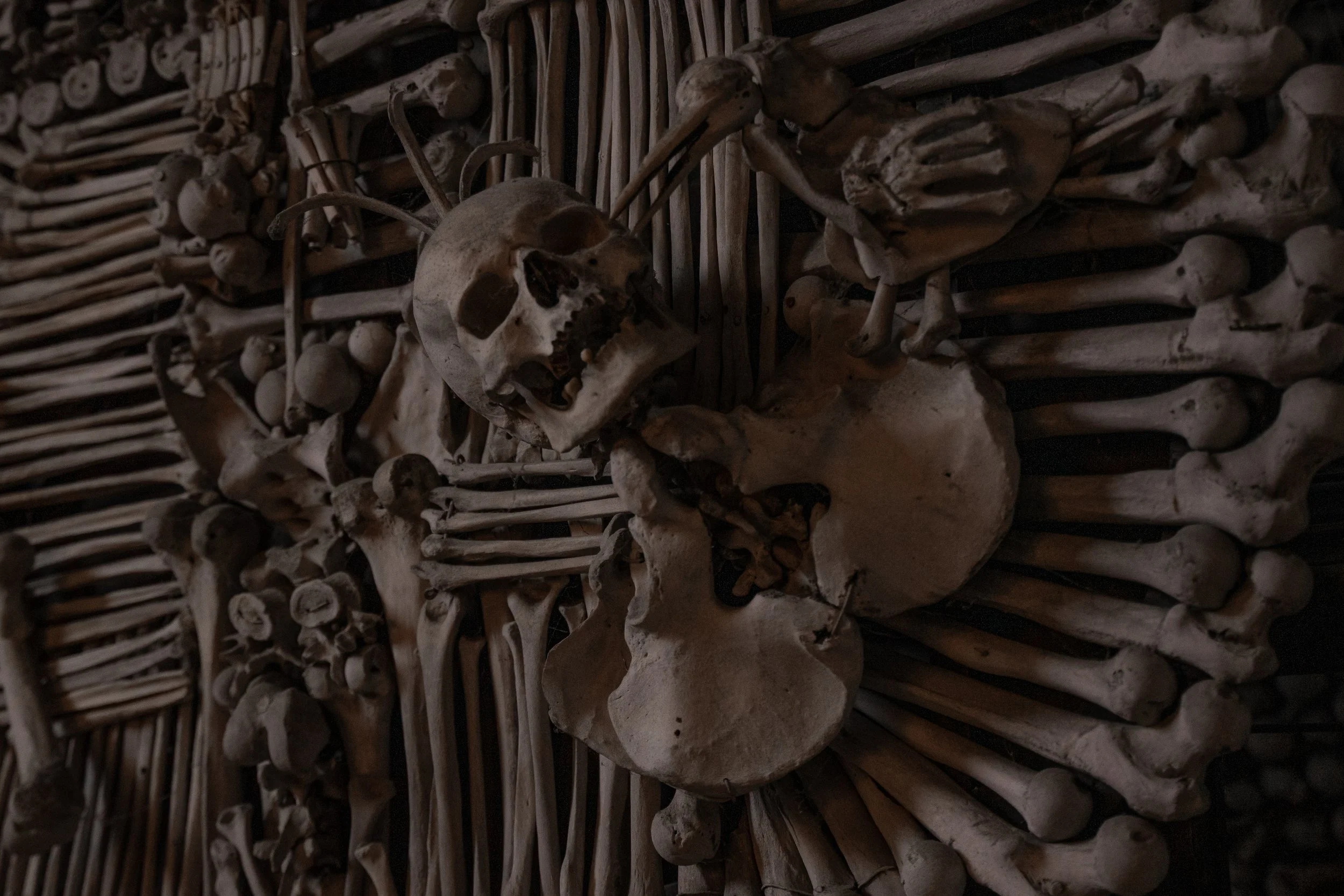

1. Where to stay
Discover the best Gothic, moody, historic and dark academia hotels in Prague. Stays with depth, heritage and a darker, more dramatic mood than the typical Prague hotel.
Hotel recommendations
Dark Romantic: Alchymist Grand Hotel and Spa, Alchymist Prague Castle Suites Hotel, Sir Prague
Gothic & Medieval Heritage: Hotel Paris, Iron Gate Hotel & Suites, Hotel U Prince
Old World Elegance: Hotel Nerudova 211, The Mozart, Golden Well, NH Art Deco Imperial Hotel, Art Nouveau Palace Hotel, Hotel Residence U Černého Orla
Curious: The Emerald, Old Royal Post Boutique Hotel, Aria Hotel, Monastery Garden
As The Alternative Guide is reader‑supported, booking through my Booking.com links is a simple way to support my site at no additional cost.
2. St. Vitus Cathedral


Situated within the Prague Castle complex, St. Vitus Cathedral is one of the most impressive and awe-inspiring examples of Gothic architecture in the city and is one of the largest and most important churches in the Czech Republic.
This imposing cathedral was commissioned by Charles IV and construction began in 1344 on the site of a former 10th century Romanesque rotunda. Astonishingly the Gothic masterpiece took nearly 600 years to complete with the final phase of construction ending in 1929. The initial build was tasked to the master French architect Matthias of Arras who designed the overall layout taking inspiration from the French Gothic style. Unfortunately, he only lived to build the Eastern parts of the choir, so the task was then intrusted to the 23-year-old German - Peter Parler, who was already a veteran of Cologne’s cathedral. Parler was able to add his own touches to the design including the unique diagonal pattern vaults and artistic gothic tracery, which were completed before he died in 1399.
The construction was put on hold for almost 500 years due to the Hussite Wars which then delayed the build until the latter half of the 19th century when its completion was finally approved. It's useful to note that the architecture to the left of the tallest tower including the main nave and the narrow side aisles is Gothic revival, whilst everything to the right is from the 14th century.
As you enter the small courtyard, you are met with the looming western façade of the cathedral where you can also find the entrance. On the exterior, along the Southern side of the church, you will discover the old entrance known as ‘The Golden Gate’ which displays an exquisite 14th century mosaic of The Last Judgement. Before heading inside take a walk around the whole structure to spot the numerous gargoyles adorning its walls. No two are the same design and are said to represent the many faces of the devil!
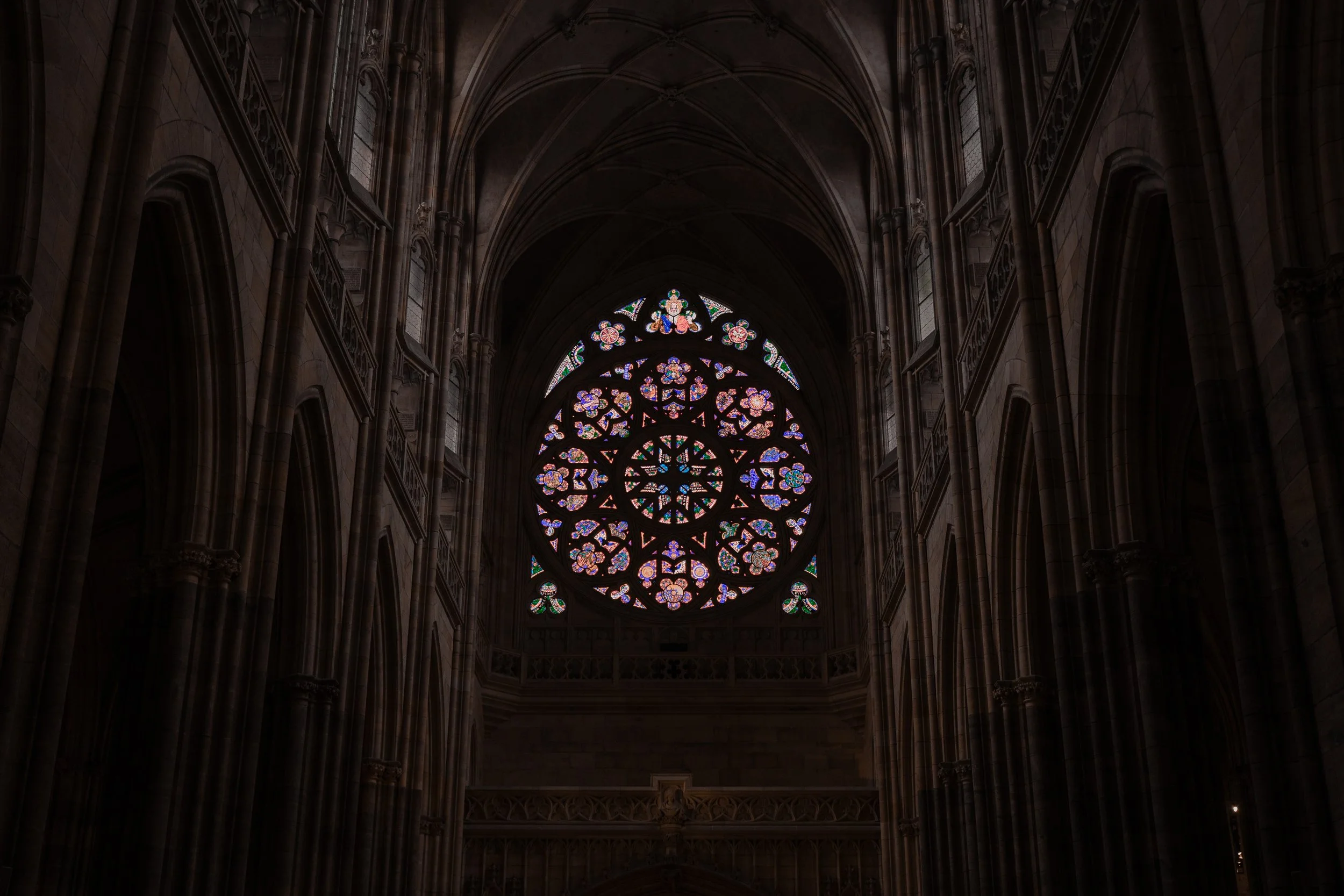
Stepping inside the cathedral I was completely blown away by the scale and beauty of its interiors, which in my opinion where even more impressive than its exterior! Lining either side of the nave are numerous chapels, which include exceptionally vivid stained-glass windows dedicated to different saints. Flooded with colour the sharp hues and intricate designs look even more angelic when they are saturated by the sunlight pouring through them. One of my favourites was the South window where the nave and transept meet, designed by Max Švabinský it depicts the Last Judgement and if you look carefully, you can see the fires of hell burning in the lower right-hand corner.
The chapel of St. Wenceslas is particularly impressive due to its elaborate 14th century decoration, with frescoes and gilded panels including over 1300 semi-precious stones which form the tomb of the country’s patron saint. Fascinatingly the tombstone is still located where it was originally placed in the Romanesque rotunda. Although he never became king in his lifetime, many people will recognise the name from the Christmas carol ‘Good King Wenceslas’ with the regal title being posthumously conferred on him after his death.
From here you will next discover the lavish and embellished tomb of St John of Nepomuk, the Czech archbishop who became a martyr after being drowned in a river when he refused to divulge the secrets of the Queen’s confessional. The tomb was designed by an Austrian architect in 1736 and is thought to have used two tonnes of silver, with the sarcophagus being the heaviest in the Czech Republic. The draped deep red canopy carried by silver angels amongst the candles, cherubs and moulded figures creates a masterpiece in funerary art.
Many dukes, kings and high-ranking officials are buried within the holy grounds and crypt of the cathedral as well as the architects Matthias of Arras and Peter Parler. As you round the end of the ambulatory you will pass the tomb of St Vitus to whom the cathedral is dedicated. He was known as the patron saint of Bohemia as well as the patron of actors, entertainers and dancers.
Other interesting pieces to note which I found along the North side of the church were a sculpture of a demon being pierced with a spear and an interesting tomb decorated with skulls and crossbones.
After you have soaked up the Gothic interiors, I would highly recommend climbing the Great South Tower where you can admire spectacular views across the city as well as getting a glimpse of the largest bell in the Czech Republic (which weighs 16 tonnes and is called Sigismund). Please take into consideration that the tower has 287 narrow spiralling steps to climb and is over 90 meters high, however the views of the architecture from above and of the surrounding steeples definitely make the climb feel worth it! To access the tower, you can simply buy a separate ticket from the entrance on the day that you visit.
Looking for a place to stay? Discover my Prague hotel guide.
3. Sedlec Ossuary


Known as the ‘Bone Church’, Sedlec Ossuary is a magnificent example of memento mori located in Kutná Hora, which is just a short train journey from the centre of Prague. The remarkable church holds the remains of 40,000 – 70,000 people whose bones festoon each and every inch of this small Gothic church, creating one of the World’s most macabre displays of art.
But how did thousands of bones end up in this unique location? Well, it all started when the Cistercian abbot of the monastery, made a pilgrimage to the Holy Land and brought back a jar of earth from the Church of the Holy Sepulchre in Jerusalem. When he arrived home in Kutná Hora he poured the earth over the Sedlec cemetery which caused it to become a highly desired place to be buried due to its ‘Holy Soil’.
During the 14th century the ‘Black death’ claimed the lives of nearly 30,000 victims who were then buried at Sedlec. The Hussite Wars that happened in the early 15th century also added around 10,000 more casualties to the site. Eventually they ran out of room for burials which sparked the idea of creating the ossuary.
In 1511, the task of assembling the bones was given to a half-blind monk who began collecting the remains from the graves to create decorative ornaments. The master architect Jan Santini Blazej-Aichel renovated the chapel in his famous Baroque Gothic style and later in 1784 the Schwarzenberg’s, who were one of the most prominent European noble houses, bought the ossuary and had the inspiration to organise the cadavers into their various artistic forms. It was in 1870 when the local woodcarver, Frantisek Rindt, was tasked with bleaching and rearranging the skeletons, artfully decorating the holy space as we see it today.
One of the key pieces is the breath-taking four poster skull tower with the tremendous chandelier above it. This is certainly one of the main features of the chapel; created from at least one of every single bone in the human body! From this you will find garlands of skulls and femurs hanging from the ceiling forming one of the most remarkable displays of dark art I have ever witnessed. The angelic cherubs which sit at the top of the pillars even have skulls resting on their knees, whilst candles glow from grinning skulls gazing down upon you.
No matter which direction you look, you are surrounded by ornate bones producing differing formations including the gigantic stacked pyramids in the corners of the space, which are truly quite staggering in size. If you examine them closely you can even see coins which have been put in some of the eyeball sockets of the skulls.
One of my favourite pieces was the Schwarzenberg coat of arms which showcases a raven made of tiny bones pecking at a severed head. Along with the two impressive monstrances which adorn the sides of the altar. The peaceful chapel is a transcendental place which evokes many different emotions, whilst it also acts as an important reminder of the impermanence of life and inescapability of death.
Please note that photography is not allowed within the ossuary and I was given special permission outside of their regular opening hours to take photographs.
Looking for a place to stay? Discover my Prague hotel guide.
4. Old Jewish Cemetery


The Old Jewish cemetery is part of the Jewish Museum complex, which includes a compelling selection of historical monuments. You can purchase a ticket for the museum either online or at one of the ticket offices on the day of your visit (this will then grant you access to all of the locations in the Jewish town). I would highly recommend visiting the Old-New Synagogue and Spanish Synagogue which are both particularly impressive in their interior design.
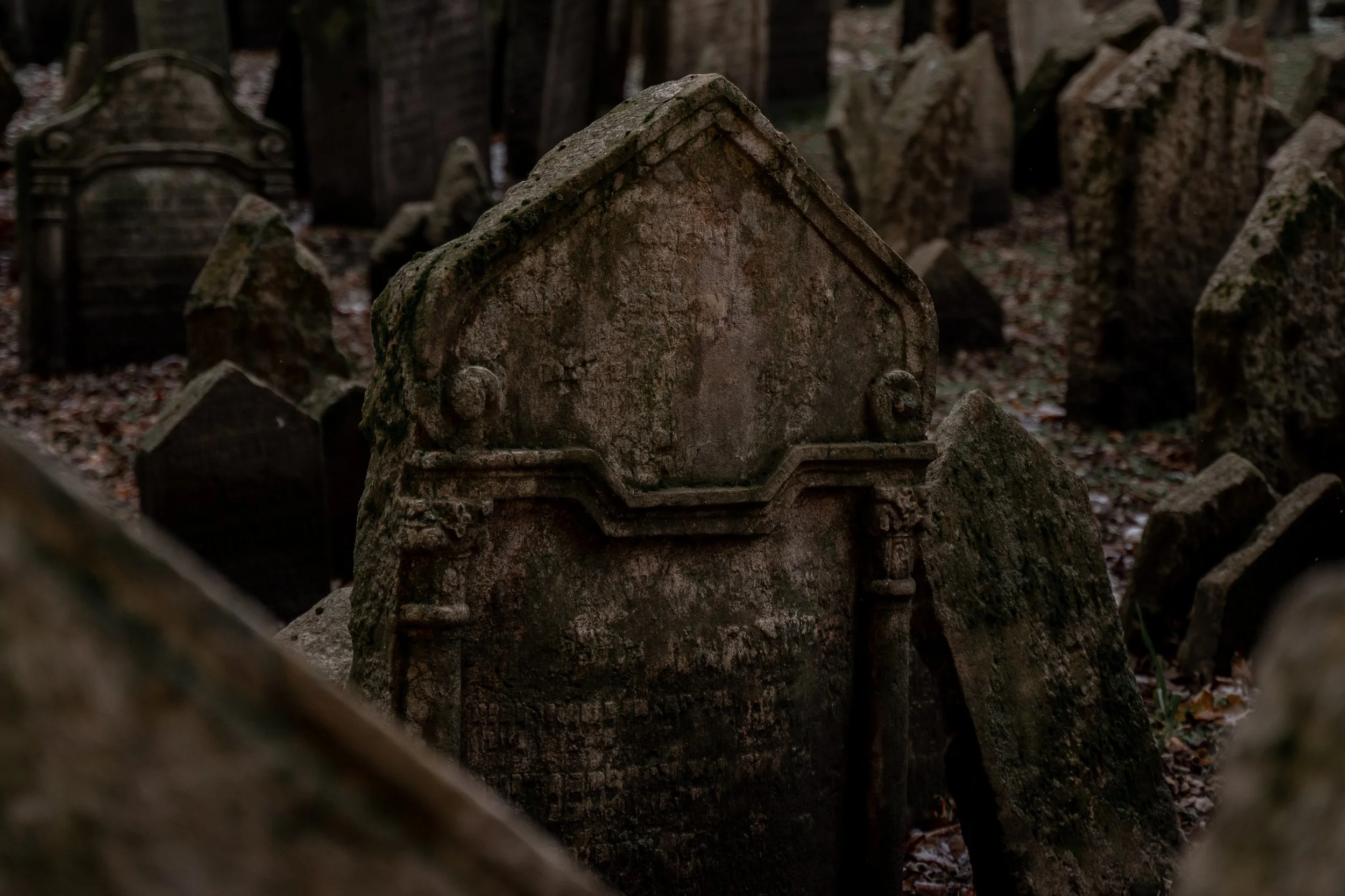
The cemetery was inaugurated in the first half of the 15th century, with some of the earliest tombstones dating back to 1439. It is one of the oldest surviving Jewish burial grounds in the world and is the final resting place for around 100,000 people. The raised grounds are particularly unique; covered by a sea of crooked headstones which are packed so closely together that, because of their exaggerated angles, seem to merge into each other.
Due to Jewish customs prohibiting the removal of old graves and the fact that the Jewish community weren’t allowed to purchase additional grounds to expand the cemetery, for centuries the deceased had to be buried on top of each other. This led to some plots holding up to 12 bodies and required more earth for the burials, all of which explains the fact that the cemetery is several meters higher than the surrounding streets.
Walking around the winding paths of the cemetery you can see that many of the 12,000 crumbling tombstones are decorated with motifs, symbols and animals connotating the family name, profession or character of the deceased. For example, the Star of David features for particularly devout Jews, scissors signify the profession of a tailor, books on a shelf connotes a rabbi, and grapes meaning the person’s life was full and prosperous.
Many leading figures in the Jewish community are buried here including the great religious scholar and teacher Rabbi Judah Loew ben Bezalel who is accredited with generating the myth and legend of the artificial creature, the Golem. You can easily spot this grave towards the back of the cemetery as it is marked by a sand-coloured lion.
The last person to be buried here was Moses Beck in 1787, as for sanitary reasons burials were banned shortly after this date by Emperor Joseph who introduced a decree prohibiting interments inside the city walls. During WW2, many synagogues and other Jewish sites in Prague were destroyed by the advancing Germans, but luckily the Old Jewish Cemetery survived and it remains to this day exactly how it looked hundreds of years ago.
Looking for a place to stay? Discover my Prague hotel guide.
5. Loreto




Upon entering this striking baroque church, you are immediately welcomed by the numerous statues of youthful angels and children which line the walls outside. Step inside to discover a variety of treasures as well as oddities and curiosities which lay deep in the depths of this mysterious complex.
In the middle of the site, you will find the impressive Santa Casa which was designed to replicate the Sacred house (the home of the Virgin Mary) in the Holy Land. It is said that the original Santa Casa was transported by angels to the Italian town of Loreto as the Turks advanced on Nazareth. Many of these replicas can be found across Europe but this version is particularly special due to the exquisite relief panelling that adorns the outer walls and its dark red interiors which include 17th century frescoes, ornate silver metalwork and a wooden effigy of ‘Our Lady of Loreto’.
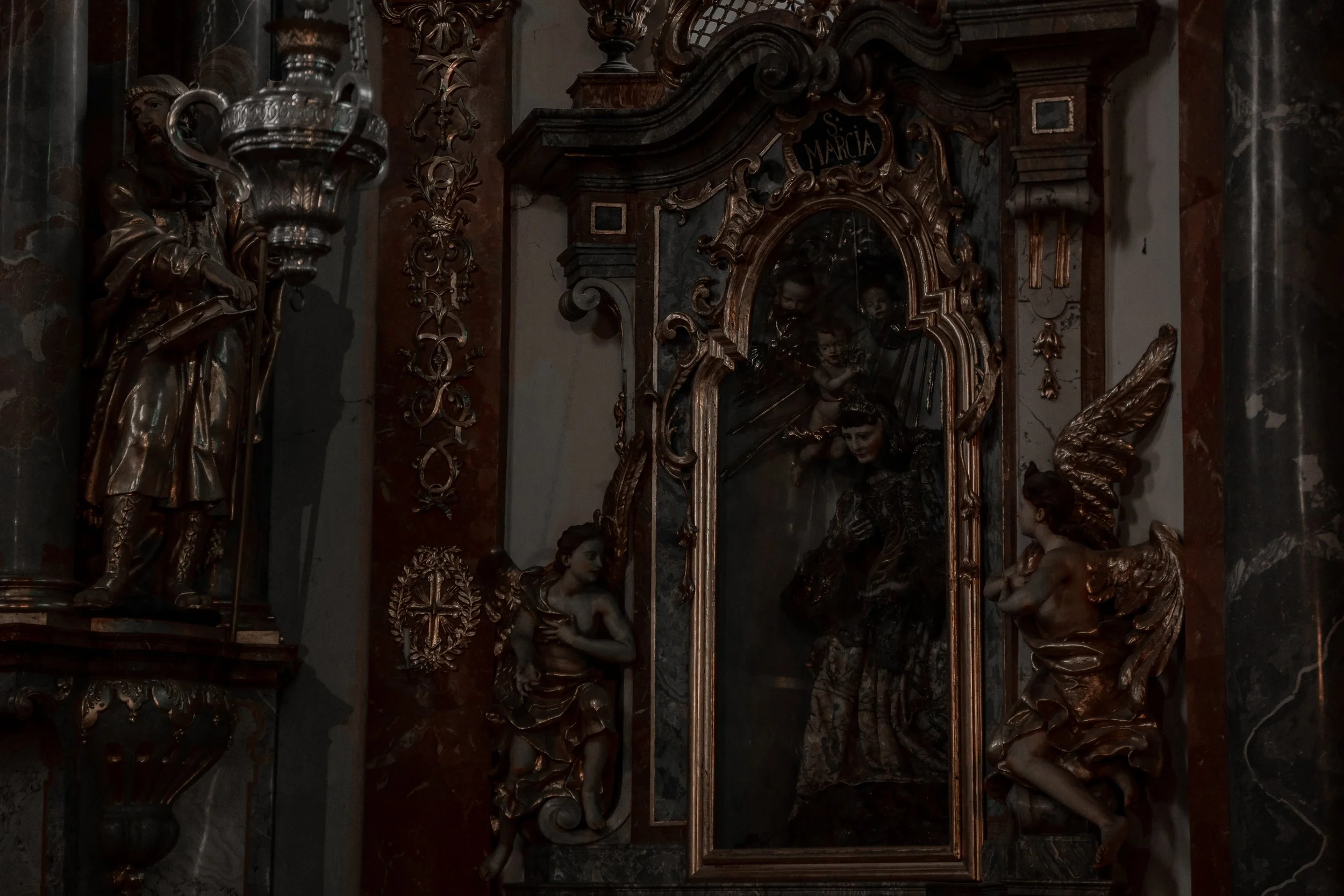
Behind the Santa Casa sits the Church of the Nativity of Our Lord. This is a stunning example of Baroque architecture with highly decorative pieces and an exceptional mathematical design. The building was constructed in the early 18th century by architect Kilián Ignaz Dientzenhofer who had a strong background in mathematics and philosophy. The church is particularly beautiful and includes two skeletons in its side altars. These are the remains of the Spanish saints Felicissima and Marcia who are dressed in 18th century clothing and are wearing wax masks to conceal their faces.
Walking through the cloistered arcades you will discover a small chapel called Our Lady of Sorrows which is located in the Southwest corner. Here you will see a crucified bearded lady known as St Wilgefortis or St Starosta. She was said to be the daughter of a Portuguese king who, against her wishes, promised her hand in marriage to the king of Sicily. As legend goes, after a night of sorrowful prayers, she awoke with a beard and the engagement was immediately called off. Her father was so enraged he decided to have her crucified. This led to her becoming the patron saint of all oppressed and unhappily married women around the world.
Next make your way upstairs to the treasury to view the rare collection of artworks, precious objects (including the Monstrance with its 6,222 diamonds) and, in my opinion the main reason to visit this location– the replica of the Loreto Crypt.
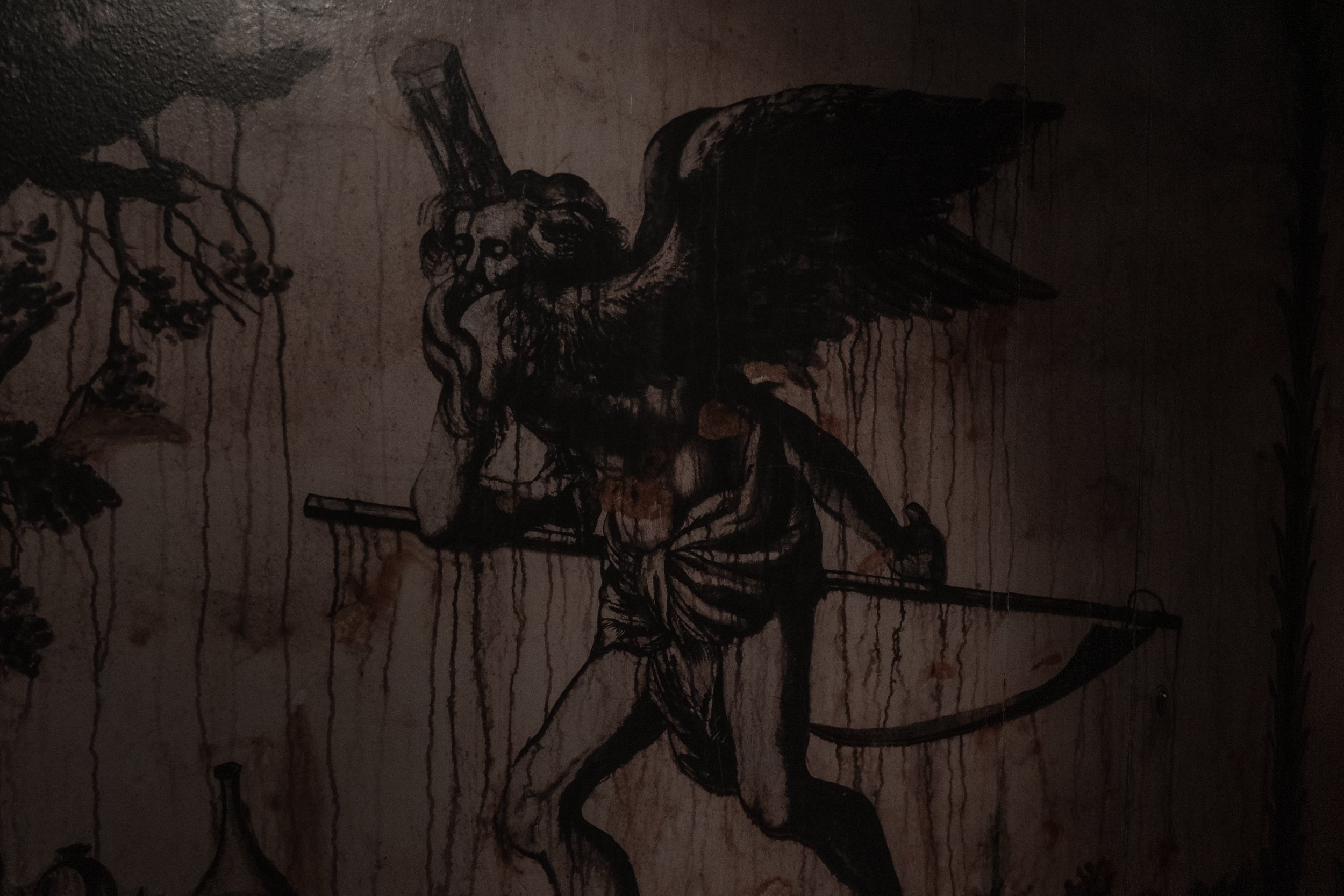
In 2011 there was a fascinating discovery in the crypt of the church that revealed a selection of unique Baroque mural paintings depicting motifs of death and resurrection. The frescos were created in 1664 using the special technique of chiaroscuro – employing exclusively the shades of black and grey. The work is thought to be that of a Capuchin order painter, who took his inspiration from Flemish and Dutch prints, with the main scene depicting the raising of Lazarus, which was based on the famous etching by Rembrandt. The selection of macabre themes and vanitas motifs include ‘A boy with a skull’, ‘The Triumph of death’, ‘Seated skeleton with scythe’ along with many others. The small room is located behind a black drape towards the back of the treasury and although it is not the original crypt it is still extremely interesting to visit.
The bell tower is another fascinating part of the church, as each hour (during opening times) the 27 Dutch bells which form the clock tower peel, play a tuneful Baroque Marian melody, which sounds absolutely incredible and is yet another reason to visit this famous pilgrimage site!
Looking for a place to stay? Discover my Prague hotel guide.
6. Vyšehrad


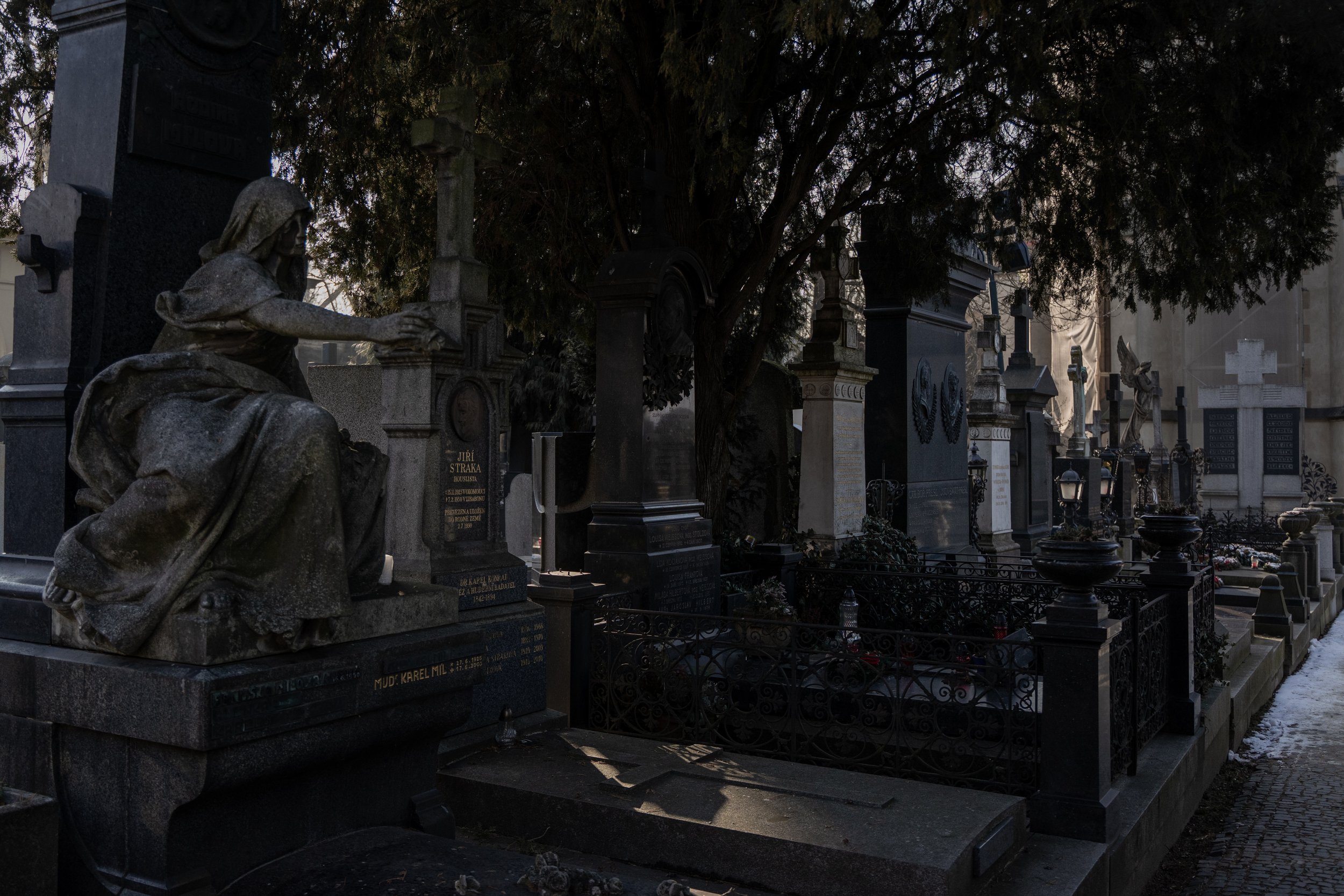


Situated on the eastern bank of the Vltava River, Vyšehrad is an ancient fort cited to date back to the mid-10th century when it was used as a royal residence and military base. Then in 1085 Vratislav II (a prince of Bohemia's founding dynasty), built a castle here and the area became the stronghold of Prague. Unfortunately, not much of the castle remains today but the area is still fascinating to walk around as it is the home to many historic treasures such as the Gothic revival church of St. Peter and Paul, the Devil’s Column, Saint Martin’s Rotunda, the Gothic cellar and Vyšehrad Cemetery.
I would recommend starting with a visit inside the neo-Gothic church of St. Peter and Paul which is easily recognised from its two looming 58m high spires. The basilica was originally built in the Romanesque style in the 11th century by the King Vratislaus II of Bohemia but unfortunately it suffered a great fire during 1249. The church was rebuilt in 1887 in the Gothic Revival style and is, thanks to Josef Mocker’s magnificent design, an iconic piece of the city’s history.
The richly decorated interiors showcase elements of Art-Nouveau, Baroque and Gothic architecture creating a unique blend of some greatly differing styles. The decoration of the altar, pulpit and side chapels is exquisite, demonstrating beautiful tracery, intricate stained glass and colourful frescos. Interestingly the organ which is situated above the entrance even has hollow spires which match those of the exterior towers.
One of the frescos which particularly caught my eye depicts the first church which was located here. This is positioned at the eastern end of the northern aisle and if you look above the painting of the church you can see a devil flying mid-air holding a column whilst an angel tries to stop him.
Legend says that in 1609 the devil made a bet with the local priest that he could move a column from the Roman Basilica of Our Lady in Trastevere before the priest finished saying mass. The priest (with the help of St. Peter) is thought to have won the wager causing the angry devil to throw the column against the roof of the church. This in turn caused it to break into three pieces and fall to the ground. In 1894 the three stone cylinders are thought to have been moved from the graveyard and put in their present position just moments from the church. These have now been documented on the map as the ‘Devil’s Column’.
As you exit the church take a right through the cemetery gates to discover the final resting place of many notable Czech artists, politicians and musicians. Some of the most iconic graves include that of the author Karel Čapek, the composer Antonín Dvořák and of course the famous Slavín tomb. The idea to build a common tomb for the country’s notable greats came from the politician and historian František Palacký. The Slavín tomb was built between 1889 and 1893 and is the final resting place for the poet Julius Zeyer, sculptor Josef Václav Myslbek and painter Alfons Mucha to name but a few. Located in the East side of the cemetery, above the central monument you can see a sarcophagus with a beautiful winged angel laying flowers upon it.
You can capture some moody shots of the church from the cemetery whilst exploring the exterior arcades which are built in an Italian style with marble tombs and Tuscan pillars.
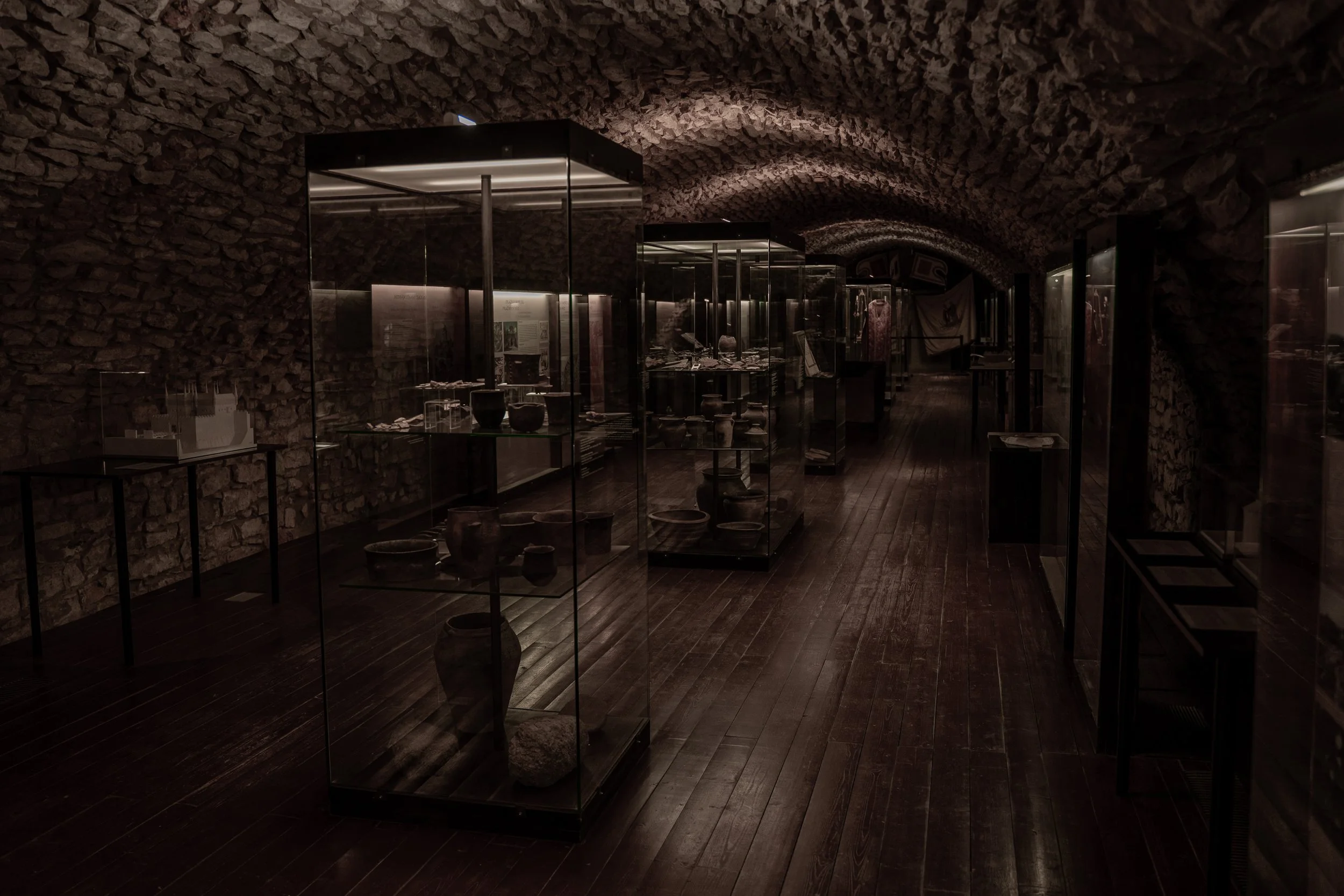
From here head towards the Gothic Cellar which is located towards the river in front the of church. The cellar is what remains of one of the palace structures owned by Charles IV and was most probably used as a storage space. It now hosts a permanent exhibition called the Historical Appearances of Vyšehrad showcasing the history and legends surrounding the complex. Head towards the back of the cave, where you will find two very interesting tapestries in a glass cabinet, one features a silver skeleton holding an hourglass and a scythe and the other a skull and crossbones in-between a pair of scissors.
I would highly encourage spending a few hours here enjoying the scenery and walking around the castle walls which provide some wonderful vantage points across the river and the Prague skyline.
Tip: Instead of getting public transport or a taxi I would recommend taking a stroll down the side of the river from Prague’s Old Town, a journey that takes around 45 minutes on foot.
Looking for a place to stay? Discover my Prague hotel guide.
7. St. Nicholas Church (Malá Strana)

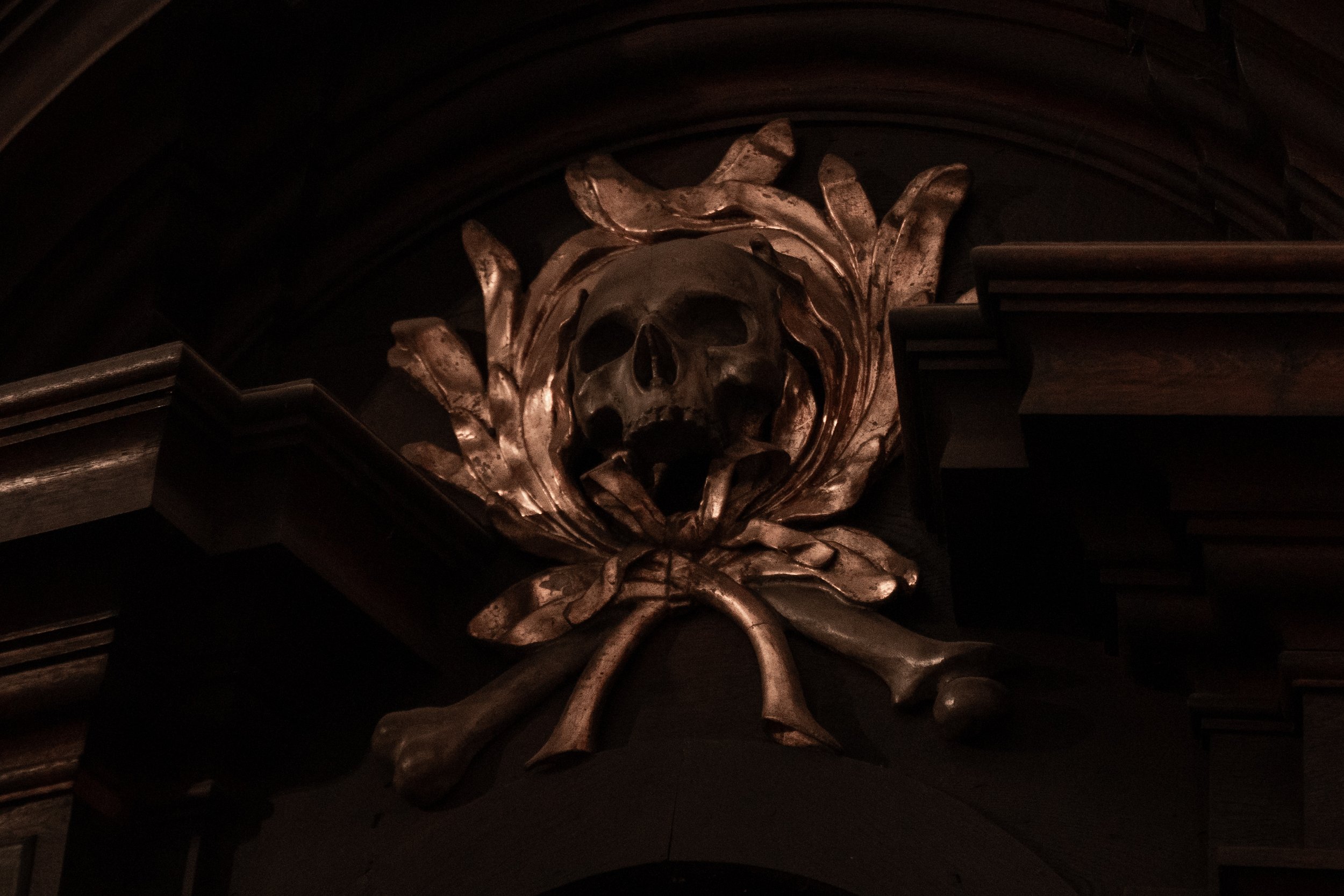


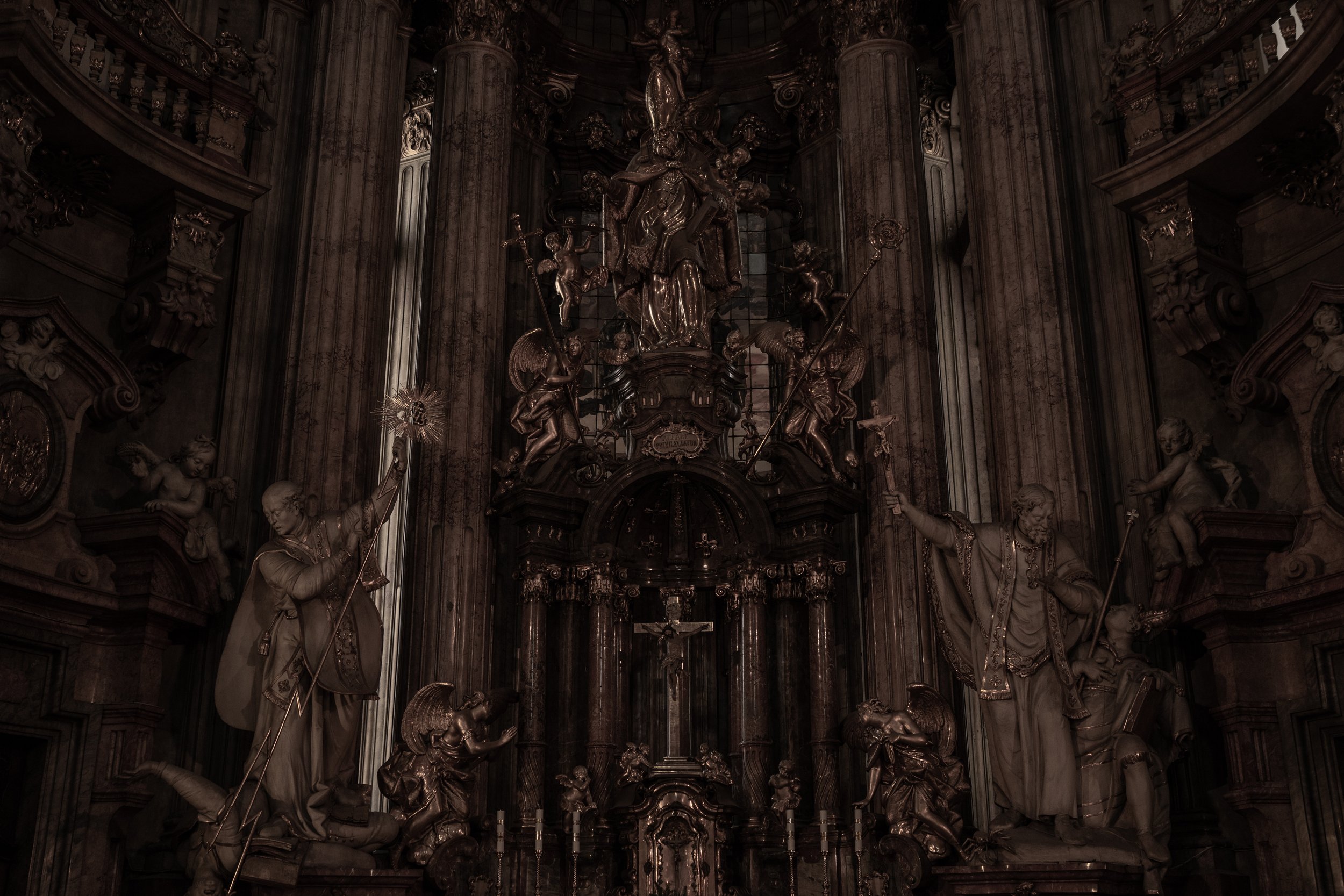
Known for being one of the most impressive examples of high Baroque architecture in Prague, St. Nicholas Church not only excels in its architectural design but also in its maximalist interior decoration.
The church was built between 1704 and 1755 on the site of a former Gothic place of worship dating back to the 13th century. The new church was designed by the architect Giovanni Domenico Orsi and was sponsored by Count Wenceslaus Kolowrat-Liebsteinsky who donated his entire estate to ensure the completion of the construction.
The basilica features a wonderfully detailed geometrical design built by Christoph Dientzenhofer with a soaring nave and lofty side chapels giving great height and light to the structure. The interiors are truly beautiful, showcasing many frescoes by the Vienna painter Johann Lucas Kracker, who took inspiration from the Italian late-Renaissance period. In total there’s an incredible 3000 square meters of frescoes featured in the church with the painting of the Holy Trinity by Franz Palko positioned inside the 70m high dome, being particularly impressive!
As well as the gorgeous paintings there are many impressive larger than life sculptures by artist František Ignác Platzer which showcase different Jesuit Saints in glistening marble with individual parts highlighted in gold.
To the left of the altar you will find a small staircase leading up to a balcony from which you can admire the church from above and get a closer look at the magnificent dome as well as admiring the baroque organ which has over 4000 pipes (the largest of which are six metres in length). In 1787 even Mozart played this exact organ and after his death his requiem Mass was held here.
In my opinion the most impressive part of the church has to be St. Barbara’s Chapel located in the north-east corner of the basilica. The painting on the ceiling by Karel Škréta documents the Crucifixion and if you look closely you can also spot some tiny skulls and reapers hidden amongst the many figures that are depicted within this amazing work of art. Also, around the edges of the chapel you can find winged skull carvings and a ‘skull and crossbones’ within a golden wreath.
Construction of the church lasted nearly one hundred years and saw three generations of great Baroque architects work on it, transforming the structure into a National cultural monument which amazes visitors with its timeless beauty.
Alongside the church you can also climb to the top of the bell tower which was the last part of the church to be built in the Rococo style by Anselmo Lurago. The 215 steps take you up to a 65m high gallery which offers striking panoramic views across Prague!
Looking for a place to stay? Discover my Prague hotel guide.
8. Strahov Monastery
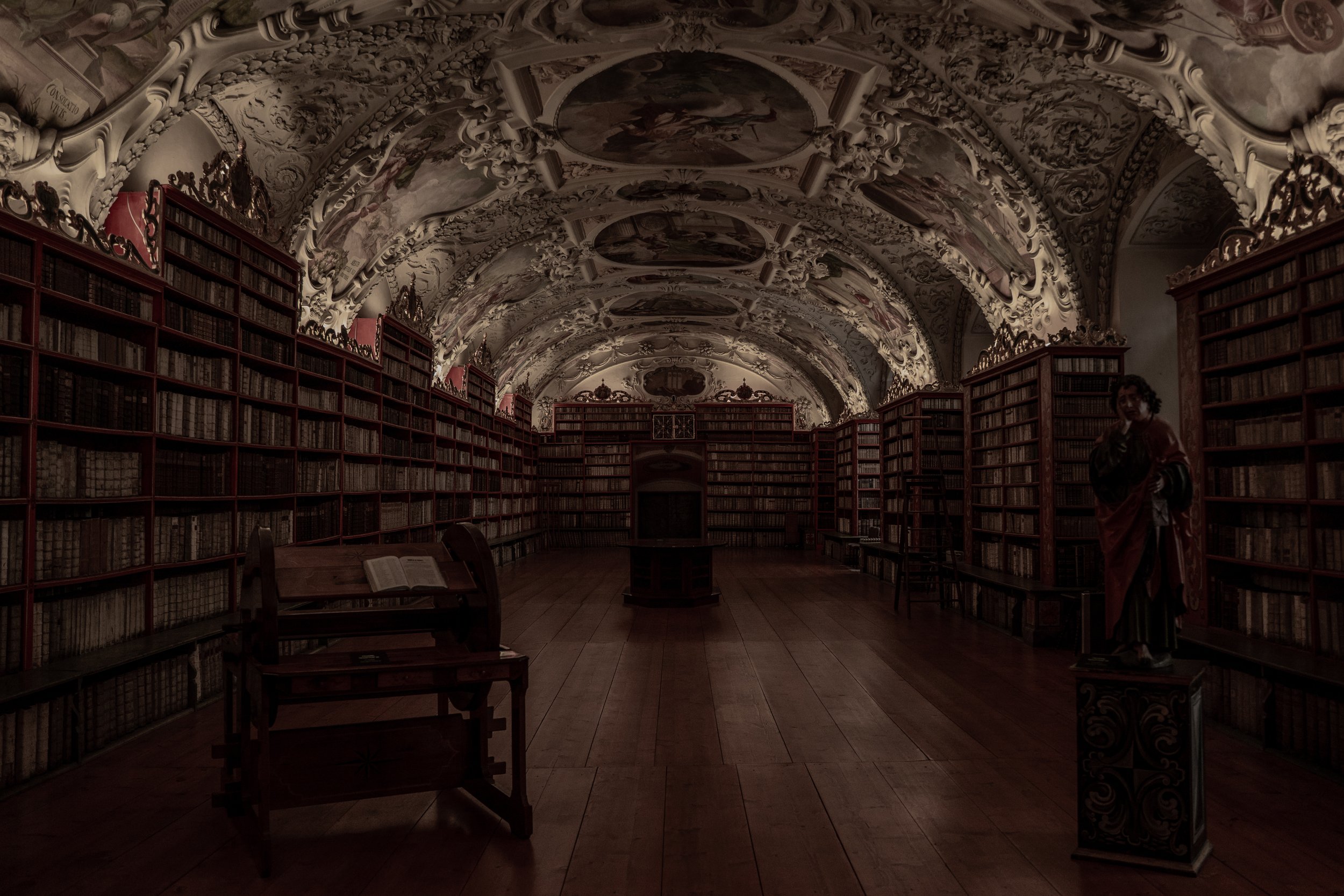

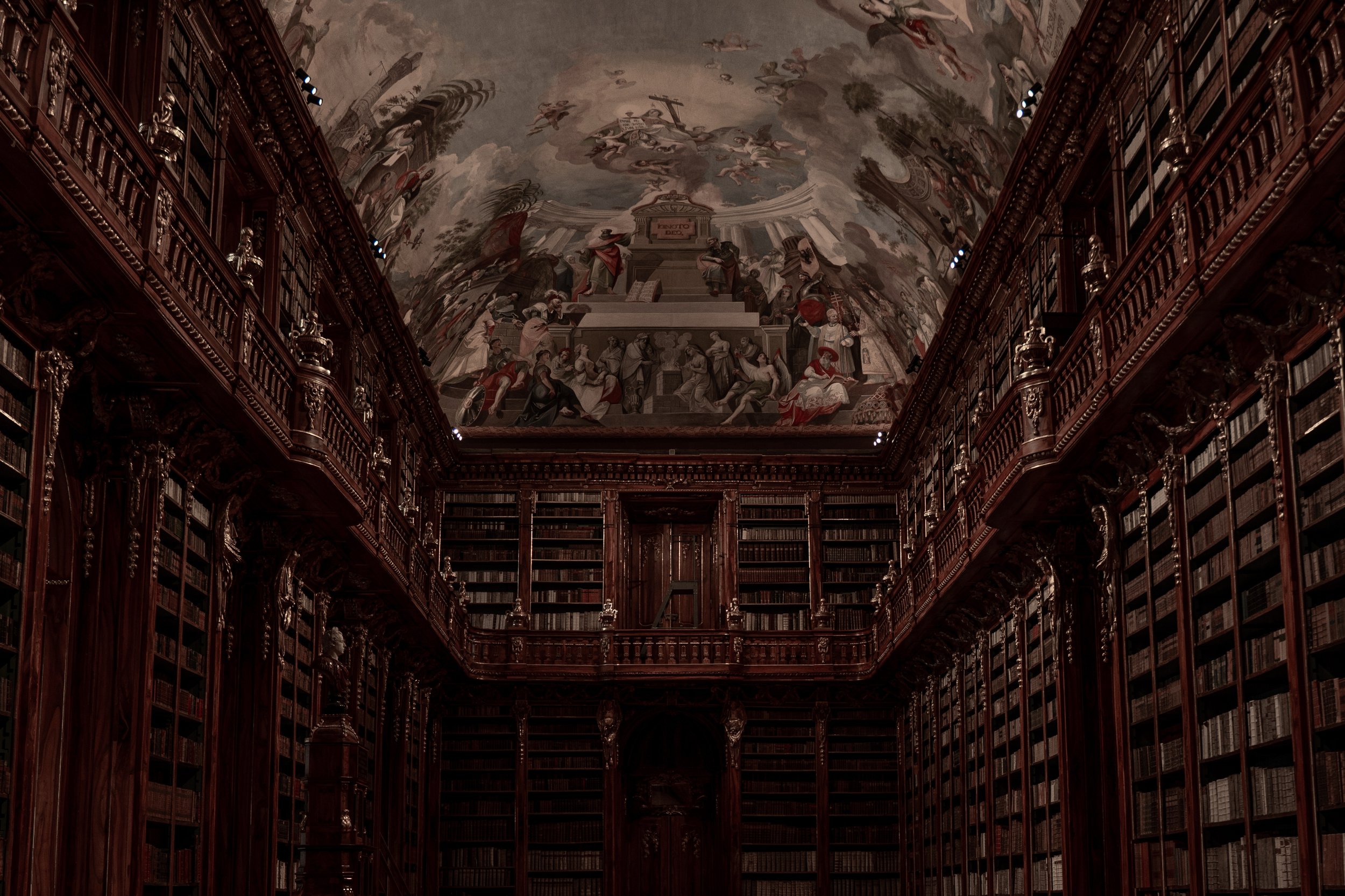
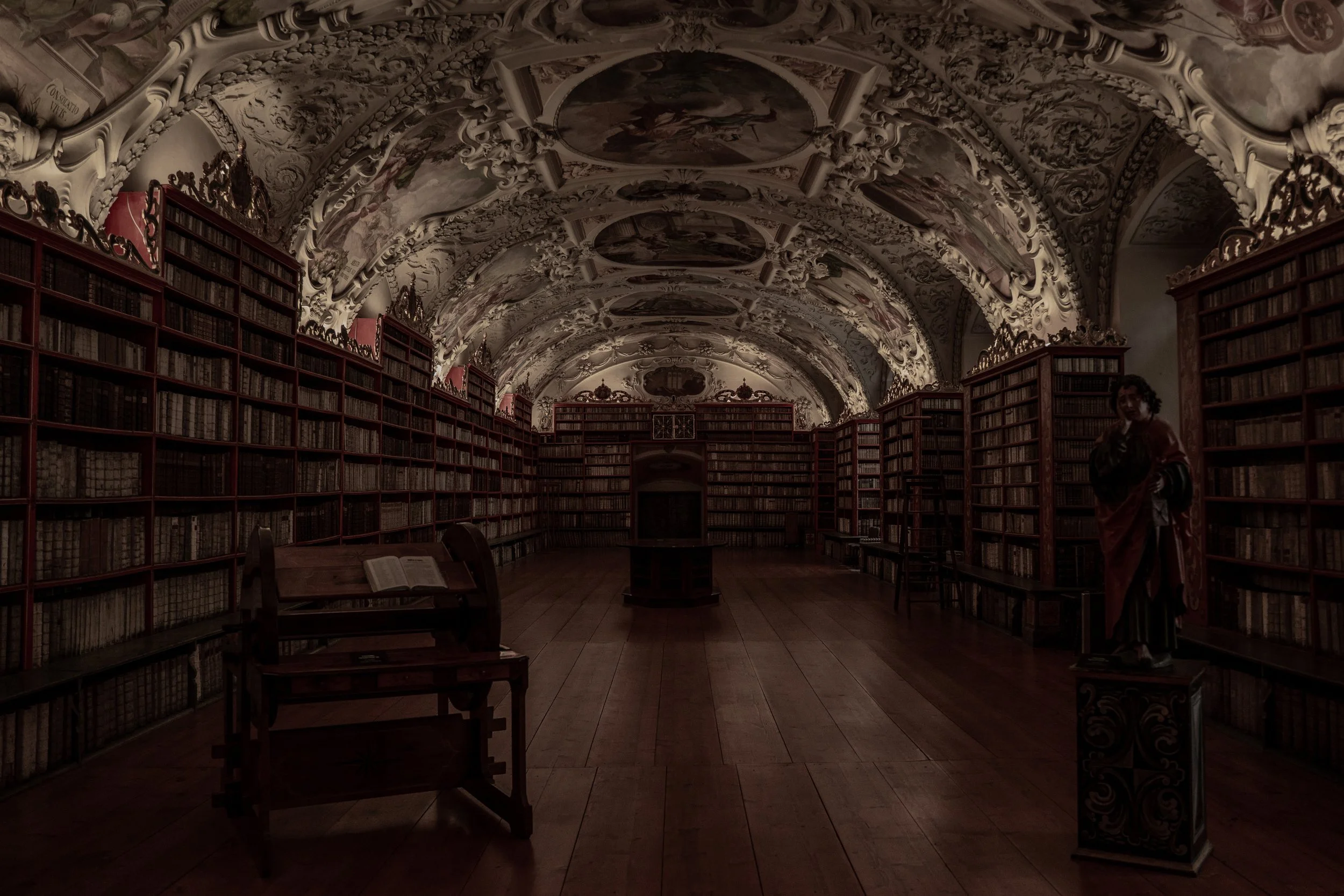
Founded in 1140 by Prince Vladislav II, Strahov is the second oldest monastery in Prague. The main reason to visit is to admire its enchanting library which is divided into two halls and includes many rare, ancient and medieval tombs.
The first library is the Philosophers’ Hall, which dates back to 1794 and is home to over 42,000 philosophical manuscripts including subjects ranging from medical and astronomical to geographical. This double story hall was designed by the Italian architect Jan Ignác Palliardi and is exquisitely decorated with a fresco on the ceiling by Franz Anton Maulbertsh. This masterpiece portrays the intellectual progress and wisdom of mankind. Interestingly the highest books in the library can only be reached from the upper gallery which is accessible from the spiral staircases in the corners of the room, which are concealed behind the fake spines of the books.
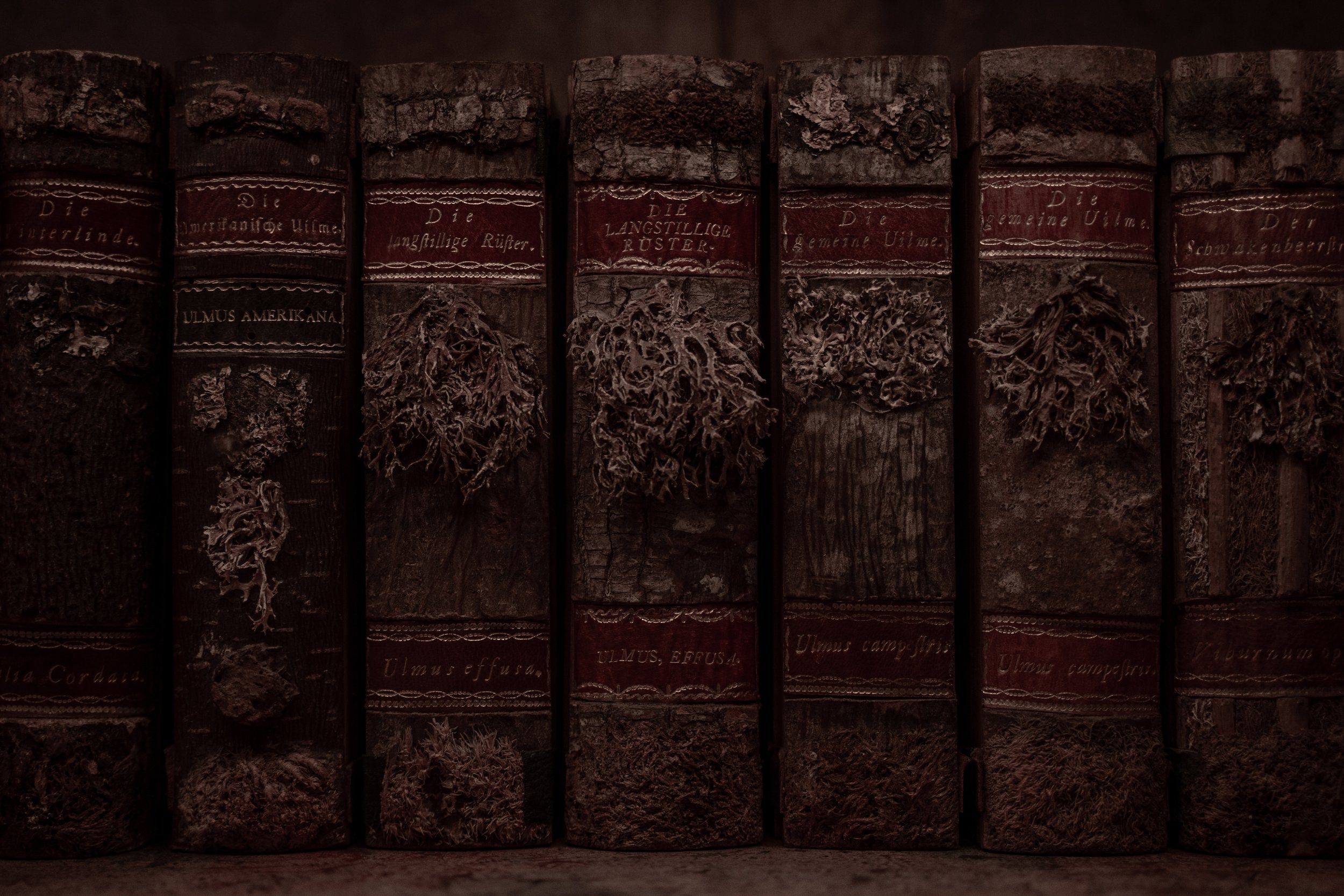
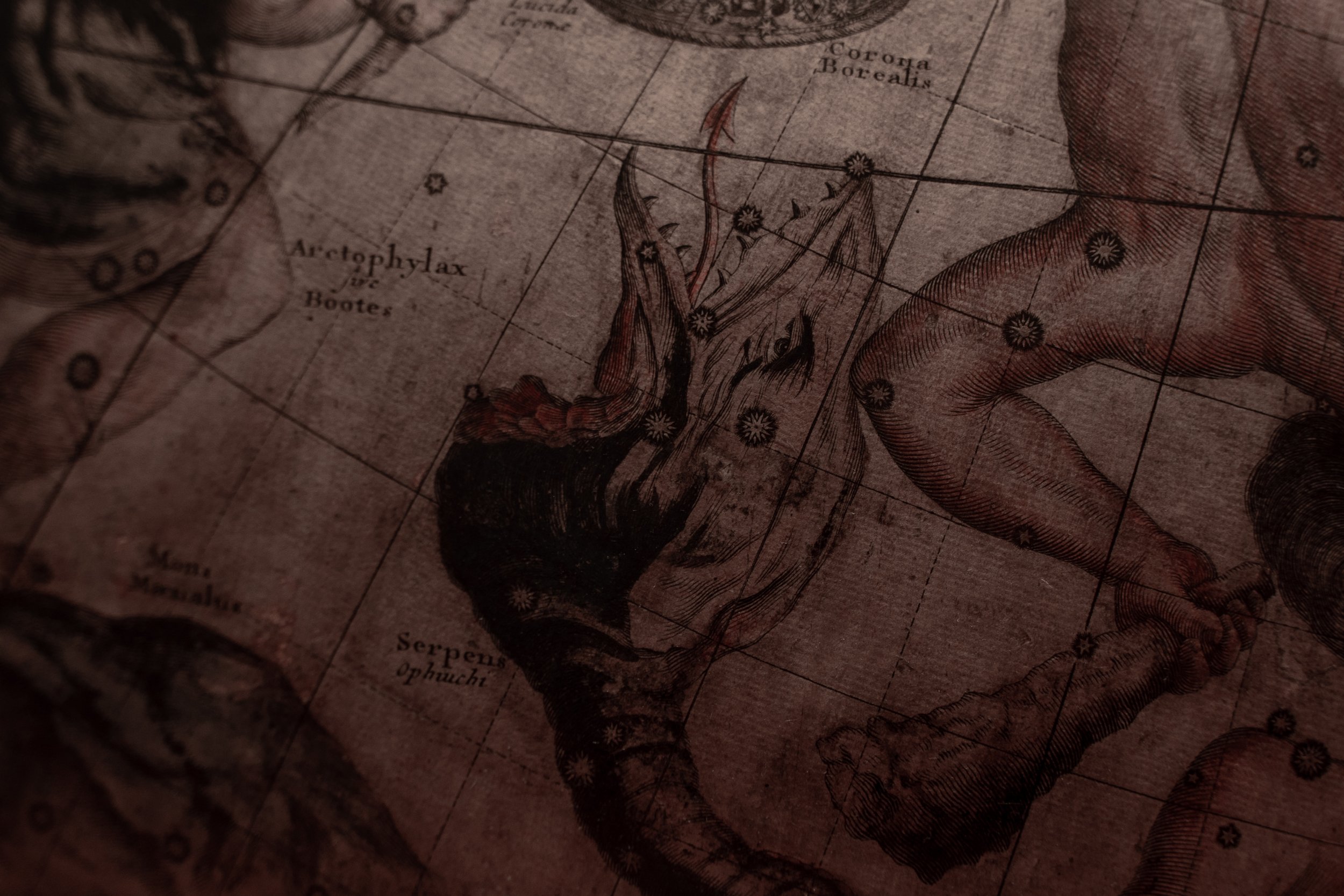
Connecting the two libraries you’ll discover an intriguing gallery featuring many cabinets of curiosities which were donated from the estate of Karel Jan Erben in 1798. Here you can see remarkable rarities such as anthropological specimens, minerals, insects, historical globes and books so old they have even started to grow fungi on them.
The library at the end of this gallery is the Baroque Theological Hall which is the older of the two halls, designed by the architect Giovanni Dominik Orsi between 1671 and 1679. The space contains approximately 18,000 religious texts concentrating on the subject of theology. If you look closely, you will see the wooden carved cartouches displaying pictures and inscriptions above the bookshelves which showcase what type of literature is stored on the racks below. Dating back to the 18th Century the beautiful ceiling is masterfully frescoed by Siard Nosecký and it showcases proverbs from the bible. Also, within the hall you can see the ‘compilation wheel’ which is the desk situated to the left which was used in the 17th century by scribes to compile texts.
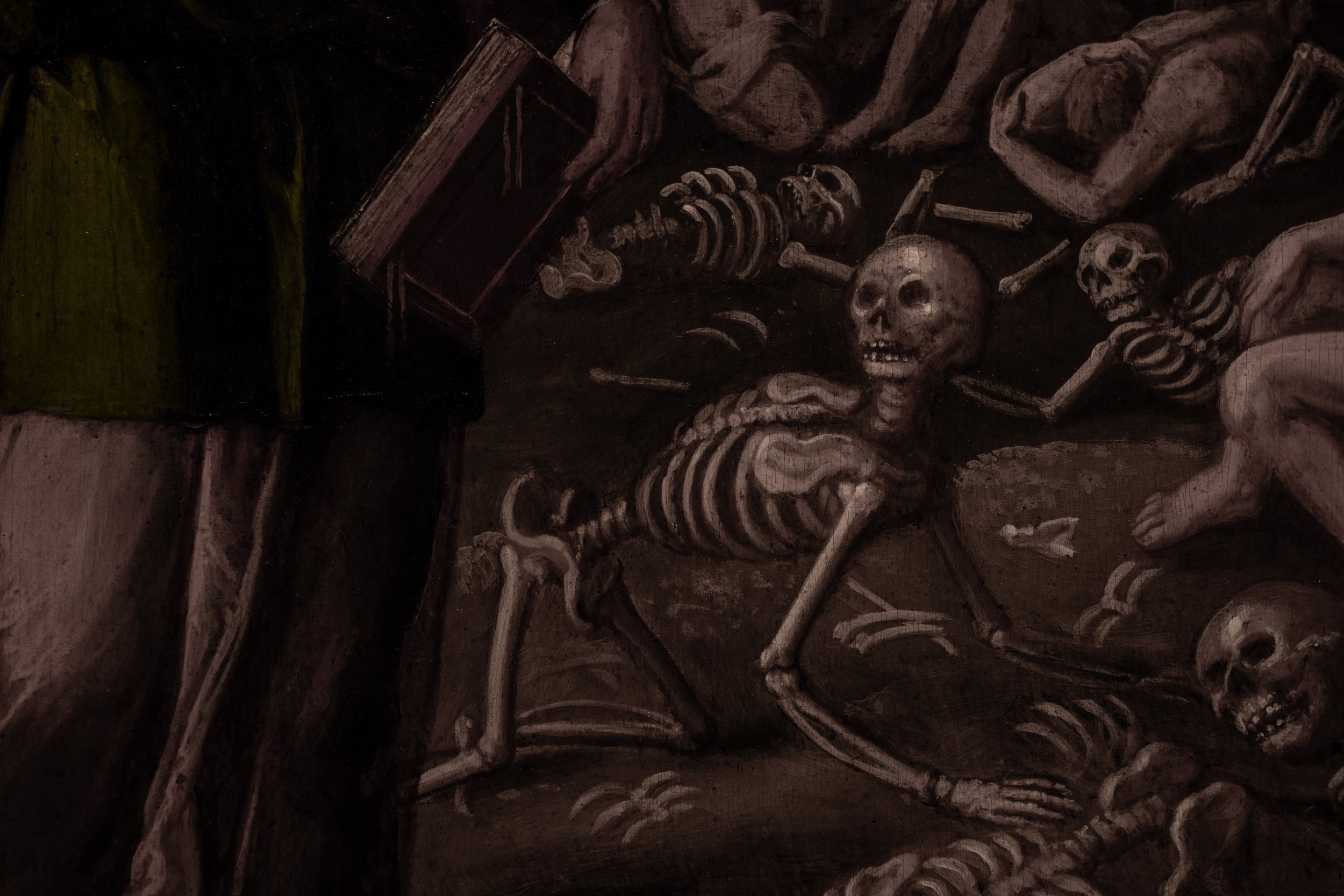
I would also highly recommend making time to wander around the art gallery, which hosts hundreds of paintings and interesting artefacts, some of which are housed in a room of reliquaries. One of my favourite pieces is called ‘Vision of the Prophet Ezekiel’ and is thought to have originally served as an epitaph in one of the chapels of the cemetery at the Church of St. James in Jihlava. The painting depicts the biblical bringing of the bones back to life and is thought to have been painted by the Flemish master Quentin Metsys Jr in 1589. Other artworks to note are the beautiful still life compositions using dark colour palettes by Guiseppe Arcimboldo.
The complex is tucked away on the top of a hill offering magnificent views across the city as well as picturesque grounds which are perfect to wander around.
Looking for a place to stay? Discover my Prague hotel guide.
9. Charles Bridge


This dark and romantic 14th century medieval sandstone bridge crosses the Vltava River and connects Prague’s Old Town with the Lesser Town (also known as Malá Strana). The bridge is framed at each end by Gothic towers and offers wonderful views of Prague Castle and down the banks of the river.
Construction began in 1357, with the intention of replacing the Judith Bridge which had been severely damaged by floods in 1342. Originally referred to as Stone Bridge and Prague Bridge the work was carried out under the specific instructions of the Czech King and Holy Roman Emperor Charles IV who is thought to have laid the foundation stone himself. The design was overseen by the city’s favourite architect Peter Parler and was completed in 1402; since 1870 it has been known as the Charles Bridge.
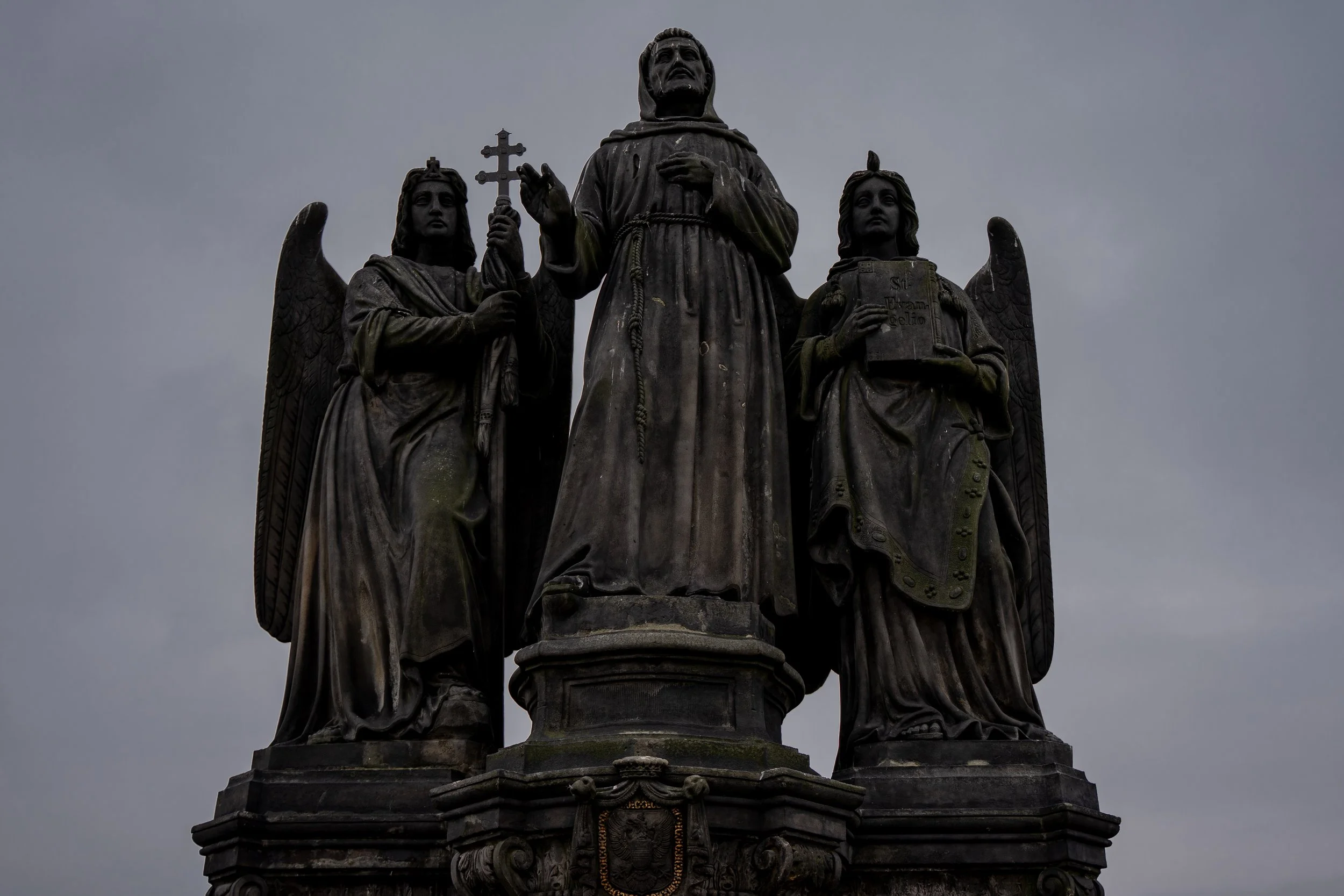
The overpass was originally constructed for chivalrous knight tournaments with little decoration, it wasn’t until the 1600’s when the Catholic love for ornamentation led to the 30 beautiful Baroque statues and sculptures of saints being installed. It is said they represent the great personalities of both European and global history, who it was believed had moved the world or changed it for the better. Unfortunately, many of the sculptures have now been replaced by replicas due to damage which has occurred over the years, however many of the originals can still be seen in the Lapidary of the National Museum in Prague.
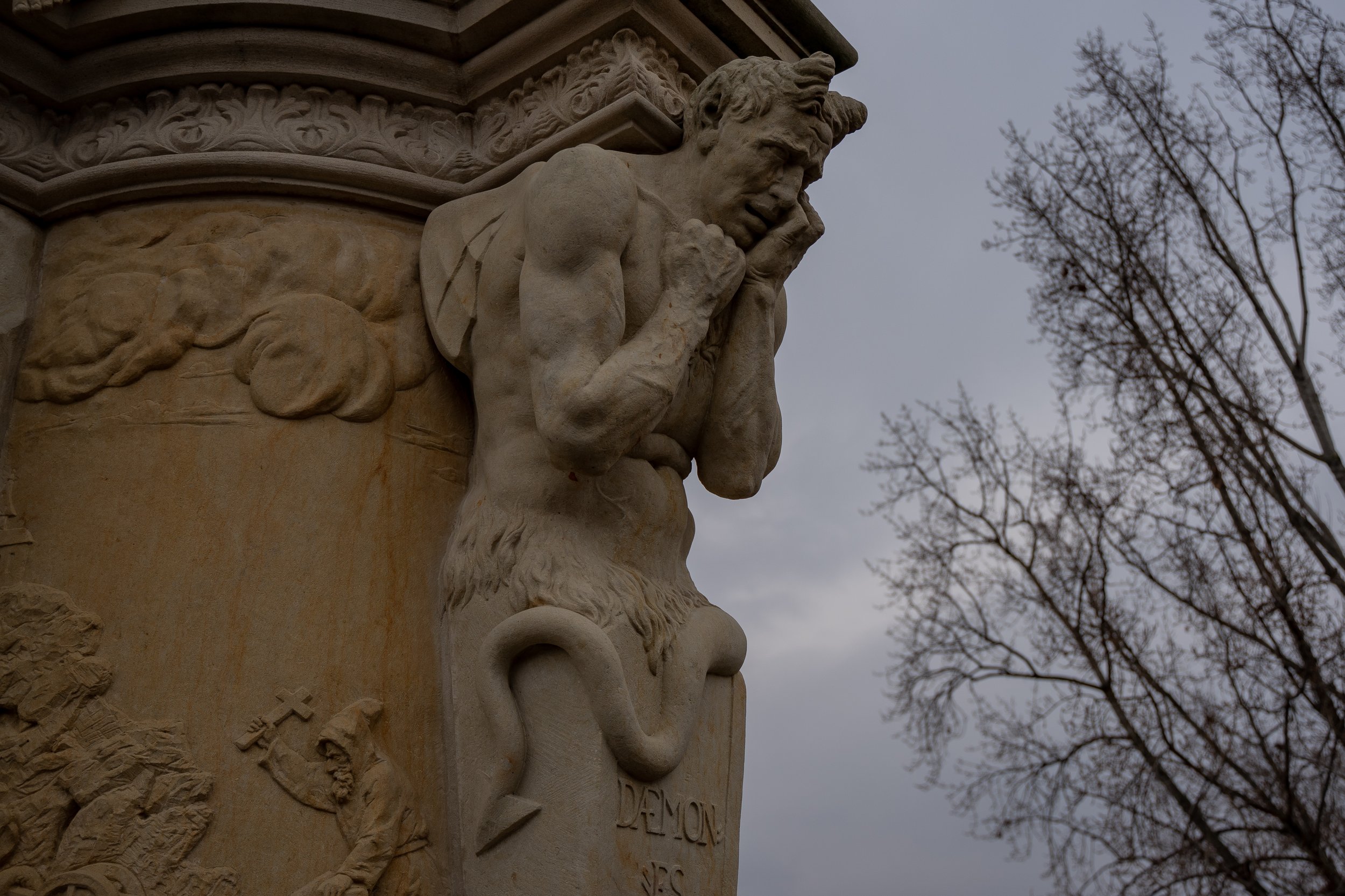
Close examination of these sculptures will reveal many different dark carvings such a devils, skulls, snakes and scenes of murder. One of my favourite pieces was the crowned skull which is situated towards the middle of the bridge on your left-hand side (if you are looking in the direction of the Lesser Town).
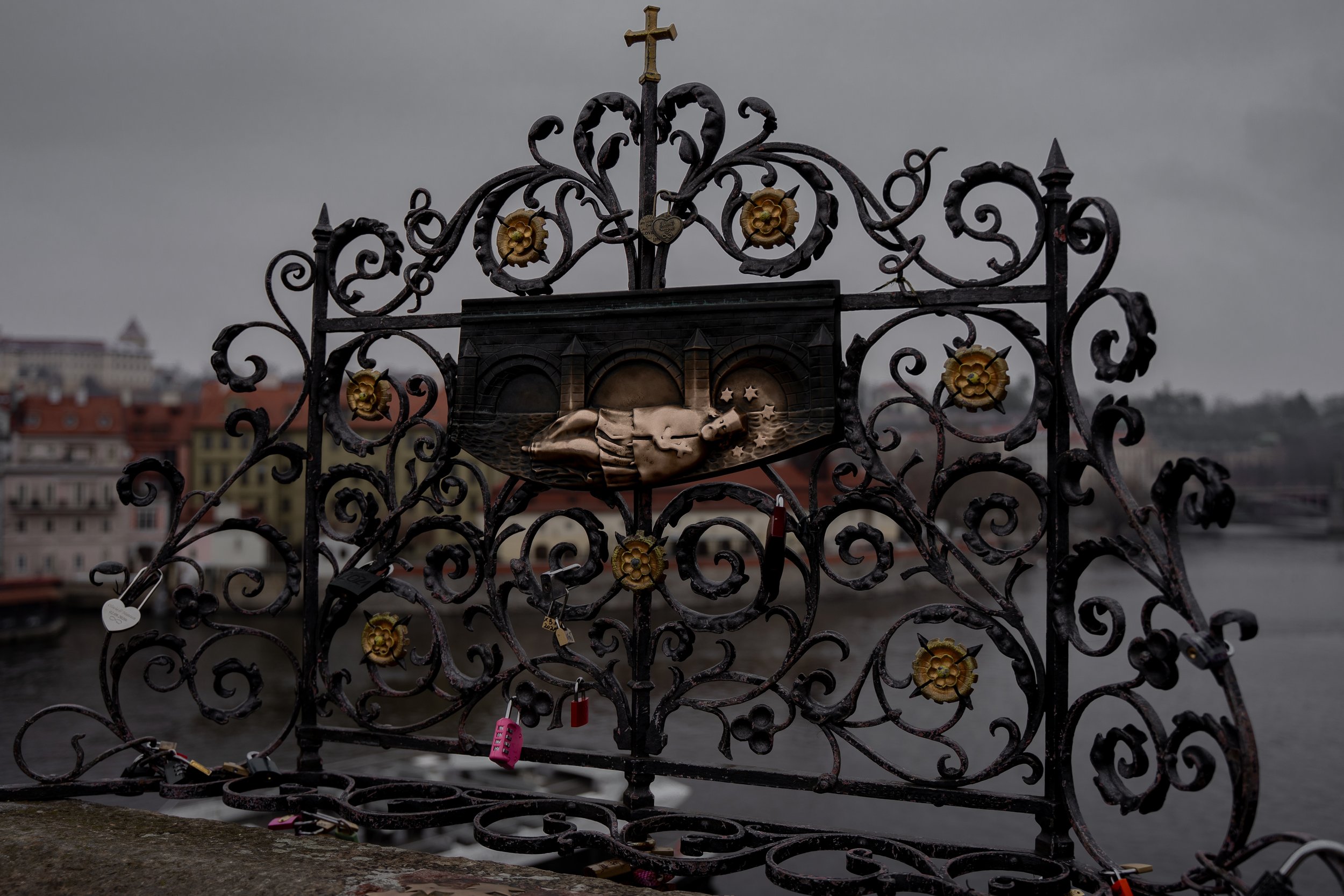
The most famous statue is that of St John of Nepomuk who was a Czech martyr executed for his beliefs before being thrown from the bridge into the river. This occurred in 1683 during the reign of Wenceslas IV. According to legend if you touch the plaque on his statue, it will bring good luck and ensure your return to Prague. Also look out for the old lattice which commemorates the exact location from which his body was thrown.
The 515m long bridge has been included as an UNESCO World Cultural Heritage site and interestingly there are many stories about egg yolks, milk, beer, wine and even blood being mixed into the mortar to strengthen the construction of the bridge.
I would highly recommend either visiting early in the morning or when the sun goes down, as the bridge holds an even more moody and mystical aura at night when the gas lamps are lit!
You can also climb both the Old Town Bridge Tower or the Lesser Bridge Tower where you will be rewarded with stunning views. I personally climbed the Lesser Tower but would recommend the Old Town Tower from which you can admire the picturesque cityscape including the vast Prague Castle atop of the hill.
Looking for a place to stay? Discover my Prague hotel guide.
Support The Alternative Guide
The Alternative Guide is completely reader‑supported. If the guide helped you uncover something fascinating, extraordinary or curious on your travels, please consider supporting my work. Every contribution helps me continue documenting and sharing these moody, atmospheric locations.