
St. Stephen’s Cathedral
St. Stephen’s Cathedral rises from the heart of Vienna with its Gothic needle-sharp spire towering above the surrounding city. Known locally as Stephansdom, it embodies Vienna’s medieval past, where memento mori carvings, shadowed catacombs, and gleaming stained glass create a Gothic theatre of mortality and salvation.
Consecrated in 1147, the cathedral began as a modest Romanesque basilica, of which only fragments, such as the Giant’s Door and parts of the west façade survive. Between 1304 and 1450, the structure underwent a dramatic Gothic transformation: the soaring nave, the intricate rib vaults, and the monumental South Tower were added, turning the church into one of Europe’s most ambitious medieval building projects. Over the centuries, the cathedral has endured fires, Ottoman sieges, and WWII bombing, yet it survives becoming an inspiring symbol of Vienna’s resilience.
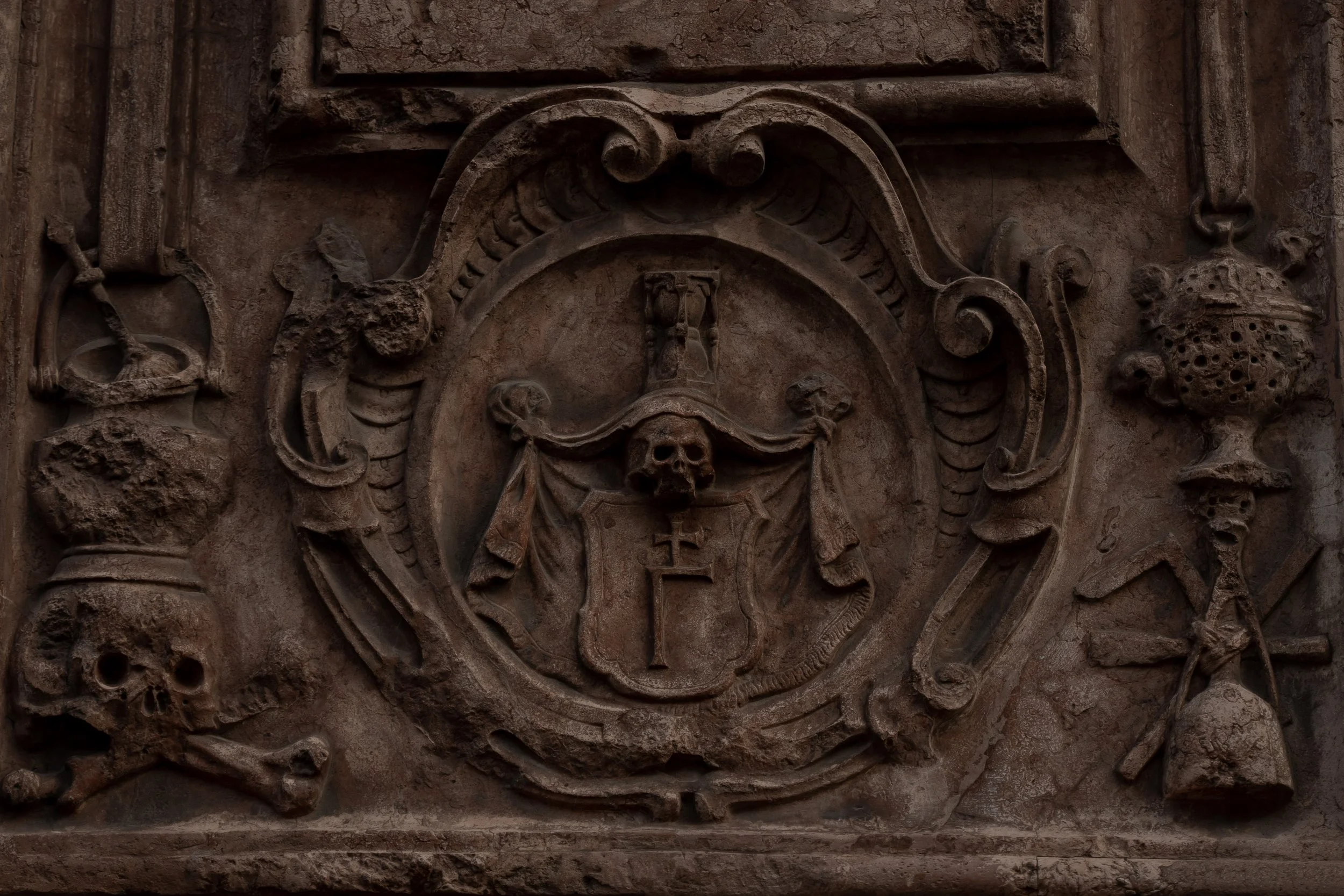
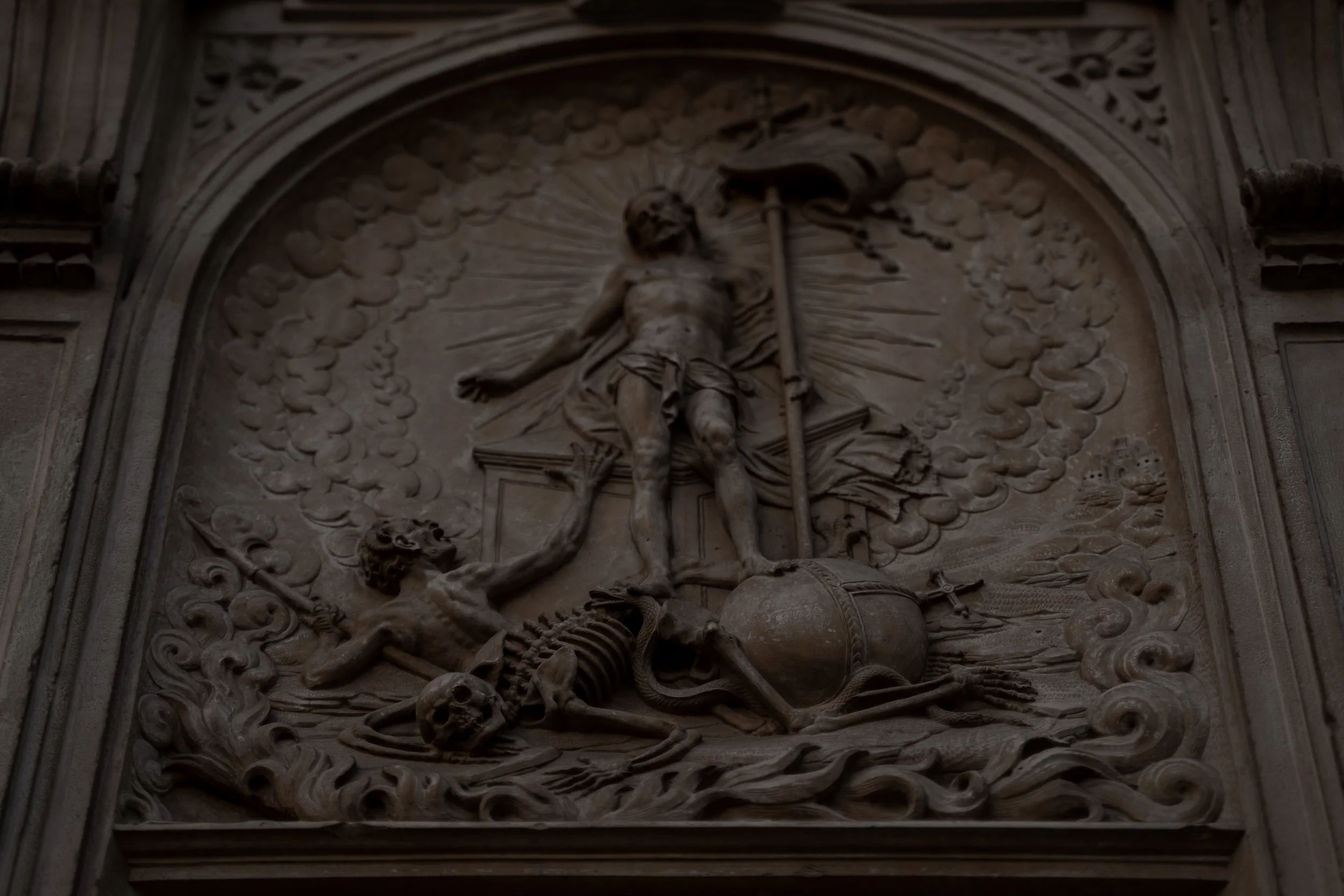
Before stepping inside, take time to circle the cathedral’s soot‑darkened exterior, where centuries of brutal weather have only intensified its dramatic presence. The stone walls are like a canvas of memento mori symbolism including skulls, bones, hourglasses, and carved reminders of life’s brevity. These carvings were deliberately placed on the outer walls so their message, ‘remember you must die’, was visible to all. In an era marked by plague, famine, and war, these motifs served as spiritual warnings: death comes for all, and the soul must be prepared. Interestingly amid these sombre carvings also lie practical medieval tools, such as brass “ells,” (a north western European unit of measurement originally spanning a cubit) which were used by cloth merchants to measure fabric.
The main entrance, the Giant’s Door (Riesentor), is a masterpiece of Romanesque ornamentation, adorned with demons, dragons, monks, and mythical beasts. Its name derives from a Mastodon bone unearthed during construction in 1443, which medieval Viennese believed belonged to a giant.
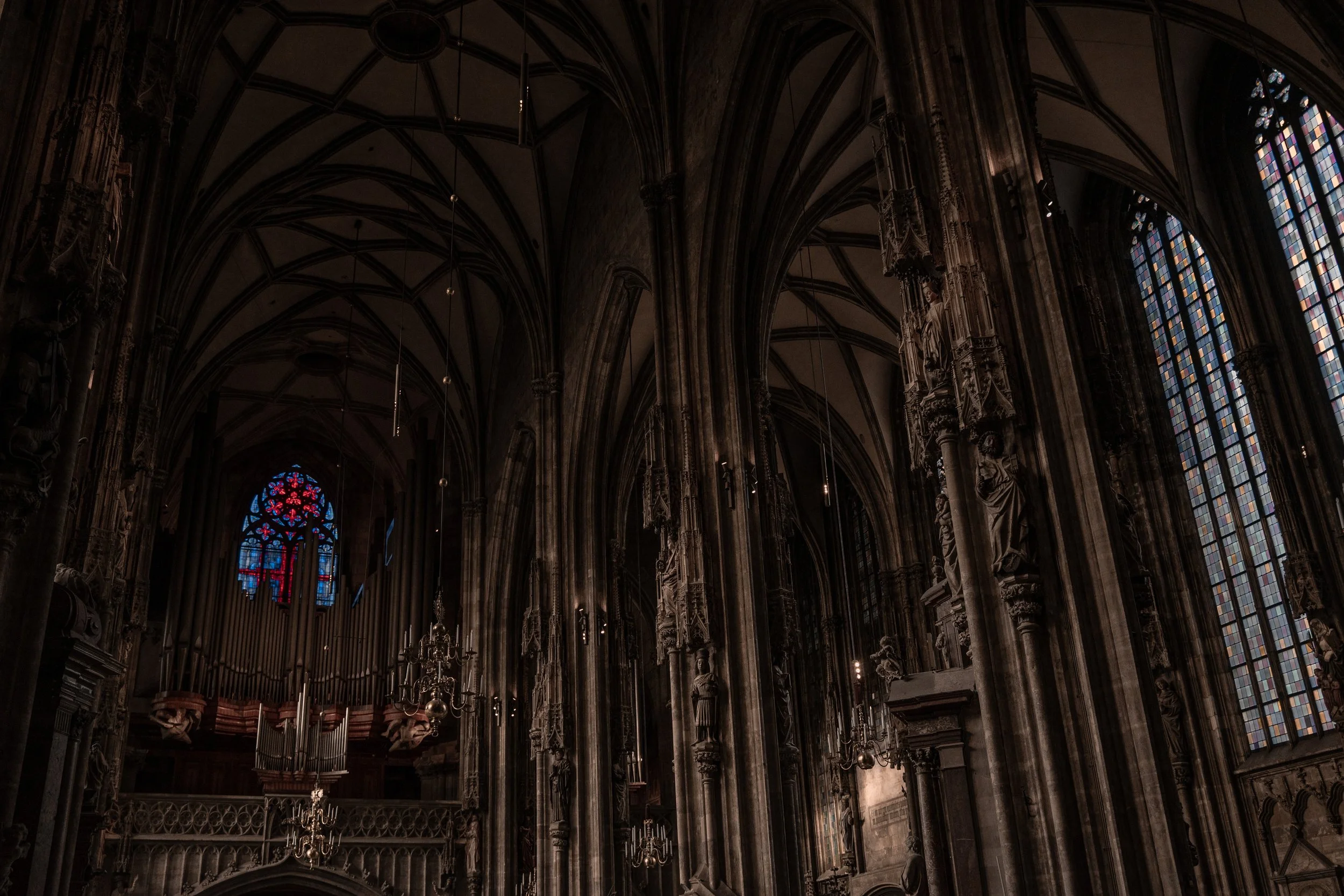
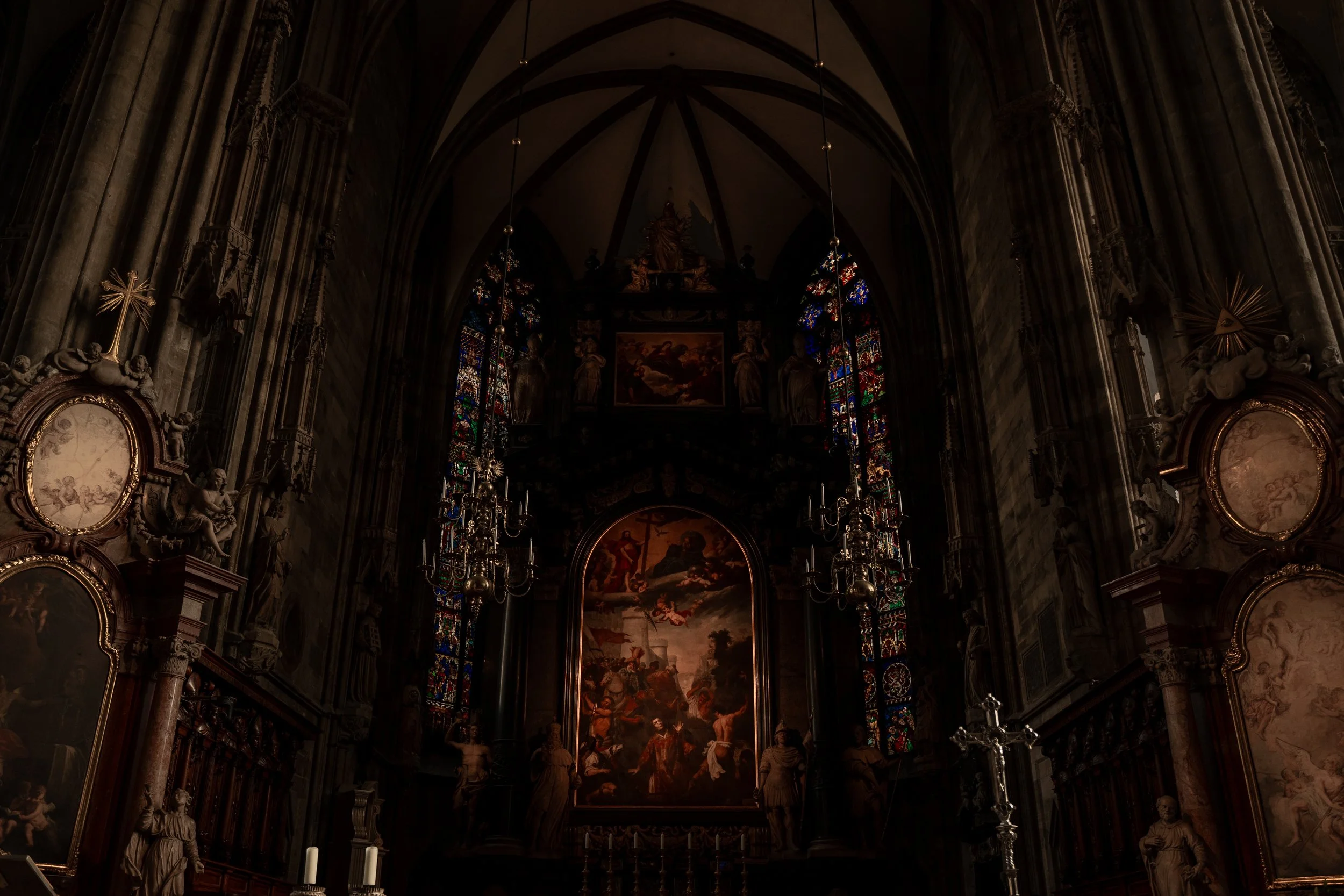
As you enter you are greeted by a cavernous interior where the nave rises like gigantic stone ribs, and the vaults soar overhead in a web of Gothic geometry. Light filters through stained glass in shifting colours, animating the sculptures and casting the space in a sacred glow.
Tickets
Entry to the cathedral is free, but without a ticket you can only view the interior from behind the iron gates at the back or along the left aisle. For the full experience, the all‑inclusive ticket grants access to the main cathedral (including an audio tour), the Catacombs, the North Tower, the South Tower, the Treasury and the Dom Museum. If you prefer to only visit select areas then individual tickets can be purchased at each entrance (cash only). You may visit the sites in any order, but my recommended route is: Cathedral, North Tower, Catacombs, South Tower, Treasury, Dom Museum.
Interior Highlights
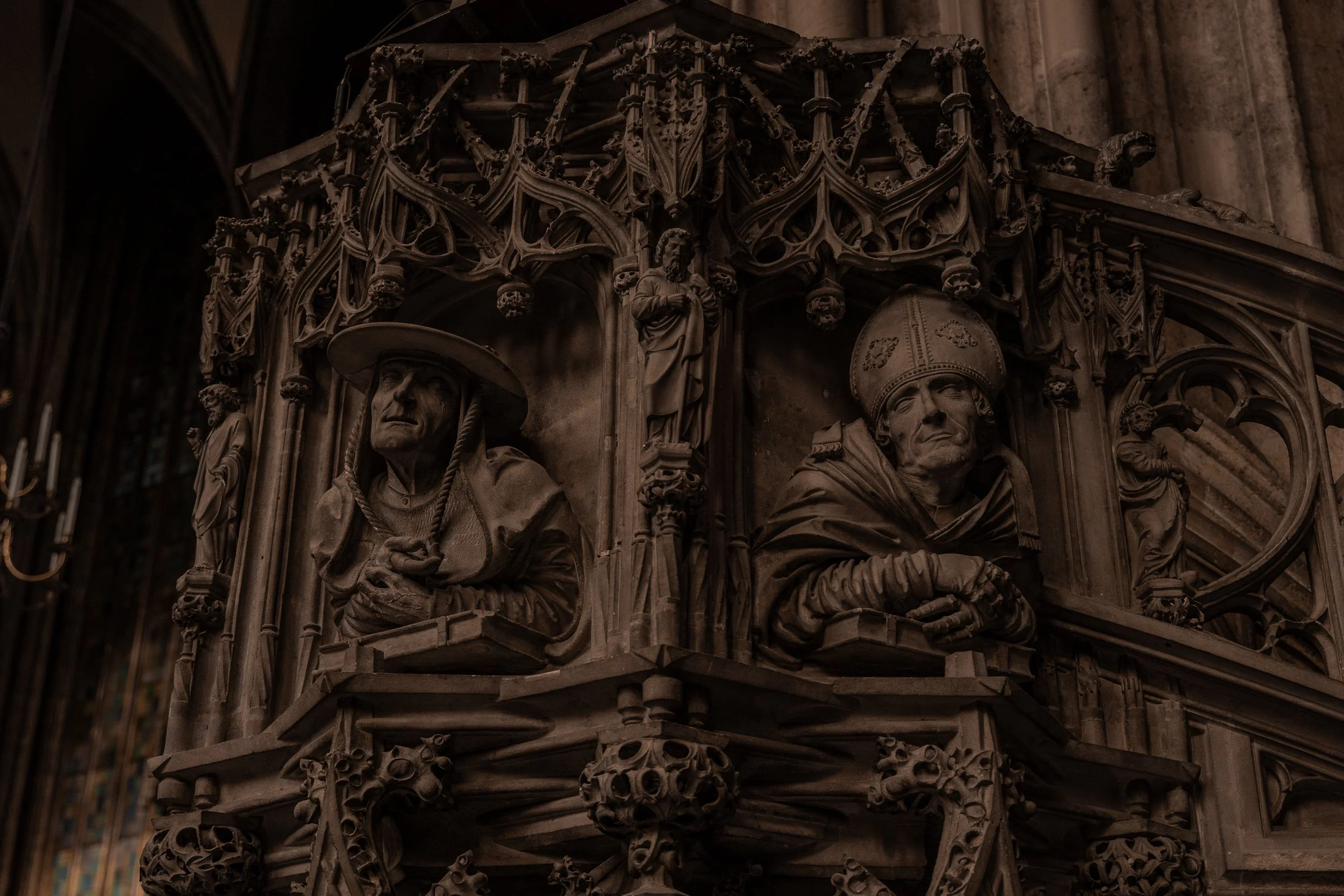
Anton Pilgram’s Pulpit: Decorated with Gothic grotesques: twisted faces and writhing creatures that warn of vanity and mortality. Pilgram famously carved himself peering from a small window, as if whispering across time: remember me, for you too will pass.
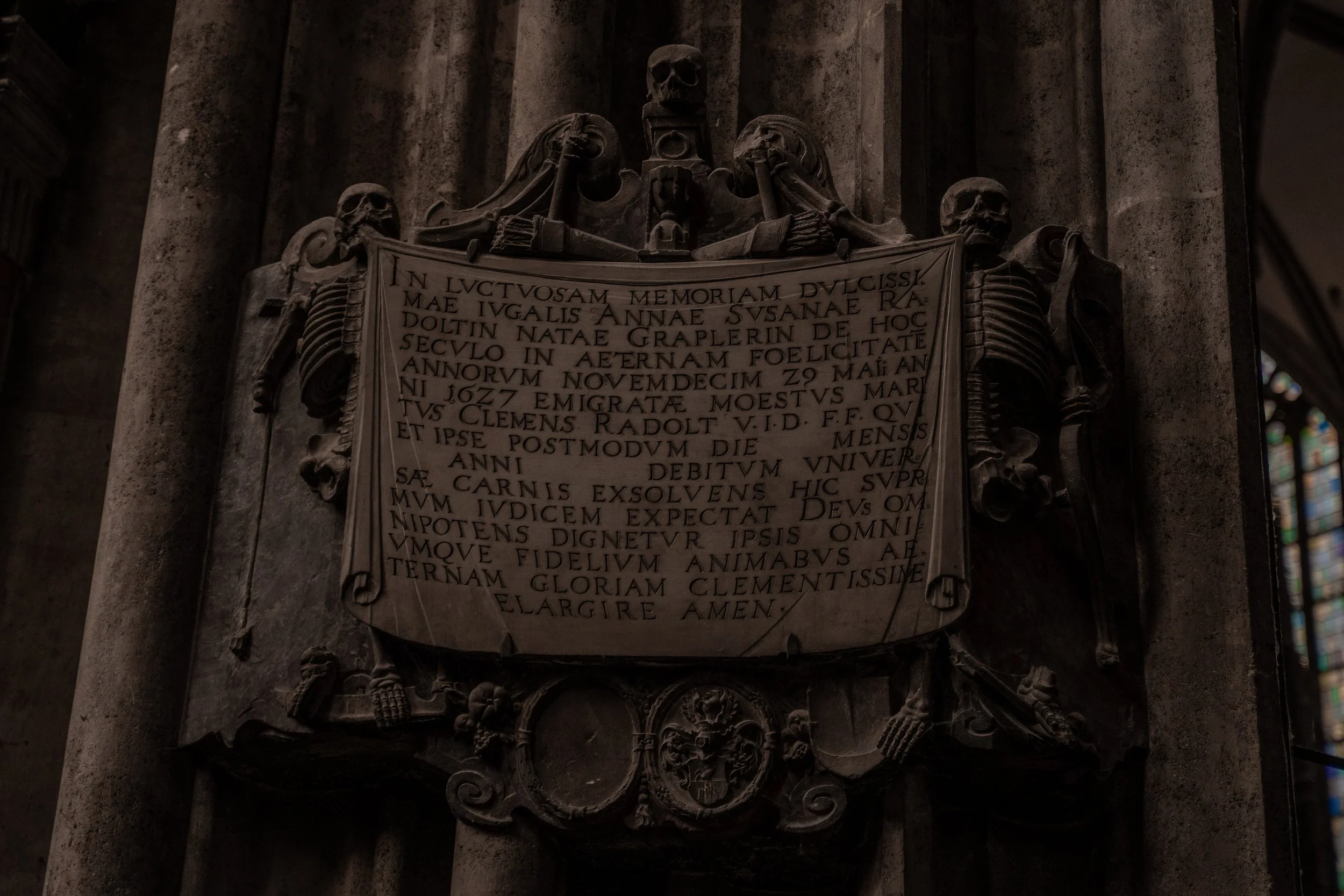
Memento Mori Tombs: Skulls, hourglasses, and skeletal figures adorn the funerary monuments. One striking example along the right aisle shows two skeletons gripping a cloth in their teeth, crowned by a skull and hourglass, a chilling reminder of time’s relentless march.
Medieval Stained Glass: Surviving 14th‑century panels wash the stone in vivid hues. Visit on a sunny afternoon to see the cathedral transformed into a kaleidoscope of colour.
Gothic Organ Case: Another work by Pilgram, richly carved in 1513 and dramatically silhouetted against the nave.
Wiener‑Neustädter Altar: A magnificent, winged altarpiece originally crafted in 1447 for a Cistercian abbey, now one of the cathedral’s greatest treasures.
High Altar: A monumental black‑marble Baroque altar depicting the patron saints of the region.
Habsburg Windows: Portraits of past rulers watching over the city, rendered in glowing stained glass
Night-time Atmosphere: After sunset, the cathedral becomes a sepulchral stage of deep shadows and heightened Gothic drama.
Crypt
Beneath the cathedral lies a hidden necropolis: a crypt holding the remains of approximately 11,000 people, from bishops and nobles to plague victims. Access is only via a guided tour, which leads you through the labyrinth of catacombs, explaining their history and highlighting significant burials.
Check the entrance on the left side of the nave for the next available tour (which runs several times daily). No booking is required, simply wait at the top of the stairs five minutes before the tour begins. Descending the steps feels like entering Vienna’s underworld. The air cools, the light fades, and the silence and shadows dominate.
Highlights include:
The Ducal Chamber: Directly beneath the High Altar, this chamber holds the sarcophagi of Duke Rudolf IV (the “Founder of the Cathedral”) and his family. Rudolf was instrumental in elevating Vienna’s status and initiated the Habsburg burial traditions.
Habsburg Organ Vaults: Here lie the urns containing the organs of many Habsburg rulers. Their bodies rest in the Imperial Crypt, while their hearts were interred separately in the Augustinian Church, a striking example of dynastic ritual.
The Plague Catacombs: Created when Vienna’s cemeteries overflowed during the devastating 17th‑century plague outbreaks, over 30 chambers are piled high with bones. The crypt embodies the Baroque belief that contemplating death was not morbid but spiritually instructive.
The tour is a solemn, unforgettable experience and please note no photography or filming are permitted.
North & South Towers
The North tower was left unfinished at roughly half its intended height and was capped with a Renaissance cupola in 1578. A lift takes you to the top of the tower where you can see the ‘Pummerin bell’, the second‑largest free‑swinging chimed church bell in Europe. From here you can admire the cathedral’s iconic roof, a colourful mosaic of 230,000 zigzagging roof tiles forming the double‑headed imperial eagle and Vienna’s coat of arms.
The South Tower was completed in 1433 and remains Vienna’s tallest medieval structure. Climb the 343 steps to the Türmerstube for striking 360‑degree views over the city and a close look at the cathedral’s intricate roof design.
St. Stephen’s Cathedral is not simply a landmark, it is a treasury of contrasts: light and shadow, salvation and decay, ascent and descent. A visit allows you to encounter Vienna’s Gothic soul, a place where life and death intertwine.
Address: Stephansplatz 3, 1010 Wien, Austria