
St. Gereon's Basilica
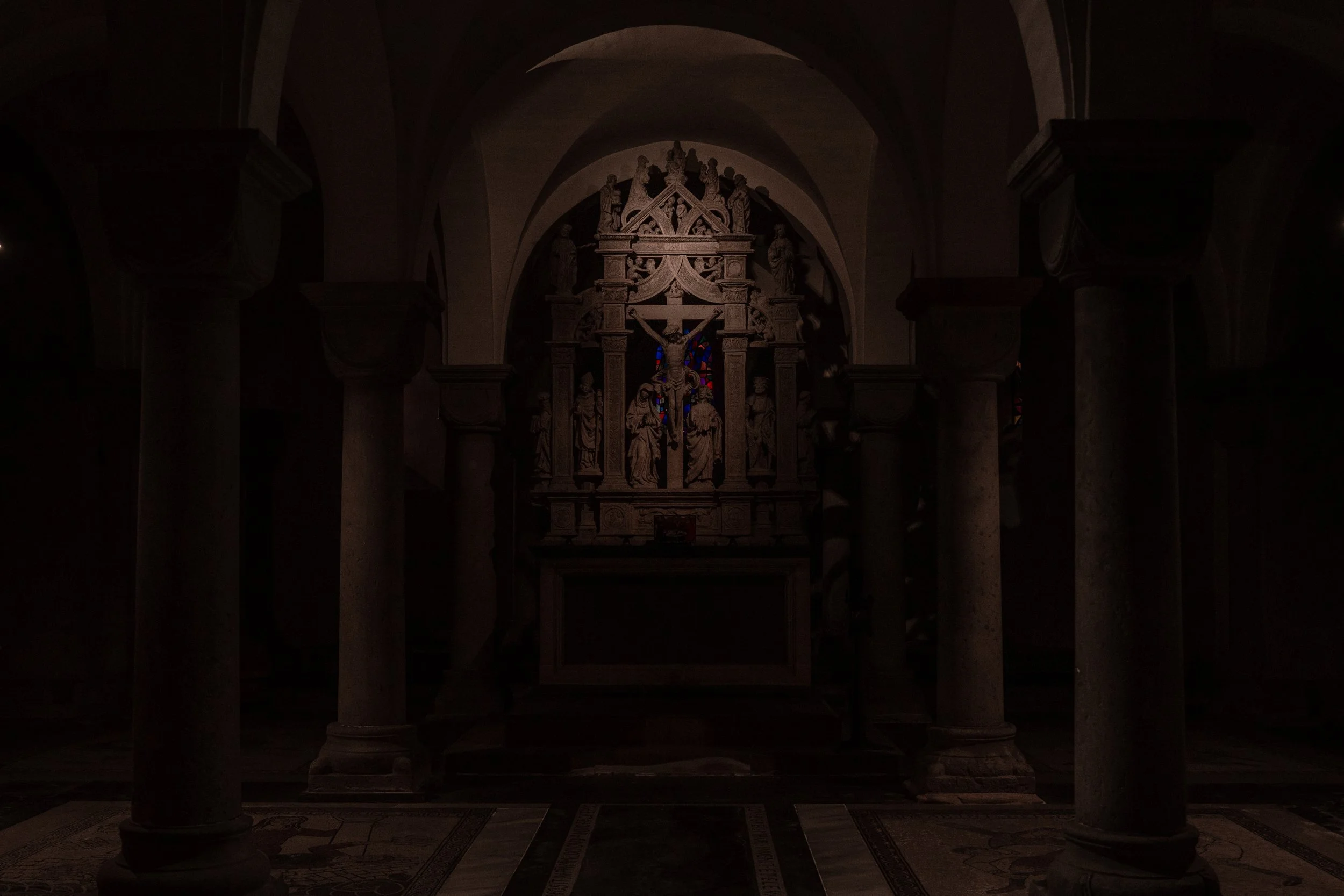
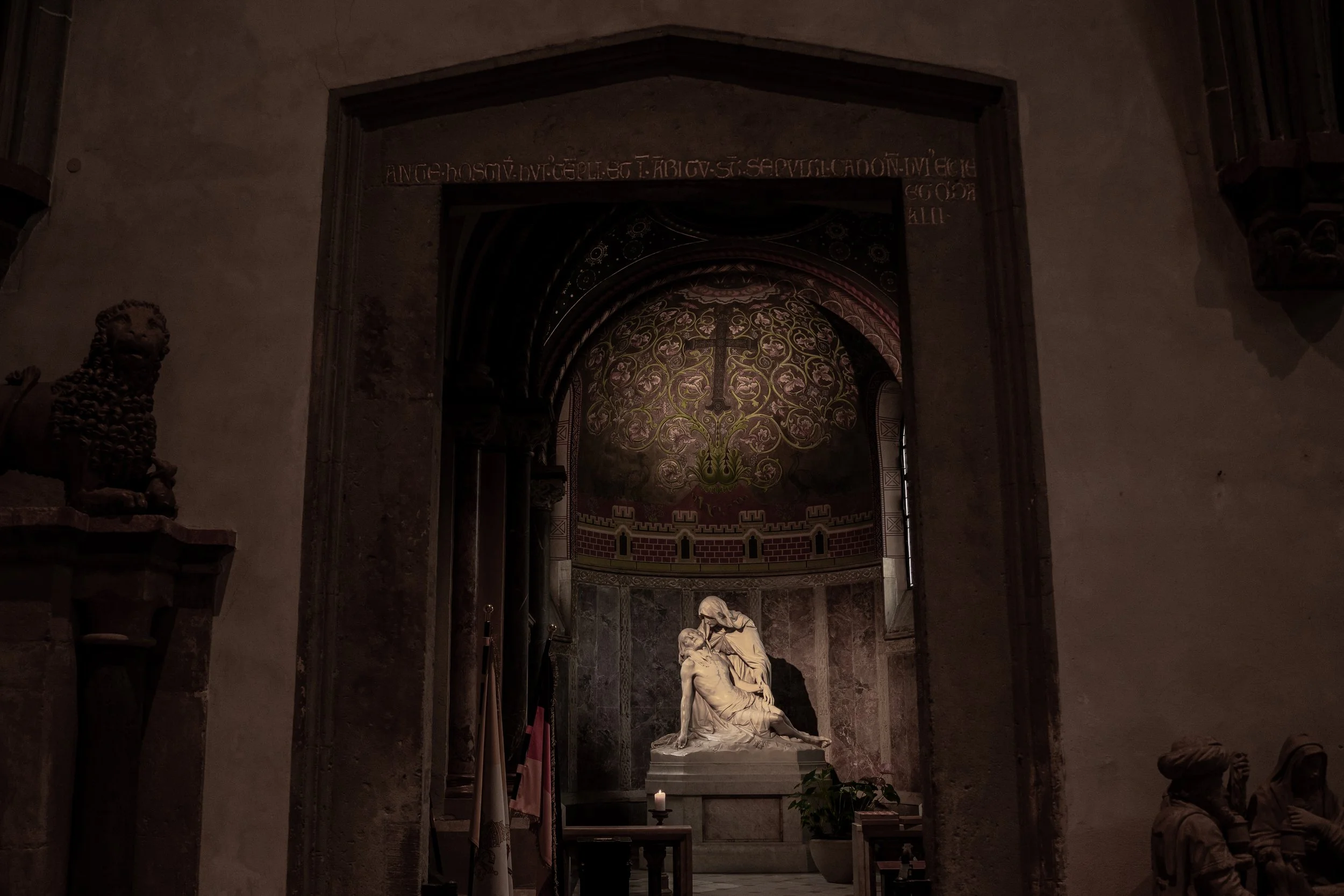
The location now occupied by St. Gereon has been in use since late antiquity. During this period, an oval-shaped building was constructed over a Roman burial site, though its exact purpose is still unknown. Evidence of the structure’s early history can be found in one of the apses, where a small fragment of its original 4th century mosaic pavement remains.
The present-day basilica took shape gradually around the earlier structure. During the beginning of the 13th century, medieval craftsmen built upon the late-antique remains, incorporating them into a newly constructed ten-sided nave. This unusual decagonal form has since become a defining characteristic of St. Gereon. The structure consists of four levels and reaches roughly 34.5 metres in height, while the interior extends around 21 metres across. High rows of narrow lancet windows allow daylight to enter the upper part of the building and the thick masonry retains the distinctive angular form established during the medieval period.
The church continued to expand throughout the medieval period, with new sections added at different points in its development. A choir and crypt were introduced during the 11th century, while an apse was added in the following century. Further construction took place during the 13th and 14th centuries, when features such as the decagonal nave, baptistery and sacristy were incorporated into the complex. As a result, the building reflects a long process of architectural development rather than it belonging to one particular phase of construction.
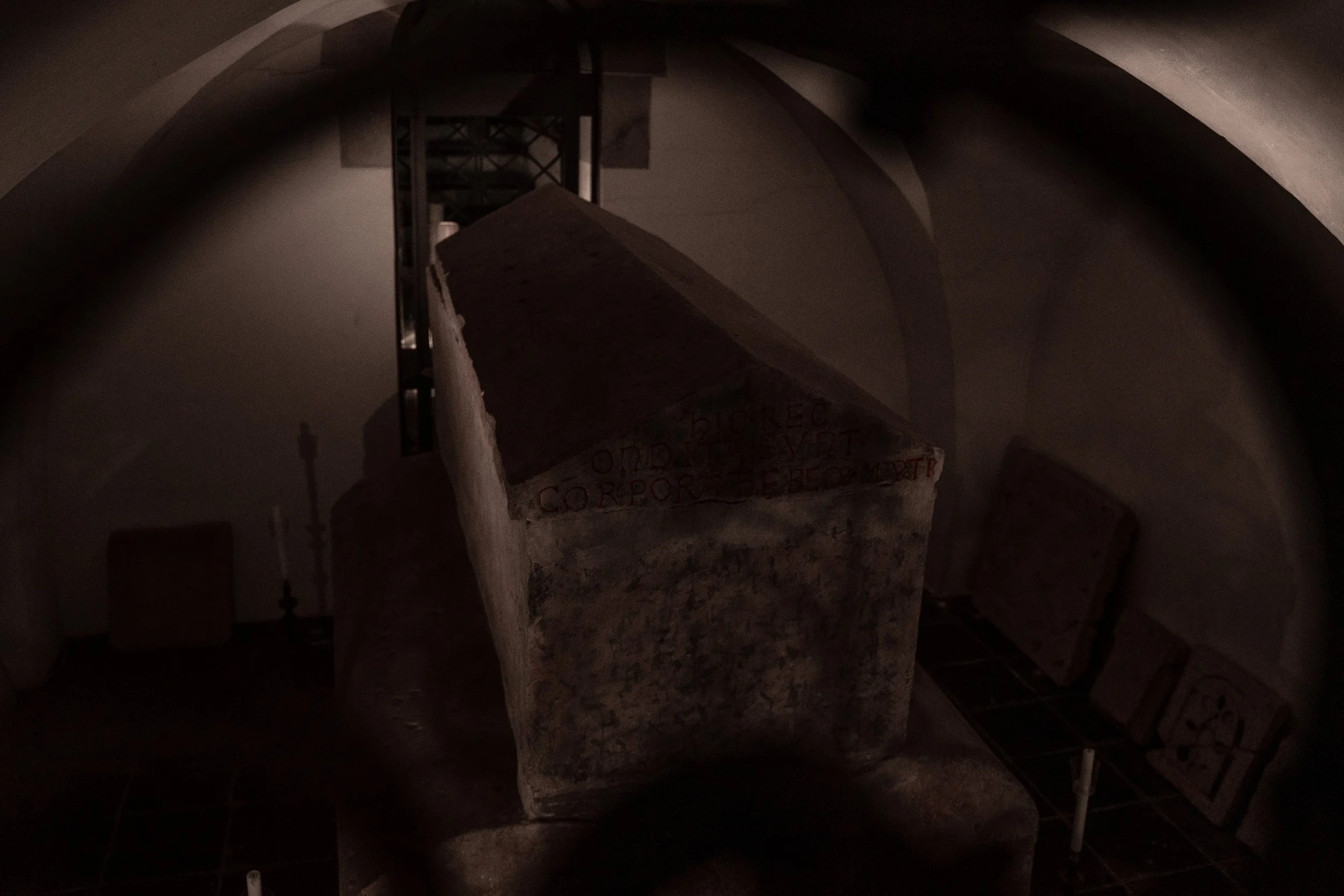
Located beneath the basilica, the crypt is amongst the best-preserved elements of the medieval complex. The space retains several significant features, including 12th-century mosaic decoration, Romanesque paintings on the ceilings and an altar made from tuff stone, dated to 1530. The sarcophagus within the crypt is traditionally regarded as the burial place of St. Gereon. According to the established tradition associated with the basilica, his remains were placed here following his martyrdom in the early 4th century.
The sarcophagus has played an important role in the history of the church acting as a centre of pilgrimage and religious devotion. Although there is no conclusive evidence confirming that it contains his original remains, the connection between the tomb and the saint has been preserved through centuries of tradition.
St. Gereon is traditionally described as a Roman soldier who was put to death around 304 AD for refusing to participate in the persecution of Christians. His legend is also connected to the object known as the Blood Column, situated close to the entrance of the basilica. Medieval accounts claim that Gereon’s blood was spilled onto the granite column following his execution, which was subsequently believed to possess the ability to determine whether a person was guilty or innocent when standing before it. Another story links the column to the Merovingian ruler Theoderic, who was said to have died there after murdering members of his own family. These accounts form part of the basilica’s longstanding legends.
In the grounds beside the basilica, a large sculptural representation of St. Gereon’s head can also be found!
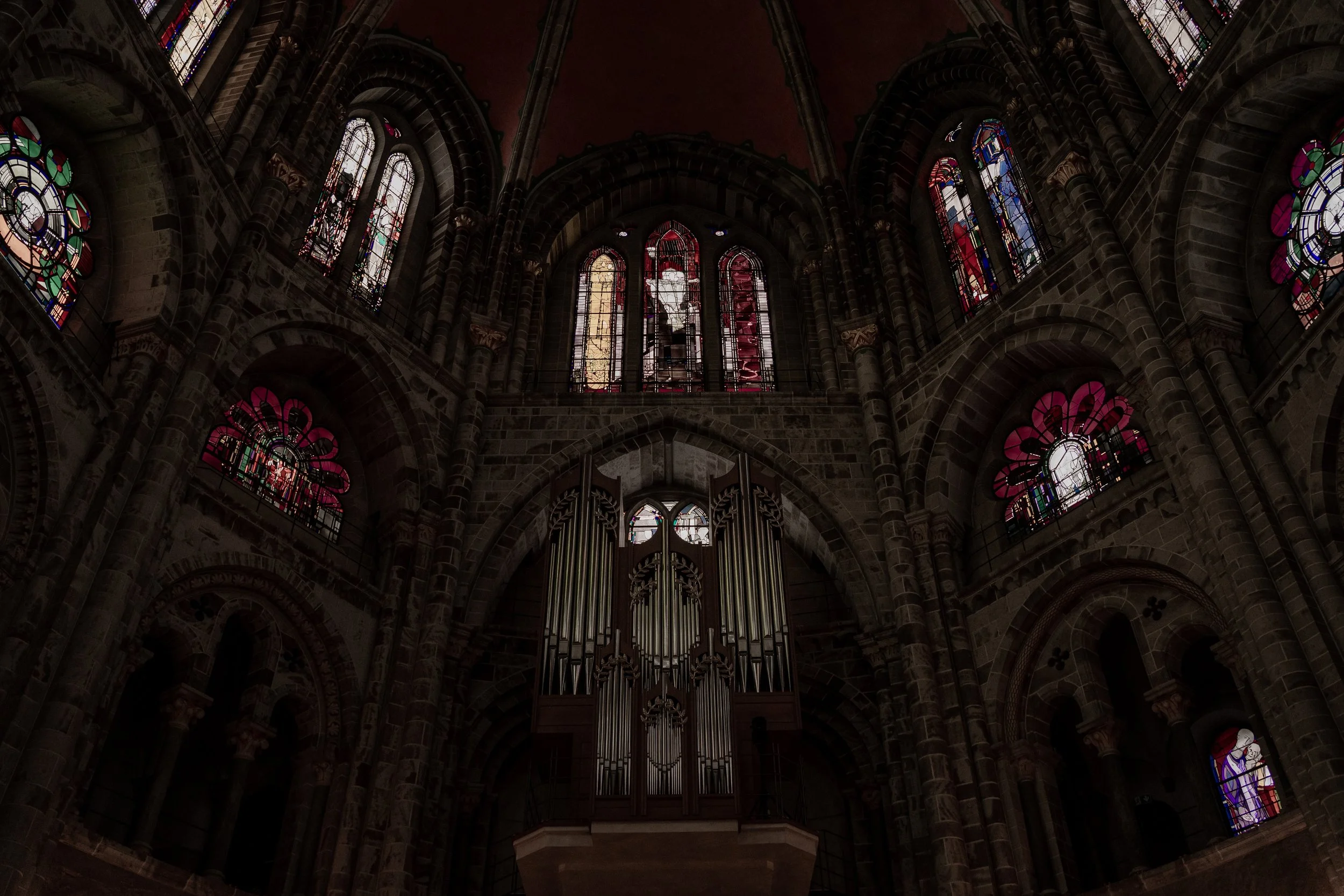
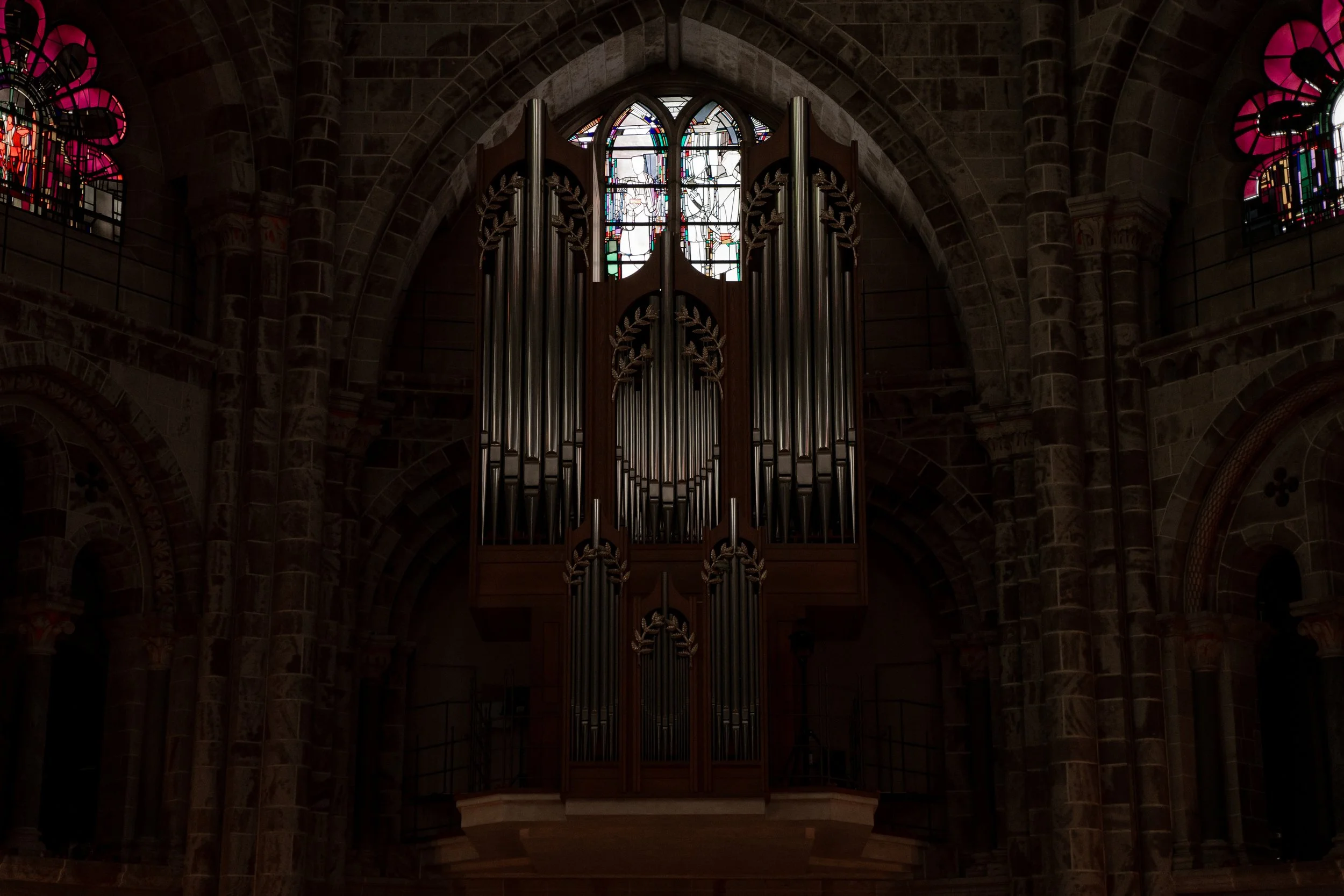
The basilica suffered considerable damage during the Second World War, leading to a lengthy programme of restoration. St Gereon as it appears today is consequently a combination of surviving medieval structures and features introduced or repaired during the modern conservation process. One of the most striking elements of the interior in my opinion is its stained glass. The windows fill the space with vivid tones altering the appearance of the light as it falls across the stonework. Much of this glass belongs to the basilica’s post-war restoration and provides a clear visual contrast with the earlier Romanesque fabric. Rather than recreating the medieval interior in its original form, the windows represent a later stage in the church’s history and demonstrate how the building continued to develop artistically following the wartime damage.
Address: Gereonskloster 2, 50670 Köln, Germany