
Roman Tomb Köln-Weiden
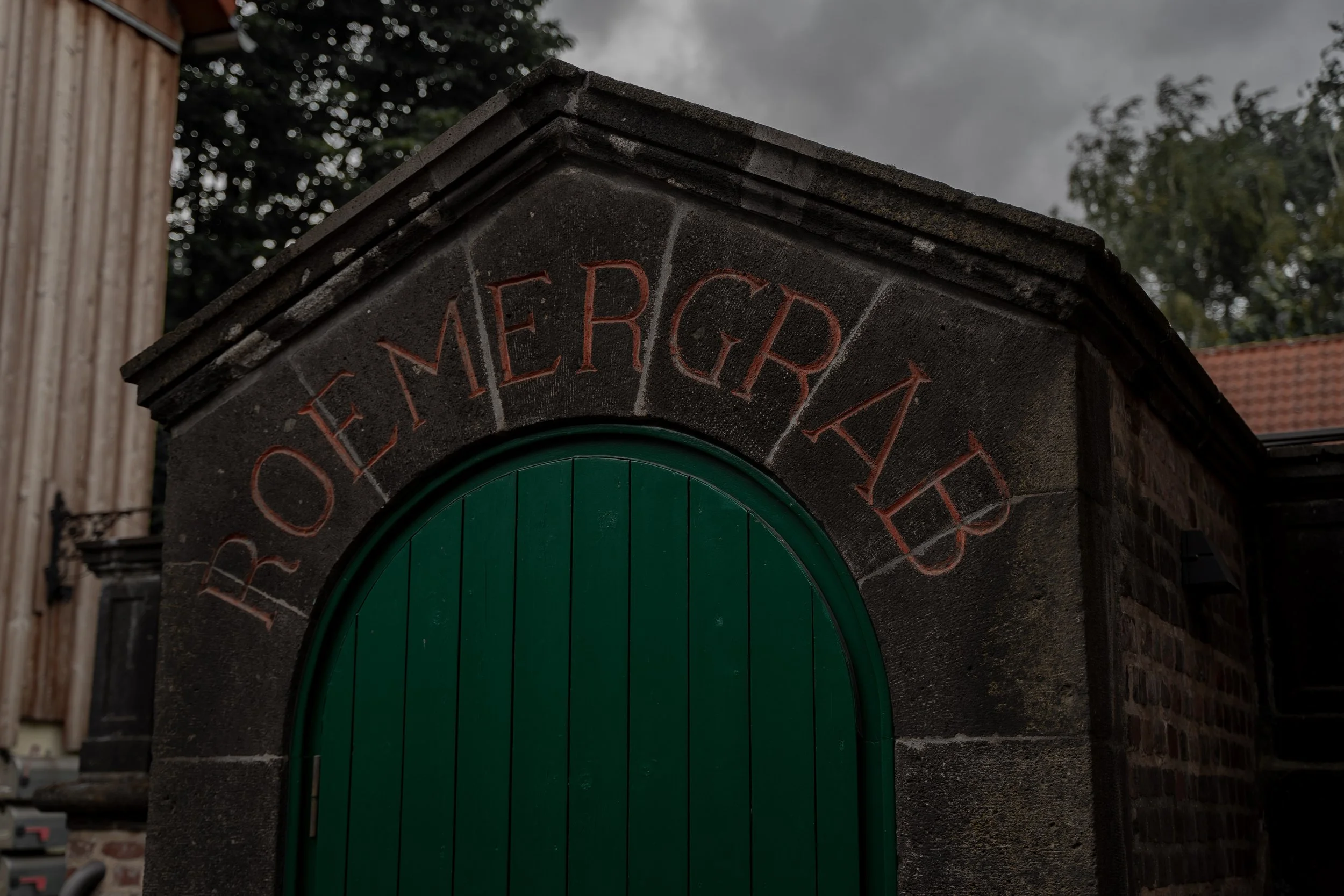
On the western edge of Cologne and right beside the busy Aachener Straße, stands a Roman monument that is remarkably easy to miss. Surrounded by modern roads, trams and a largely suburban neighbourhood, the site gives little indication of what lies beneath the present day street. Yet below this contemporary setting is one of the best preserved Roman funerary chambers in Germany.
Built during the 2nd century AD, the tomb was commissioned by a prosperous family whose rural estate was probably situated nearby. Although their villa has never been conclusively identified, the impressive scale of the tomb and the quality of its materials indicate that its owners were a wealthy and socially prominent household.
The location of the tomb was closely connected to the Roman road network. It was built beside the Via Belgica, an important route linking Cologne and the Rhineland with regions further west. During the Roman period, roads beyond urban settlements were commonly lined with graves and funerary monuments, as burial within towns was generally restricted.
For an affluent landowning family, placing such a substantial monument beside a major road carried both practical and symbolic importance. The tomb provided a place for burial, but it also indicated the family's wealth and social standing to those travelling along the route. Its prominent position helped ensure that the memory of the deceased remained visible within the landscape, reflecting the Roman belief that the dead could continue to have a presence among the living.
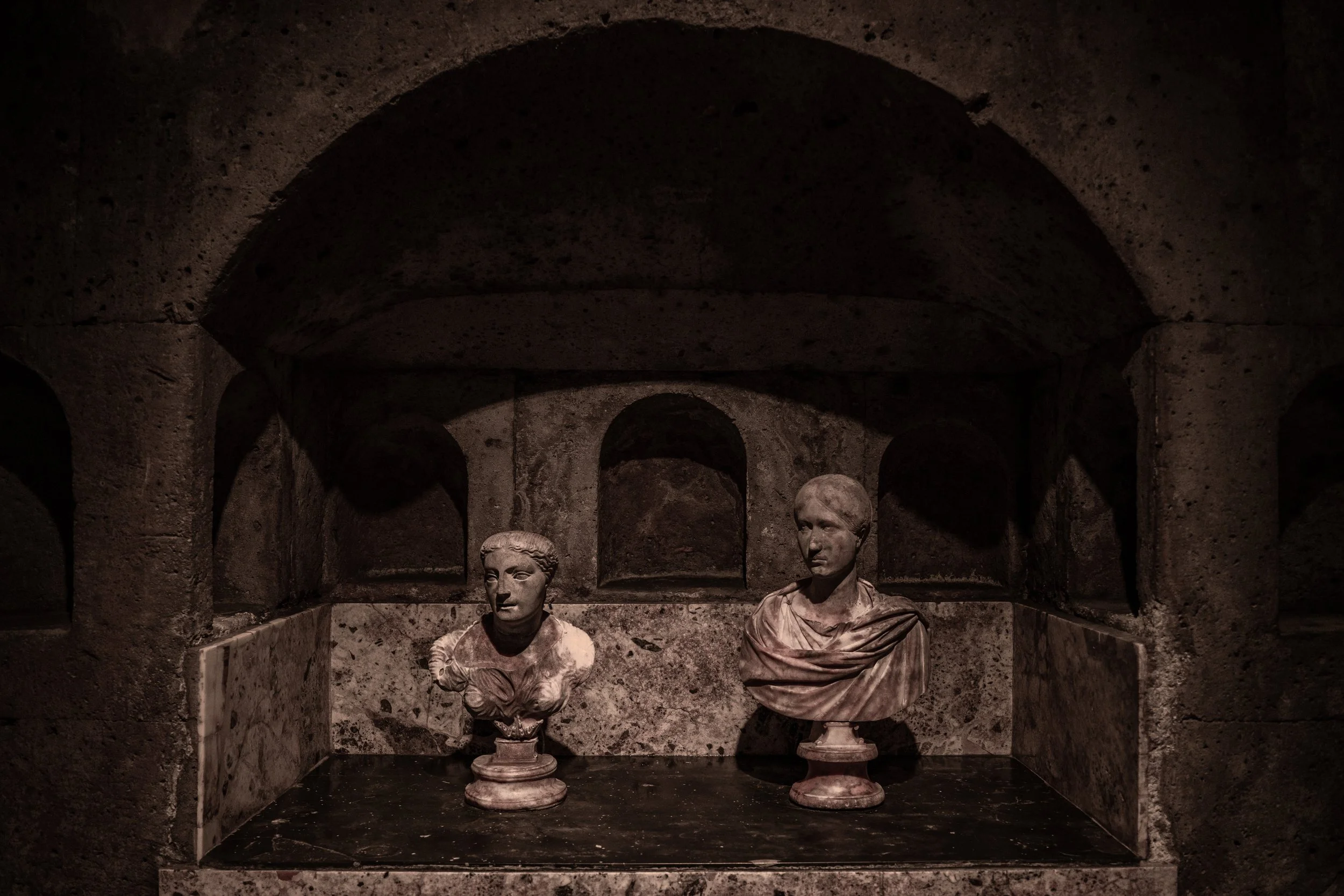
The burial chamber lies approximately six metres below the modern street level and measures around 3.6 by 4.5 metres. Its walls were built from large blocks of tuff, a pale volcanic stone widely used in Roman construction across the Rhineland.
Inside, you will find large wall niches, shaped like klinai, or couches. These were originally lined with coloured marble, giving the chamber a richly decorated interior. Smaller recesses, known as loculi, were probably used for offerings or objects associated with funerary ceremonies. Together, these features reveal the importance placed on both the appearance of the burial space and the rituals carried out within it.
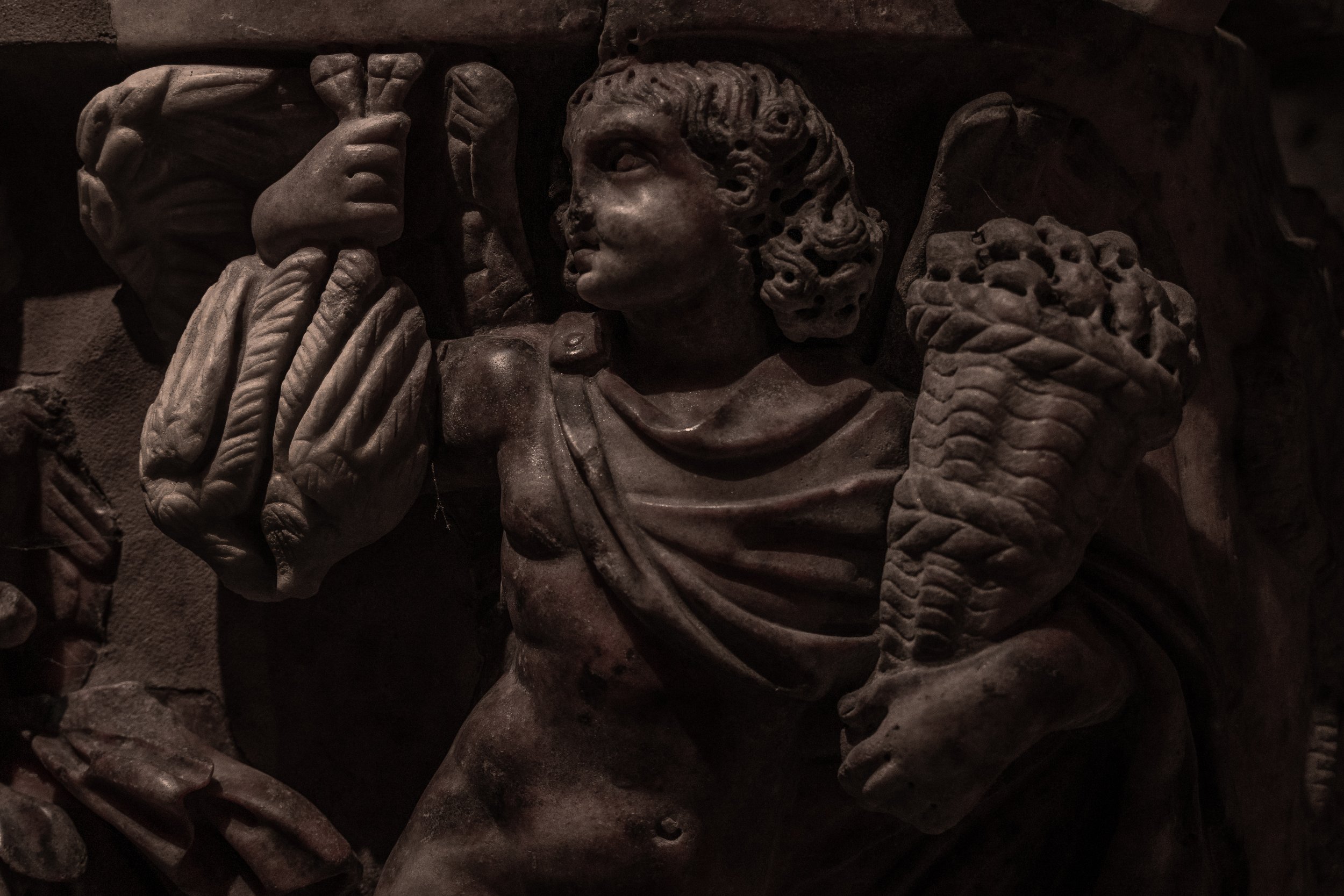
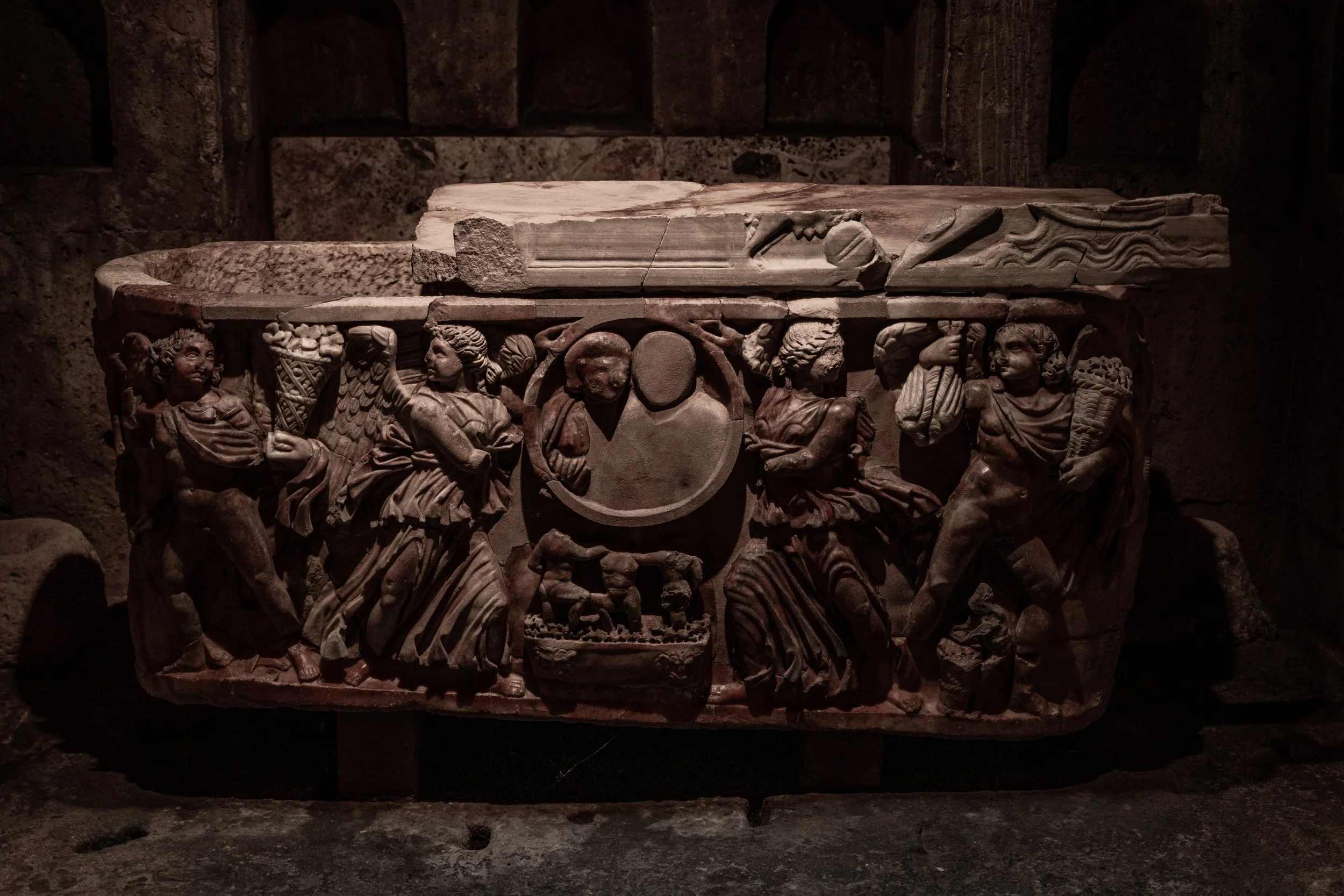
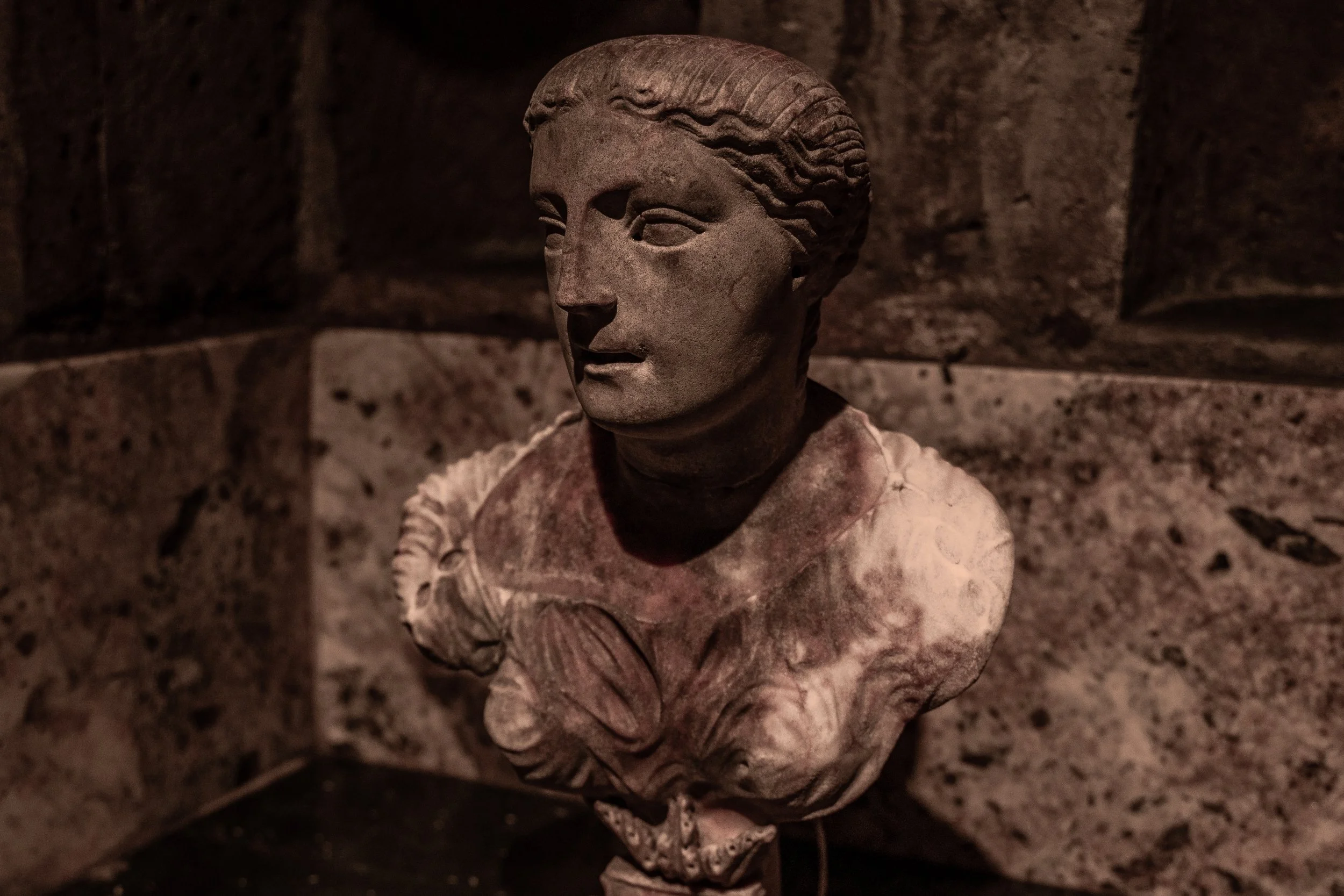
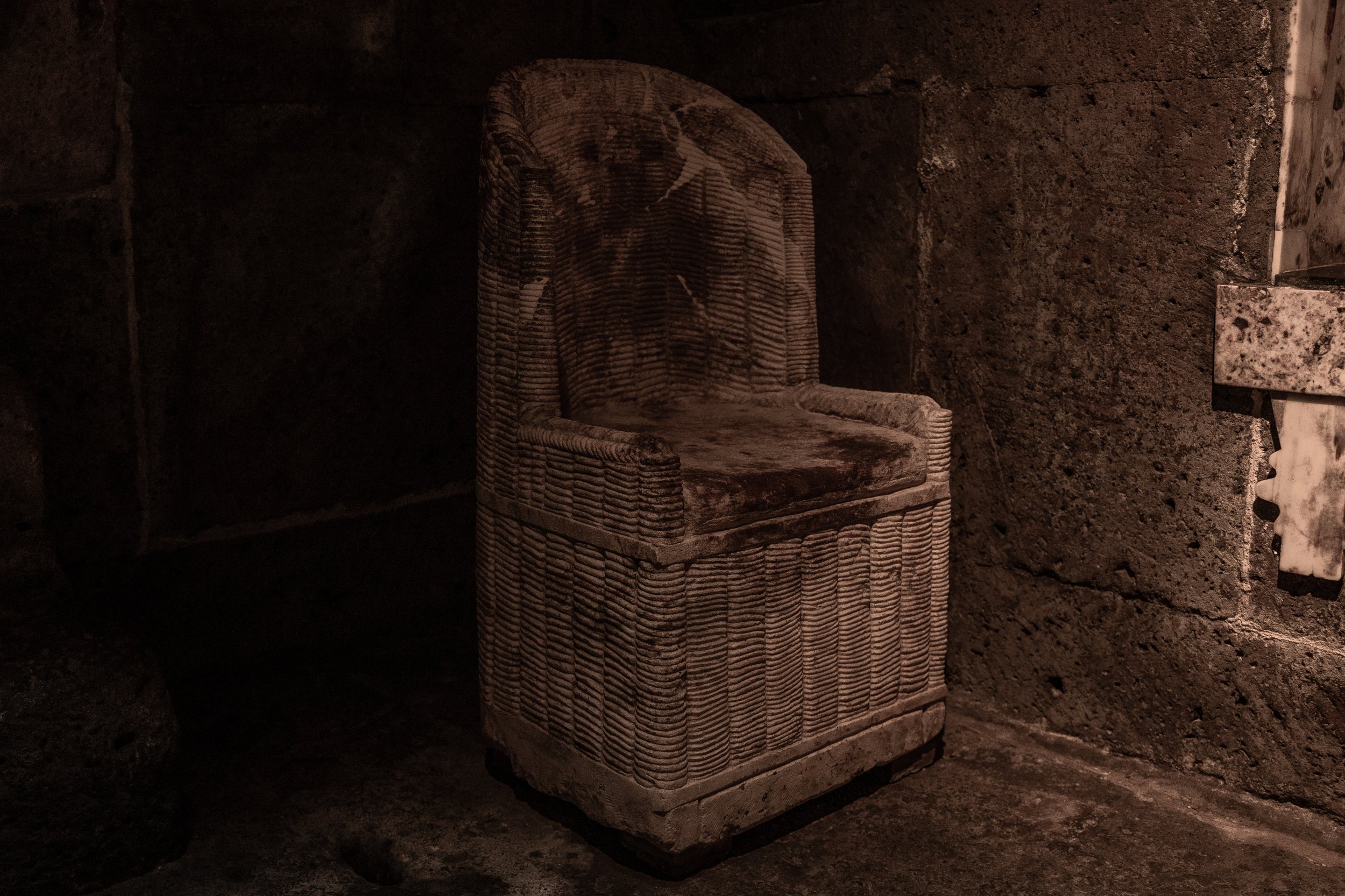
Two limestone chairs were also discovered, their surfaces carved to imitate woven or cane furniture, suggesting that the interior was designed to resemble a furnished room. Rather than functioning solely as a place of burial, the chamber appears to have been created as a carefully arranged space for remembrance and ritual. Among the most significant discoveries were the fragments of an elaborately decorated Carrara-marble sarcophagus. It belonged to a type commonly known as a ‘Four Seasons’ casket. At its centre, a medallion depicts the deceased couple, supported by winged figures of Victories, while representations of the four seasons surround the composition. The use of Carrara marble, which was quarried in Italy and transported across the Roman Empire, provides evidence of both the family's considerable wealth and the extensive trade networks of the period.
Roman funerary art frequently expressed ideas of family identity, prosperity, social status, the passage of time and the preservation of memory. The objects discovered within the Weiden tomb therefore offer valuable evidence not only of Roman burial customs, but also of the wealth, identity and aspirations of the family who commissioned the monument.
For centuries, the tomb disappeared from view and it was only rediscovered in 1843 during building work at the site. The significance of the discovery was quickly recognised and the tomb was subsequently placed under public ownership. In 1846, a protective building was constructed above the Roman remains, helping to safeguard the burial chamber prior to its opening in 1848. The site has continued to develop with the former keeper's house now a visitor and education centre. This provides an opportunity to explore the history and archaeology of the tomb before or after the tour of the burial chamber itself.
Address: Aachener Str. 1328, 50859 Lindenthal, Germany