
Schloss Drachenburg
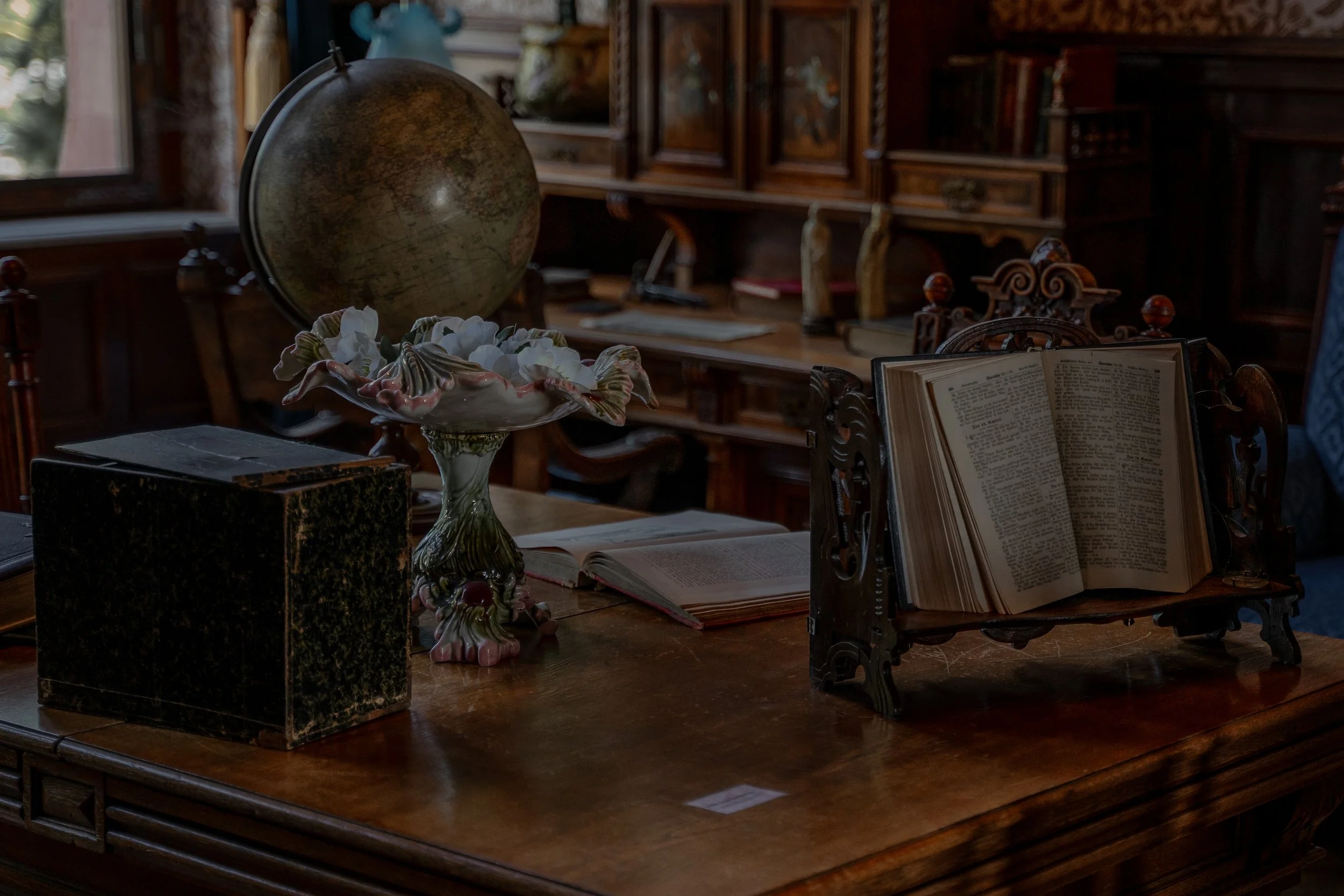
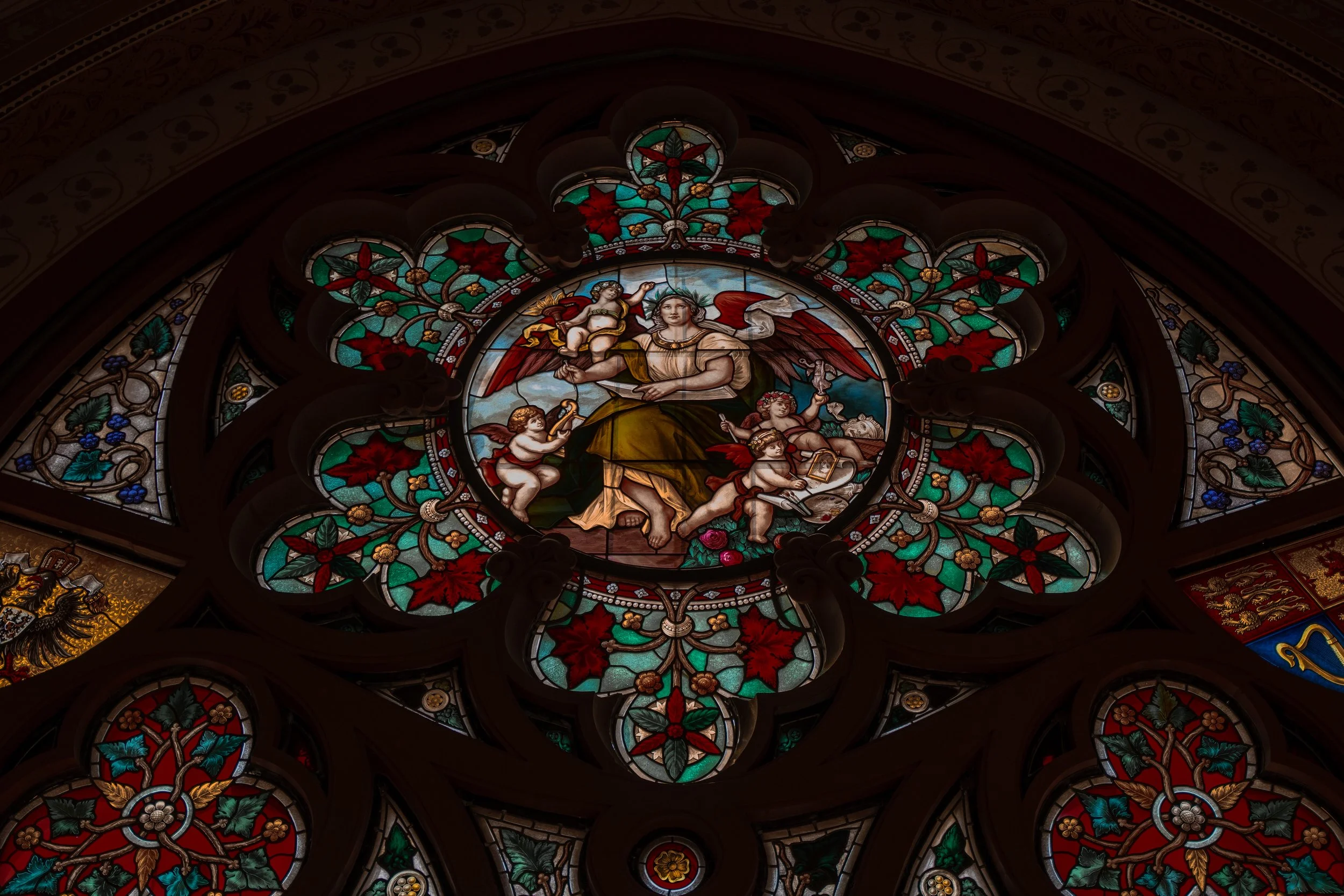
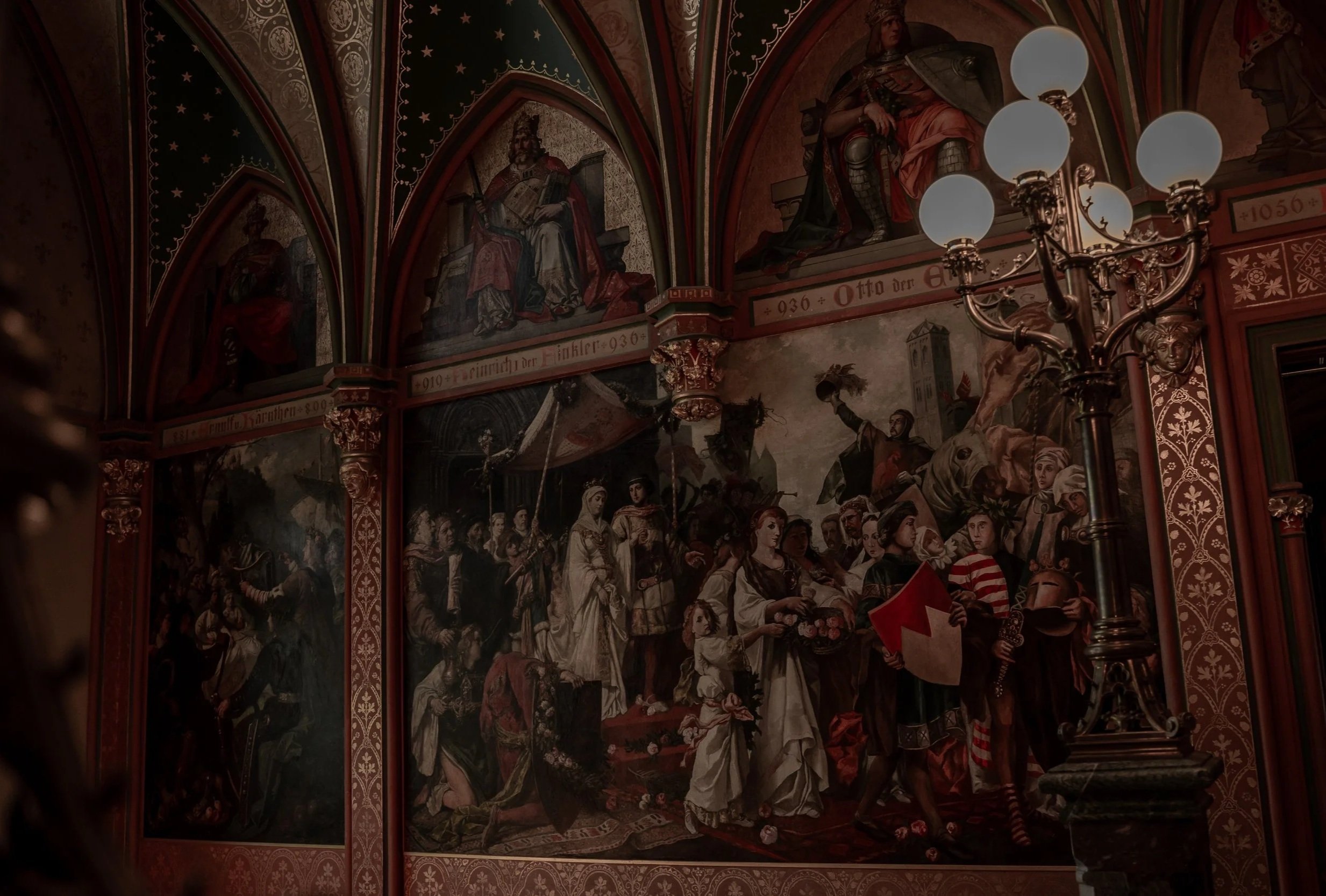
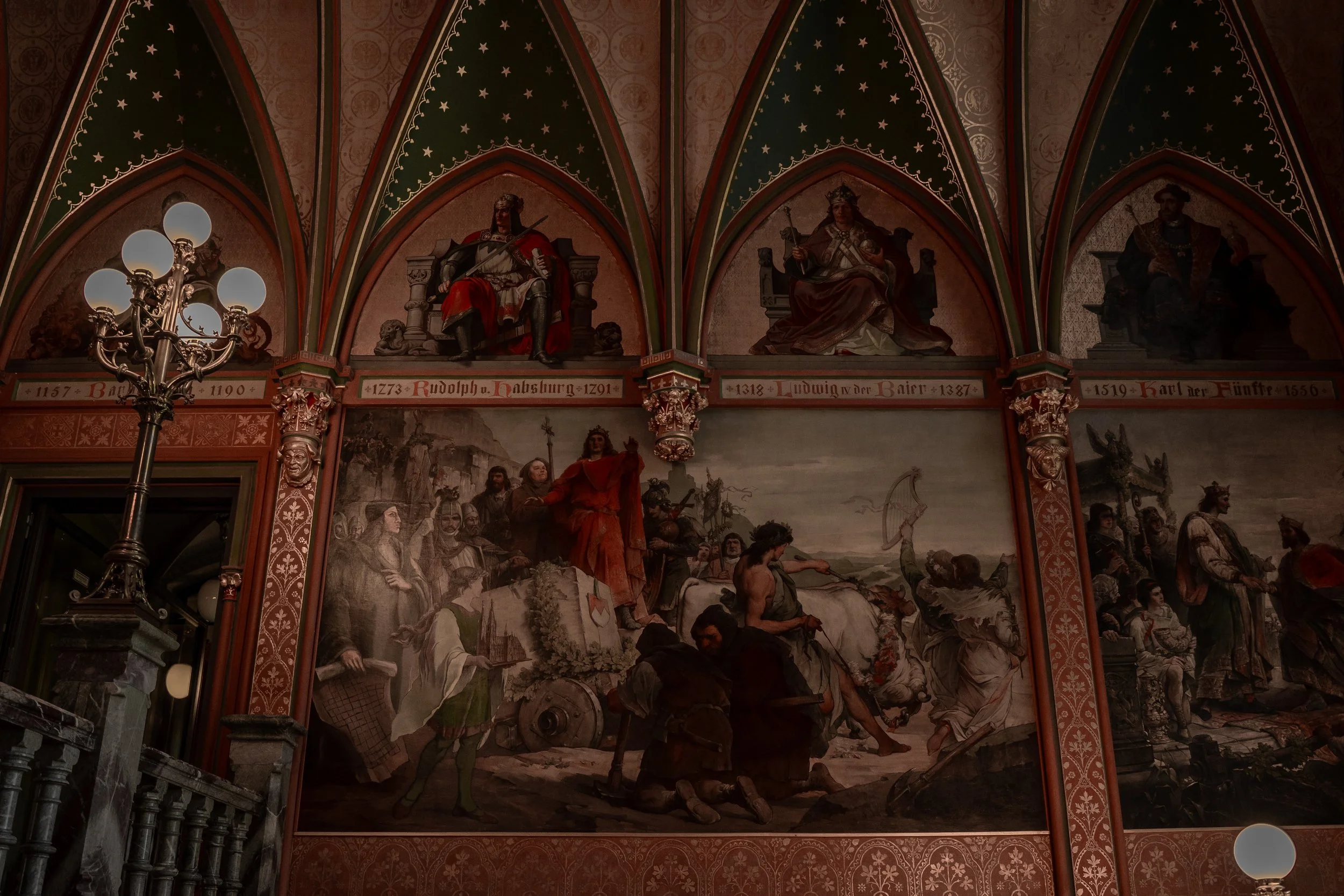
Perched high above the Rhine and surrounded by the wooded hills of the Siebengebirge, Schloss Drachenburg resembles something straight from a Gothic fantasy. Turrets and pointed arches rise above the trees whilst ornate stonework covers its façade, creating the illusion of a romantic medieval castle. Although, in reality, Drachenburg is much younger than it appears.
The castle was constructed between 1882 and 1884 for Stephan von Sarter, a wealthy Bonn-born financier who, remarkably never actually lived in the extravagant residence he commissioned. It was later passed on to his nephew Jakob Biesenbach, who opened it to visitors, thus beginning a long history of changing uses. Drachenburg became a resort and later a boys’ boarding school before being taken over by an ‘Adolf Hitler School’ during the Second World War. The castle subsequently came under fire from the enemy, resulting in damage to the building, which saw much of its original stained glass destroyed.
By the 1960s, Drachenburg had fallen into decline. Murals and furnishings disappeared, sections of ornate wooden panelling were reportedly used as firewood and demolition was even considered. Its rescue began in 1971, when textile merchant Paul Spinat purchased the castle and began restoring it. A much larger conservation programme followed in the 1990s, using historic photographs, postcards and surviving records to reconstruct lost interiors and return the castle closer to its late-19th century appearance.
Architecturally, Drachenburg reflects the 19th century fascination with romanticising the medieval past. Built in the Gothic Revival and wider Historicist tradition, it borrows freely from medieval architecture, with pointed arches, steep roofs, decorative stonework, elaborate windows and soaring turrets creating its dramatic silhouette.
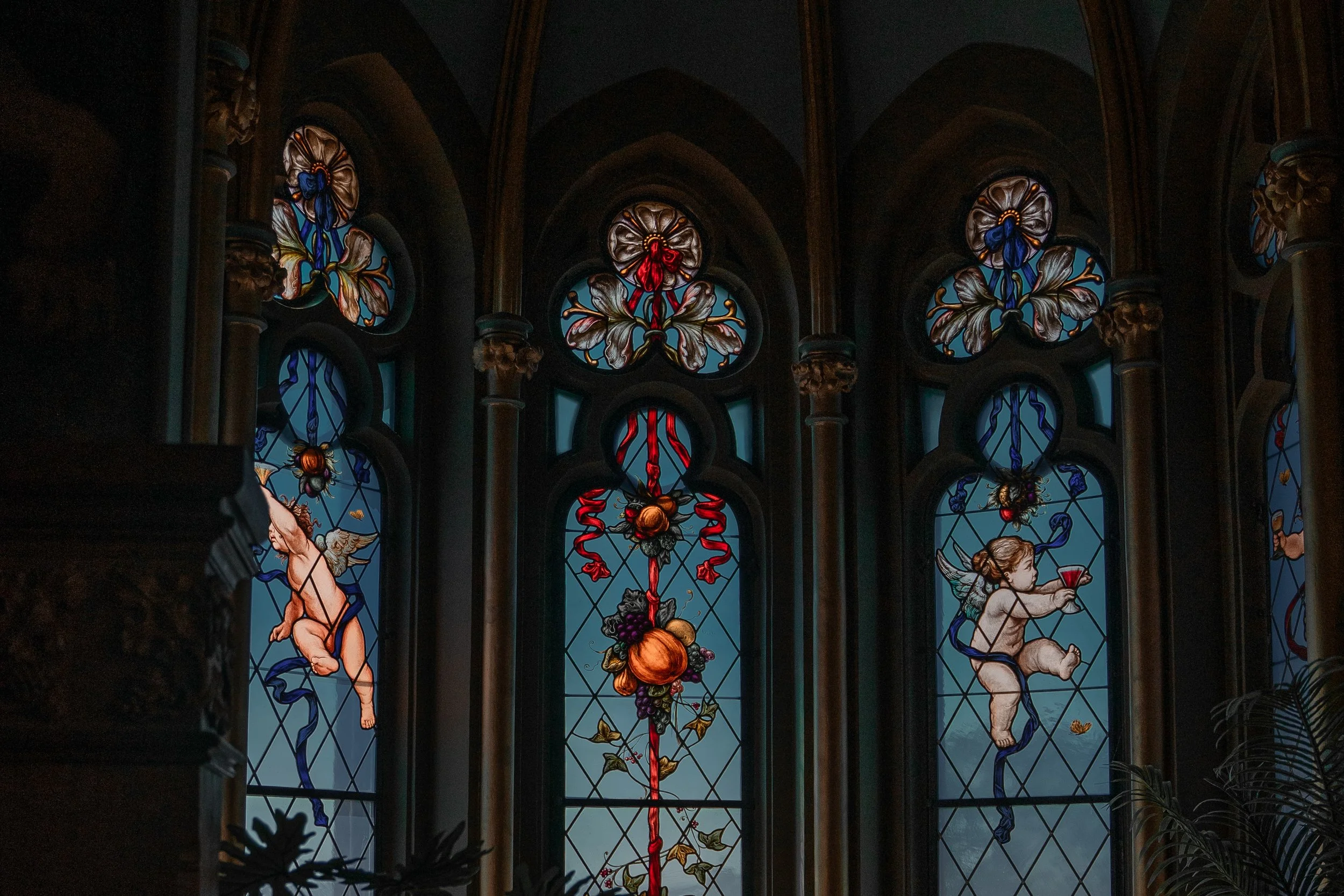
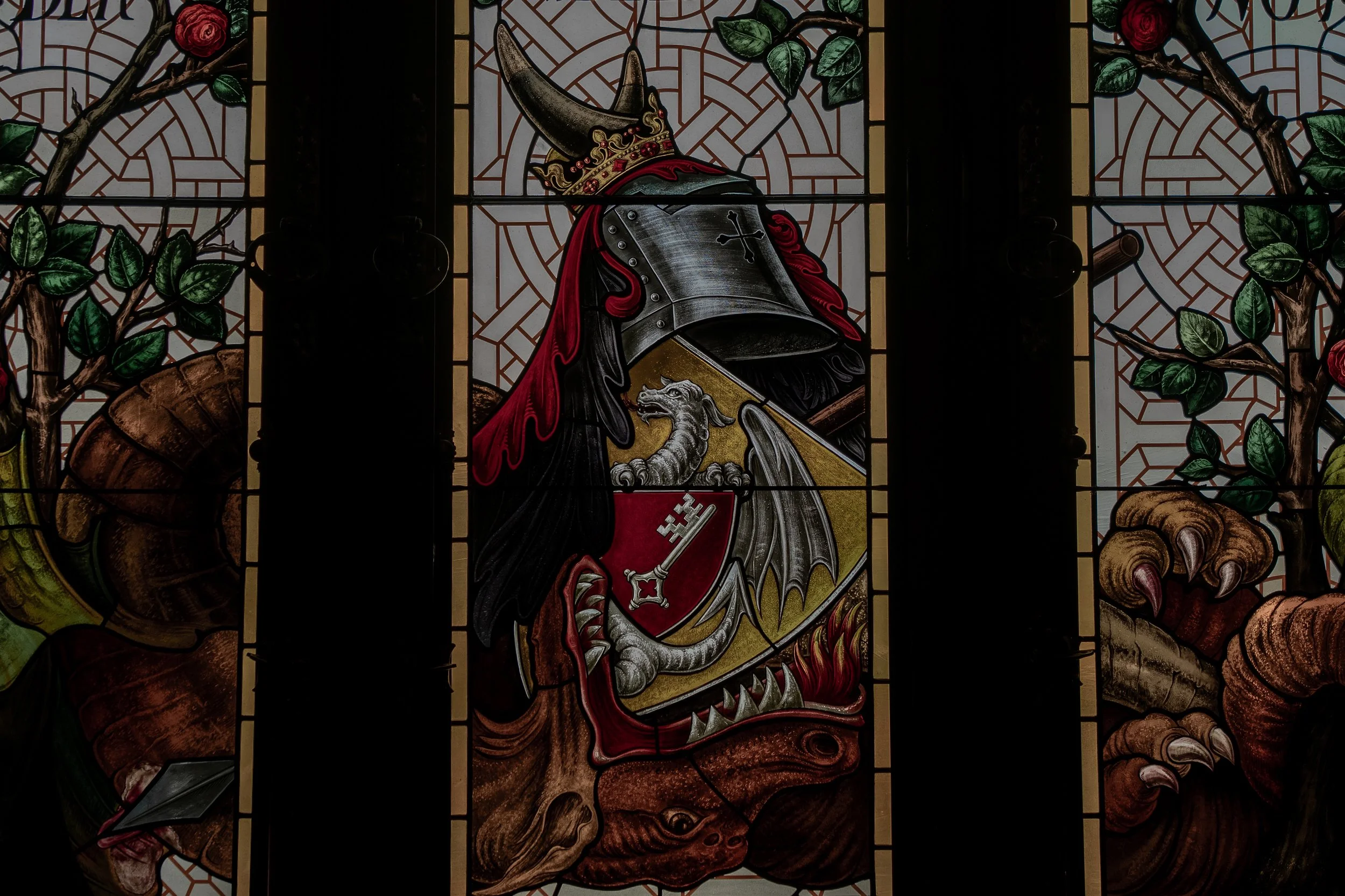
Inside, grand rooms unfold beneath deep, dark timber ceilings, surrounded by carved woodwork, painted walls, murals and stained glass. Look closely at the windows and you’ll find some particularly curious details, including foxes, rabbits and other wildlife alongside fantastical dragons which is especially fitting for a castle sitting beneath the legendary Drachenfels or “Dragon’s Rock”. When sunlight passes through the coloured glass striking tones fall across the rooms, contrasting beautifully with the heavy woodwork and darker interiors.
One of the most impressive spaces is the grand staircase, situated in a beautifully decorated hall featuring frescoes and intricate architectural details. Much of the decoration you see today has been painstakingly restored following decades of damage and neglect.
One of my favourite parts was climbing the 36-metre-high North Tower. Following the staircase upwards eventually brings you out high above the surrounding landscape, with panoramic views across the valley. In fact, on a clear day, you can even make out Cologne Cathedral in the distance!
Schloss Drachenburg sits just below Drachenfels, a mountain steeped in legend and long associated with Siegfried and the dragon-slaying story of the medieval Nibelungenlied tradition. If you continue further up, you’ll reach the ruins of Burg Drachenfels, a 12th century castle that overlooks the Rhine. Unfortunately, I didn’t have enough time to see it, so would recommend allowing for a full day trip if you want to experience both castles. You can continue towards the summit on foot or take the historic Drachenfelsbahn cog railway, which has been carrying visitors up the mountain since the 19th century.
To reach Schloss Drachenburg from Cologne, take the train from Köln Hauptbahnhof south to Königswinter. From here, you have two options for reaching the castle. The easiest is to walk to the nearby Drachenfelsbahn station and take the historic cog railway up the mountain, getting off at the Schloss Drachenburg stop. Alternatively, you can skip the railway and walk from Königswinter up the Drachenfels hillside, following the uphill route through the woodland to the castle. The walk is quite steep, but gives you the chance to approach Drachenburg gradually through the surrounding forest.
Address: Drachenfelsstraße 118, 53639 Königswinter, Germany