
Saint John’s Hospital
Founded in the 12th century, St John’s Hospital is one of the oldest surviving hospital complexes in Europe. For more than 800 years, its medieval walls offered refuge to the sick and poor, as well as pilgrims and weary travellers passing through Bruges.
Life within the hospital was very different from the medical care we recognise today. In the Middle Ages, illness, faith and death were closely intertwined, and tending to the soul was considered just as important as treating the body. Prayer, spiritual guidance and preparation for the afterlife accompanied the limited and often rudimentary treatments available.
Over the centuries, the hospital grew into a sprawling complex of vast communal wards, a church and cemetery, alongside its own brewery, pharmacy, medicinal herb garden and orchard.
If you became ill during the Middle Ages, there were far fewer options for treatment than there are today. Those arriving at St John’s Hospital were offered shelter, basic care and spiritual guidance, but medical intervention could be limited to practices such as bloodletting, treating fractures or administering medicinal herbs. For many patients, faith offered as much hope as medicine. Prayer formed an essential part of daily life within the hospital, while the seriously ill were encouraged to prepare their souls for death.
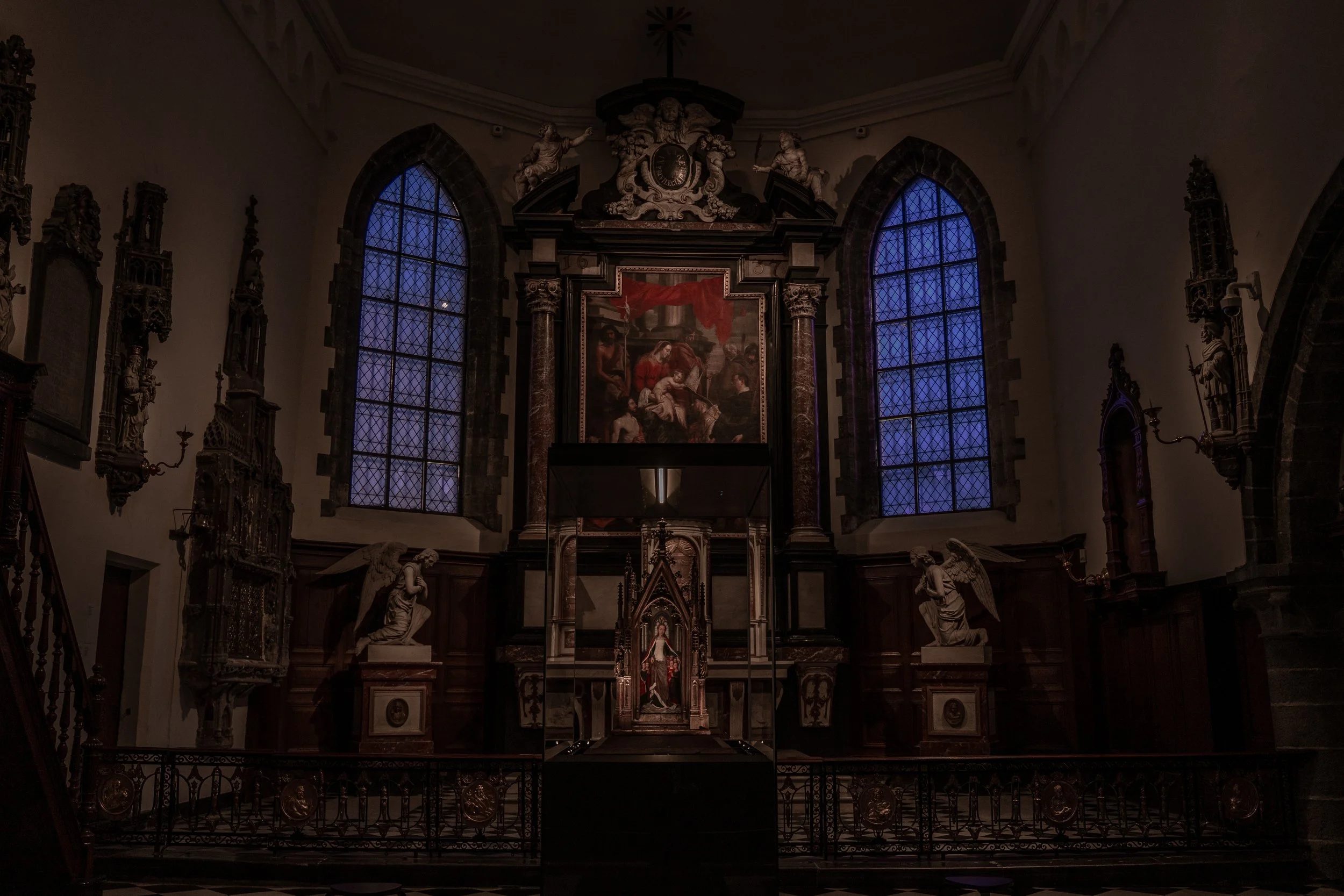
Today, its vast medieval halls have been transformed into a museum, yet the building has lost little of its sombre character. Soaring ceilings, dark timber beams, weathered brickwork and religious artworks give the space an almost otherworldly quality, while its collection reveals a world in which illness, faith and mortality were deeply intertwined.
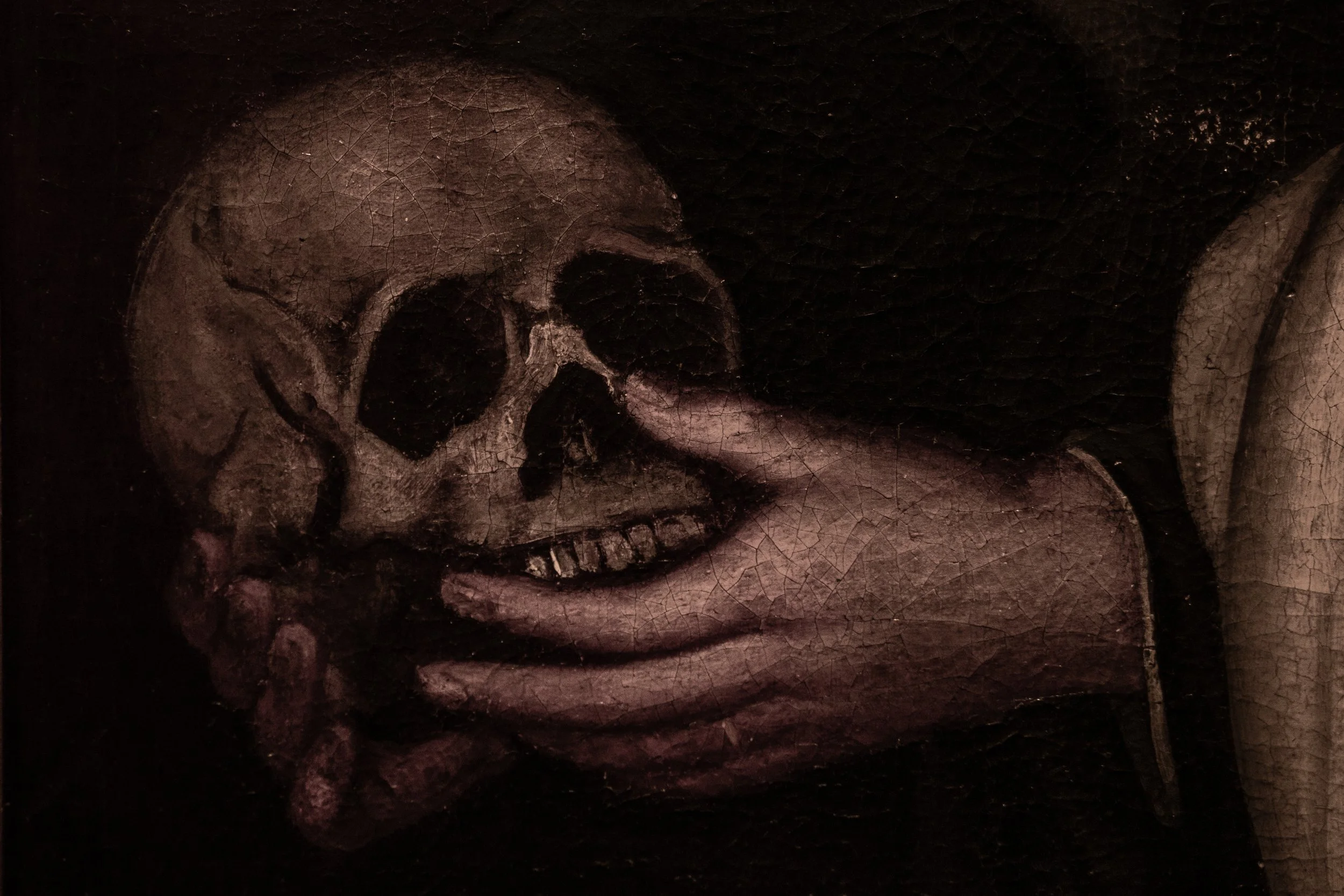
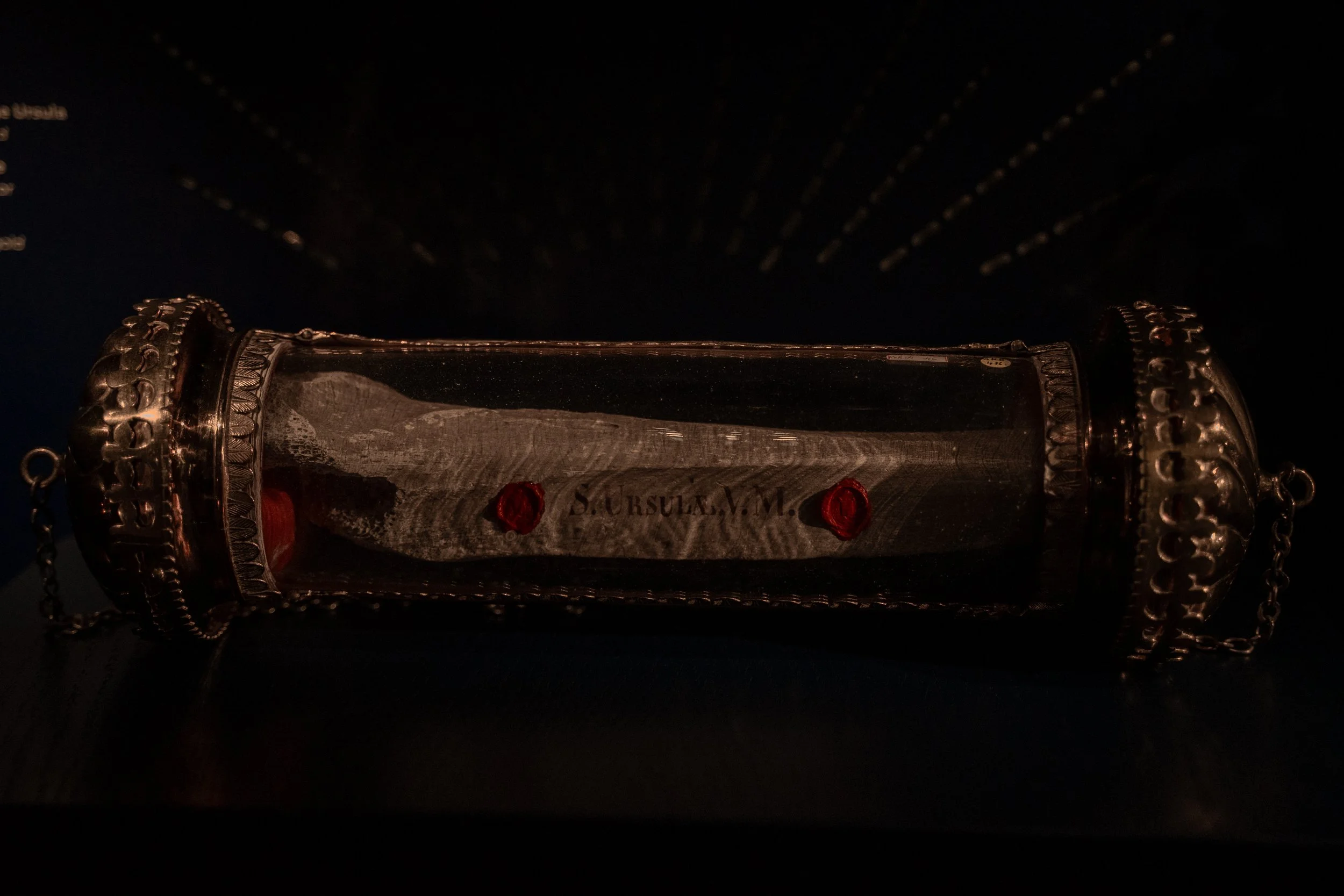
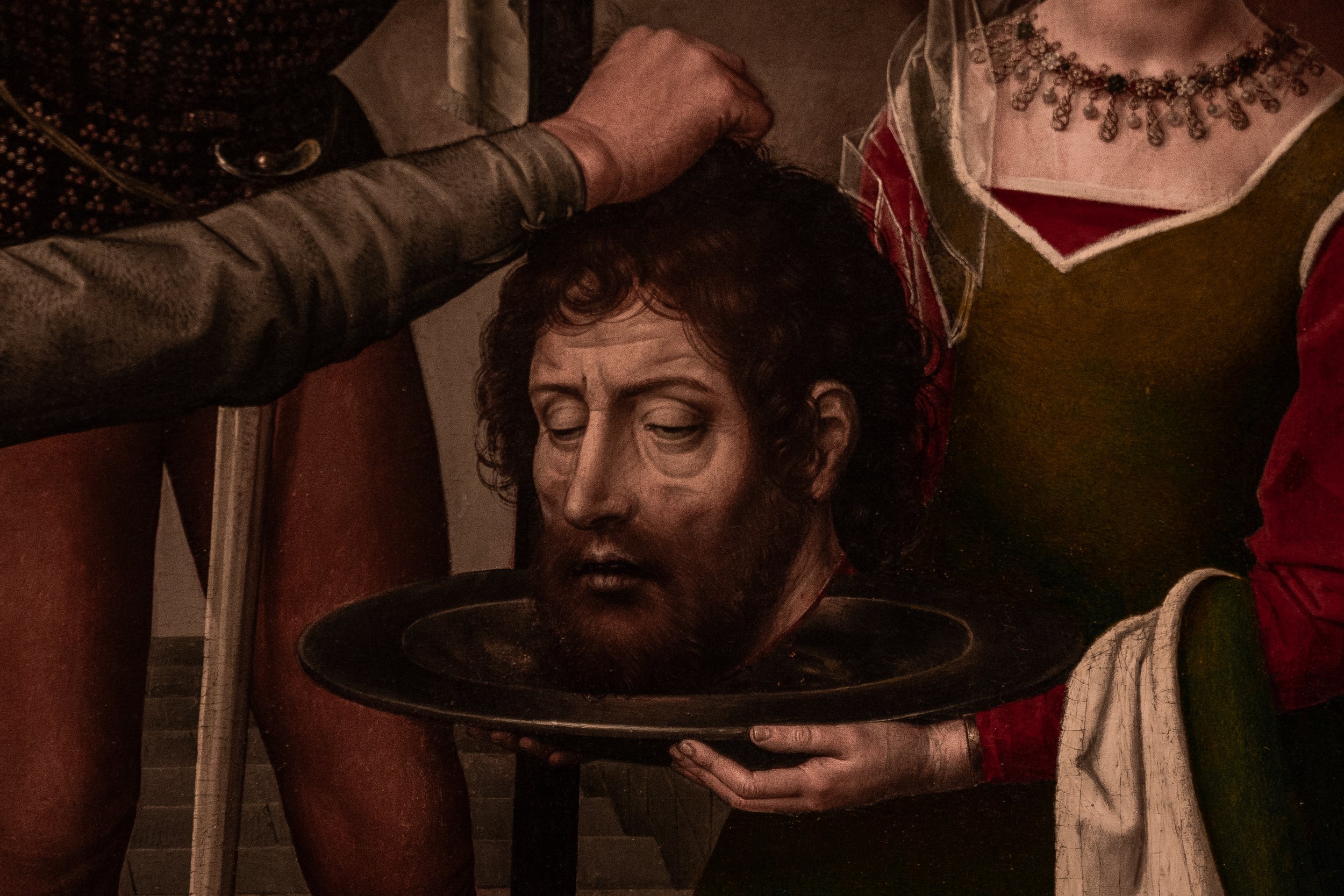
Particularly interesting are the memento mori details hidden throughout the collection. Medieval attitudes towards death emerge through skulls, reliquaries, images of suffering and devotional paintings intended to encourage contemplation of mortality and the afterlife.
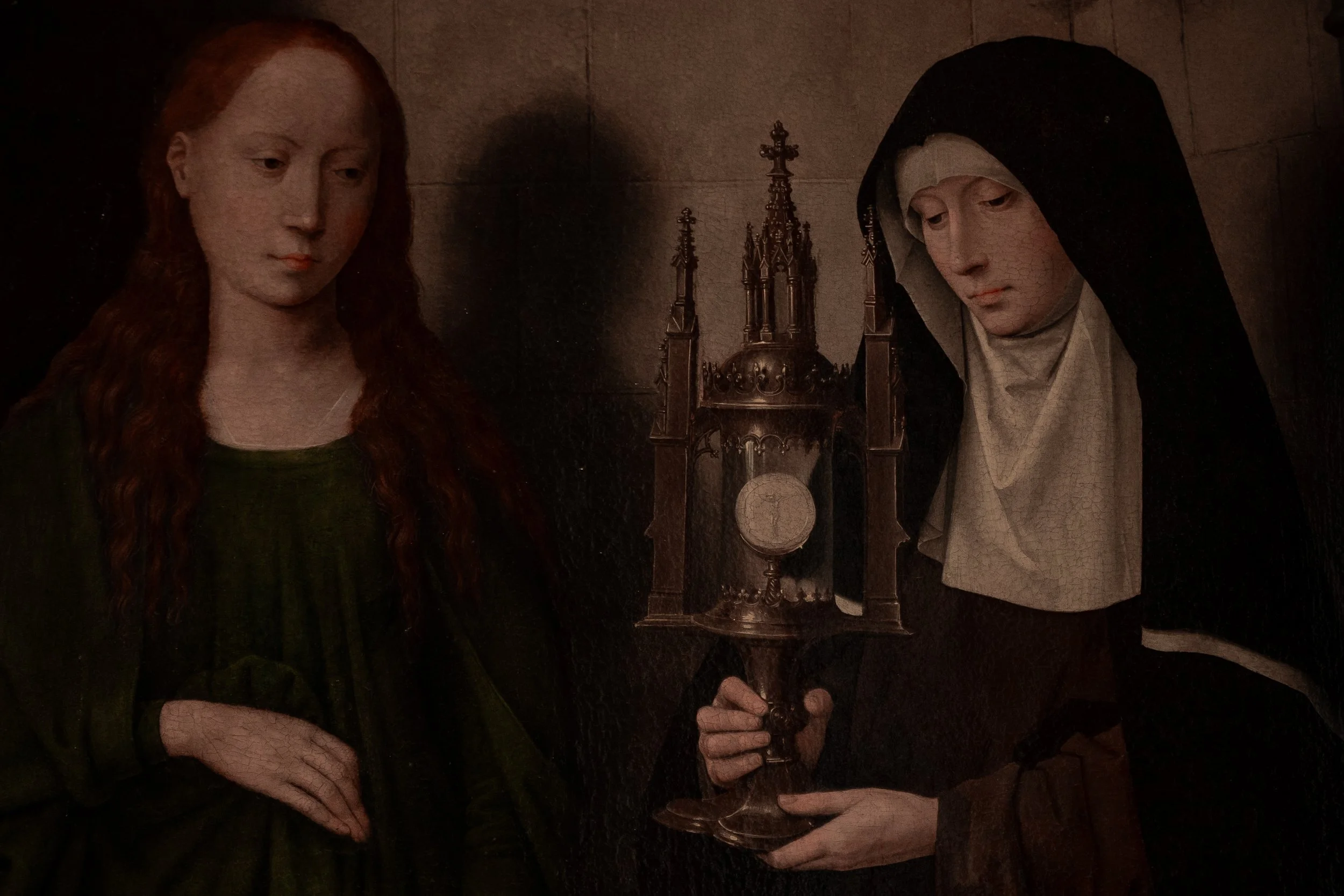
During my visit, I was particularly drawn to depictions of the hospital’s religious sisters alongside skulls, shrines and sacred objects, small details that feel especially poignant within the setting of the former hospital.
The museum is also home to an extraordinary collection of works by Hans Memling, one of the most renowned Flemish Primitive painters of the 15th century. Memling lived and worked in Bruges, and four of the seven works held by Sint-Janshospitaal were originally created specifically for the hospital. Remarkably, these four works have remained here for more than 500 years, meaning you are seeing them in the surroundings for which they were originally intended.
One of the most impressive is Memling’s 1479 Triptych of Saint John the Baptist and Saint John the Evangelist, also known as the St John Altarpiece. Commissioned by the sisters and brothers who ran the hospital, the monumental triptych was originally created for the hospital church. What makes it particularly interesting is that you can walk around it and examine the reverse panels. Medieval triptychs were not permanently displayed open as we tend to see them in museums today, making their exterior panels an important part of the work. Here, Memling painted members of the hospital community who commissioned the altarpiece kneeling alongside their patron saints.
Another of the museum’s great treasures is the Shrine of Saint Ursula, created by Memling between 1482 and 1489. Shaped like a miniature Gothic chapel, complete with an architectural roof, gilded details and intricately painted panels, it sits somewhere between a painting, sculpture and sacred object. The reliquary was created especially for the hospital and contains relics of several saints, including Saint Ursula. Six exquisitely detailed scenes tell the medieval legend of Ursula and her companions travelling along the Rhine towards Rome. If you’d like to delve further into the story, you can read more in my Cologne guide.
There are also smaller devotional details worth looking out for. One of my favourites was a small Sacred Heart display filled with tiny religious trinkets, patches and devotional objects.
There is something particularly compelling about Sint-Janshospitaal because its darker elements never feel deliberately macabre. Skulls, suffering saints, relics and reminders of death appear here because mortality was simply part of the building’s everyday existence. People came through these doors because they were sick, poor, travelling, dying or simply in need of somewhere safe to sleep, while generations of religious brothers and sisters dedicated their lives to caring for them.
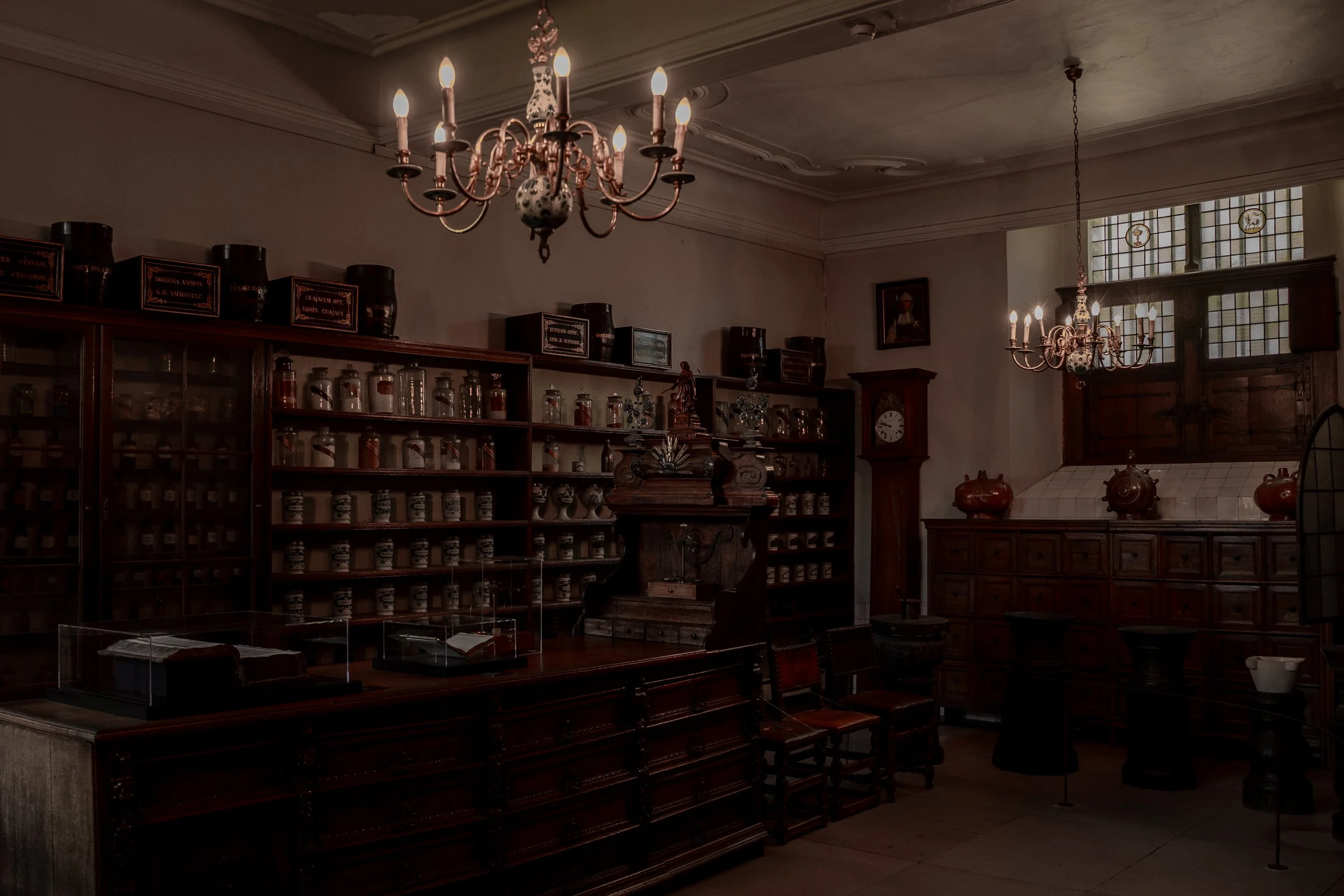
Make sure you also visit the hospital’s old pharmacy, located within the former monastery. After the last brother died, the city authorities decided in 1643 to establish a pharmacy within the old monastic buildings. It was subsequently run by the hospital’s sister-apothecaries and, remarkably, remained in operation until 1971.
Its interior has changed surprisingly little. The authentic 17th-century space still contains old herb cabinets, medicinal jars and pitchers, instruments and the original counter, alongside historic recipes once used here. It is easy to imagine the hospital sisters working behind the wooden counter, preparing remedies for their patients.
The sisters bought medicines from pharmacists elsewhere in Bruges, but they also prepared their own mixtures using medicinal plants, including ingredients grown in the hospital’s neighbouring herb garden. The garden once extended across approximately 3,000 square metres, although today the four small herb plots outside the pharmacy are among the last reminders of its former scale.
Address: Mariastraat 38, 8000 Brugge, Belgium