
Museum Schnütgen
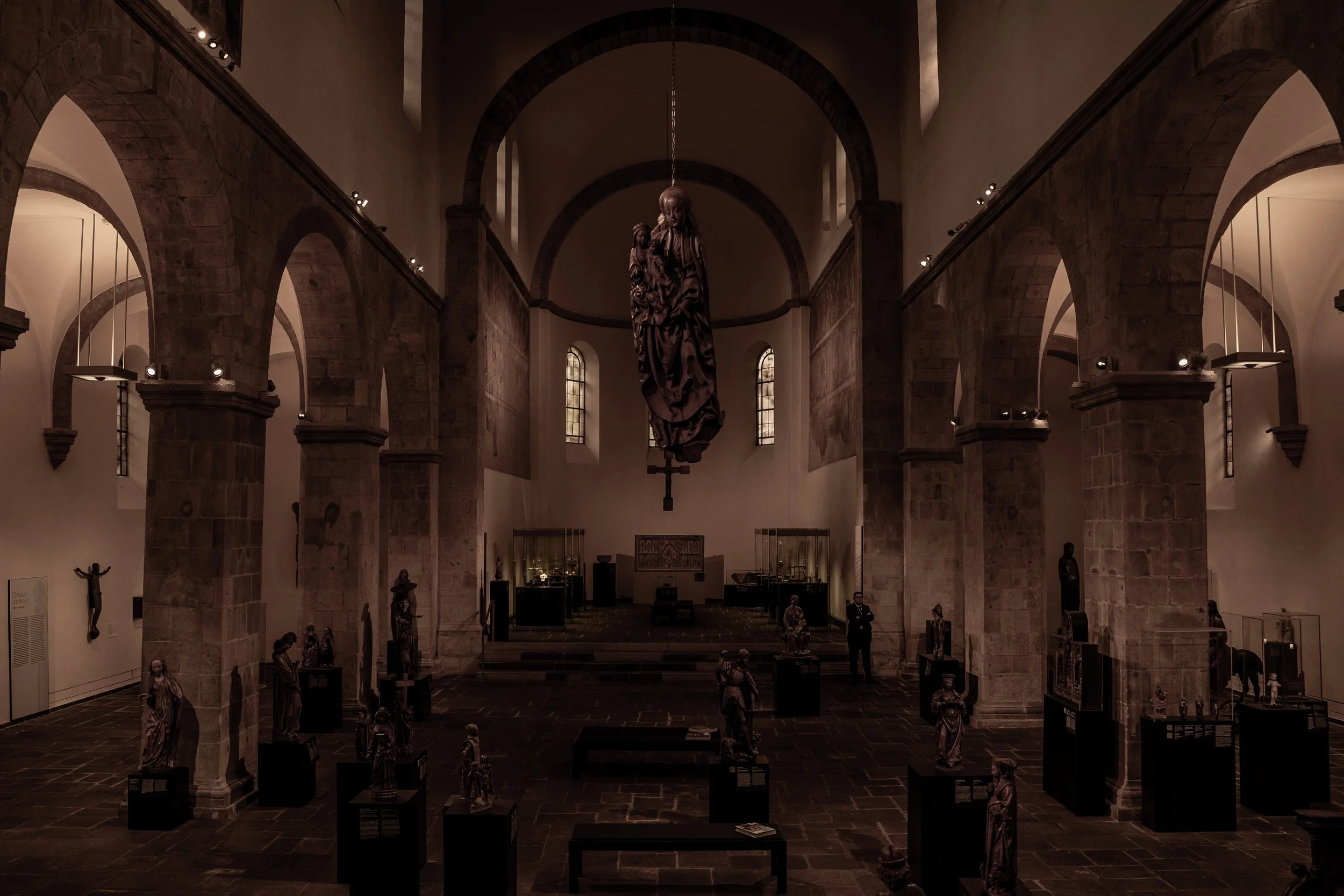
Museum Schnütgen is housed within the Romanesque church of St Cecilia, a thousand-year-old structure whose architecture shapes the entire experience of the museum. Its stone vaults, narrow windows and harmonious proportions create an elevated atmosphere, reminding visitors that medieval art was never intended for museums; it was created for ritual, worship and devotion.
The collection is one of Europe’s richest in medieval art, spanning more than a millennium and encompassing Romanesque and Gothic works in stone, ivory, precious metals, stained glass, carved wood and textiles.
The museum takes its name from Alexander Schnütgen, whose passion for medieval sacred artefacts became the foundation for the institution. Born in 1843 and trained as a theologian, he later served as a curate at Cologne Cathedral, where he developed an early fascination with Christian material culture. The 1867 Ramboux auction provided him with his first major acquisitions and set him on a lifelong path as a collector.
His influence grew through his work on the Diocesan Museum’s board and later as a cathedral canon and publisher of the Zeitschrift für Christliche Kunst, helping to shape Cologne’s approach to the preservation of medieval art. When he donated his collection to the city in 1906, it had grown to several thousand objects. Although not all of these pieces remain today, his commitment to preservation continues to define the museum, whose rotating displays draw from a collection of roughly 13,000 works.
Much of the collection originates in Cologne and the Rhineland, reflecting the region’s importance as a religious centre during the Middle Ages. Here sculptures, reliquaries, manuscripts and textiles commissioned by churches, monasteries and wealthy patrons are brought together under one roof, offering a concentrated portrait of medieval craftsmanship.
The museum’s approach to displaying its collection has evolved considerably over time. Early exhibitions followed Schnütgen’s idea of arranging objects in “type series”, grouping similar works together for comparison and study. Today, the displays combine traditional methods with more thematic and experimental approaches.
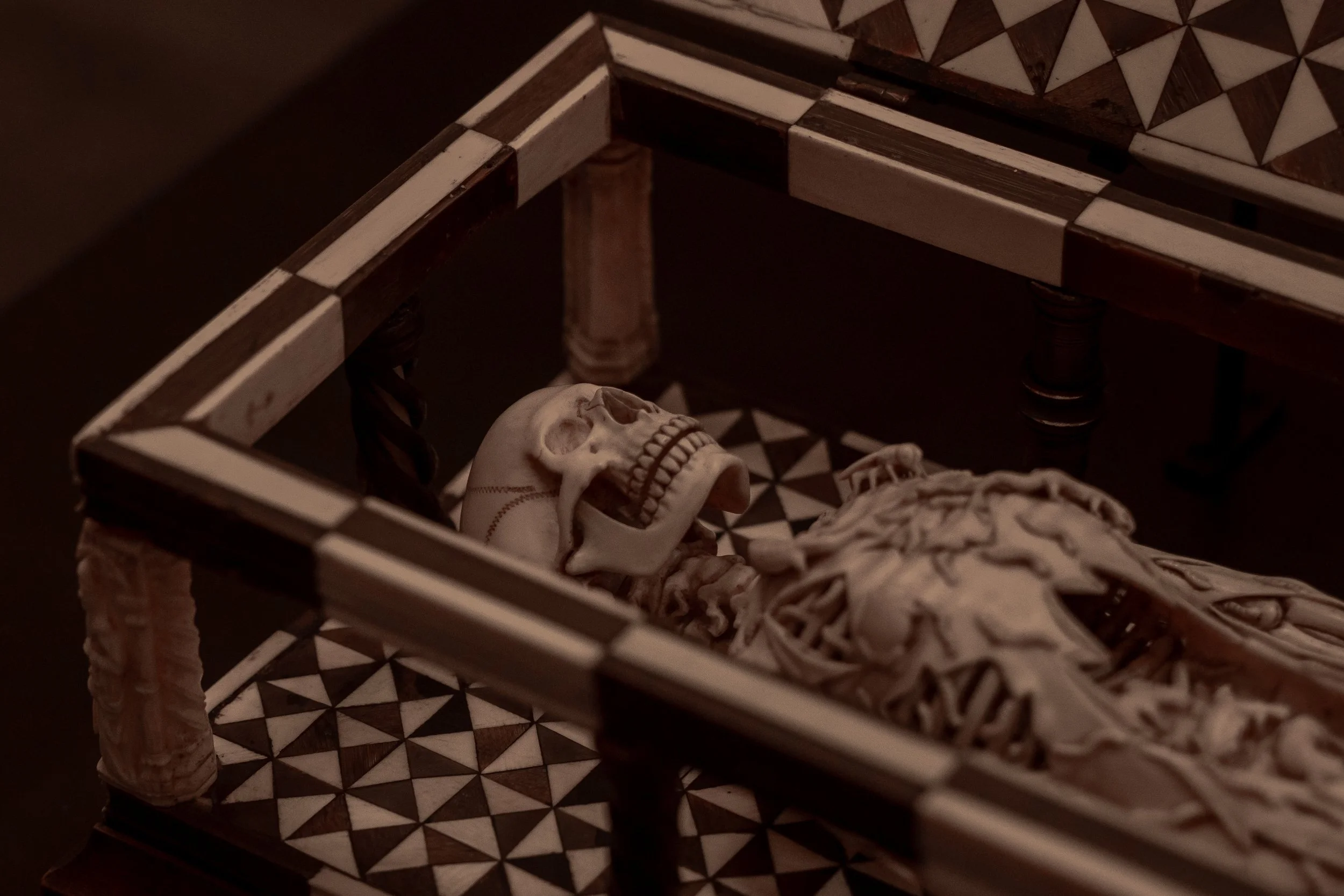
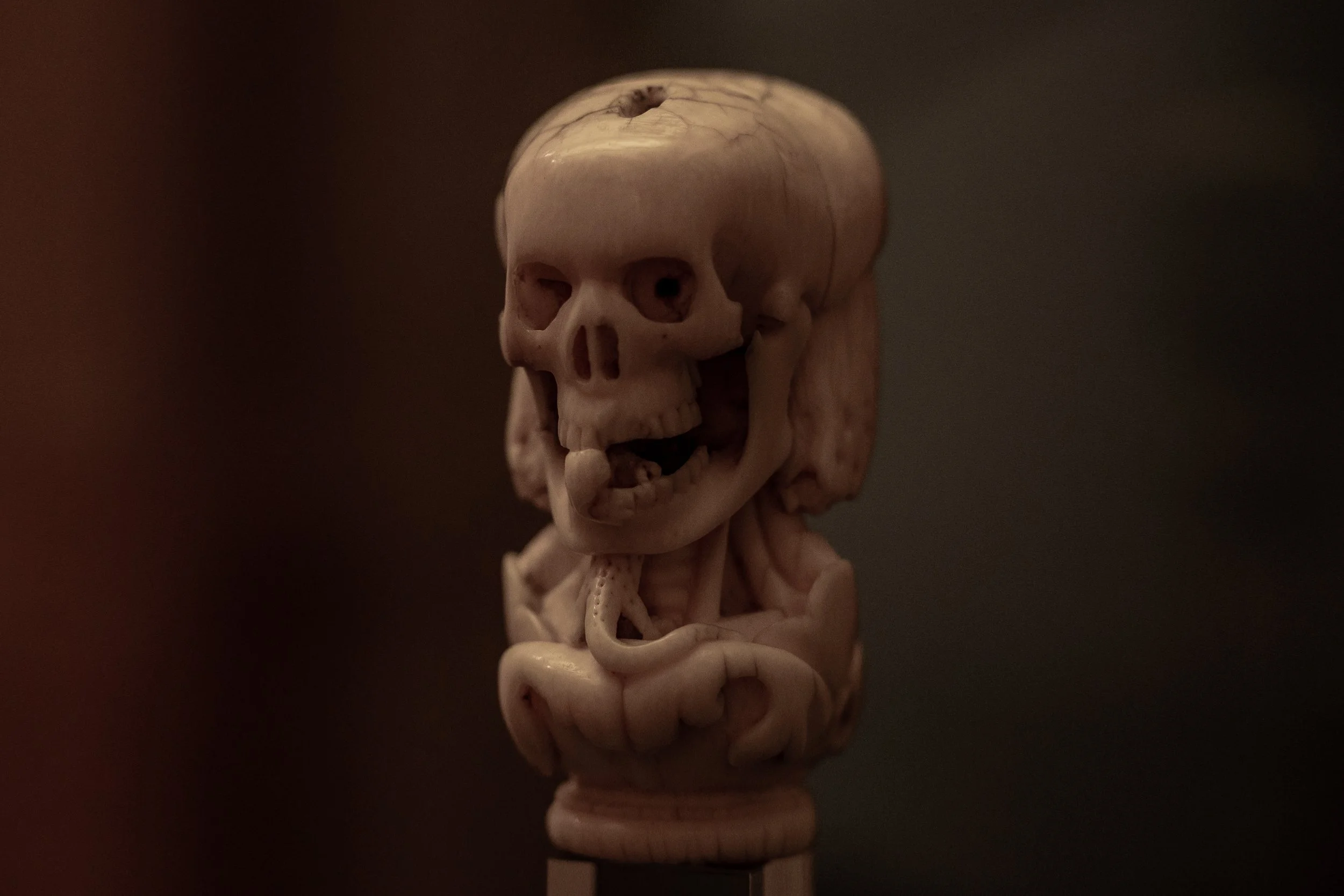
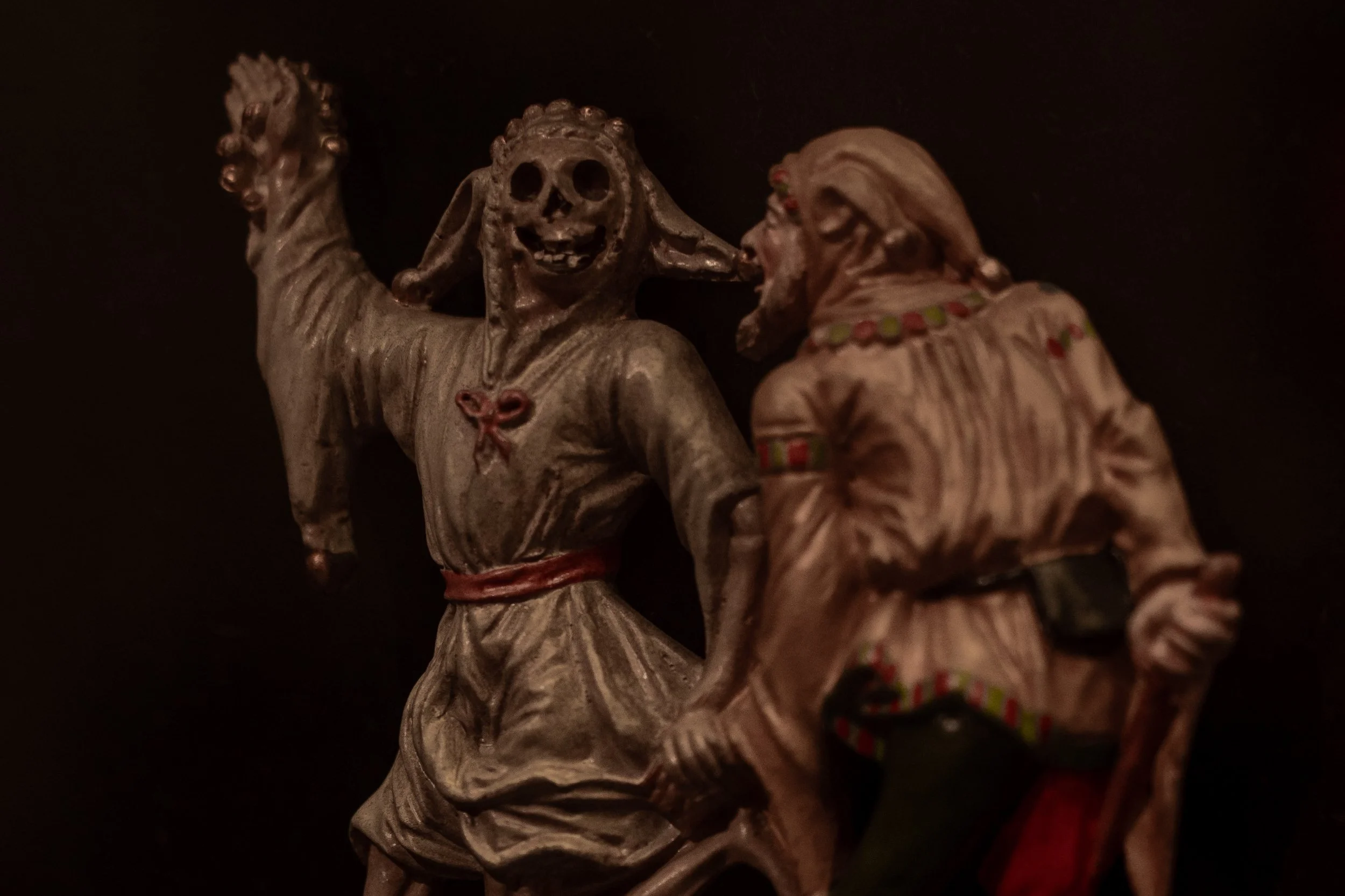
One of my favourite rooms was devoted to small memento mori objects, including miniature danse macabre scenes, tiny ivory skulls with two faces, a miniature casket and a skull mirrored piece, which only upon closer inspection revealed their many intricate details. Many of the Ursuline busts (the same type seen in the Basilica of St Ursula) are displayed in the former sacristy, reflecting a distinctly Cologne tradition of preservation and ritual.
Among the museum’s most striking works is the Crucifix of St George, a monumental willow-wood sculpture from the Salian period. Standing at 189.5 cm, its presence is almost impossible to convey in photographs. The Aachen Madonna, carved around 1230, is another highlight: a devotional sculpture that also served as a reliquary.
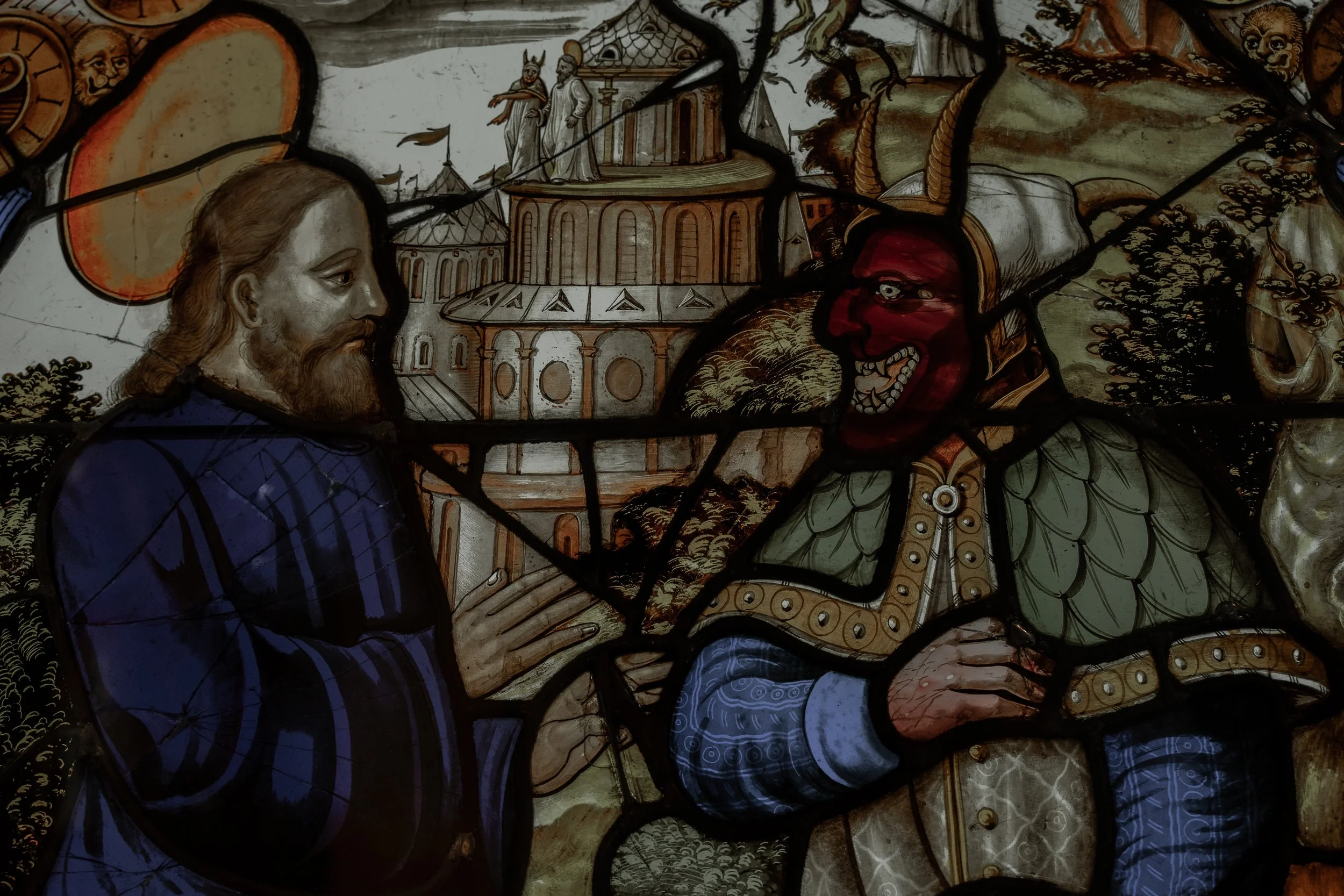
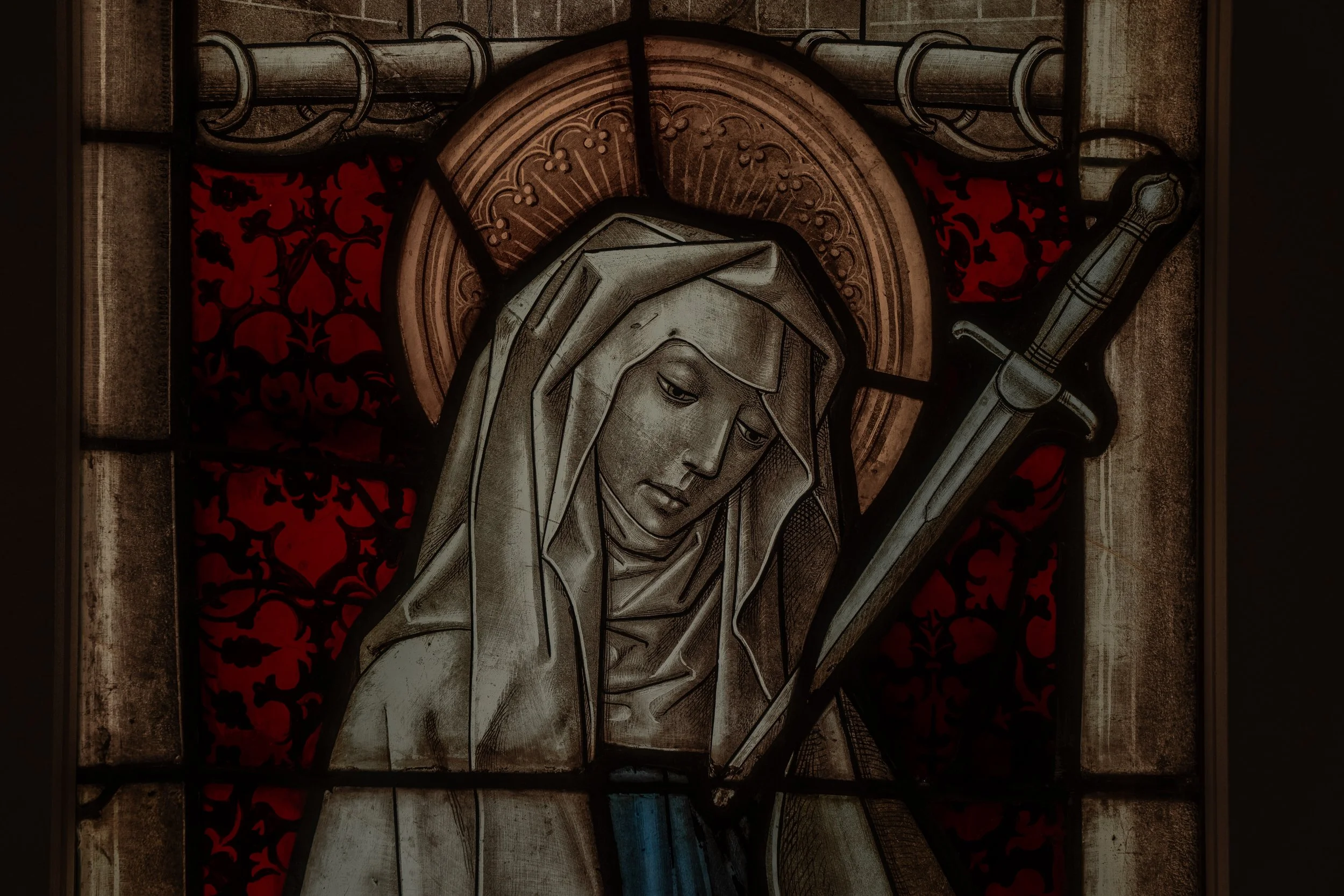
The stained glass on display is also one of the museum’s defining strengths. Panels from Cologne Cathedral and other regional churches can be viewed at close range, revealing delicate brushwork, intricate lead lines and the extraordinary craftsmanship of medieval glass painting.
During my visit, the exhibition Light in Dark Times was on display. Around thirty works from Kyiv, Cologne and private collections were brought together, including twelve stained-glass panels transported from Ukraine after the Khanenko Museum was damaged by a missile strike. Secured and brought to Cologne for conservation, the works created a poignant connection between Schnütgen’s collecting in the late nineteenth century and the Khanenkos’ efforts in Kyiv during the same period, with the two families preserving medieval art through times of upheaval. Keep your eyes peeled for tiny devils and skulls which can be found within the works!
Before leaving, make sure to step into the church garden, where you will discover some walled tombstones carved with skull motifs, continuing the museum’s dialogue with death.
Address: Cäcilienstraße 29-33, 50667 Köln, Germany