
Cologne Cathedral
The cathedral was the main reason I chose to visit Cologne. Rising above the Rhine with its magnificent twin towers, it remains one of Europe’s most recognisable Gothic landmarks.
Its story reaches back more than 1,700 years and the building we see today took an extraordinary 632 years to complete. Construction began in 1248, when medieval builders set out to create a vast Gothic church worthy of the relics of the Three Kings. For nearly three centuries the project advanced, until rising costs and dwindling resources brought work to a halt around 1520. By then, the eastern end and choir stood finished while the nave and towers remained incomplete. For the next 300 years, Cologne lived with this half-made monument and its huge wooden crane perched on the South Tower became a familiar part of the skyline.
Everything changed in the 19th century, when Gothic architecture was rediscovered with renewed enthusiasm. As surviving medieval plans resurfaced, the decision was made to continue the original project rather than redesign it. The cathedral had always been envisaged to mirror the great French High Gothic masterpieces, particularly Amiens and the Sainte‑Chapelle, however, its architects intended to create something even more ambitious!
In 1842, King Frederick William IV of Prussia restarted construction. Medieval craftsmanship was now paired with industrial‑era technology and manpower, with steam propelled railway‑mounted lifting equipment and more than 500 workers employed at a time. The builders followed the medieval drawings with extraordinary precision, most famously the enormous Riss F plan for the west façade.
The result is one of the cathedral’s most striking paradoxes, as much of what appears authentically medieval was in fact completed in the 19th century. Although you can see the medieval sections were built largely from Drachenfels trachyte, a dense volcanic stone with naturally darker, bluish‑grey tones, while the 19th‑century builders used lighter Obernkirchen sandstone, giving the exterior its subtle patchwork of colour. Over time, the trachyte has darkened further with its surface blackened by centuries of soot, industrial pollution and weathering. This is why so much of the church appears almost black as the stone’s mineral composition traps pollutants, creating the dramatic, shadowed surface that has become one of its defining characteristics.
The scale is difficult to appreciate until you stand directly in front of it, surrounded by endless tracery, flying buttresses, statues and intricate stonework. There are more than 100 grotesques and gargoyles, many are easy to miss if you only approach through the main entrance. Walking the full circuit of the cathedral reveals how constantly the details shift and just how much craftsmanship went into every part of the exterior.
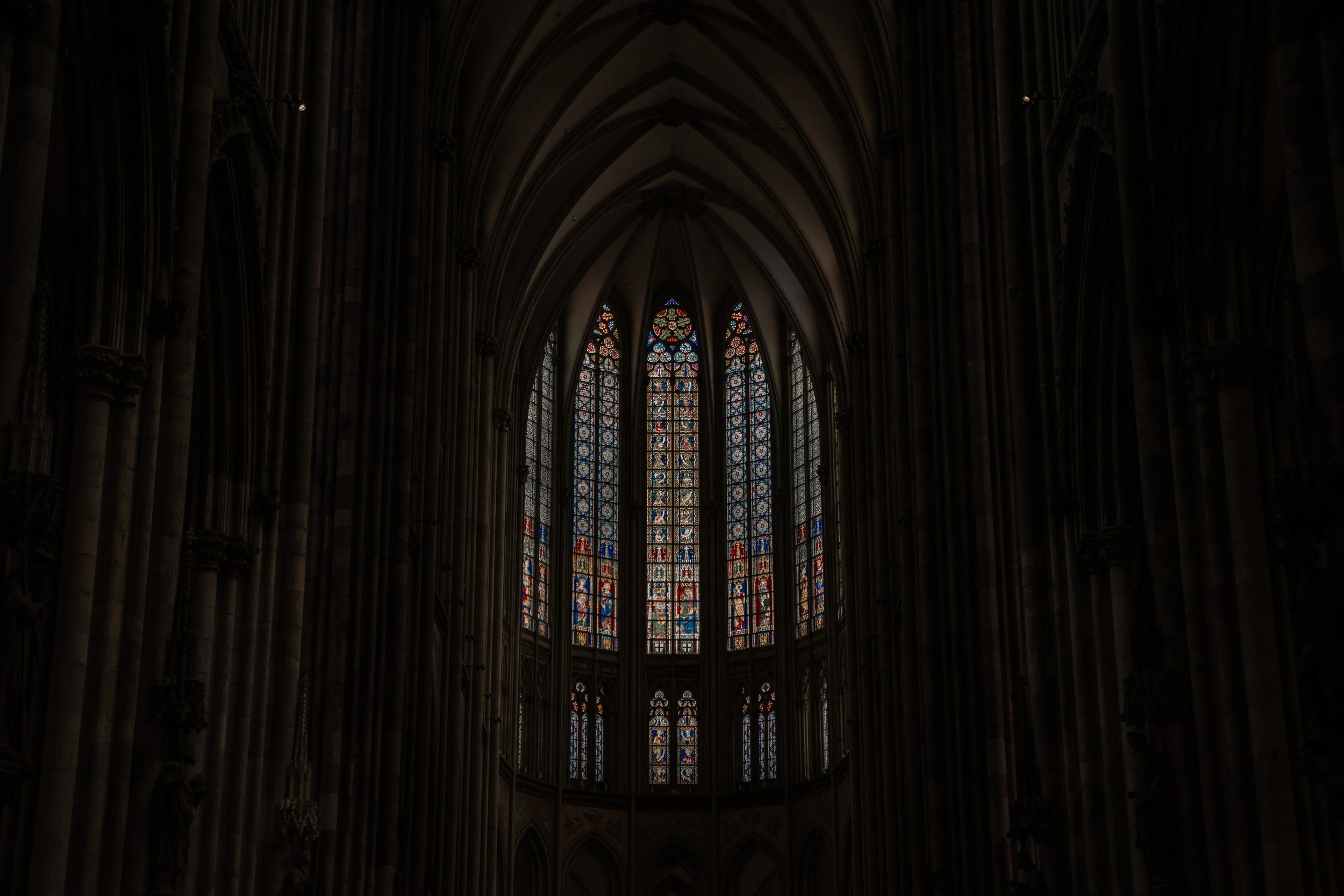
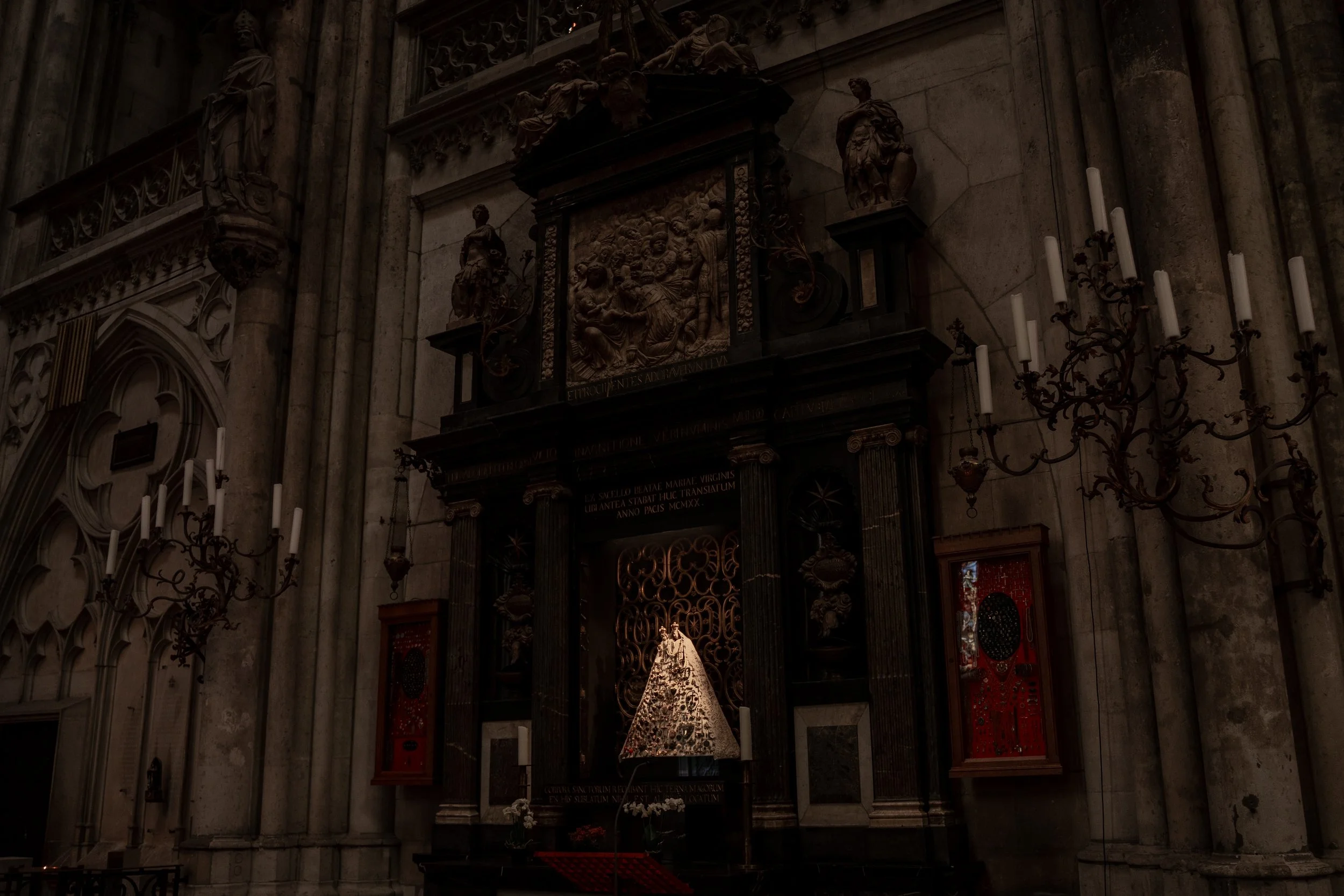
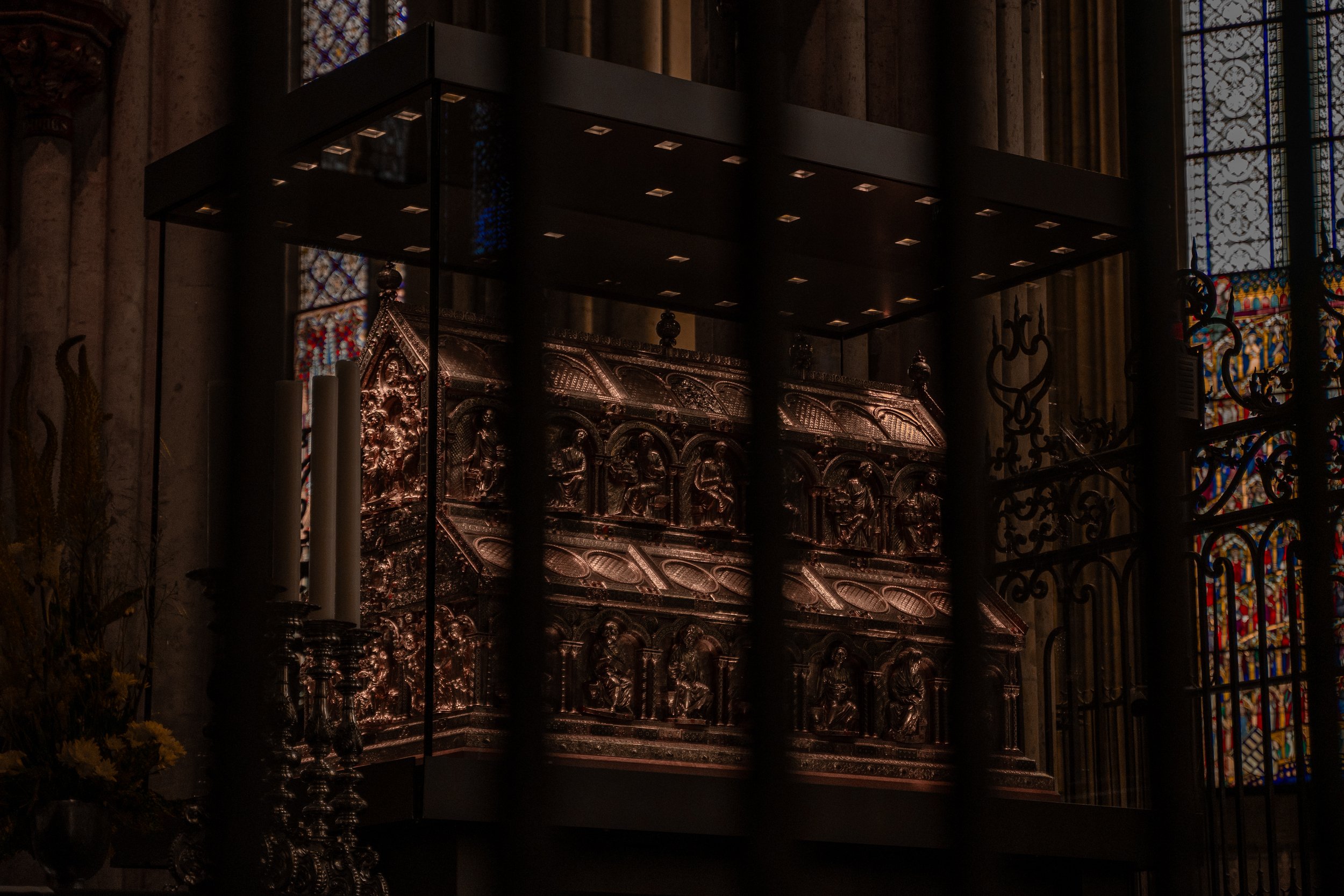
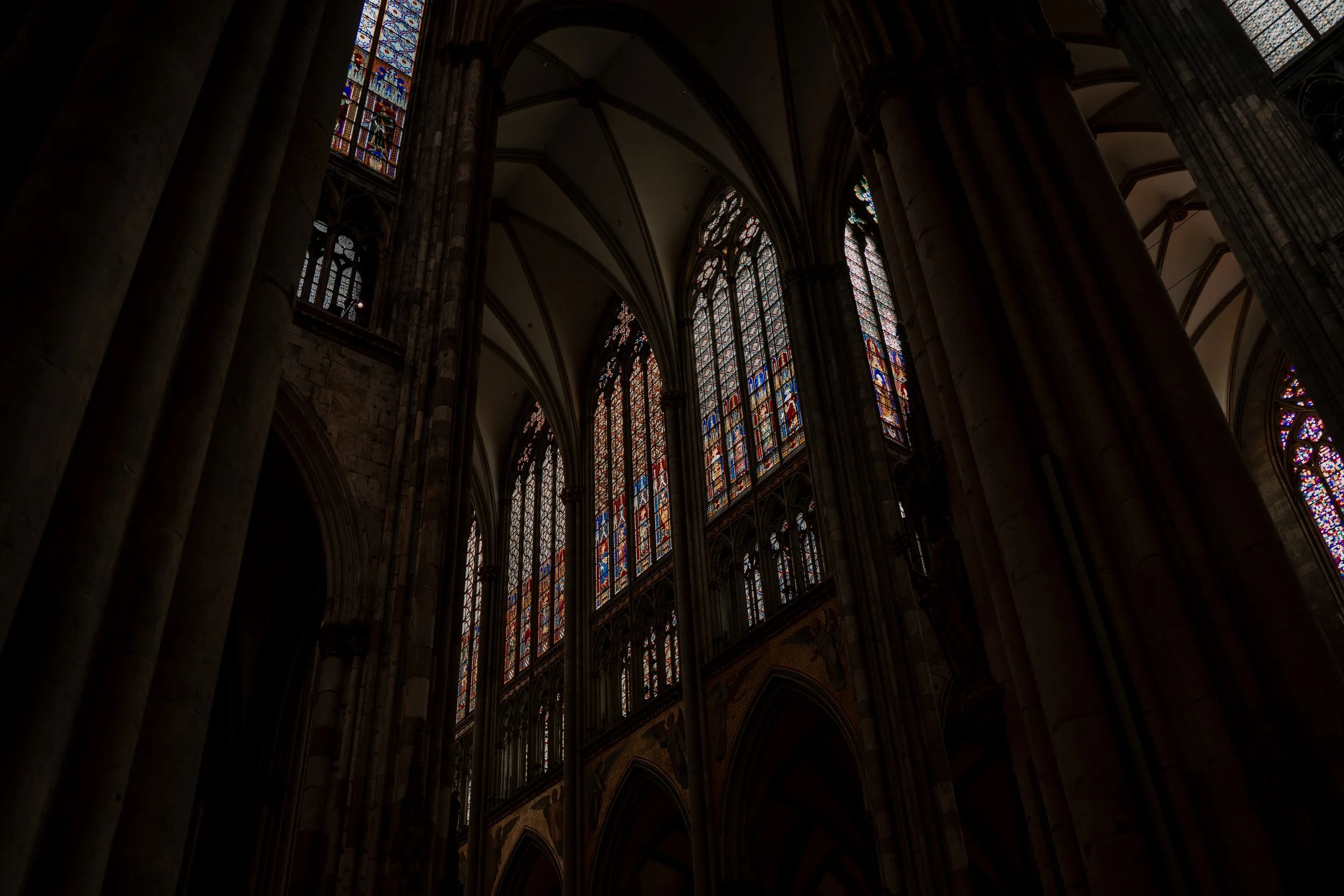
Inside, the Gothic design can be admired further though its pointed arches, clustered columns, ribbed vaults and vast stained‑glass windows. The cathedral is a five‑aisled basilica approximately 144.5 metres long and its immense scale was conceived around the relics of the Three Kings. At the heart of the cathedral is their shrine, a masterpiece of medieval goldwork created between 1190 and 1220. When the Gothic choir was consecrated in 1322, the shrine was moved into its current position, where it remains the spiritual centrepiece of the building. The relics were the catalyst for much of this extraordinary concept: their arrival in Cologne in 1164 transformed the city into one of Europe’s major pilgrimage destinations and ultimately led to the creation of a cathedral on this scale.
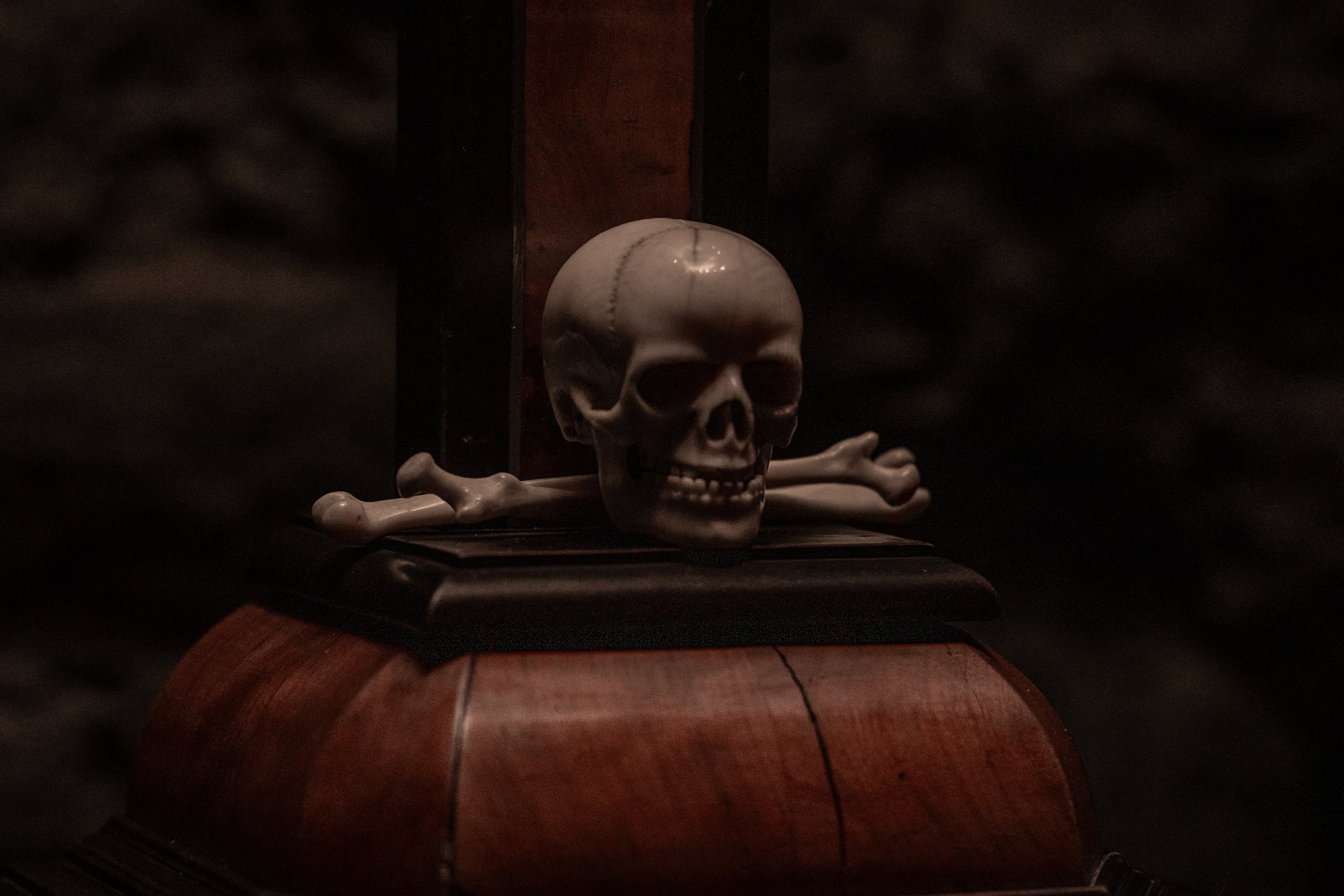
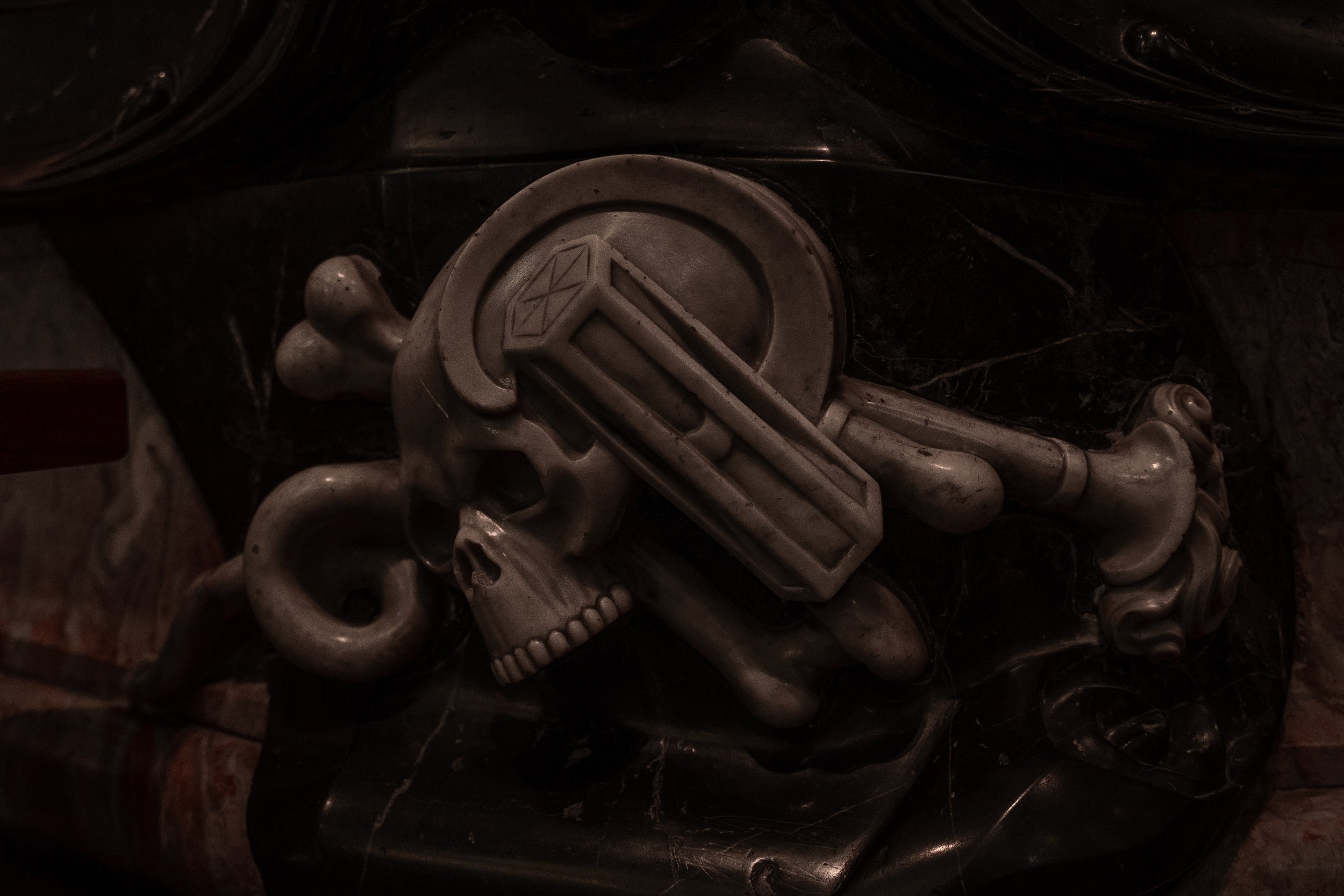
Along the side aisles, it is worth pausing at the memento mori carvings on the walled tombstones. These reminders of death fit into a wider tradition within the cathedral, where skulls and symbols of mortality appear alongside the grandeur of the architecture.
The Treasury is another highlight. Hidden beneath the cathedral in its medieval cellar chambers, it contains reliquaries, memento mori carvings, vestments, liturgical objects and treasures accumulated over centuries. The Treasury reveals the cathedral’s long relationship with mortality: carved skulls, vanitas imagery and reminders of death sit beside objects representing immense religious authority.
I also climbed the South Tower, although it’s something I probably wouldn’t recommend unless you particularly want to say you’ve done it. It is 533 steps up a narrow stairwell and although the views over Cologne are good, you don’t get as much appreciation of the cathedral’s architecture as you do from other European monuments. Compared with the Duomo in Milan, where the rooftop offers an extraordinary close‑up view of the structure, Cologne’s tower climb feels more like an endurance test than an architectural experience.
The cathedral’s story continued through the Second World War, when it suffered heavy bombing, including 14 explosive hits and more than 70 incendiaries. Sections of the vaults collapsed and much of the 19th‑century glazing was destroyed. Remarkably, many of the cathedral’s most important medieval treasures survived because they had been removed and stored for protection.
Recognised as a UNESCO World Heritage Site in 1996, this Gothic masterpiece is, quite simply, reason enough to make the journey to Cologne.
Address: Domkloster 4, 50667 Köln, Germany