
Jerusalem Chapel
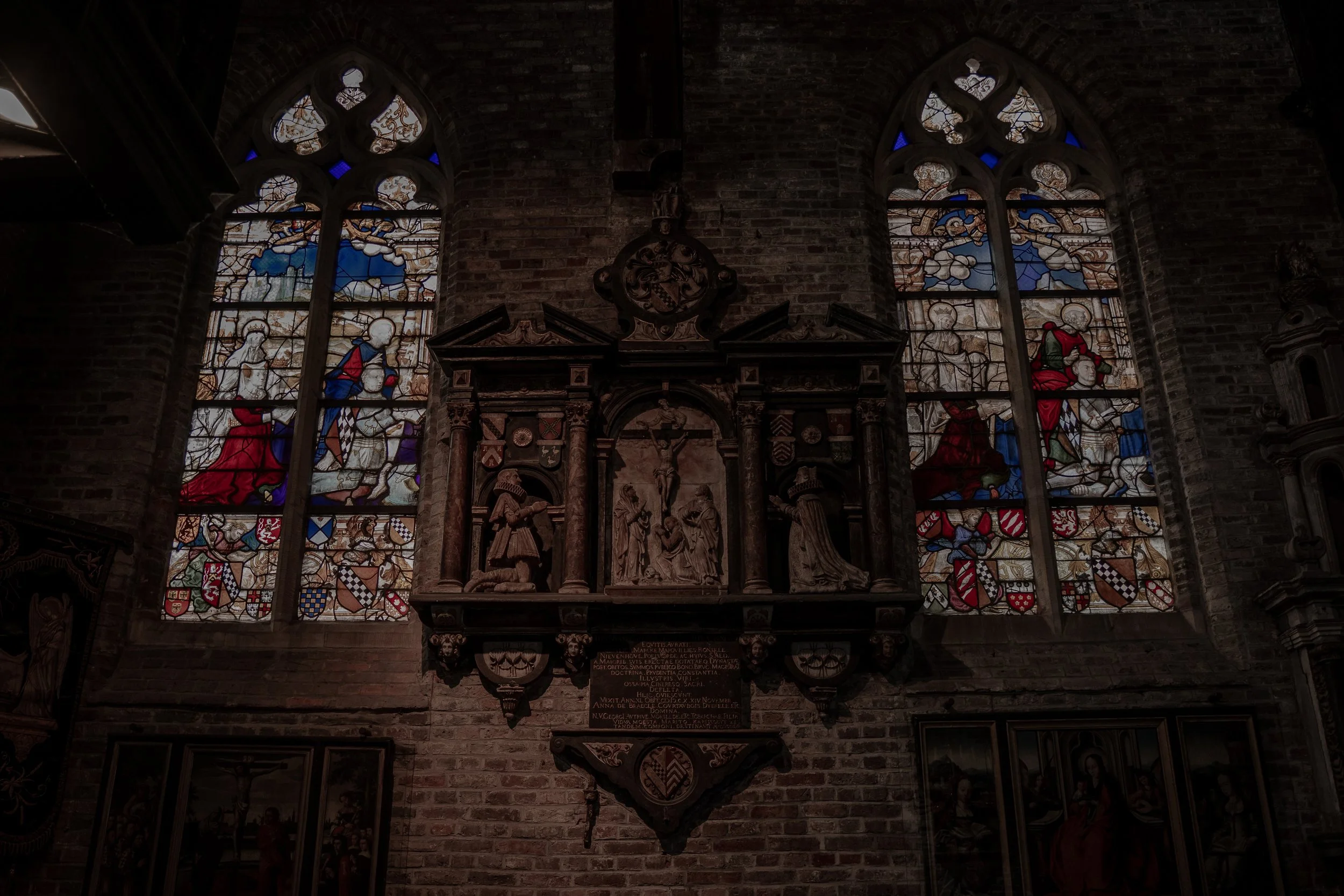
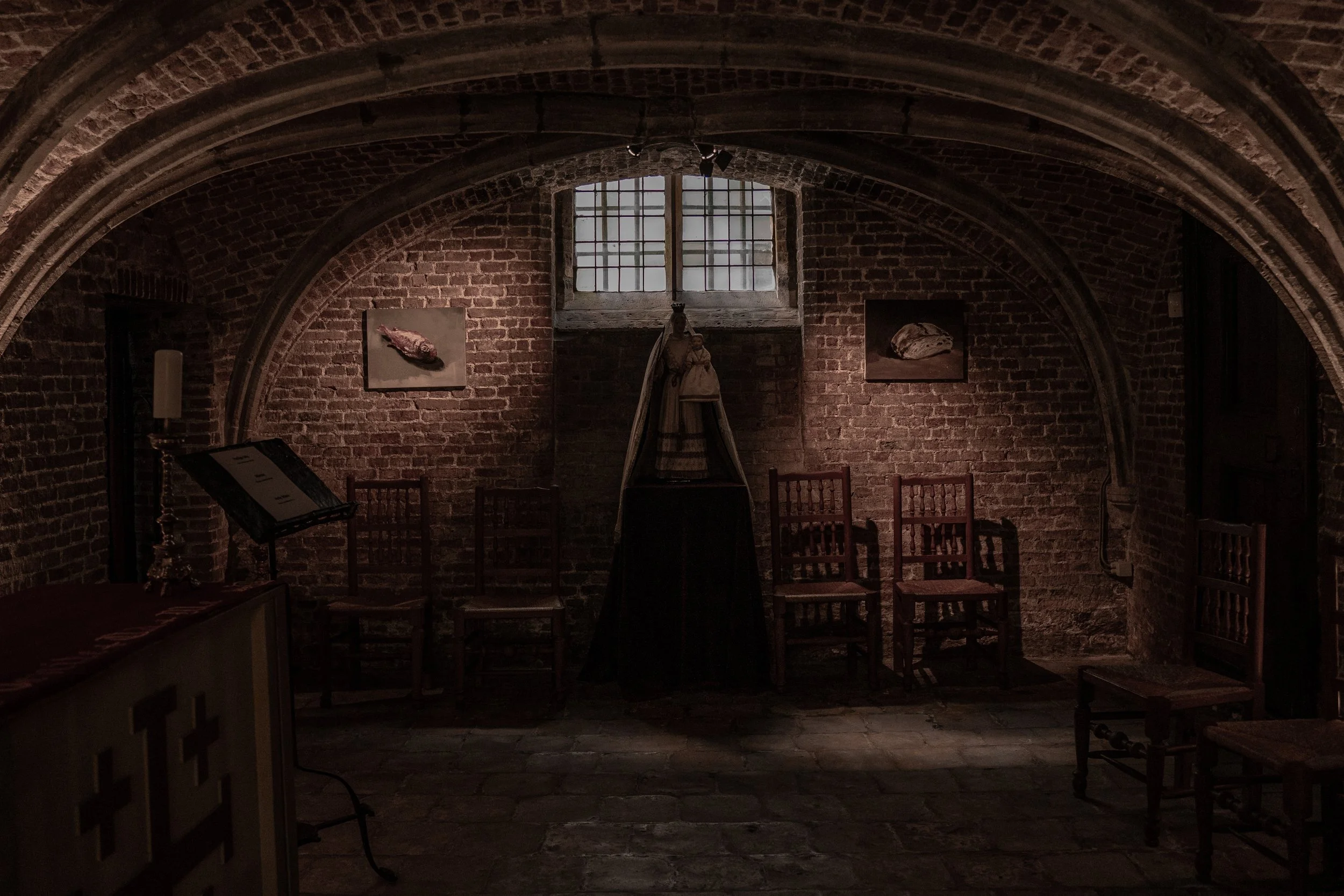
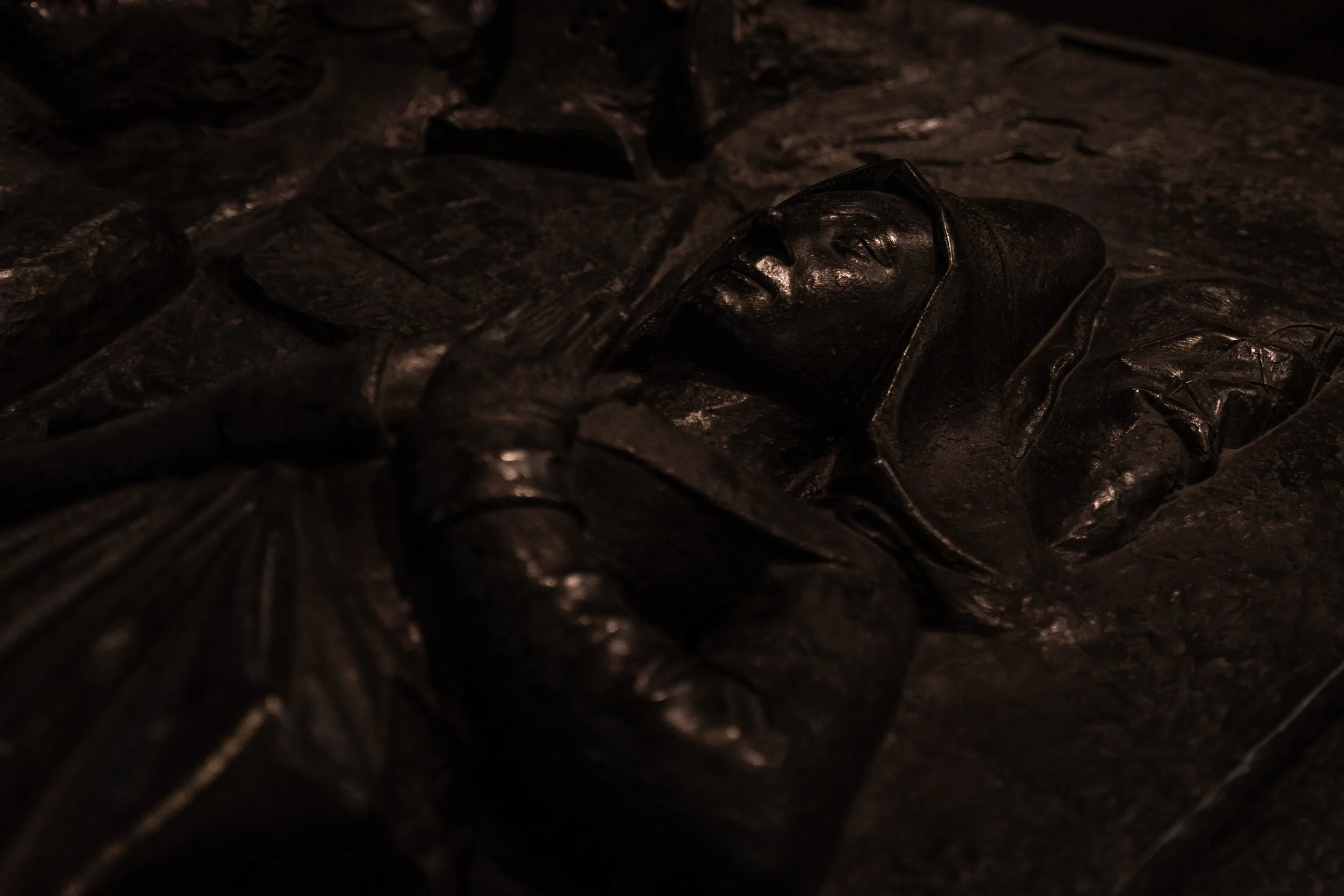
Behind the modest red brick walls of this 15th century chapel lies one of Bruges’ most curious interiors, where memento mori, sacred relics and medieval funerary art sit at the heart of its design. Elaborate stone effigies commemorate the dead, skulls emerge from religious artworks and behind the altar, a dark chamber recreates Christ’s burial place.
Consecrated in 1429, the Jerusalem Chapel is part of the historic Adornes Estate, founded by a prosperous merchant family who arrived in Bruges from Genoa. Modelled on the Church of the Holy Sepulchre in Jerusalem the chapel was designed to evoke the sacred landscape of Christ’s Crucifixion, burial and resurrection. In 1470, Anselm Adornes and his son Jan undertook a pilgrimage to the Holy Land, returning with sacred relics that deepened the chapel’s connection to Jerusalem. Almost six centuries after its construction, this extraordinary church remains in the hands of the descendants of the Adornes family.
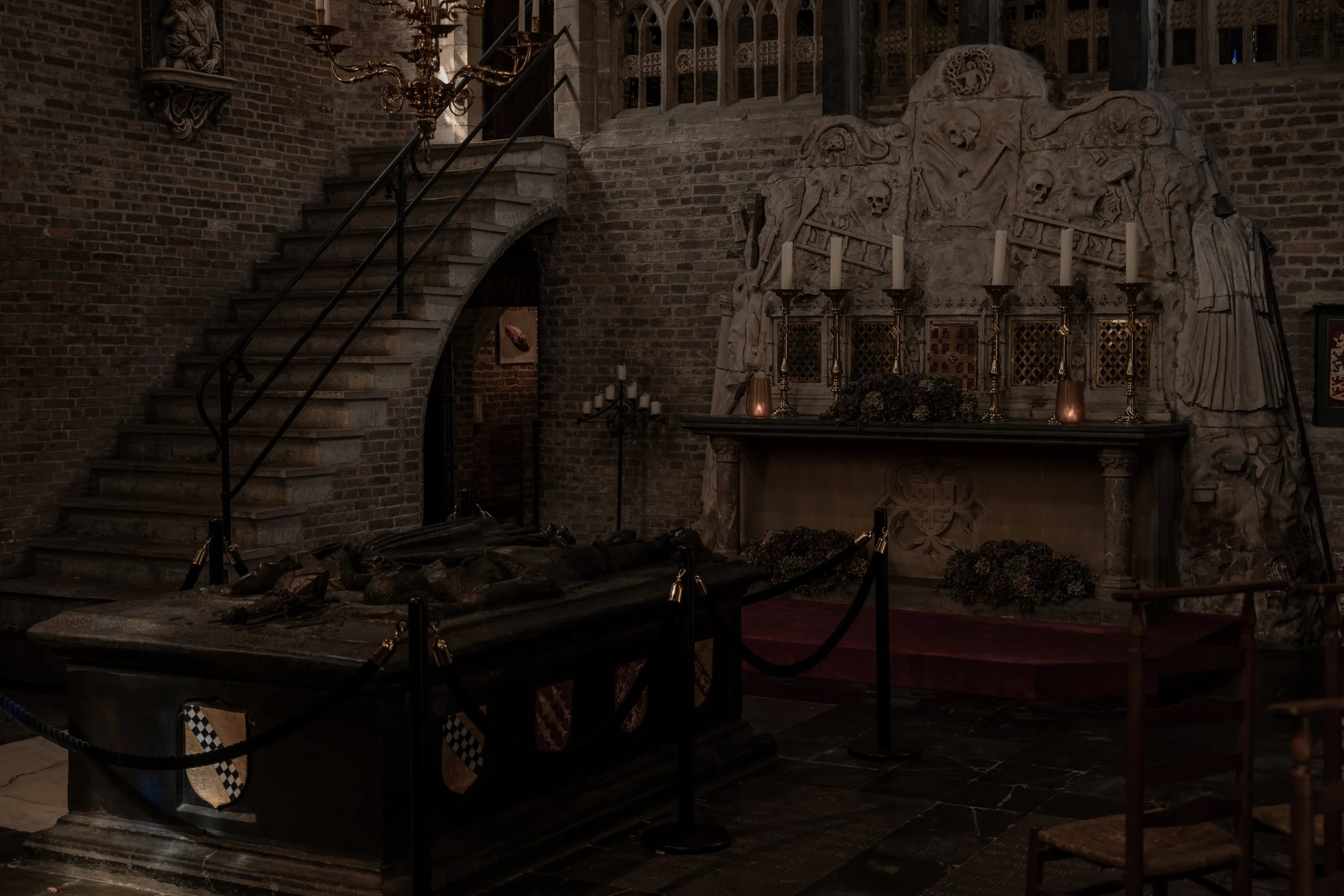
What immediately struck me was the chapel’s unusual architecture, combining an Eastern-inspired octagonal tower with a remarkable two-level interior. Dominating the interior space is the magnificent funerary monument of Anselm Adornes and his wife, Margaretha van der Banck. Sculpted from dark Tournai stone, the couple are immortalised in elaborate medieval effigies. Anselm is depicted as an armoured knight, a lion resting at his feet as a symbol of strength and courage. Beside him, Margaretha wears an elegant gown with a small dog at her feet to represent marital loyalty and devotion.
The tomb conceals a macabre history. Anselm was murdered in Scotland in 1483 and buried there, but his heart was returned to Bruges to rest beside his wife. During restoration work in 2021, vaults beneath the monument revealed a female skeleton believed to be Margaretha, alongside other unidentified human remains.
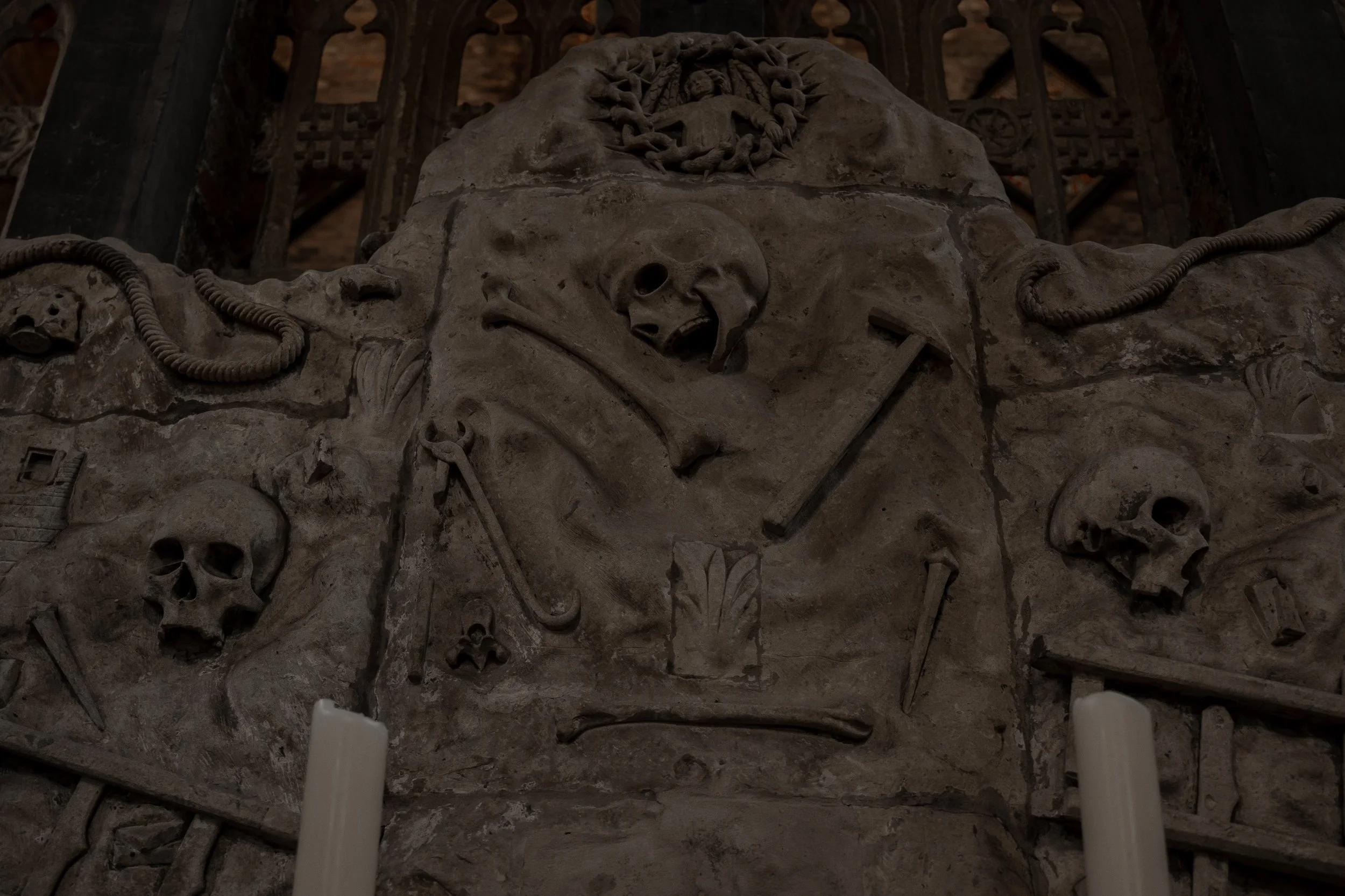
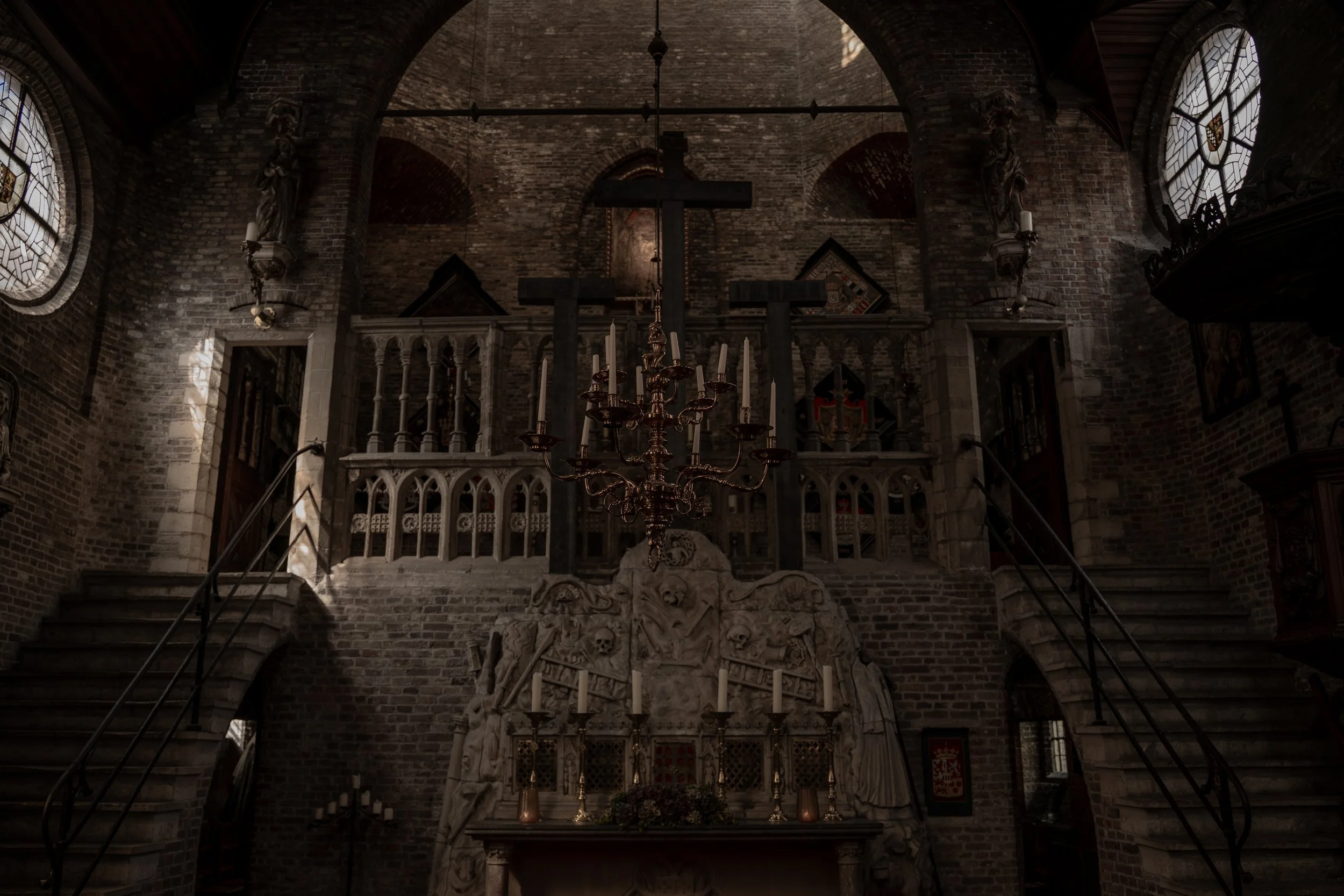
One of the chapel’s most visually interesting features is its Golgotha altarpiece, a unique example of late-medieval craftsmanship dating to around 1485. Sculpted from pale limestone, the altar recreates the rugged landscape of Golgotha, the biblical site of Christ’s Crucifixion. Skulls and bones are carved from the stone, alongside the Arma Christi, or Instruments of the Passion (symbols representing the suffering and death of Christ).
The skulls recall Golgotha’s biblical name, the Place of the Skull, and the ancient Christian belief that Adam was buried beneath the site of the Crucifixion. They also serve as powerful memento mori, a reminder of mortality and the fleeting nature of earthly life. Above the altar rise three wooden crosses, two of which are represented as half-crosses, connoting Christ and the two men crucified beside him.
Among the chapel’s sacred treasures is a relic believed to contain a fragment of the True Cross, brought back from the Holy Land. For medieval pilgrims such precious objects offered a tangible connection to the life, suffering and death of Christ.
References to death continue in a 16th century Crucifixion triptych commissioned by Jan de la Coste, a descendant of the Adornes family. Beneath the Cross lies a solitary skull, while the unmistakable towers of Bruges emerge on the distant horizon, bringing the biblical scene into a recognisable Flemish setting.
Perhaps the most mysterious space lies concealed behind the altar, where through a narrow low entrance lies a dimly lit, crypt-like chamber representing Christ’s burial place within the Holy Sepulchre. You must stoop to enter the confined space, where a representation of Christ’s body recalls his entombment following the Crucifixion.
The Jerusalem Chapel it not only worth visiting for its Gothic architecture but is also a deeply personal sanctuary dedicated to pilgrimage, mortality and remembrance.
Address: Balstraat 14, 8000 Brugge, Belgium