
Highgate Cemetery
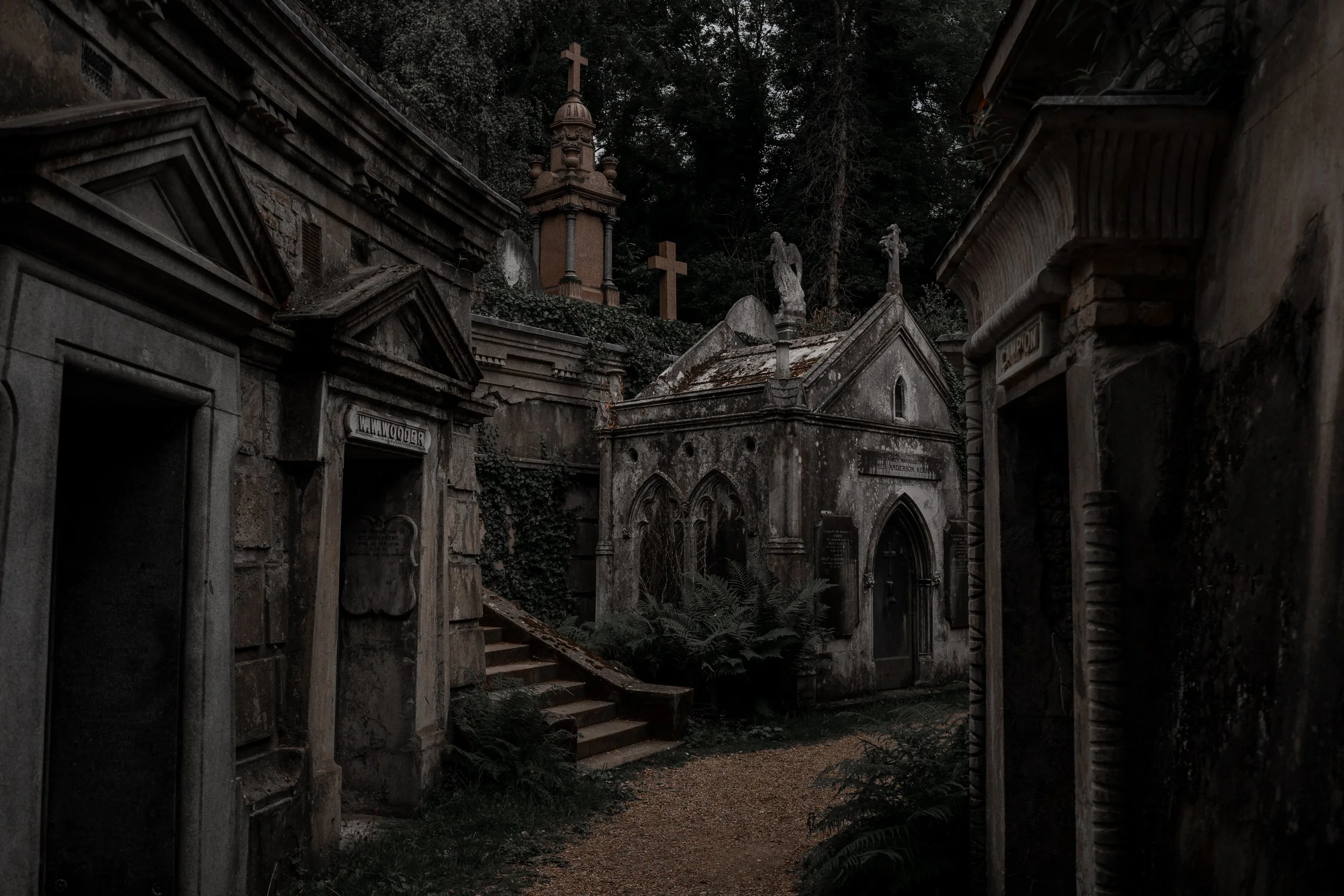
Highgate Cemetery remains one of London’s most atmospheric historic sites, where Victorian funerary art and wild woodland have merged into a landscape shaped by both design and decay. Opened in 1839 as part of the “Magnificent Seven” garden cemeteries, it was conceived by architect Stephen Geary as a planned necropolis of winding paths, dramatic terraces, and monumental tombs - an alternative to the overcrowded churchyards of central London.
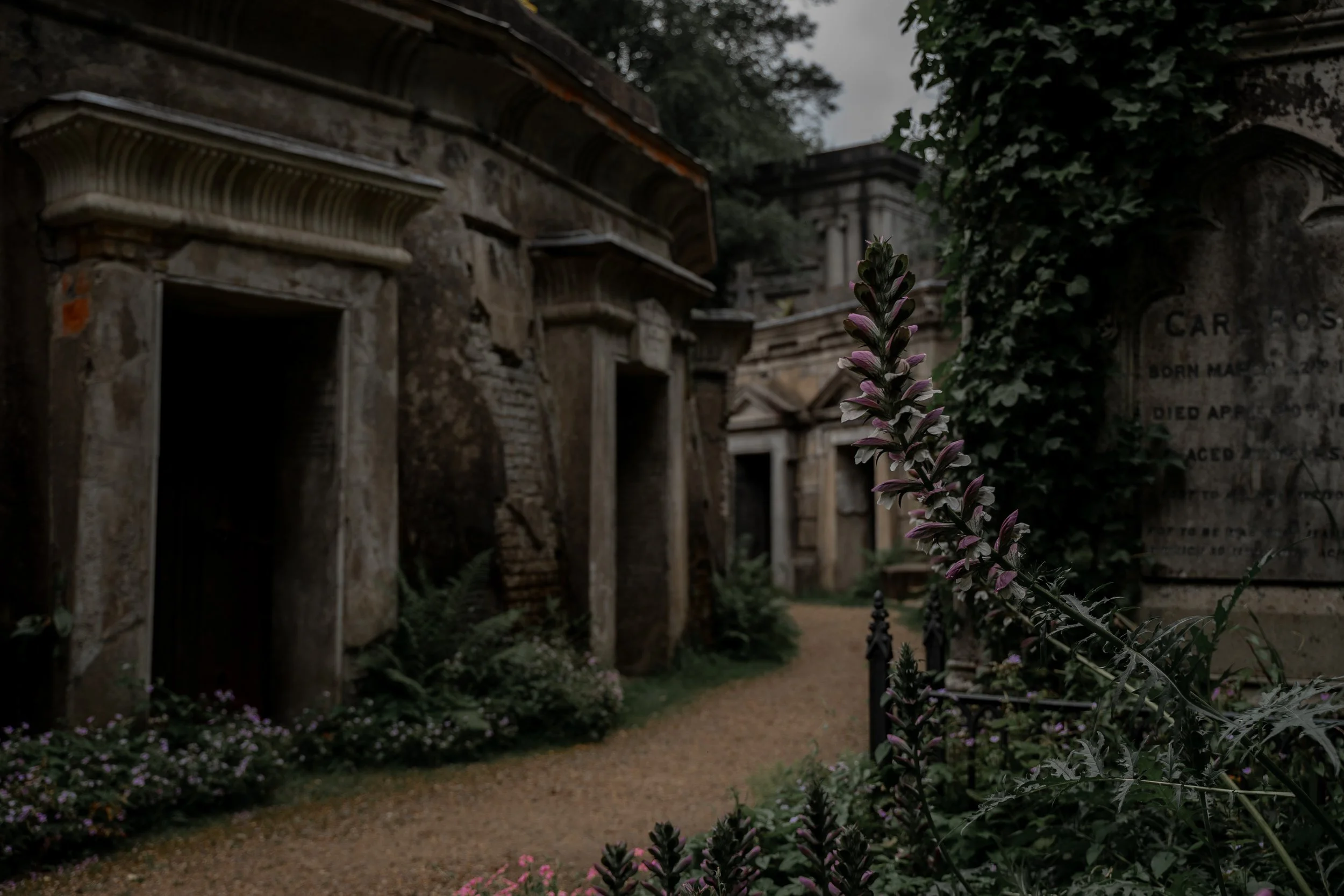
The cemetery is divided into two contrasting halves. The West Cemetery is the older and more architecturally elaborate section, designed as a theatrical expression of Victorian attitudes toward death. Here, funerary architecture draws heavily on historical styles, most notably in the Egyptian Avenue and the Circle of Lebanon which forms a ring of tombs built into the hillside.
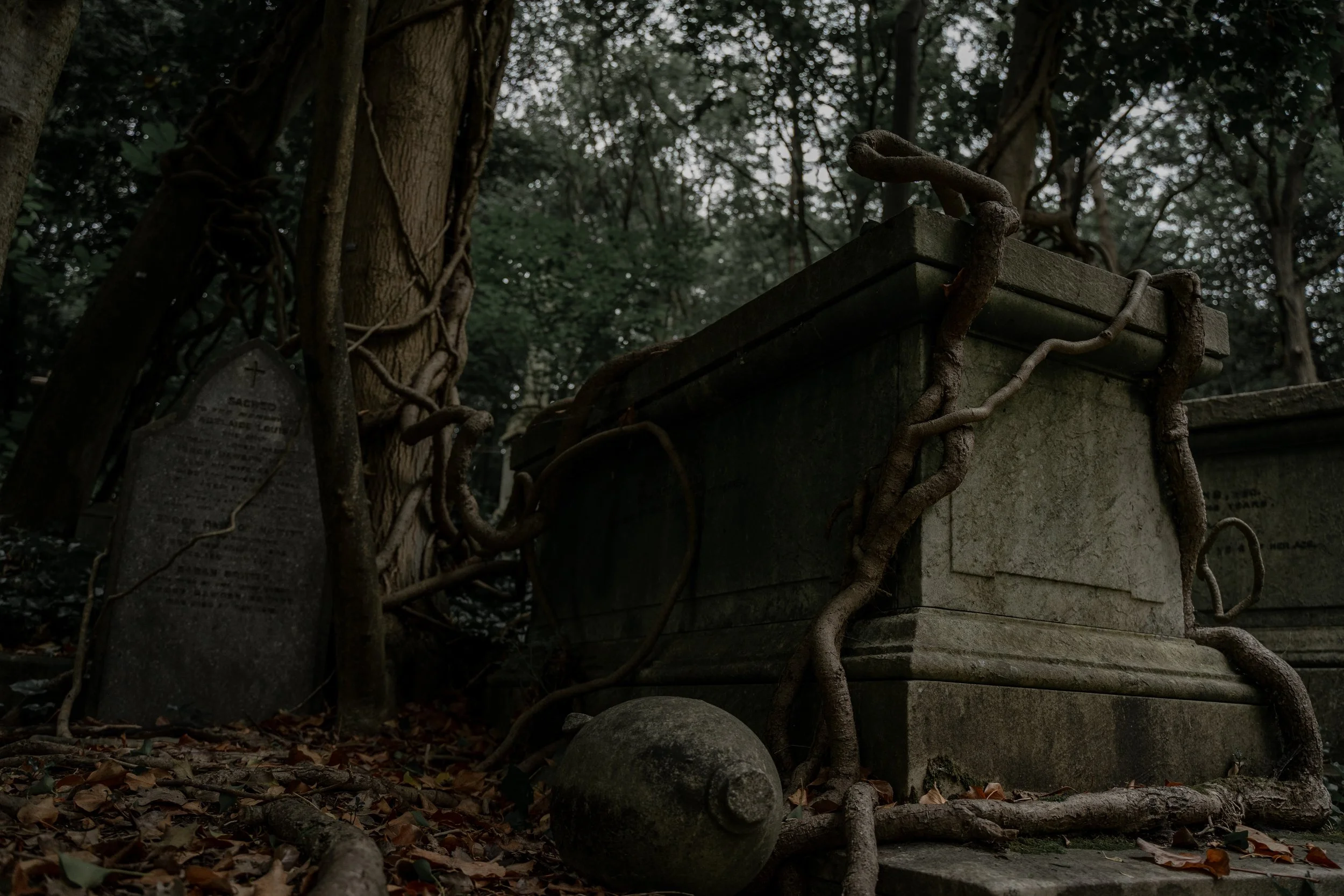
Over time, the West Cemetery was largely overtaken by vegetation. Ivy climbs over tombs, tree roots fracture brick vaults, and the landscape has softened into a semi-wild woodland. This partial reclamation by nature gives the site its distinctive character: a place where Victorian stonework appears suspended within a living forest of decay and renewal.
The East Cemetery, opened in 1860, reflects a later and more open phase of development. It is less densely monumental but contains many of Highgate’s most visited graves. Its atmosphere is still distinctly Victorian in tone, but more ordered and accessible, reflecting the cemetery’s shift toward public prominence and cultural significance.
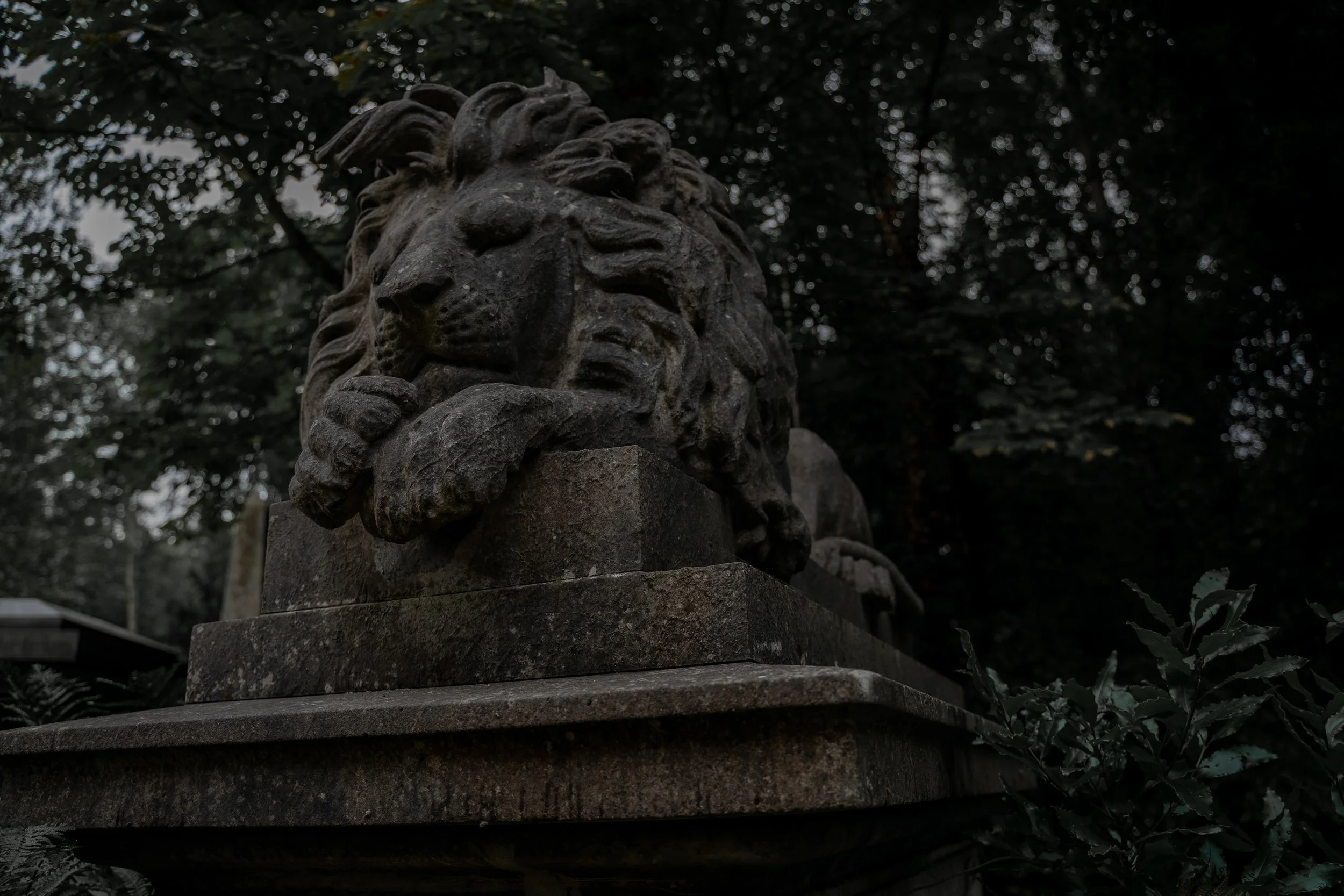
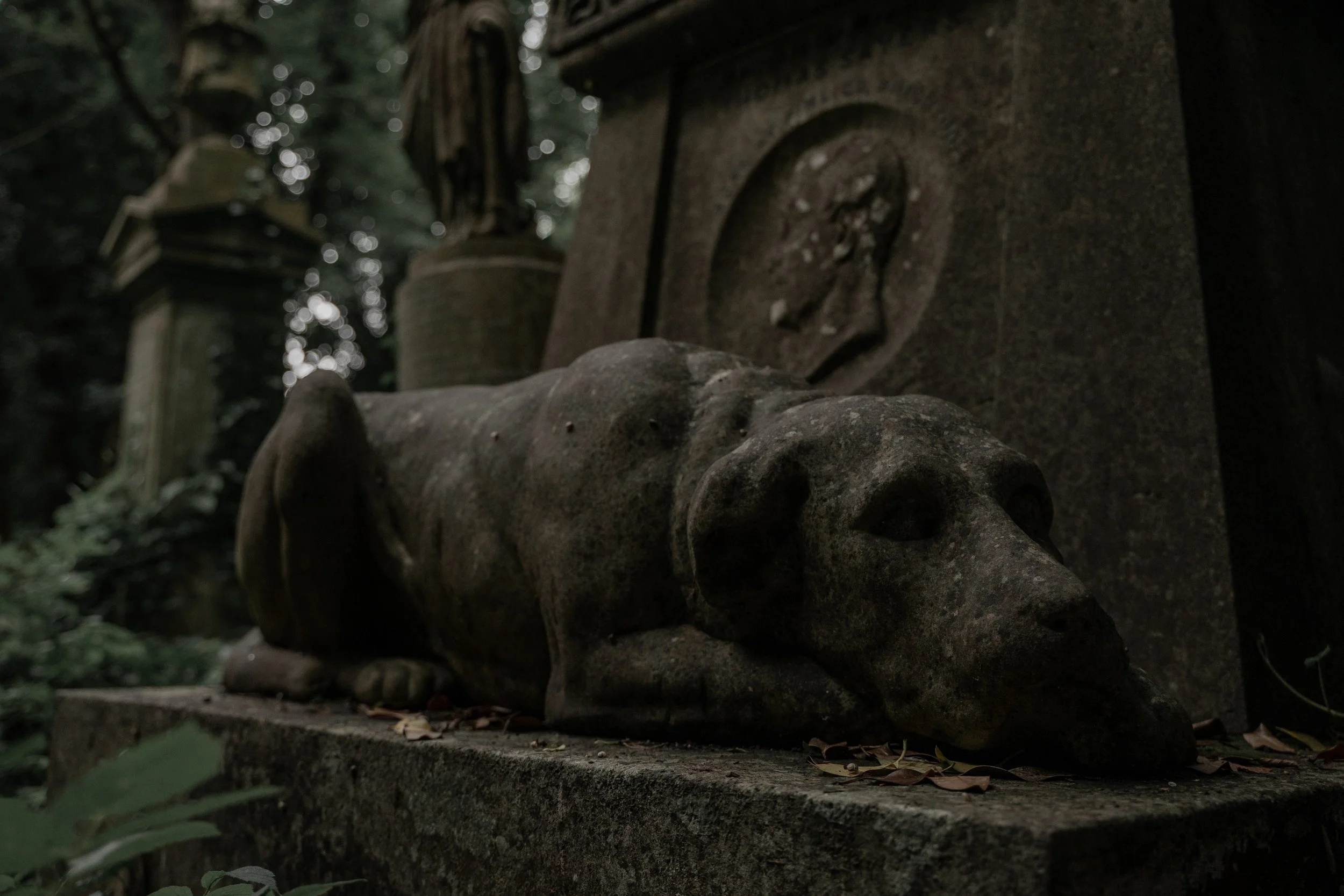
Across both sections are a number of notable monuments. In the West, the Julius Beer Mausoleum, inspired by the Mausoleum at Halicarnassus, stands as one of London’s most elaborate private tombs. As well as the grave of boxer Tom Sayers, watched over by a sculpture of his dog, remains one of the cemetery’s most personal and widely remembered memorials.
In the East, the tone shifts toward cultural memory, with the graves of Karl Marx (philosopher and historian), Malcolm McLaren (manager of the Sex Pistols), and Douglas Adams (author of The Hitchhiker’s Guide to the Galaxy) among many others.
Both sides of cemetery are open for independent exploration, but you can also join guided tours of the West side, which I’d highly recommend.
Highgate’s influence extends far beyond its gates. Its overgrown pathways, Gothic revival monuments and atmospheric details have shaped literature, horror cinema, and London’s wider fascination with the macabre for over a century. It remains one of the most complete surviving expressions of Victorian attitudes toward death: elaborate, symbolic, and deeply embedded in landscape design.
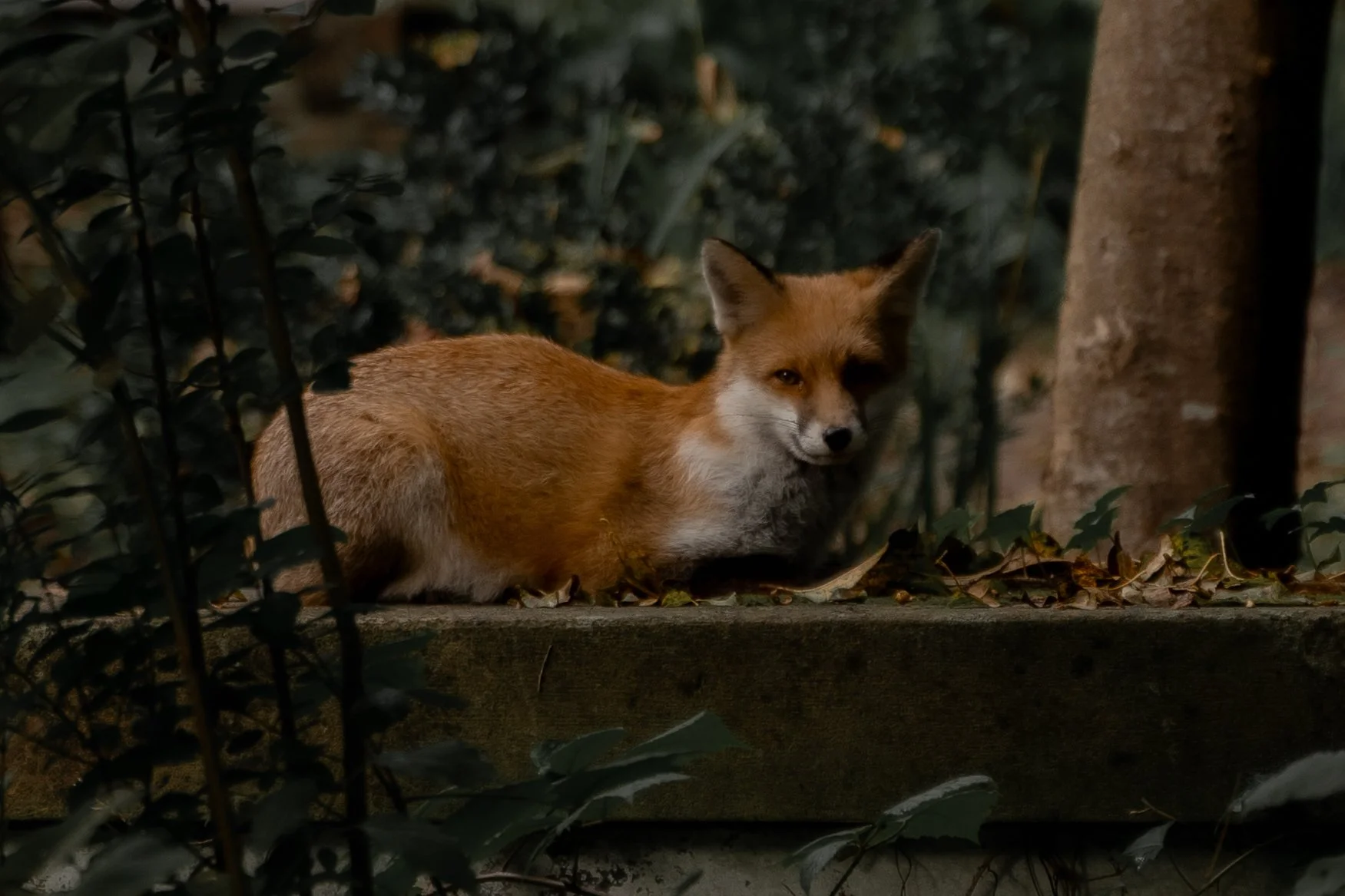
One of its most striking modern inhabitants is the cemetery’s family of foxes. They move through the West Cemetery at dusk and dawn. Often seen resting on warm stone slabs or disappearing into overgrown chapels, they have become part of Highgate’s living ecology. Their presence adds another layer to the cemetery’s atmosphere where urban wildlife has fully reclaimed a space originally designed for the dead.
Today, Highgate Cemetery is maintained by the Friends of Highgate Cemetery Trust, whose conservation work preserves both its architectural heritage and its rewilded woodland character.
Address: Highgate Cemetery, Swain's Lane, N6 6PJ
Nearest station: Archway