
Church of Our Lady
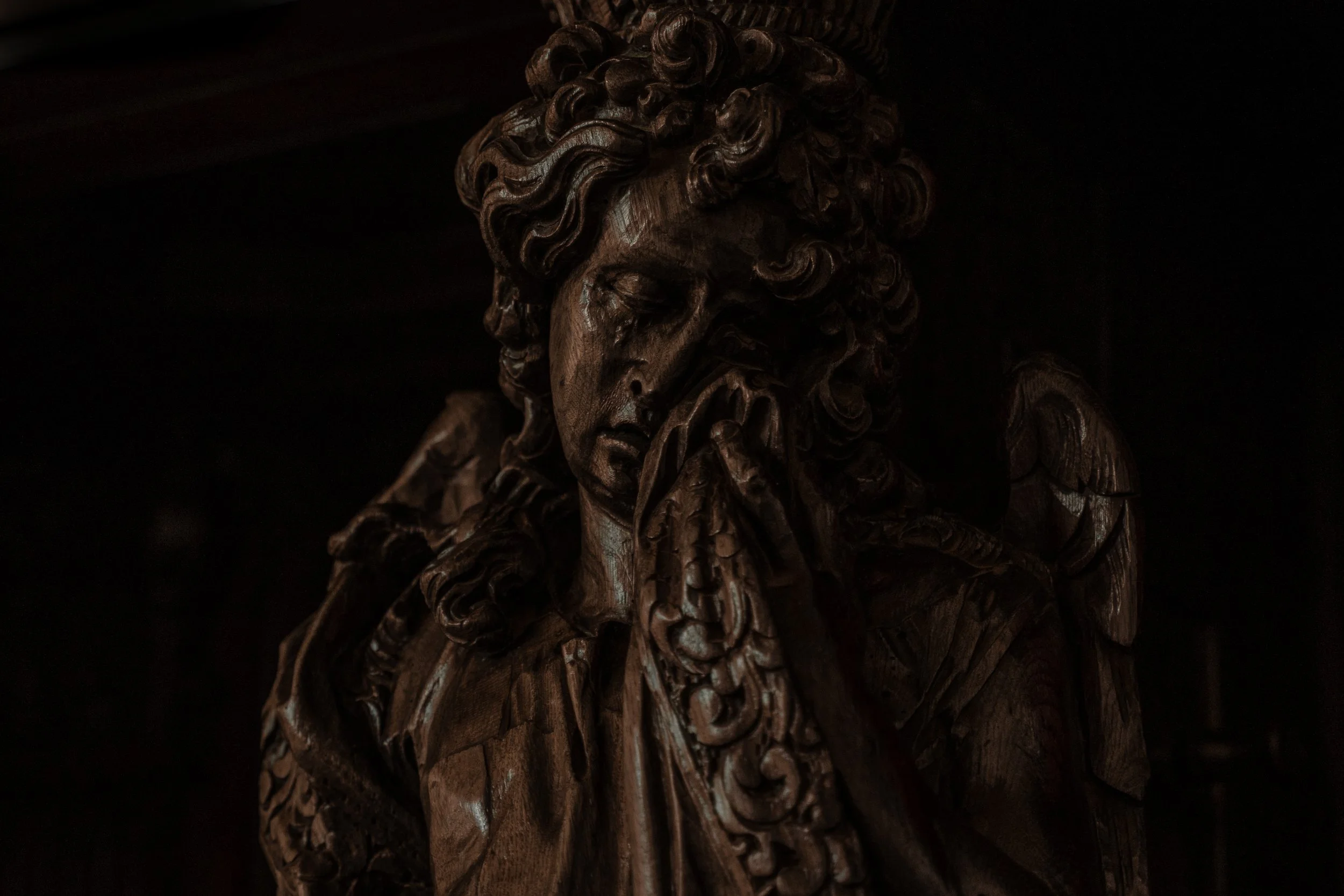
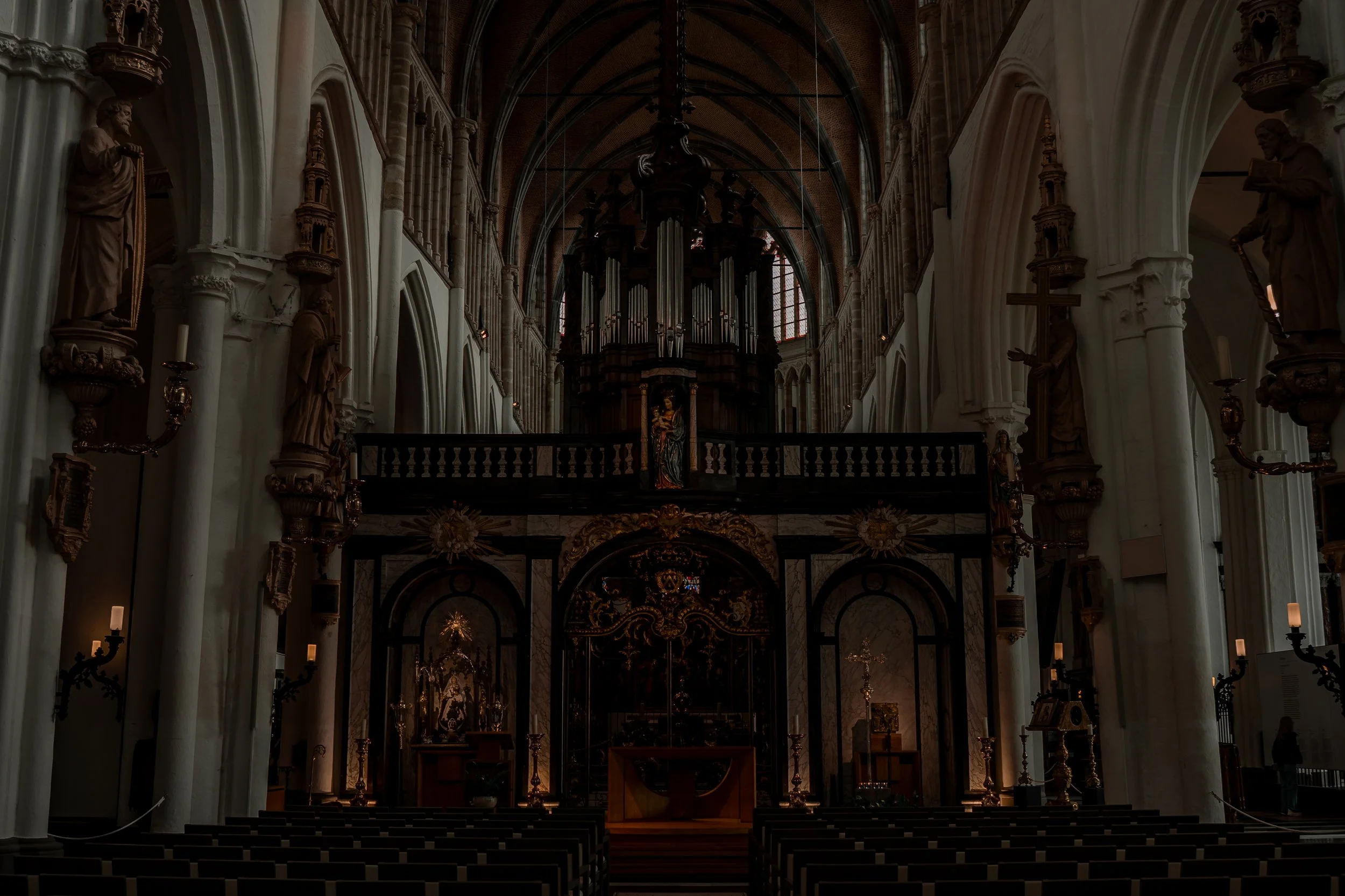
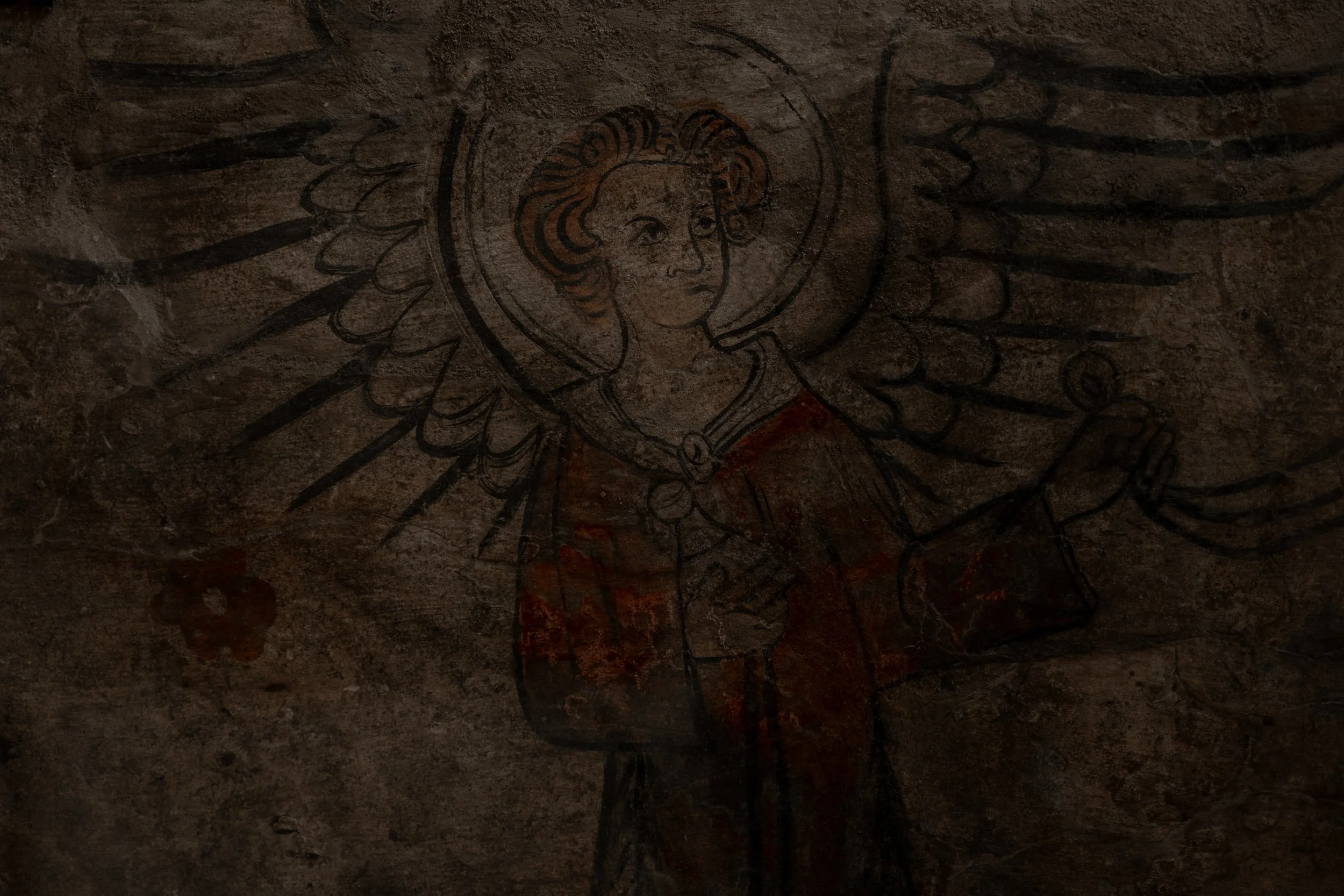
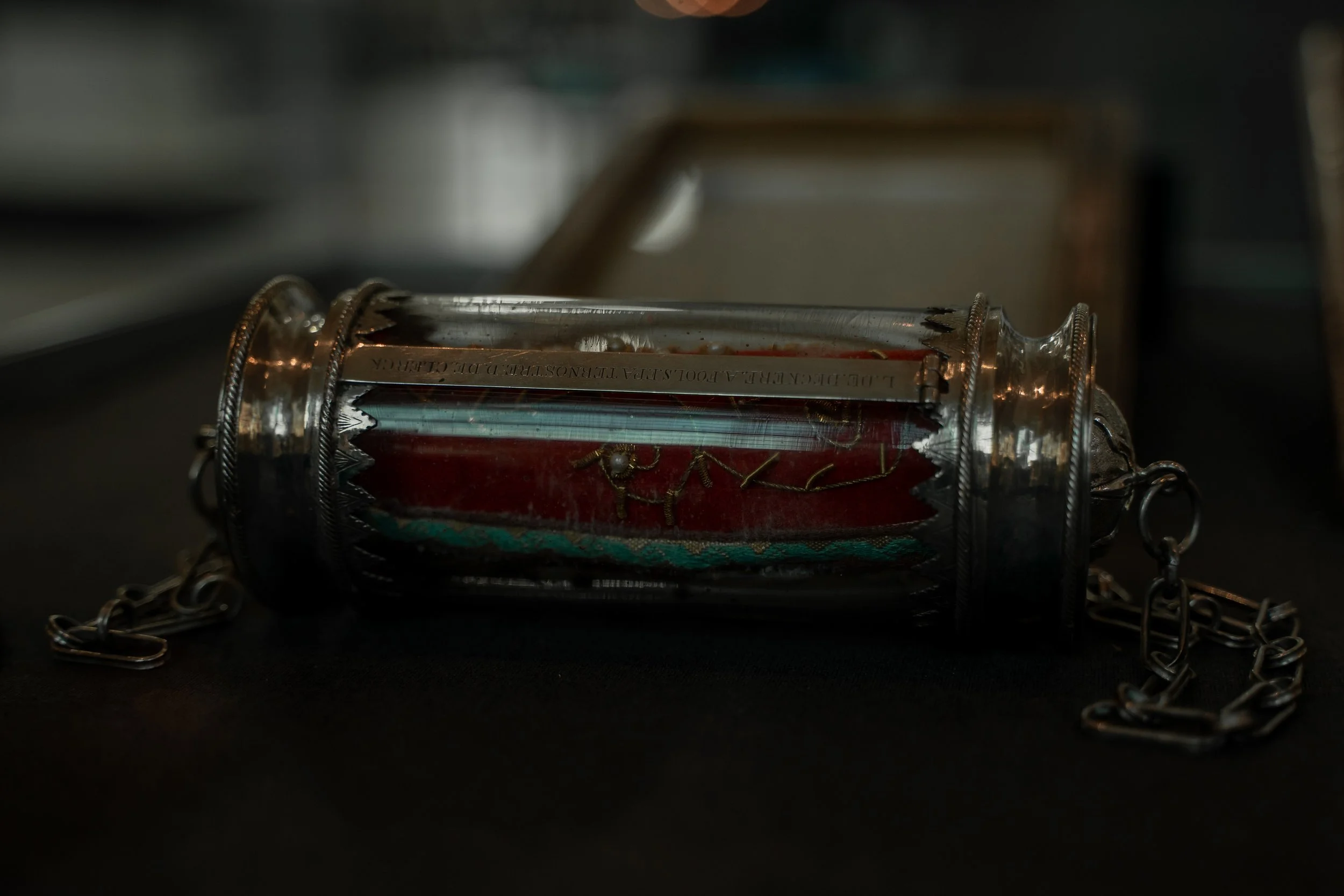
The Church of Our Lady (Onze-Lieve-Vrouwekerk) is one of Bruges’ finest examples of Gothic architecture. Behind its imposing exterior lies a wealth of memento mori art, medieval burial chambers and sacred masterpieces, revealing a lesser known side of the city’s artistic and funerary heritage.
What interested me most was the church’s relationship with death and remembrance. From the gilded tombs of Burgundian royalty to medieval burial vaults decorated with religious paintings, its interiors reveal how the dead were honoured during the Middle Ages.
The church’s origins can be traced back to the 9th century, when a small wooden chapel first stood on the site. Following a fire in 1116, it underwent centuries of development, with construction of the present Gothic structure beginning in the early 13th century and continuing for almost two centuries.
Its most recognisable architectural feature is the vast brick tower, rising approximately 115 metres above the city. Among the tallest brick church towers in the world, it has dominated Bruges’ skyline for centuries, alongside the Belfry and St Saviour’s Cathedral. For one of the best views of its exterior, head to the eastern side of Boniface Bridge.
The church is a fine example of Scheldt Gothic architecture, a distinctive regional style characterised by pointed arches, soaring proportions and intricate structural details.
Inside, the magnificent nave extends approximately 72 metres in length, its towering columns and elegant pointed arches drawing the eye upwards towards the vaulted ceiling. A succession of side chapels, luminous stained glass windows and rich coloured artworks creates an atmosphere of grandeur and timeless beauty.
Among the church’s most significant historical treasures are the elaborate funerary monuments of Mary of Burgundy and her father, Charles the Bold, two influential figures in the history of the Burgundian Netherlands. Perhaps the church’s most curious treasures, however, lie beneath its floors, where a series of burial vaults dating from the 13th and 14th centuries preserve rare examples of medieval funerary art. Some retain their original religious paintings, created not for the eyes of the living, but to surround the deceased within their final resting place.
Within some of these burial chambers, delicate depictions of angels evoke the rituals of Christian burial and the soul’s passage towards heaven, while scenes of the Crucifixion portray Christ upon the cross, flanked by the Virgin Mary and Saint John. Both beautiful and deeply symbolic, these surviving paintings illustrate medieval beliefs surrounding salvation and the afterlife.
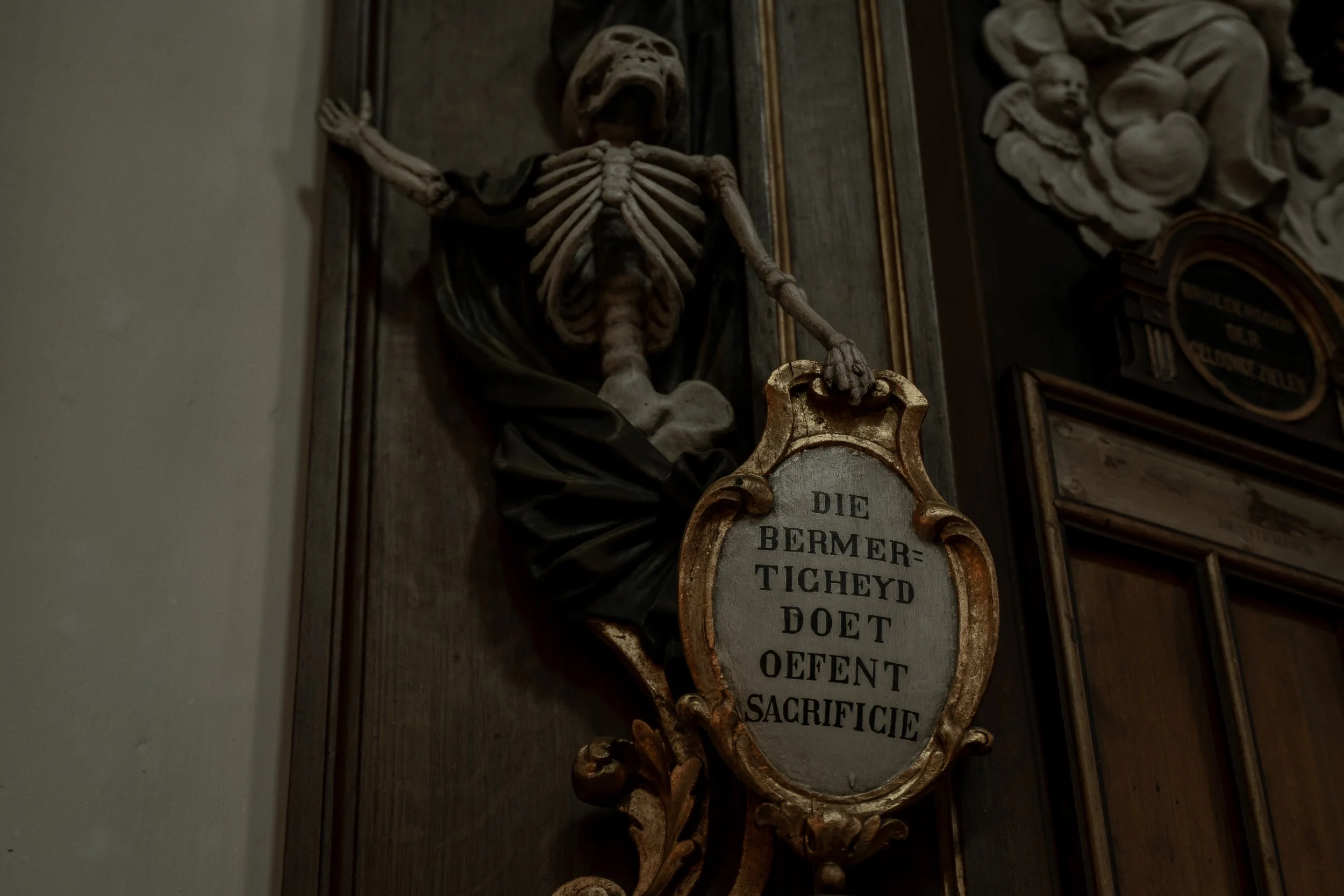
Beyond its funerary chambers, the church contains numerous examples of memento mori art. Among my favourite pieces is a striking depiction of two skeletons with one arm raised towards the heavens, accompanied by an inscription contemplating the inevitability of death. Elsewhere, carved and painted skulls can be found throughout the church, so keep your eyes peeled for these easily overlooked details.
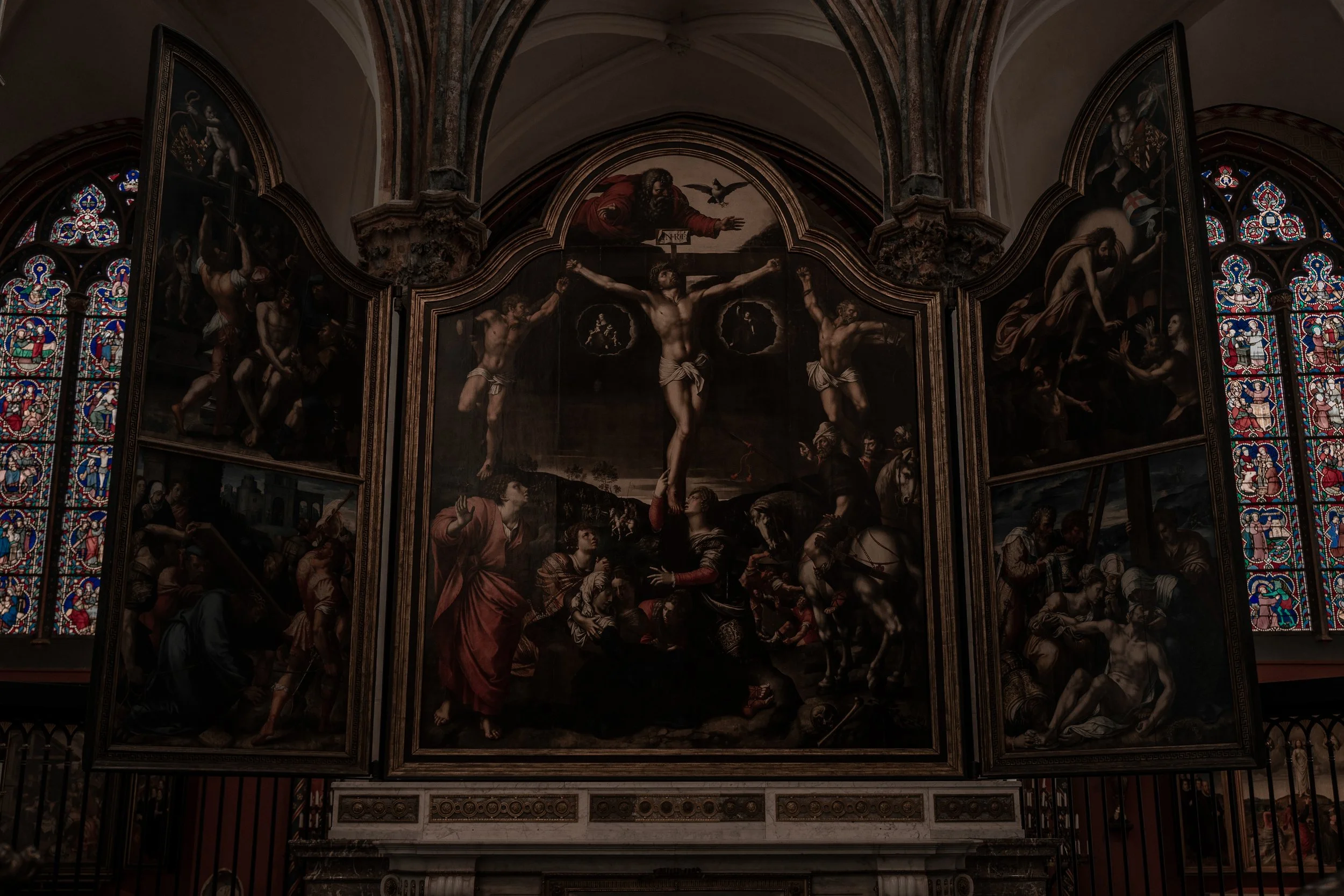
The church also houses an extraordinary collection of sacred art spanning several centuries, including Michelangelo’s early 16th century marble Madonna and Child, famously the only known sculpture by the artist to leave Italy during his lifetime. Another highlight is the Passion Triptych, begun by Bernard van Orley and completed by Marcus Gheeraerts the Elder, depicting the Crucifixion alongside scenes of Christ’s suffering.
In a city celebrated for its medieval architecture, the Church of Our Lady offers something beyond its impressive Gothic architecture. Its royal tombs, painted burial vaults and dark symbols of mortality reveal how closely art, faith and death were once intertwined.
Address: Mariastraat, 8000 Brugge, Belgium