
Cemetery of the Skull
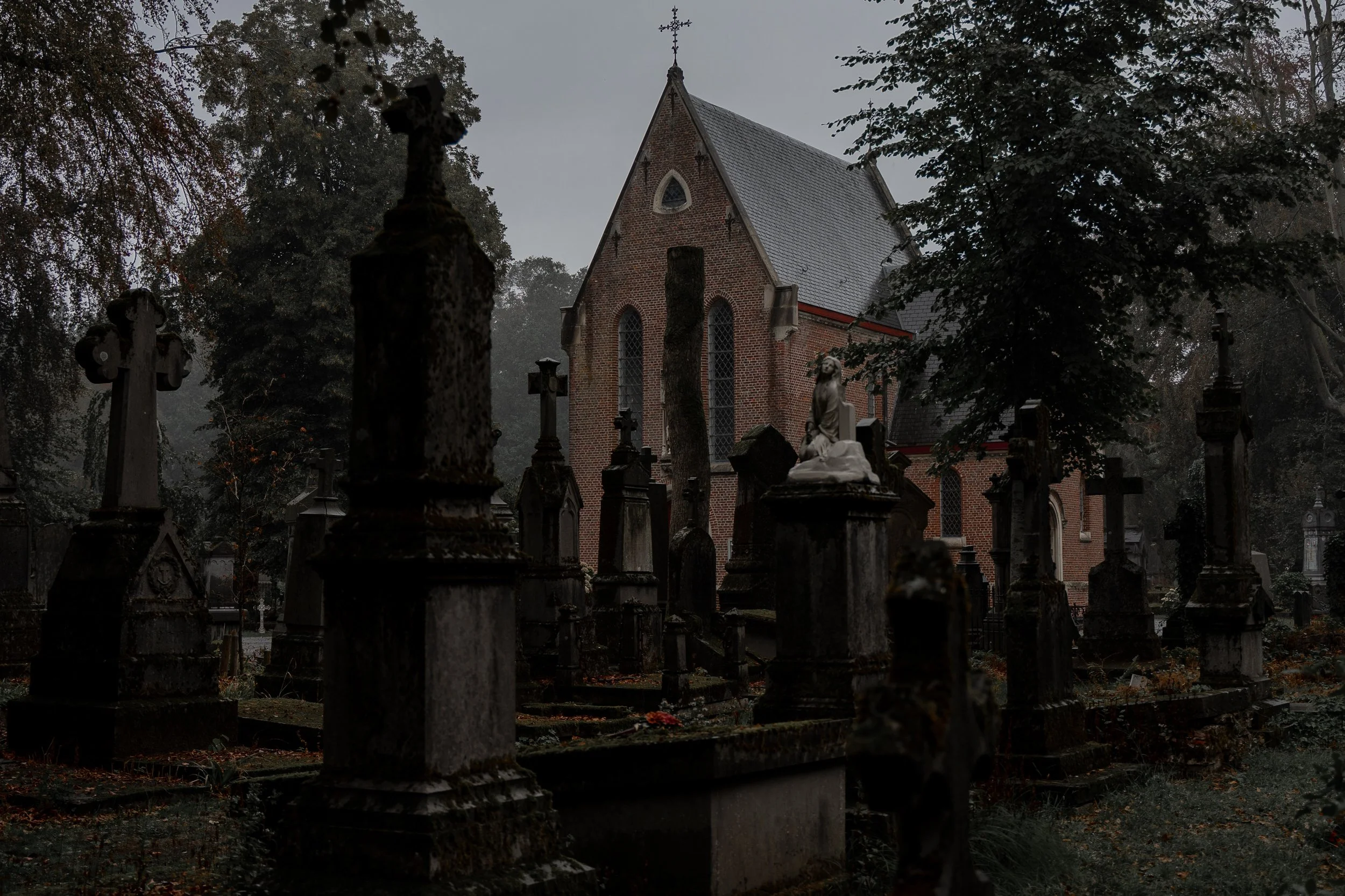
A short walk from Bruges' medieval streets lies what locals call "The Cemetery of the Skull", a vast, atmospheric burial ground of weathered statues, elaborate memorials, ancient trees and a skull and crossbones carving unlike any other.
Established in 1787 in the small district of Assebroek, it is one of Belgium's oldest municipal cemeteries and has become the final resting place of generations of prominent Bruges figures, including artists, architects, writers and politicians. Sometimes compared to Paris's Père Lachaise, it is, in my opinion, far quieter, with a distinctly dark, yet romantic atmosphere.
The cemetery owes its existence to an 18th century shift in European burial practices. Emperor Joseph II decreed that burials should no longer take place around churches within cities, partly out of concern for hygiene and public health. Bruges responded by establishing its cemetery on the outskirts of the city, with the first burial taking place in 1787.
Beyond the ornate entrance gatehouse, long pathways stretch out in every direction, vanishing beneath an enormous canopy of beech trees (some more than 200 years old). Their low hanging branches create a beautifully enclosed atmosphere, with dappled light falling across the gravestones. In places, the greenery has become almost as much a feature of the cemetery as the monuments themselves, with moss and lichen slowly reclaiming the crumbling stone.
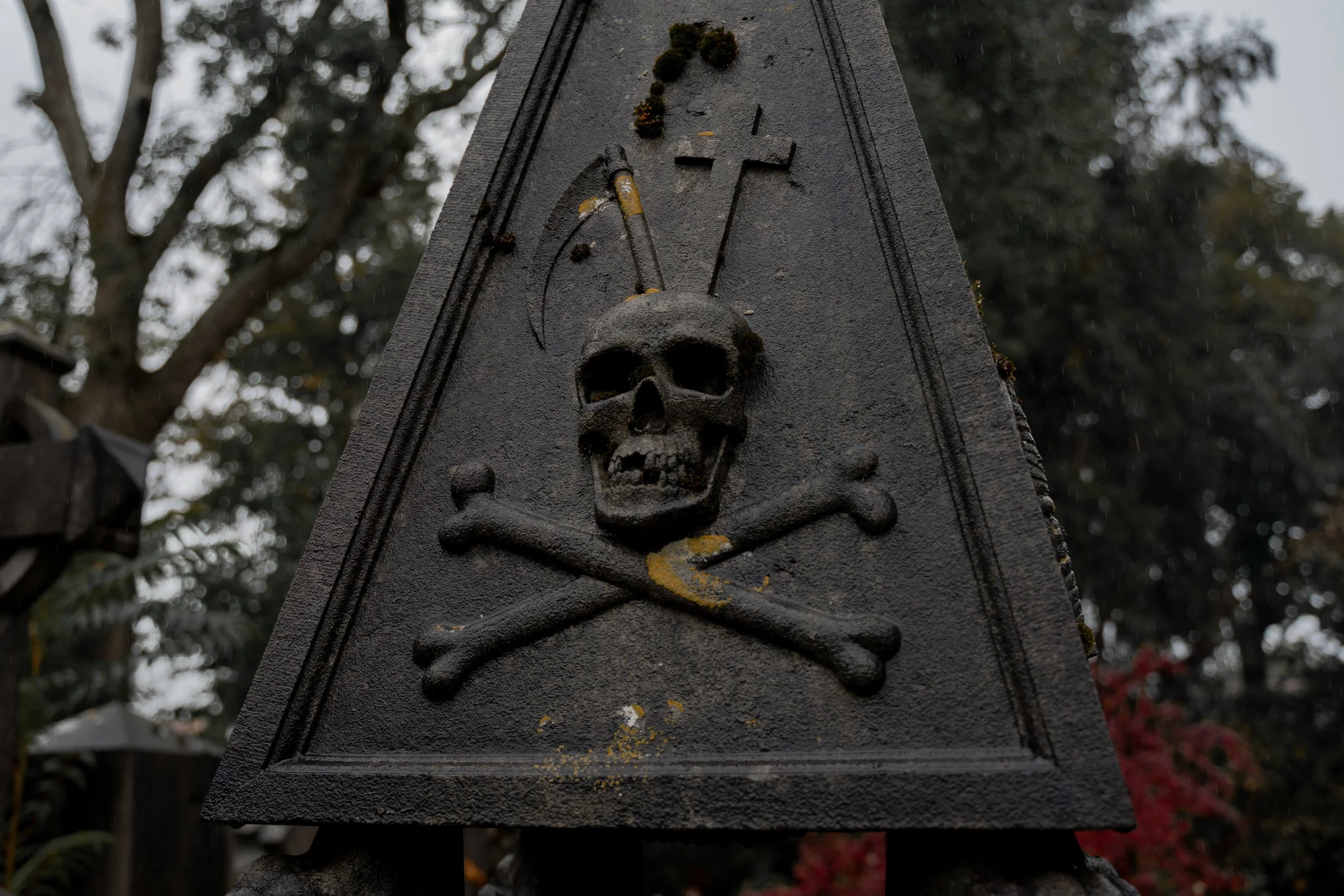
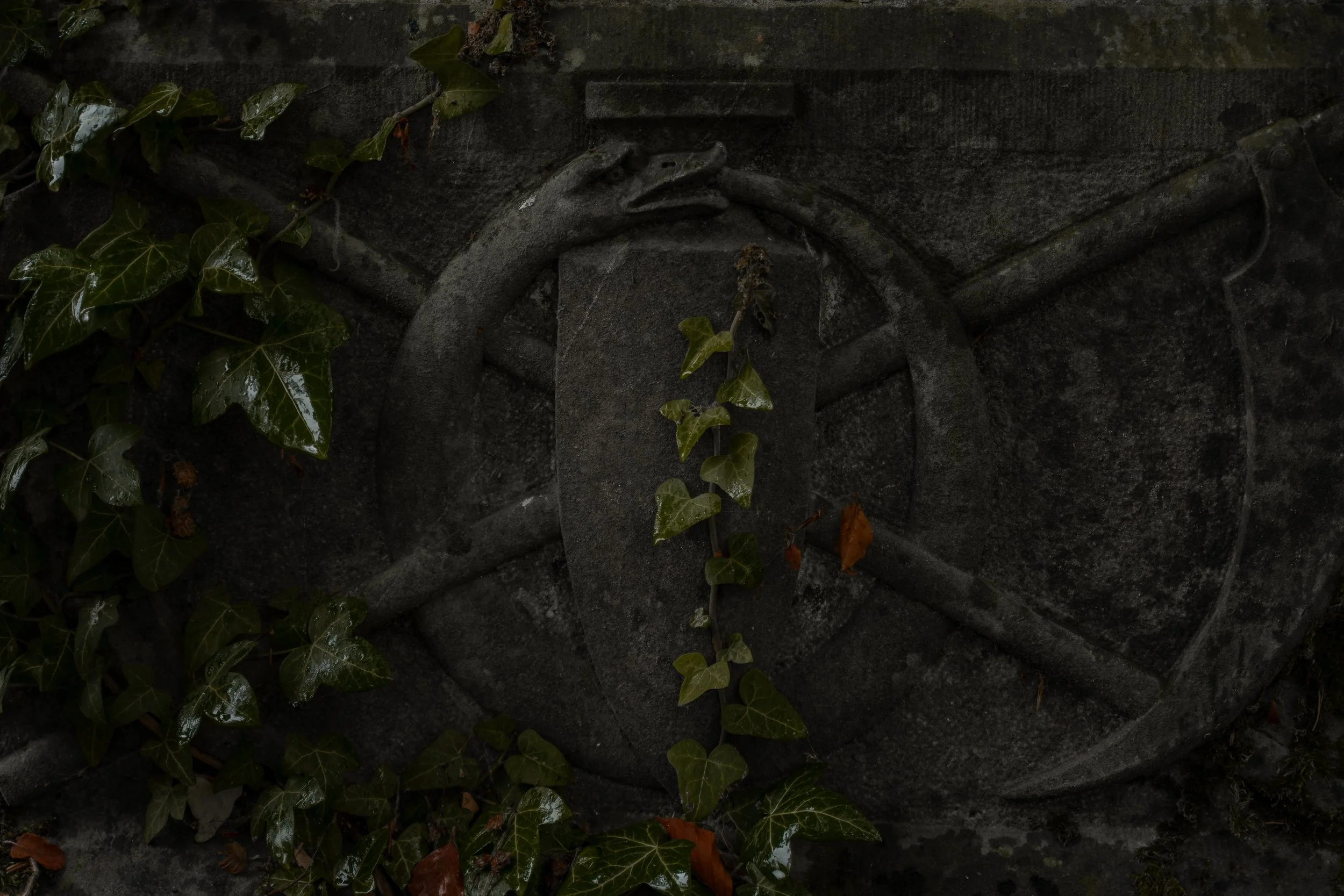
In the 19th century, elaborate funerary monuments became a way for wealthy families to display their status even after death and many of the tombs here were the work of prominent sculptors. But among the grand memorials are smaller, arguably more intriguing details: carved skulls, hourglasses, snakes and scythes, symbols that form part of the visual language of mortality found throughout Europe's historic cemeteries.
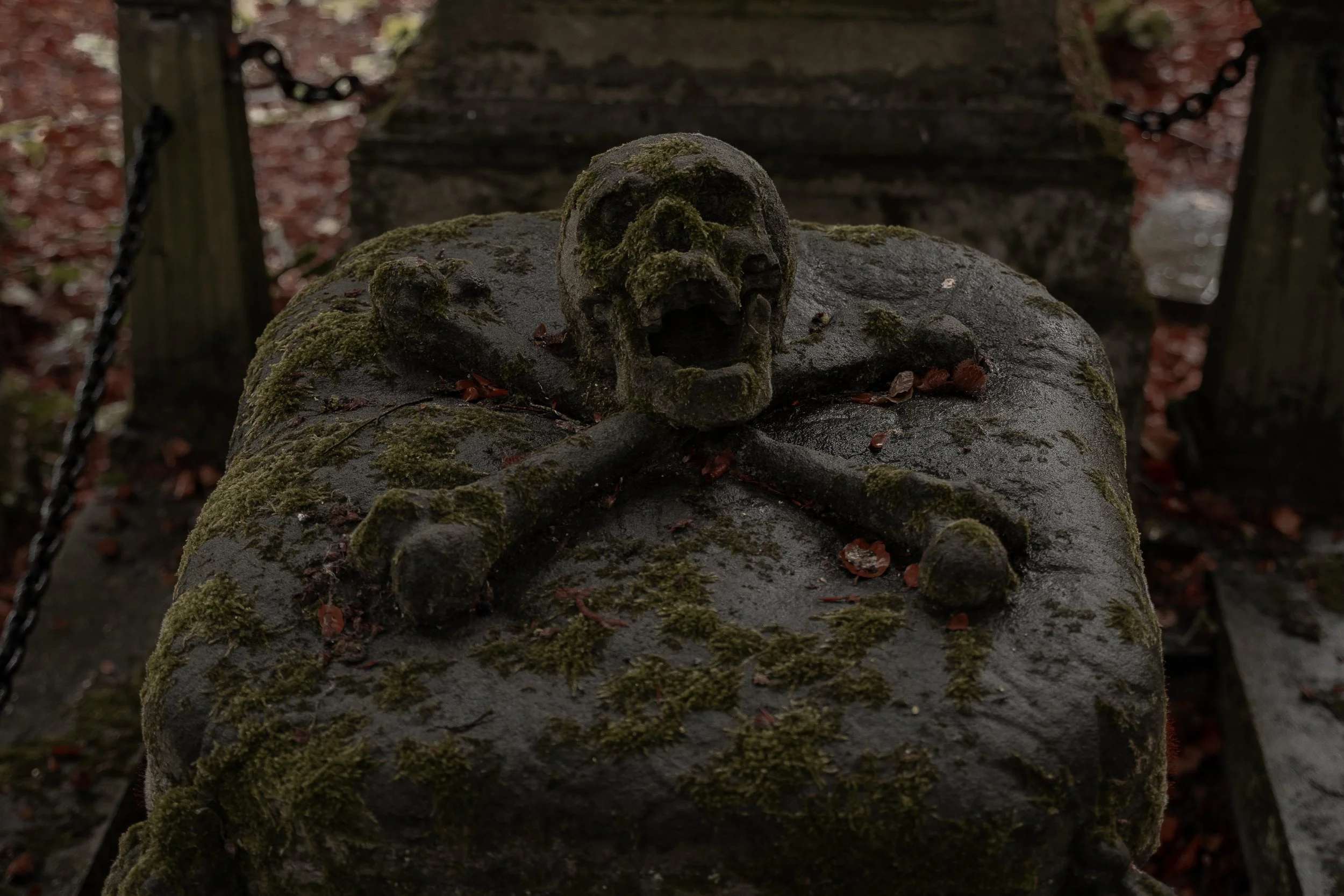
The cemetery’s most remarkable monument is its macabre skull and crossbones carving. The grave belongs to Antoine Michel Wernaer, a local merchant, whose unusual memorial became known as “Pirate Piet” because of its striking design. Look closely and you’ll find the skull emerging from a weathered stone pillow, its hollow eye sockets staring out from beneath a covering of yellow-green moss. The imagery is a particularly notable example of memento mori, the reminder that death is inevitable and that earthly life is fleeting. The carving is wonderfully theatrical: moss and vegetation creep around the monument, giving the impression that the grave is slowly being reclaimed by the landscape. Rather than being grotesque, it has become beautiful through age, decay and nature and it is exactly the sort of curious detail that drew me to this cemetery in the first place.
Near the entrance, a remarkable little open-air structure houses a small exhibition exploring the heritage, folklore, art and architecture associated with the site. It offers a closer look at the stories behind the monuments and the traditions surrounding the burial ground.
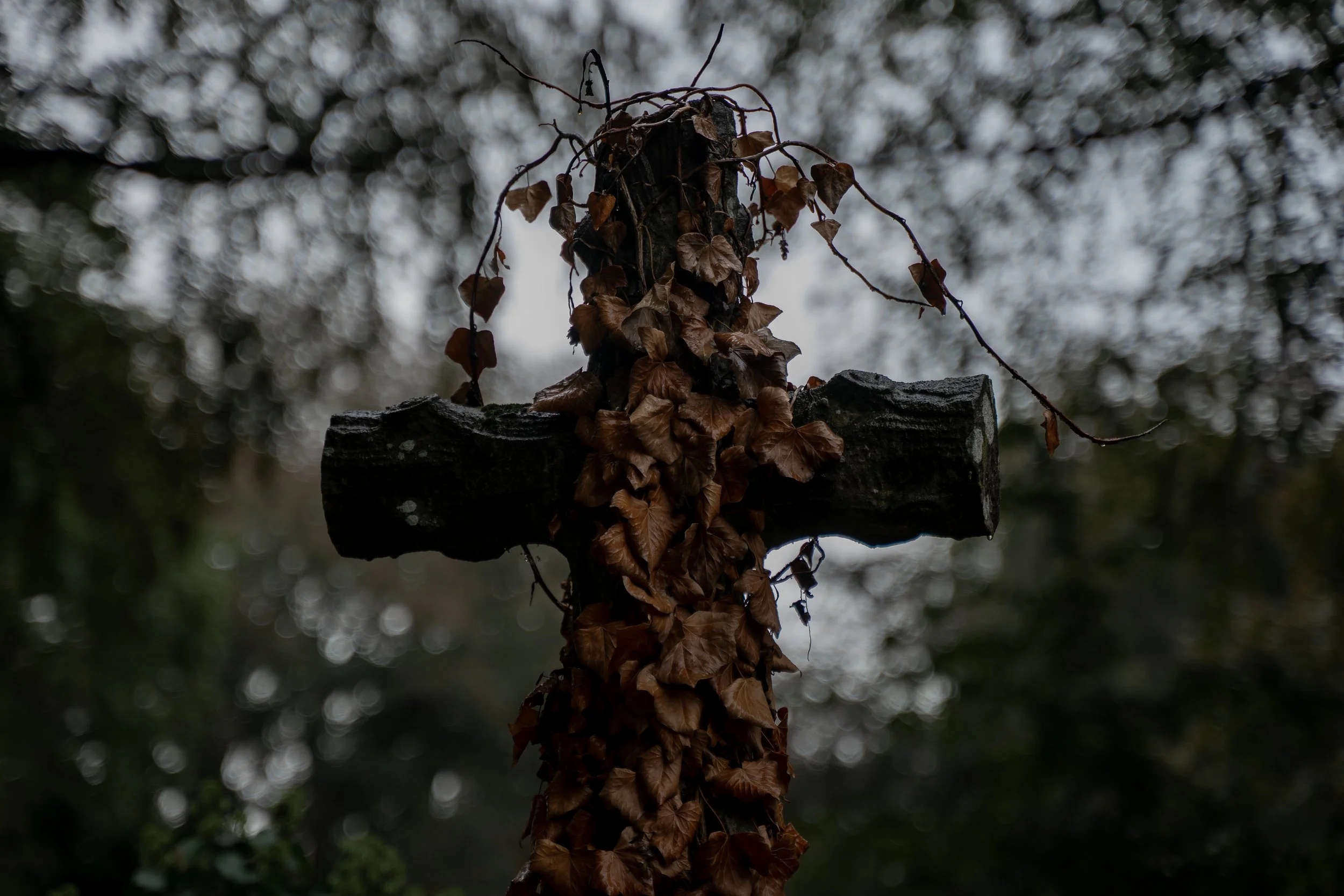
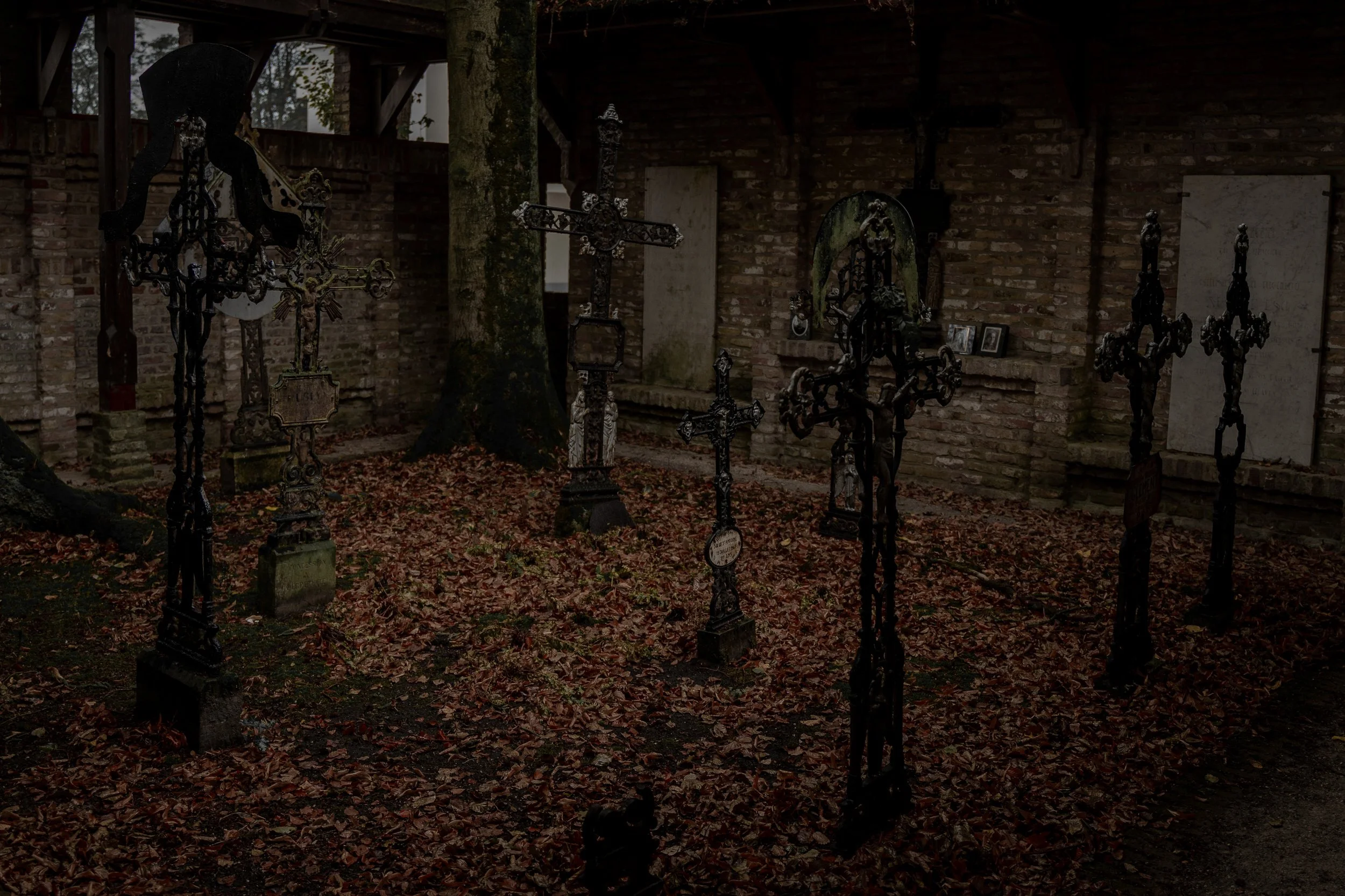
The burial site is at its most enchanting in autumn, when falling leaves blanket the paths in crisp orange and golden-brown, creating a dramatic contrast with the dark iron crosses and grey, time-worn gravestones. The effect is moody and melancholic, and the atmosphere only deepens as the season turns.
Together, the monumental tombs, moody details and root twisted trees create a cinematic landscape, even more so when the paths are empty and, if like me, you visit in the pouring rain. There's a faintly surreal quality to it, as though you've wandered into a Gothic film set, except that everything here is real and has been slowly decaying for centuries.
There's no need to rush or to follow any particular route during your visit. Simply wander beneath the trees and take in the details. The longer you look, the more this cemetery reveals.
Address: Kleine Kerkhofstraat 60, 8310 Brugge, Belgium