The Alternative Guide to London
Featuring 13 dark, Gothic & unusual things to do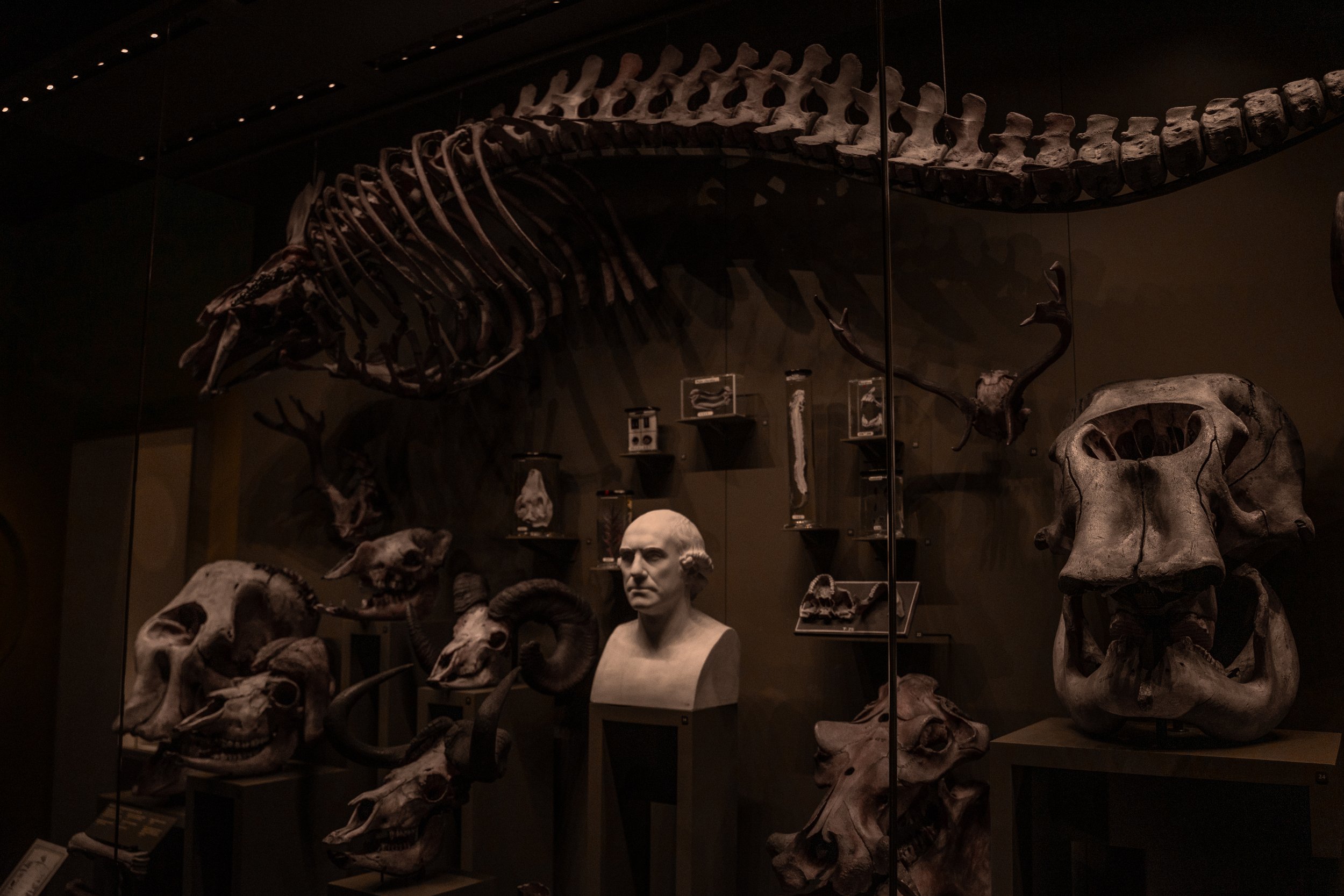
1. Where to stay
Discover the best Gothic, moody, historic and dark academia hotels in London. Atmospheric stays where shadowy corridors, Gothic architecture styles and candlelit interiors meet modern luxury.
Dark Romantic: The Rookery, House of Gods, The Mandrake
Gothic Revival: St. Pancras London
Old World Elegance: Batty Langley's, The Gore, The Goring, Kimpton Fitzroy, Vintry & Mercer Hotel, The Bloomsbury Hotel, The Ned, Rosewood, Hazlitt's, The Dixon
Curious: The Zetter Marylebone, The Zetter Clerkenwell, Artist Residence
As The Alternative Guide is reader‑supported, booking through my Booking.com links is a simple way to support my site at no additional cost.
2. Highgate Cemetery
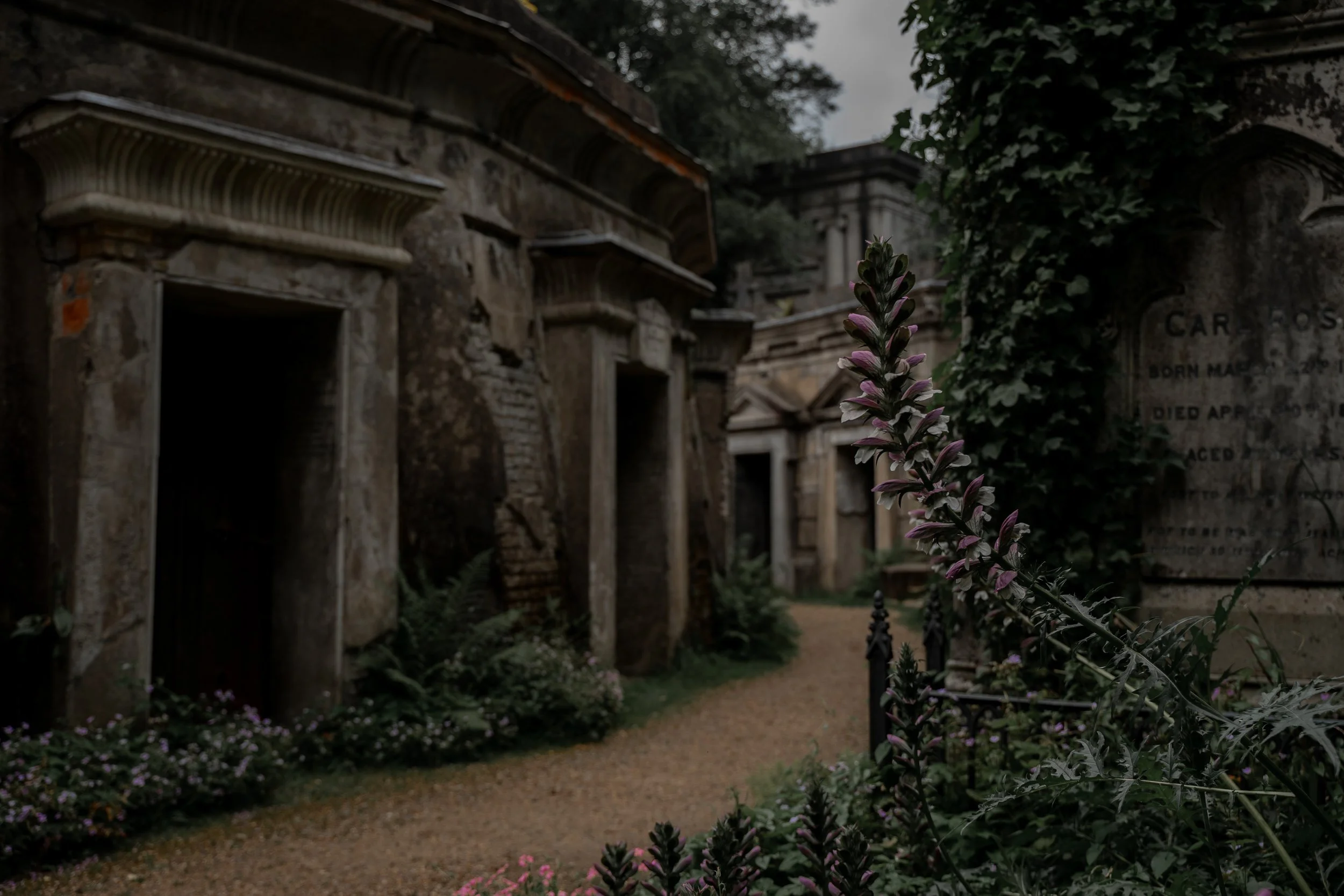
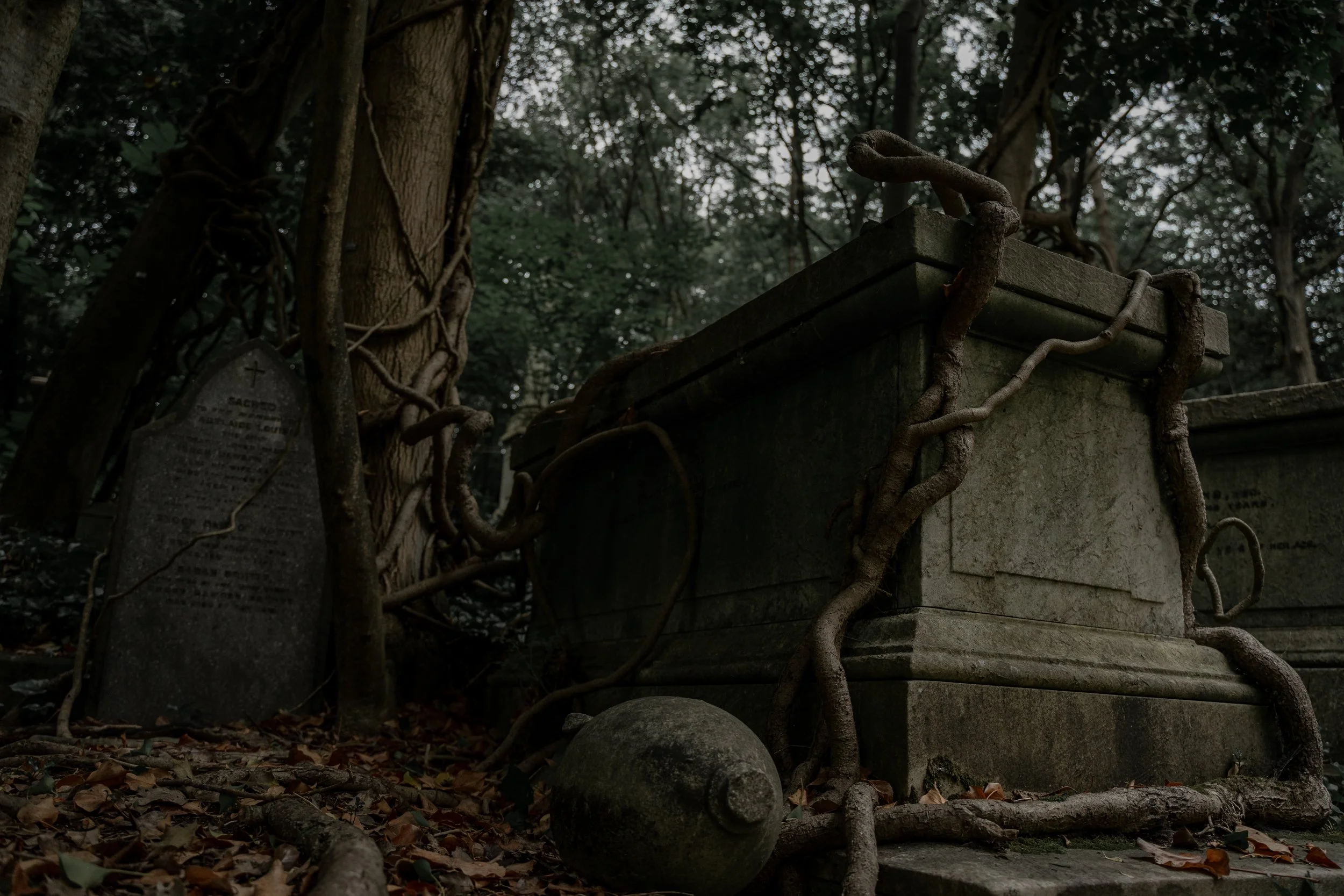
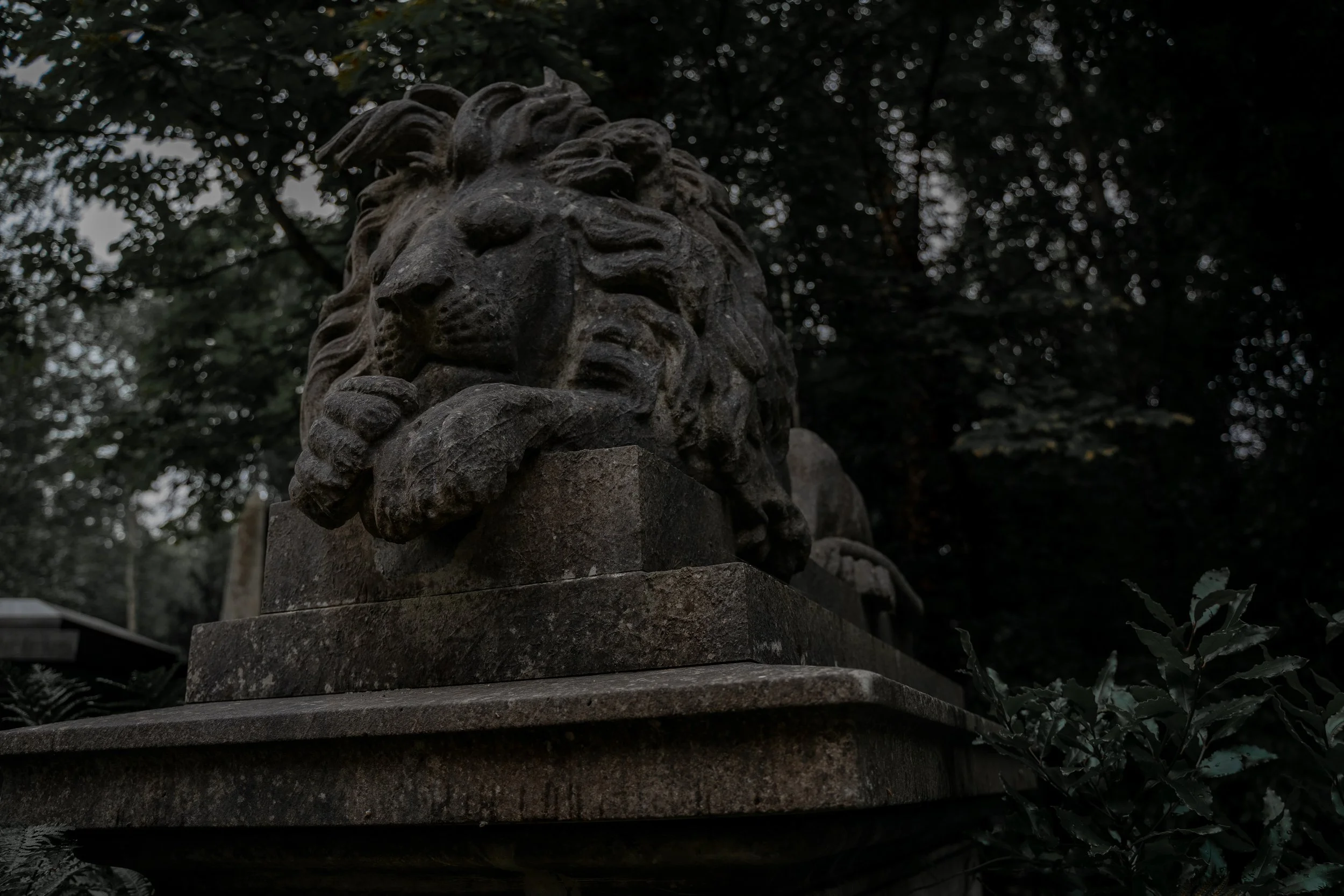
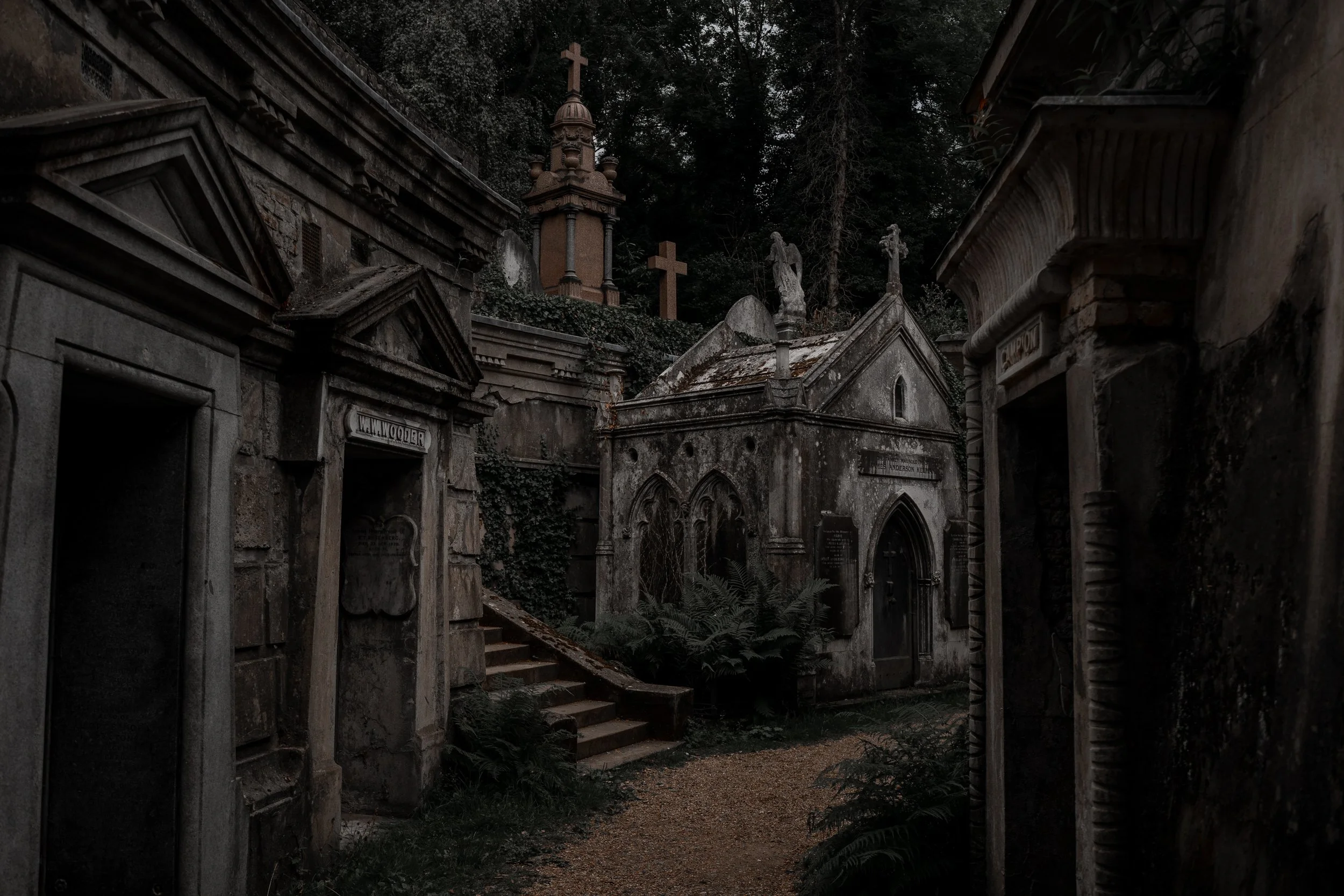
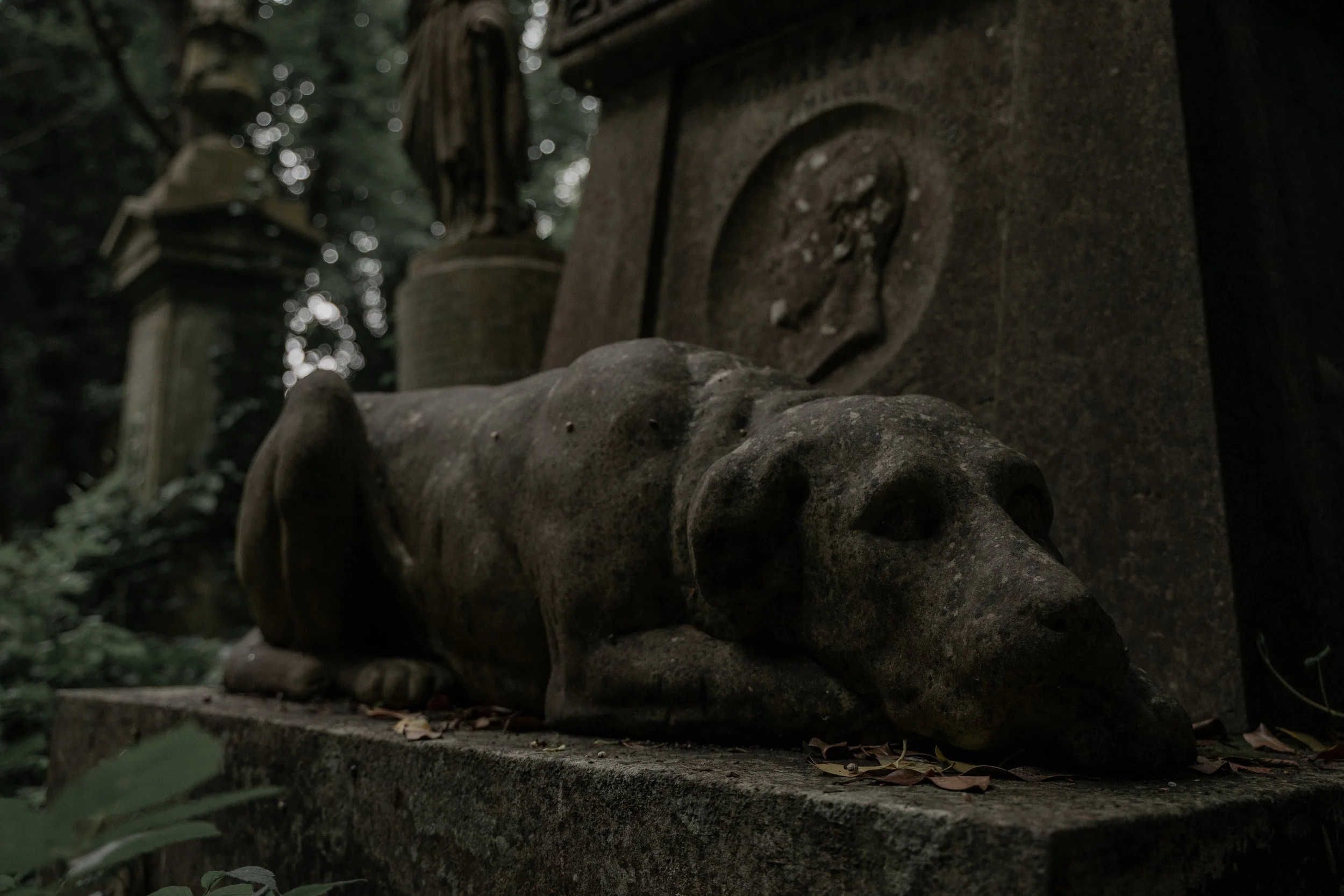
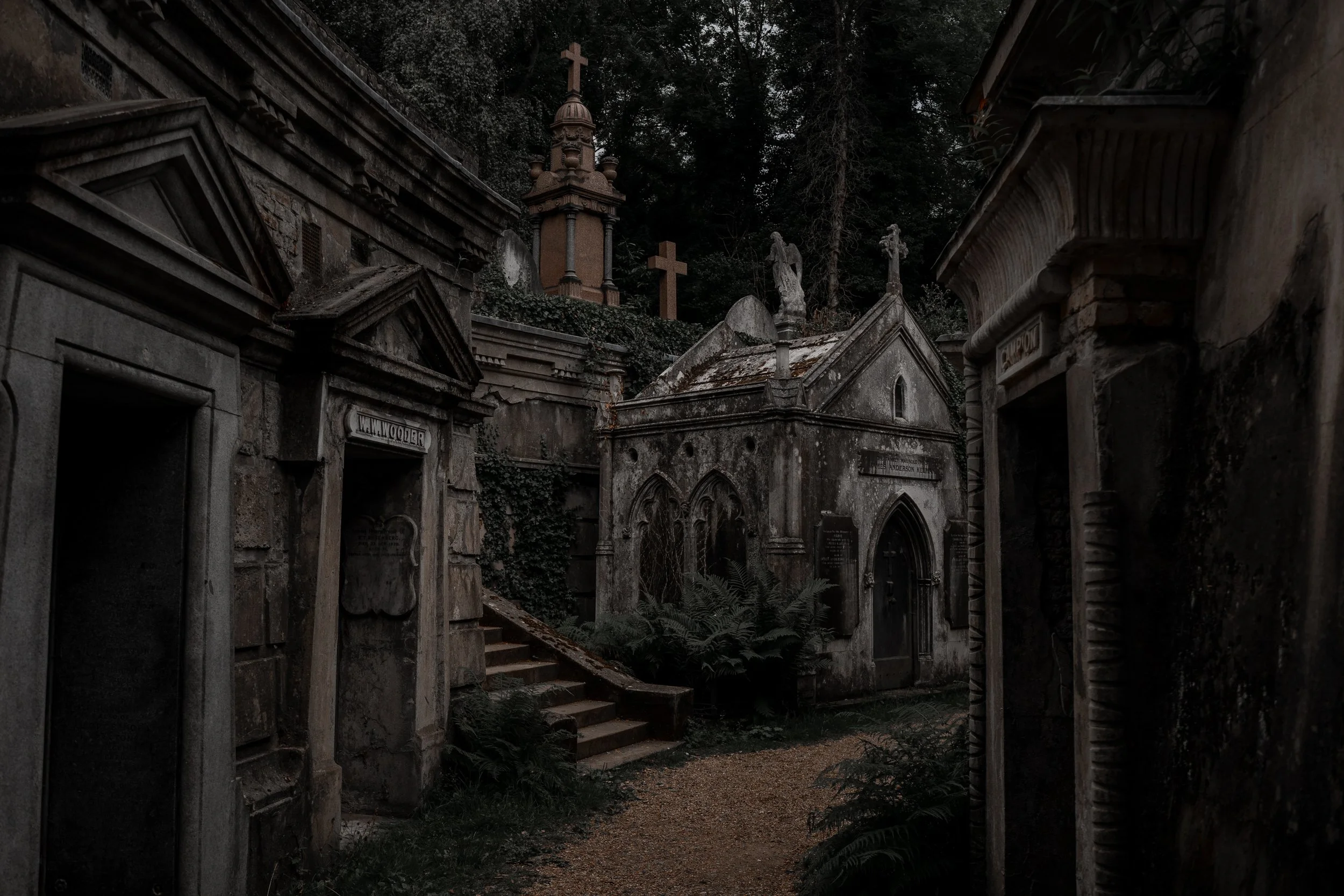
Highgate Cemetery remains one of London’s most atmospheric historic sites, where Victorian funerary art and wild woodland have merged into a landscape shaped by both design and decay. Opened in 1839 as part of the “Magnificent Seven” garden cemeteries, it was conceived by architect Stephen Geary as a planned necropolis of winding paths, dramatic terraces, and monumental tombs - an alternative to the overcrowded churchyards of central London.
The cemetery is divided into two contrasting halves. The West Cemetery is the older and more architecturally elaborate section, designed as a theatrical expression of Victorian attitudes toward death. Here, funerary architecture draws heavily on historical styles, most notably in the Egyptian Avenue and the Circle of Lebanon which forms a ring of tombs built into the hillside.
Over time, the West Cemetery was largely overtaken by vegetation. Ivy climbs over tombs, tree roots fracture brick vaults, and the landscape has softened into a semi-wild woodland. This partial reclamation by nature gives the site its distinctive character: a place where Victorian stonework appears suspended within a living forest of decay and renewal.
The East Cemetery, opened in 1860, reflects a later and more open phase of development. It is less densely monumental but contains many of Highgate’s most visited graves. Its atmosphere is still distinctly Victorian in tone, but more ordered and accessible, reflecting the cemetery’s shift toward public prominence and cultural significance.
Across both sections are a number of notable monuments. In the West, the Julius Beer Mausoleum, inspired by the Mausoleum at Halicarnassus, stands as one of London’s most elaborate private tombs. As well as the grave of boxer Tom Sayers, watched over by a sculpture of his dog, remains one of the cemetery’s most personal and widely remembered memorials.
In the East, the tone shifts toward cultural memory, with the graves of Karl Marx (philosopher and historian), Malcolm McLaren (manager of the Sex Pistols), and Douglas Adams (author of The Hitchhiker’s Guide to the Galaxy) among many others.
Both sides of cemetery are open for independent exploration, but you can also join guided tours of the West side, which I’d highly recommend.
Highgate’s influence extends far beyond its gates. Its overgrown pathways, Gothic revival monuments and atmospheric details have shaped literature, horror cinema, and London’s wider fascination with the macabre for over a century. It remains one of the most complete surviving expressions of Victorian attitudes toward death: elaborate, symbolic, and deeply embedded in landscape design.
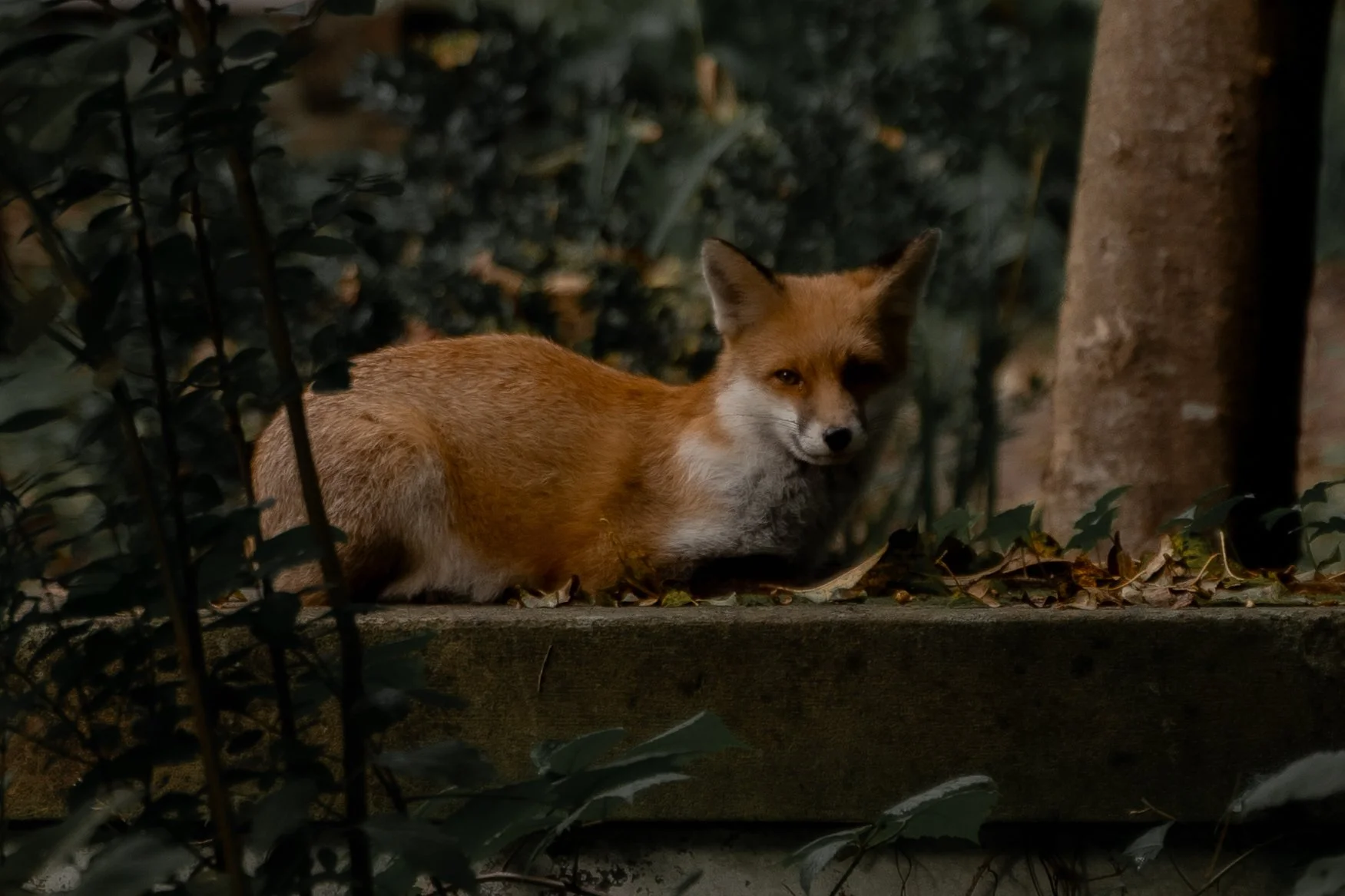
One of its most striking modern inhabitants is the cemetery’s family of foxes. They move through the West Cemetery at dusk and dawn. Often seen resting on warm stone slabs or disappearing into overgrown chapels, they have become part of Highgate’s living ecology. Their presence adds another layer to the cemetery’s atmosphere where urban wildlife has fully reclaimed a space originally designed for the dead.
Today, Highgate Cemetery is maintained by the Friends of Highgate Cemetery Trust, whose conservation work preserves both its architectural heritage and its rewilded woodland character.
Looking for a place to stay? Discover my London hotel guide.
3. Hunterian Museum
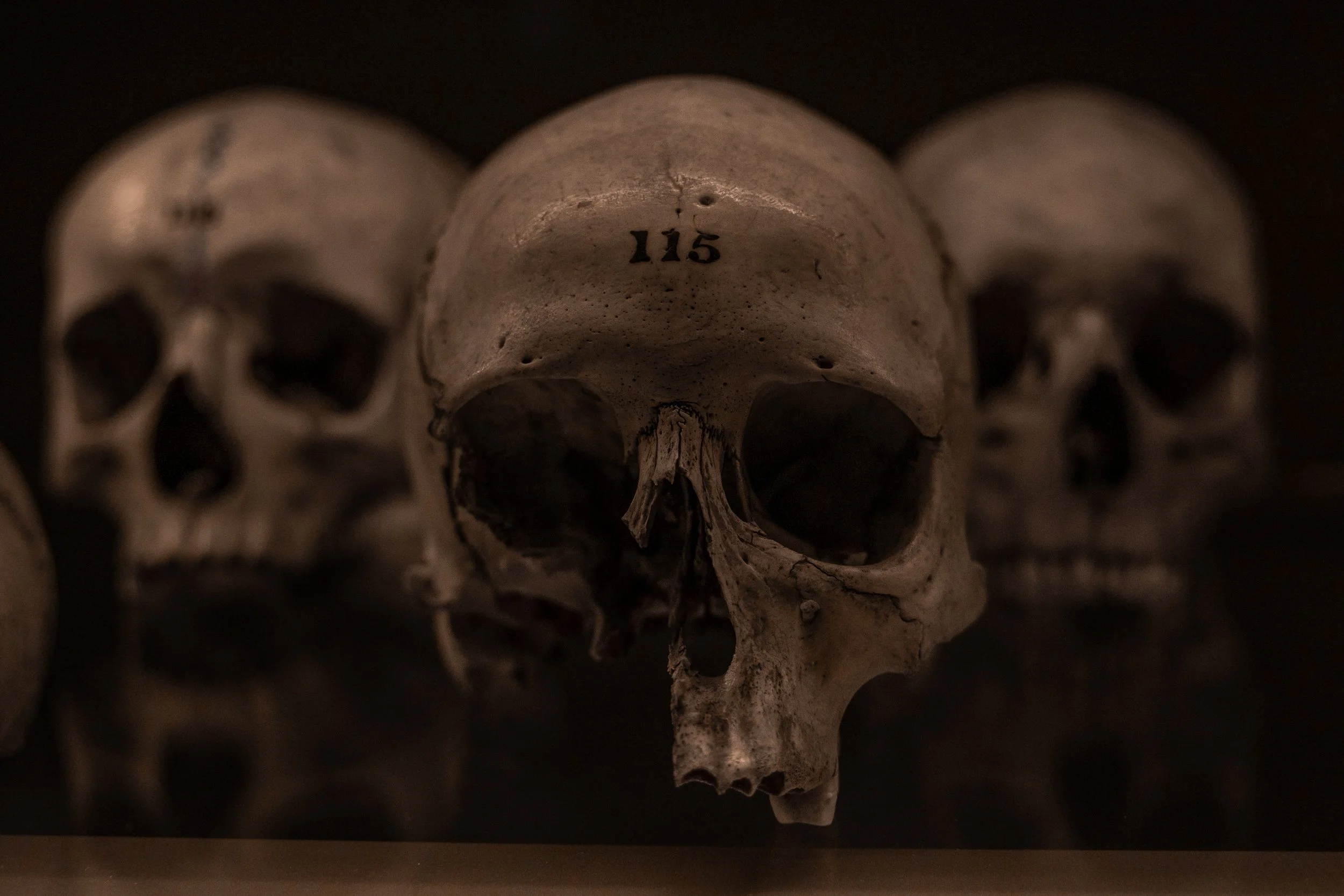
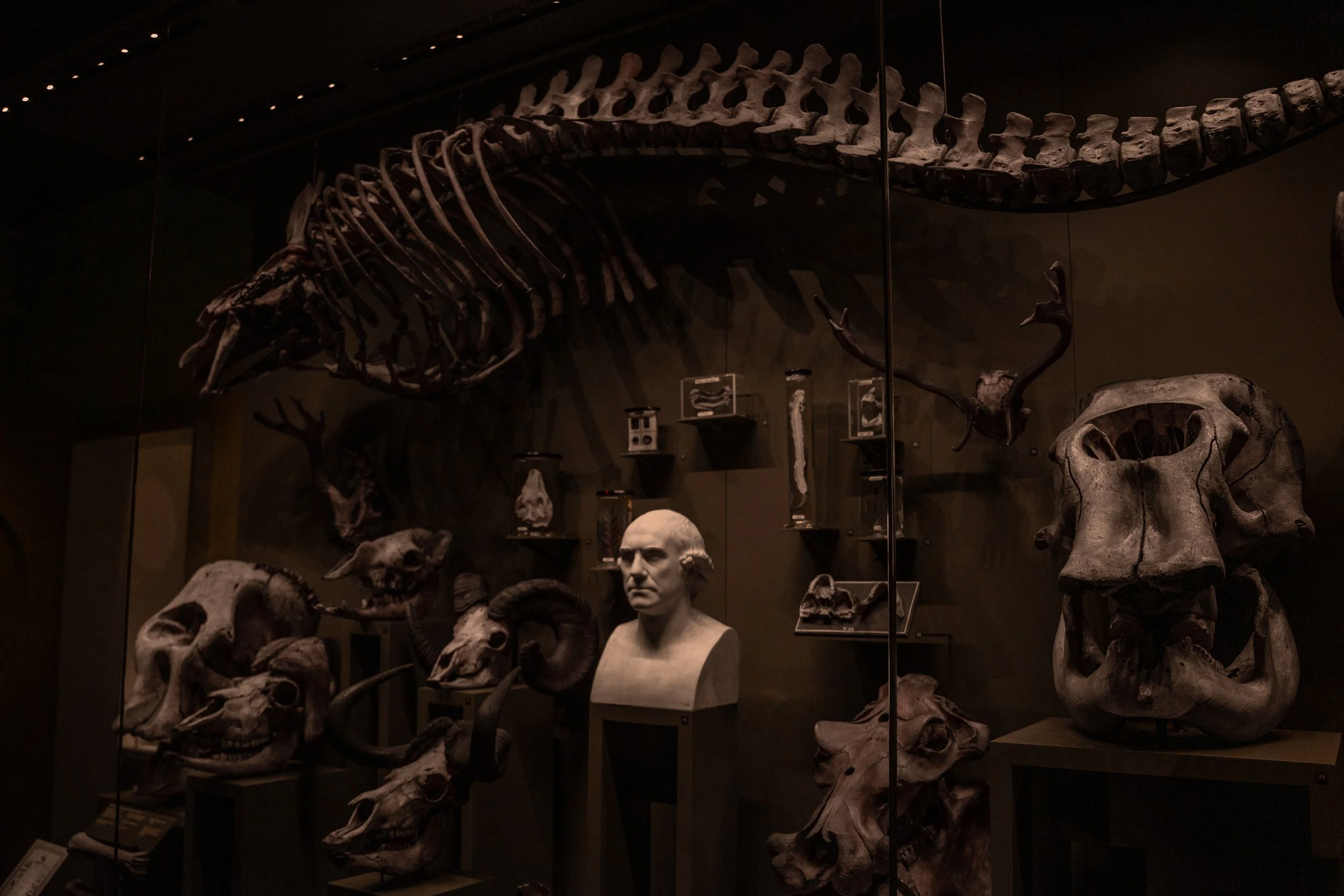
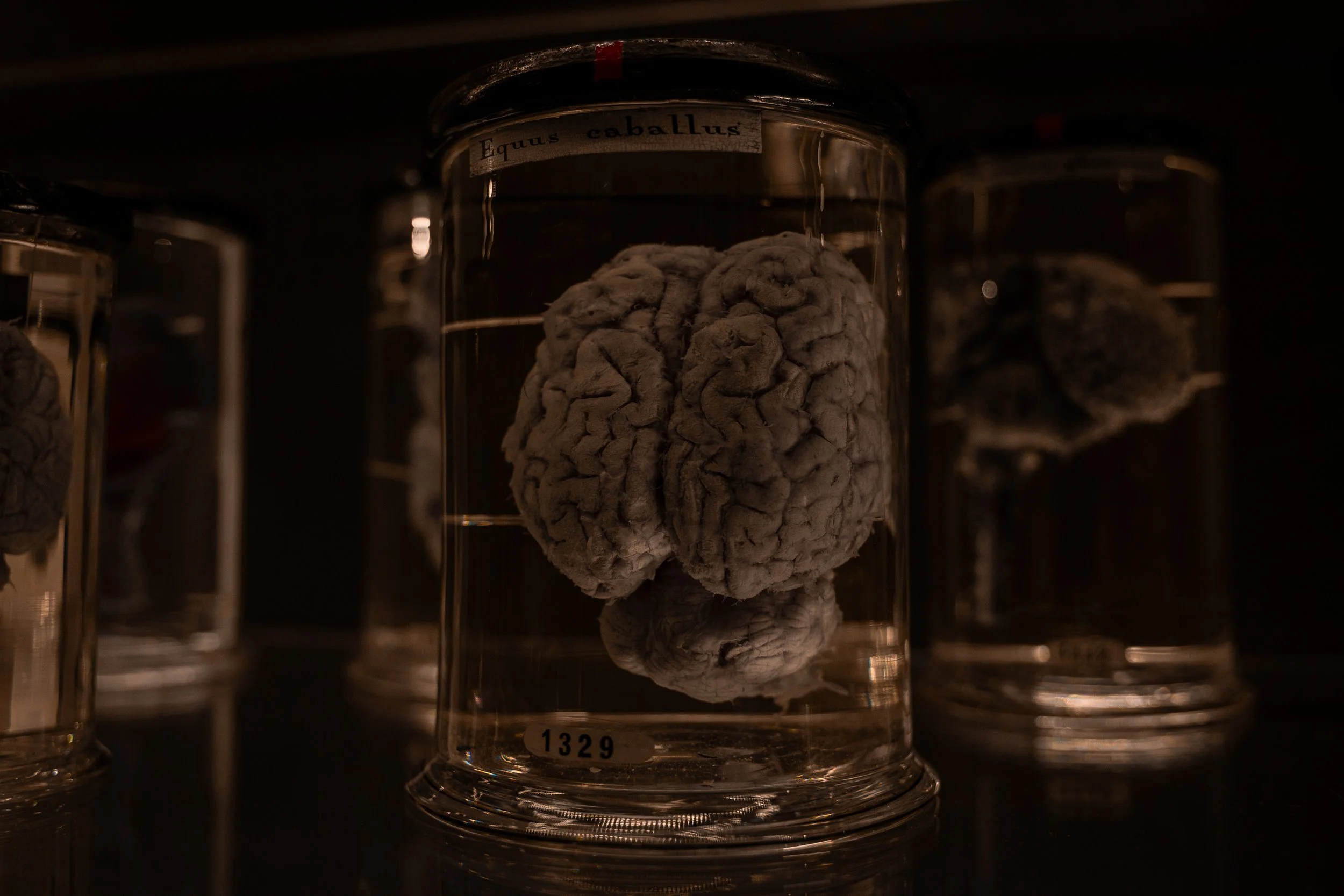
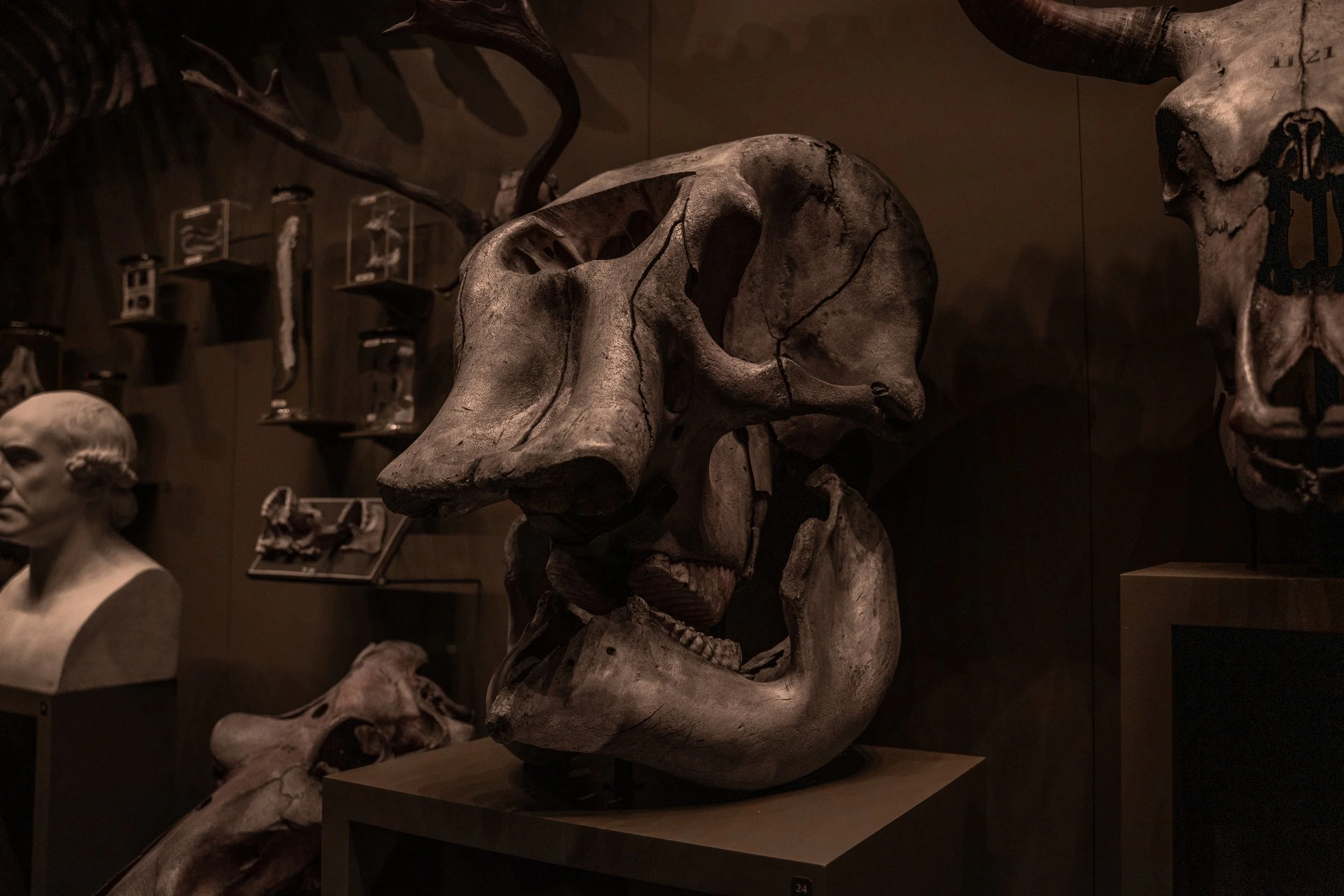
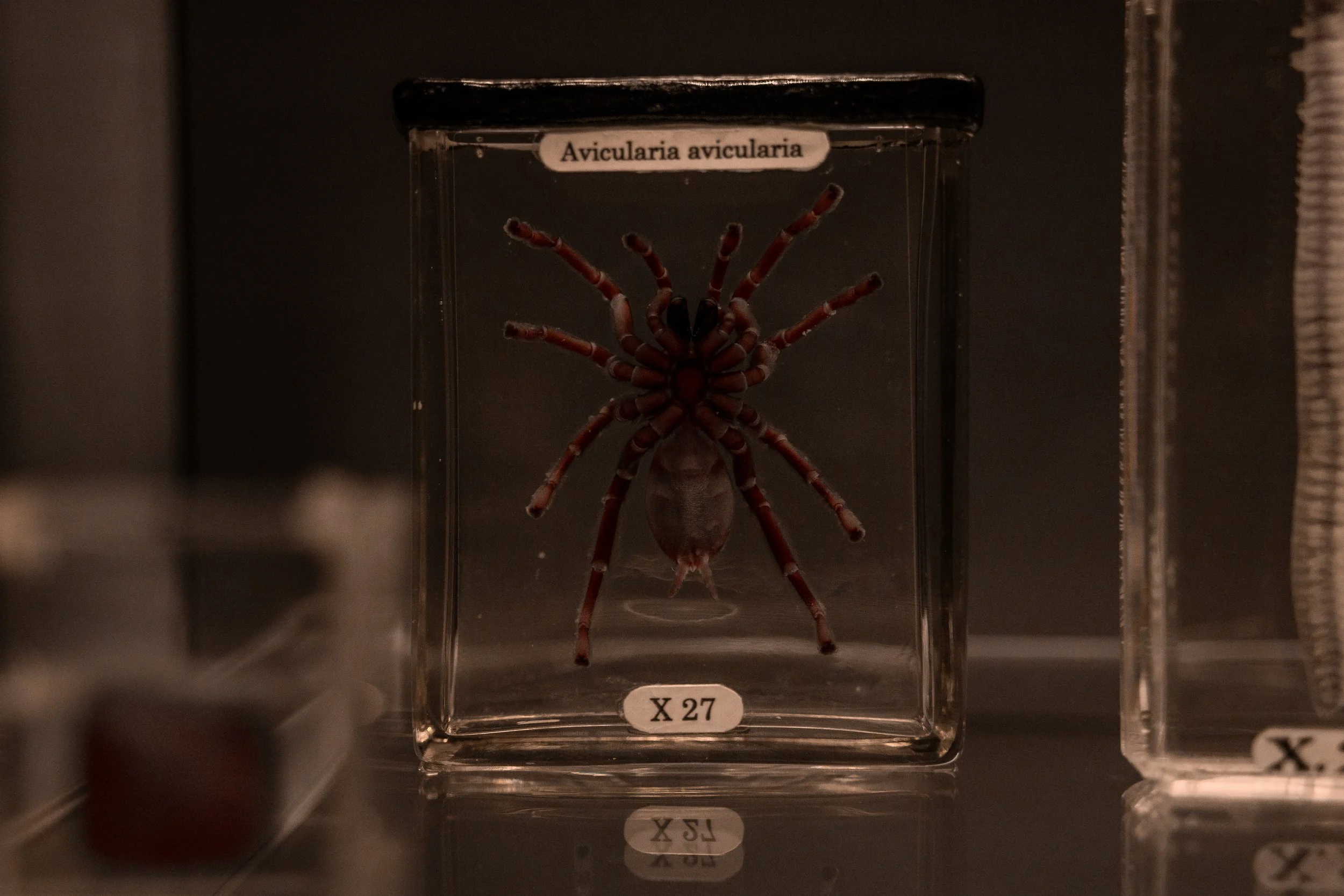
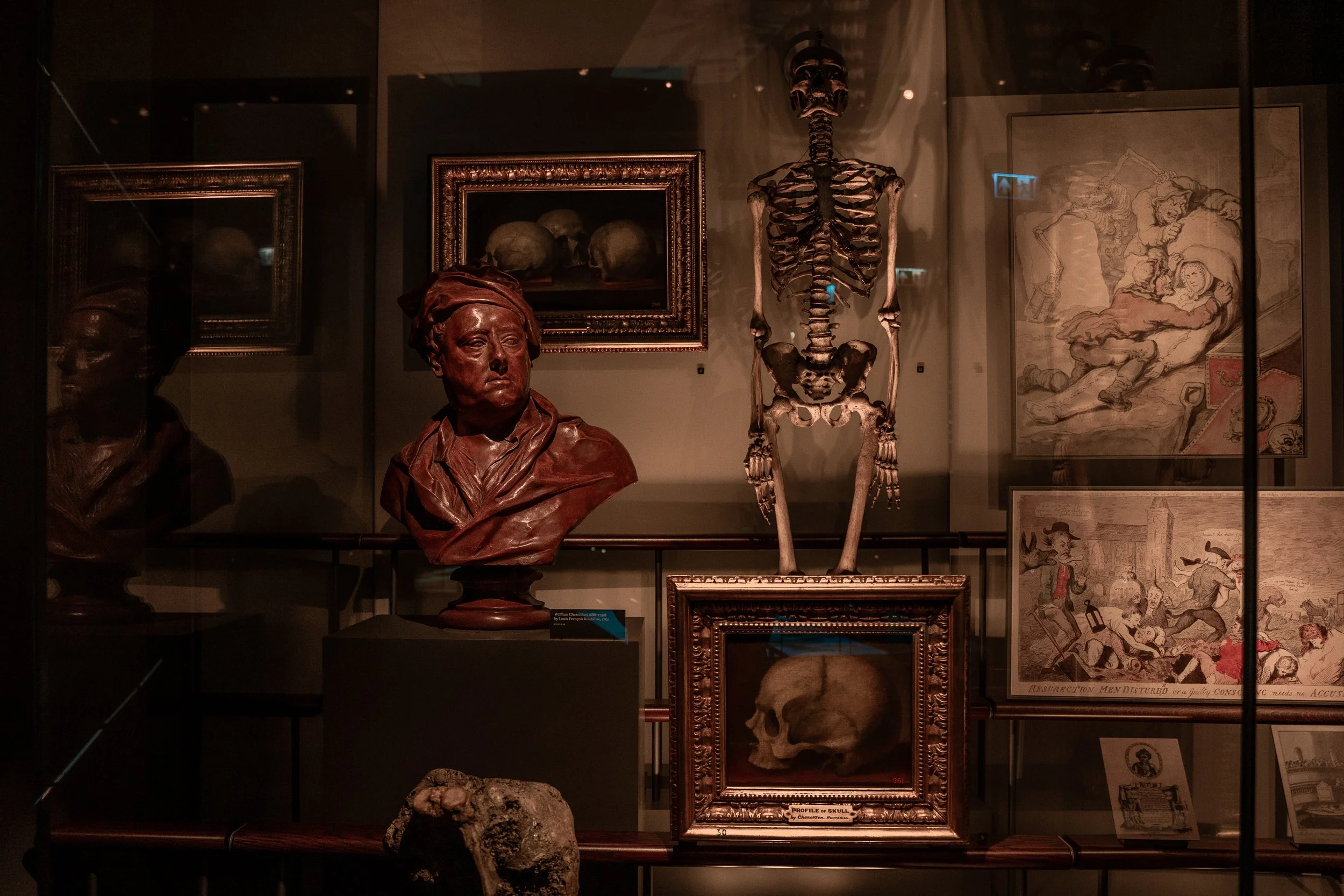
The Hunterian Museum, housed within the Royal College of Surgeons of England in Lincoln’s Inn Fields, is one of London’s most compelling encounters with the history of the human body. Its foundations lie in the extraordinary 18th century collection of John Hunter, the pioneering surgeon–anatomist whose specimens, dissections and teaching models helped establish surgery as a modern scientific discipline. Today, the museum presents this legacy with a striking balance of clinical precision, drawing visitors into the realities of early anatomical study.
The galleries are organised in long, glass-fronted runs of cabinets, where preserved organs, skeletons, vascular preparations and comparative anatomy specimens sit in careful order. Nothing here is arranged for spectacle. Instead, the displays reflect an Enlightenment mindset in which knowledge was built through accumulation, dissection and classification. Alongside them sit early surgical instruments including amputation saws, trepanning tools and 18th century forceps. Stark reminders of a pre-anaesthetic world where speed was survival and pain was unavoidable.
Themes of trauma surgery, comparative anatomy and operative technique trace how experimentation gradually became evidence-based practice. It is a place where the history of medicine feels unfinished, as if each specimen is part of an ongoing investigation into the mechanics of life.
Its setting within the Royal College of Surgeons deepens that sense of authenticity. Rather than occupying a detached museum, the collection forms part of a working institution that has trained generations of surgeons, lending it the atmosphere of a living archive rather than a conventional exhibition. Among its most thought-provoking displays are the remains of Charles Byrne, the "Irish Giant", whose continued presence in the collection has long been the subject of ethical debate over consent, scientific value and human dignity.
A visit to the Hunterian museum places you at the intersection of science, history and the human body itself, surrounded by objects that helped define modern medicine.
Looking for a place to stay? Discover my London hotel guide.
4. Strawberry Hill House
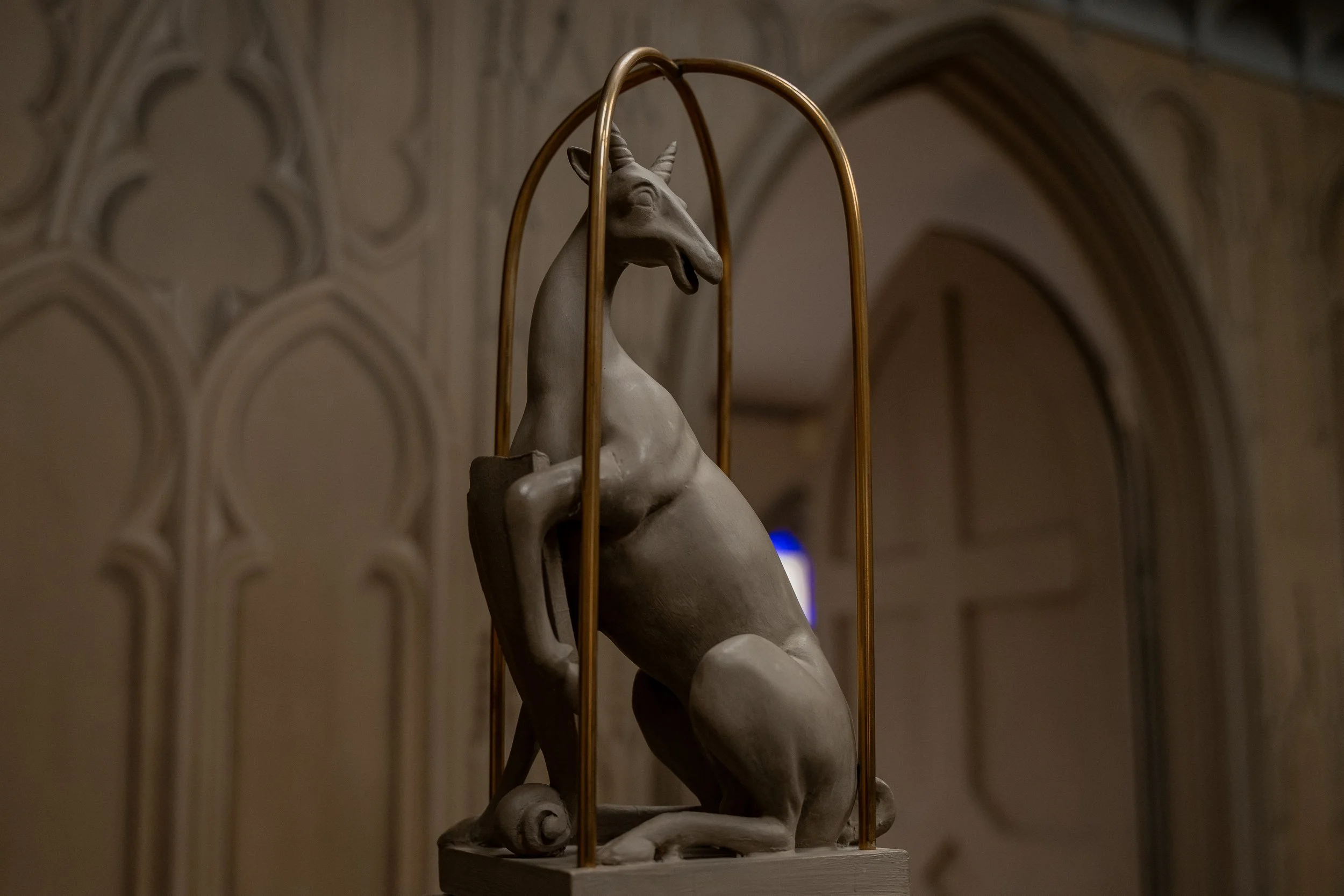
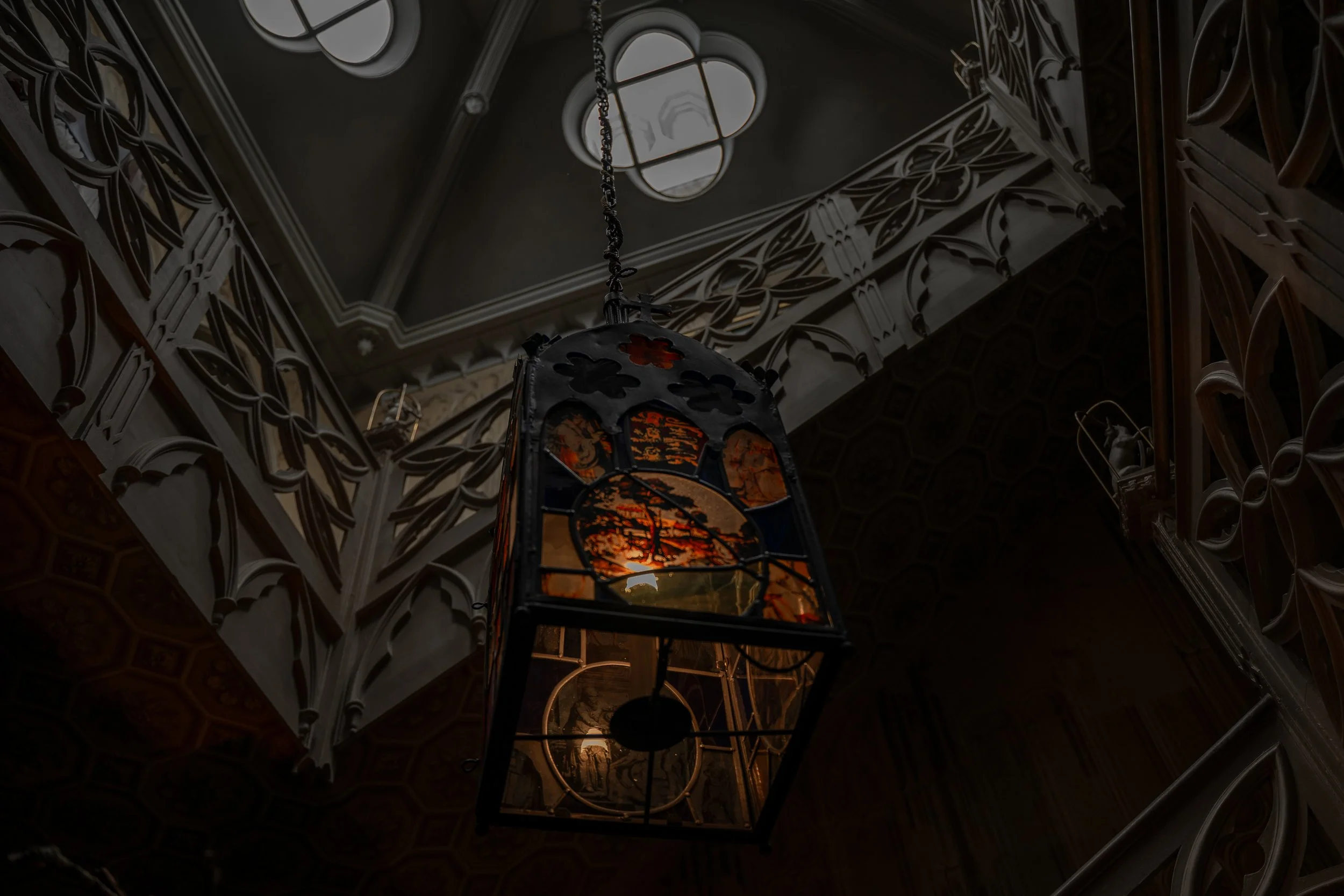
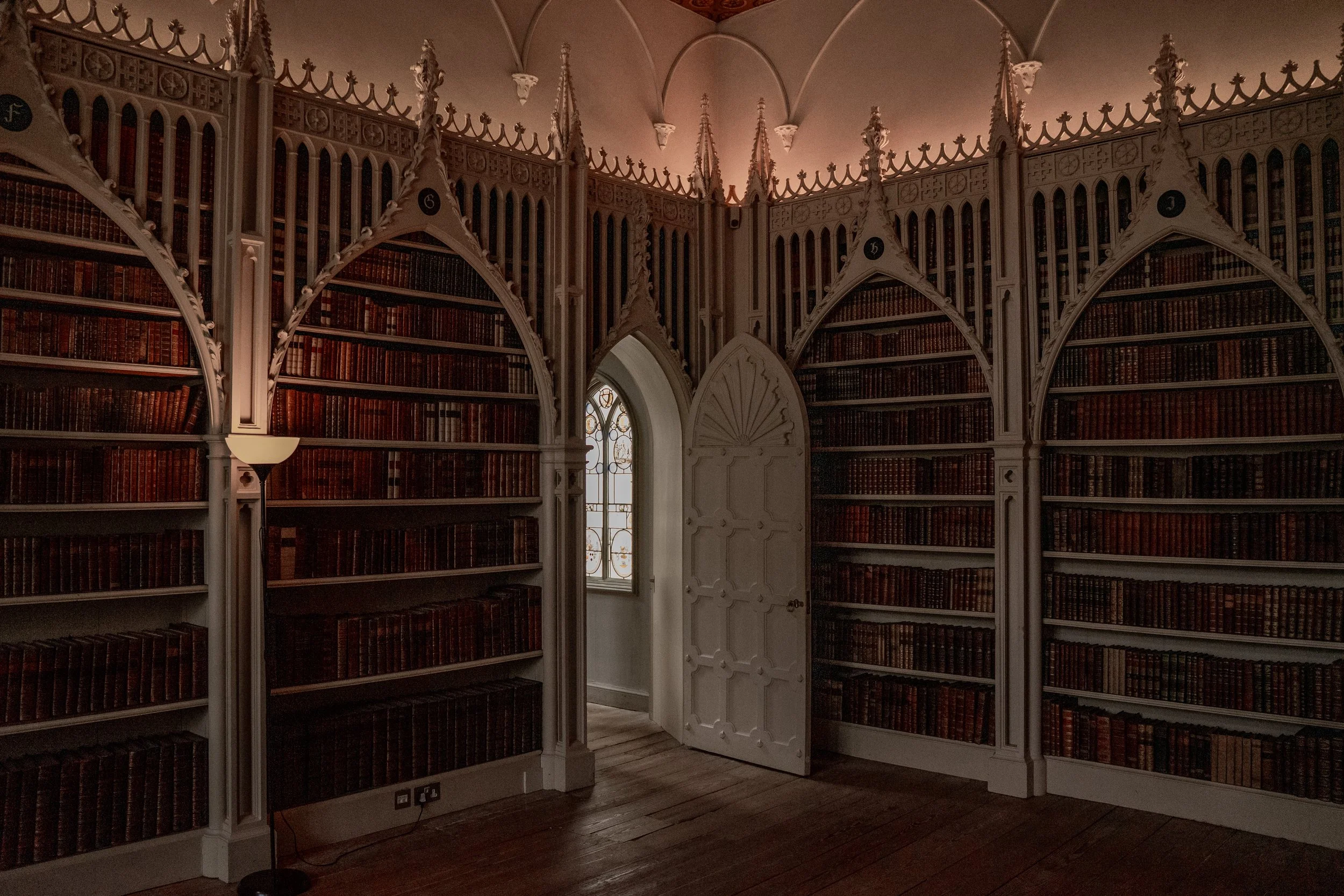
Known as the “little Gothic castle,” Strawberry Hill House stands as one of the most influential expressions of Gothic Revival architecture in Britain. Tucked away on the verdant banks of the Thames in Twickenham, it may lie far from the bustle of central London, but the journey rewards you with a place that feels as though you’ve found yourself inside the pages of a Gothic novel.
The visionary behind this extraordinary house was Horace Walpole: writer, politician, antiquarian, and youngest son of Sir Robert Walpole, an important figure in British politics who served for two decades as the nation’s first Prime Minister. Among Horace’s most significant literary achievements was The Castle of Otranto, widely regarded as the world’s first Gothic novel. Walpole claimed the idea came to him in a nightmare he experienced in the house, where he imagined “a gigantic hand in armour” resting on the bannister of the grand staircase. The groundbreaking novel laid the foundations of the Gothic genre and is said to have inspired later writers, including Mary Shelley the author of Frankenstein.
In 1747, Walpole purchased a modest pair of cottages known as Chopp’d Straw Hall and allowed his imagination to run wild, transforming the site into a pioneering Gothic Revival masterpiece. He drew inspiration from St Paul’s Cathedral, the ancient tombs of Westminster Abbey, and the romantic medieval period he adored. The result was a theatrical silhouette of towers, battlements and dramatic arched windows - his architectural fantasy brought to life!
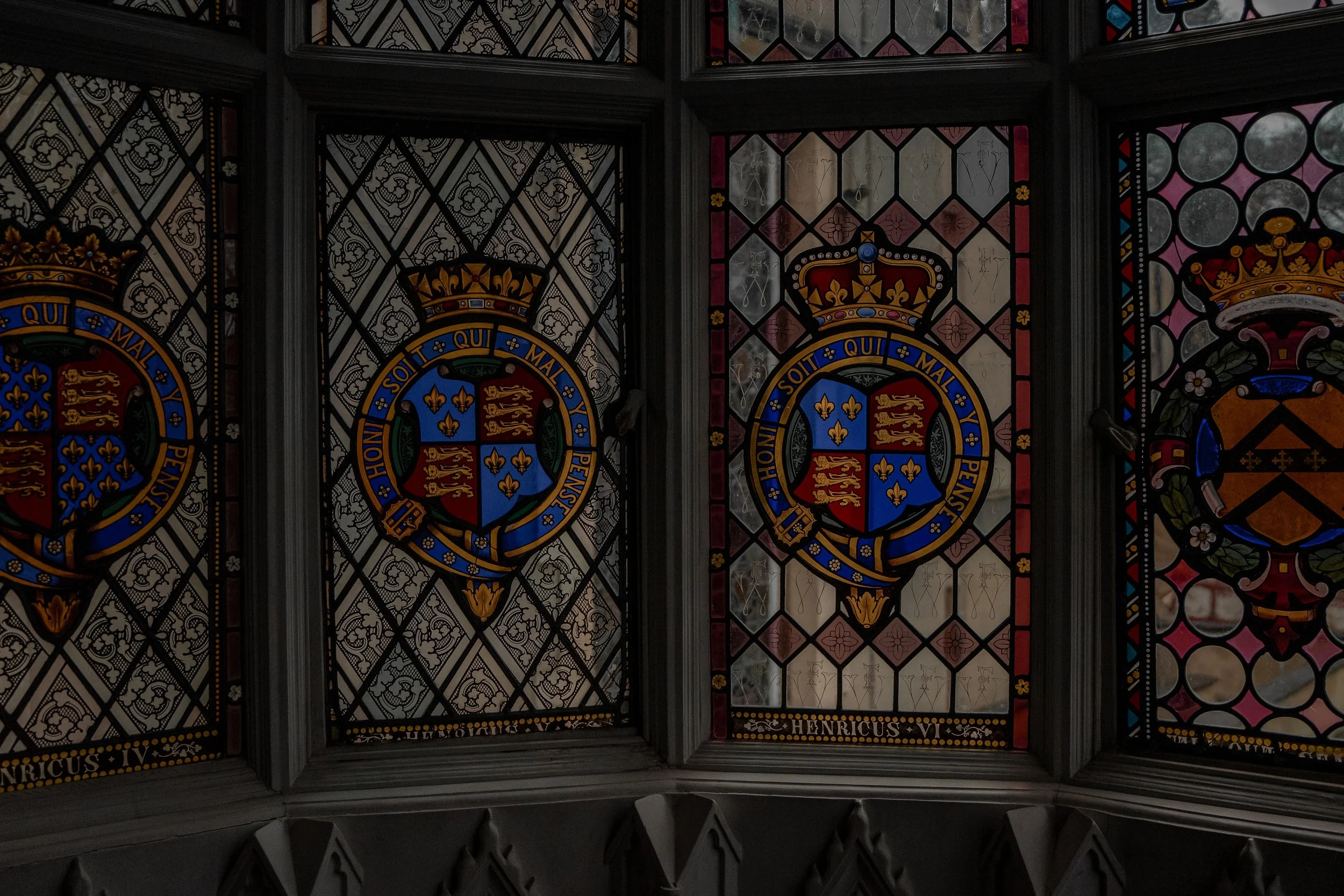
The enchantment intensifies the moment you cross the threshold into the grand staircase hall. Inspired by Prince Arthur’s tomb in Worcester Cathedral, the space greets you with soaring fan vaulting and mythical creatures perched along the balustrades. As you wander deeper into the house, don’t overlook the boldly coloured stained glass windows glowing with scenes from biblical tales, historic legends, and fantastical beasts.
Every room feels deliberately crafted to spark curiosity. Walpole famously coined the term “gloomth” to describe the blend of gloom and warmth he wanted the interiors to evoke. These evocative spaces were designed to conjure a medieval dreamscape, filled with Gothic references and dramatic lighting effects inspired by his Grand Tour of Europe.
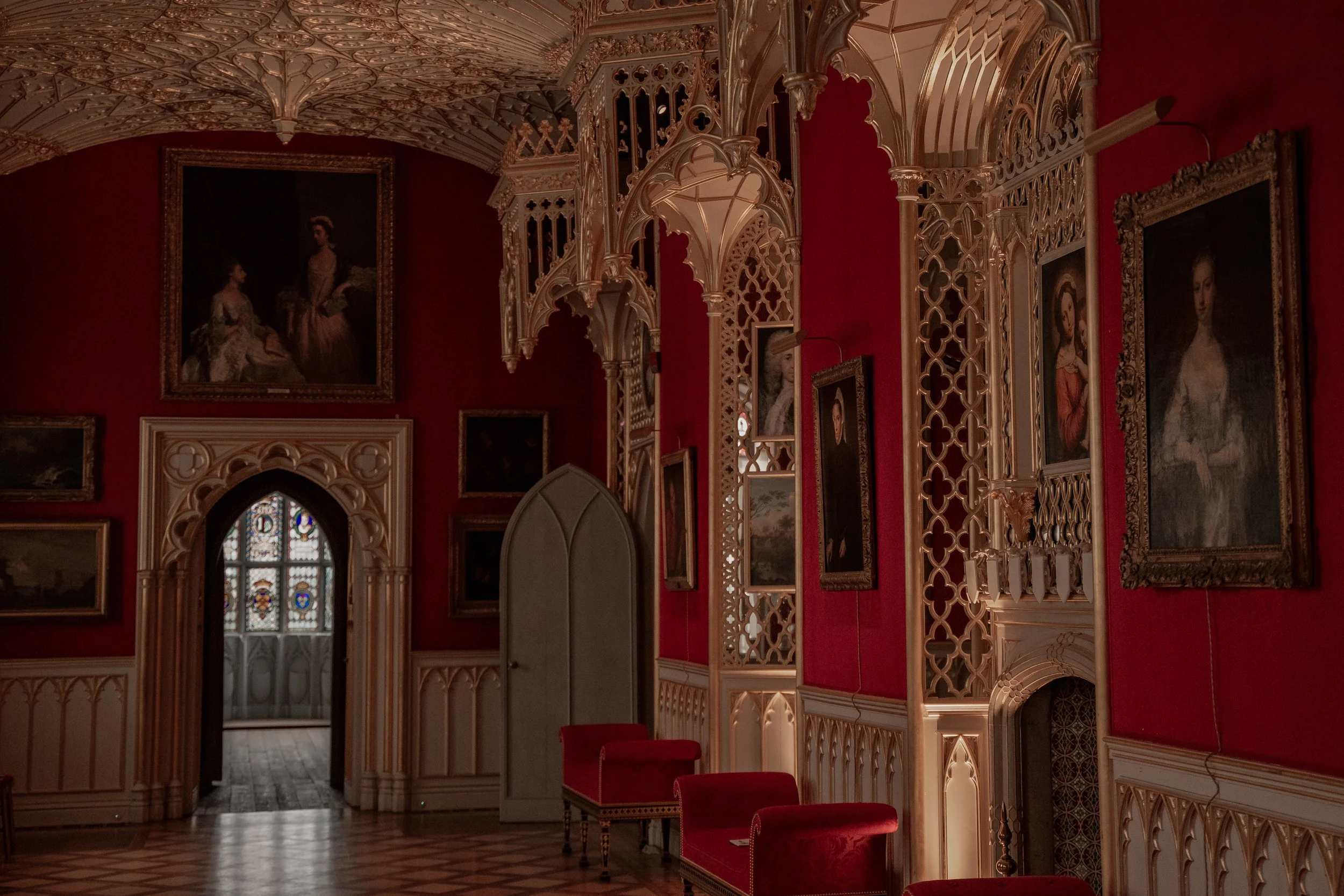
In striking contrast to the library’s shadowy charm, the opulent Gallery dazzles with blood‑red walls, lavish gold detailing, and an impressive collection of portraits. Its fan‑vaulted papier‑mâché ceiling, influenced by Henry VII’s Chapel at Westminster, along with gilded tracery and mirrored surfaces, amplifies the light in a spectacular display.
Even in Walpole’s lifetime, the house became a sought‑after attraction, with visitors admitted by appointment and guided by his housekeeper. Its reputation spread widely, and it is now recognised as a direct inspiration for the 19th‑century Gothic Revival movement in Britain and beyond.
One of the great joys of Strawberry Hill House is the freedom to explore both the interiors and the gardens at your own pace. For those seeking deeper insight, guided tours led by expert storytellers bring the house’s history and eccentricities vividly to life.
The house currently only opens from Wednesday to Sunday, so it’s worth checking their official website before planning your visit to the birthplace of Gothic Revival.
Looking for a place to stay? Discover my London hotel guide.
5. St Olave’s Church
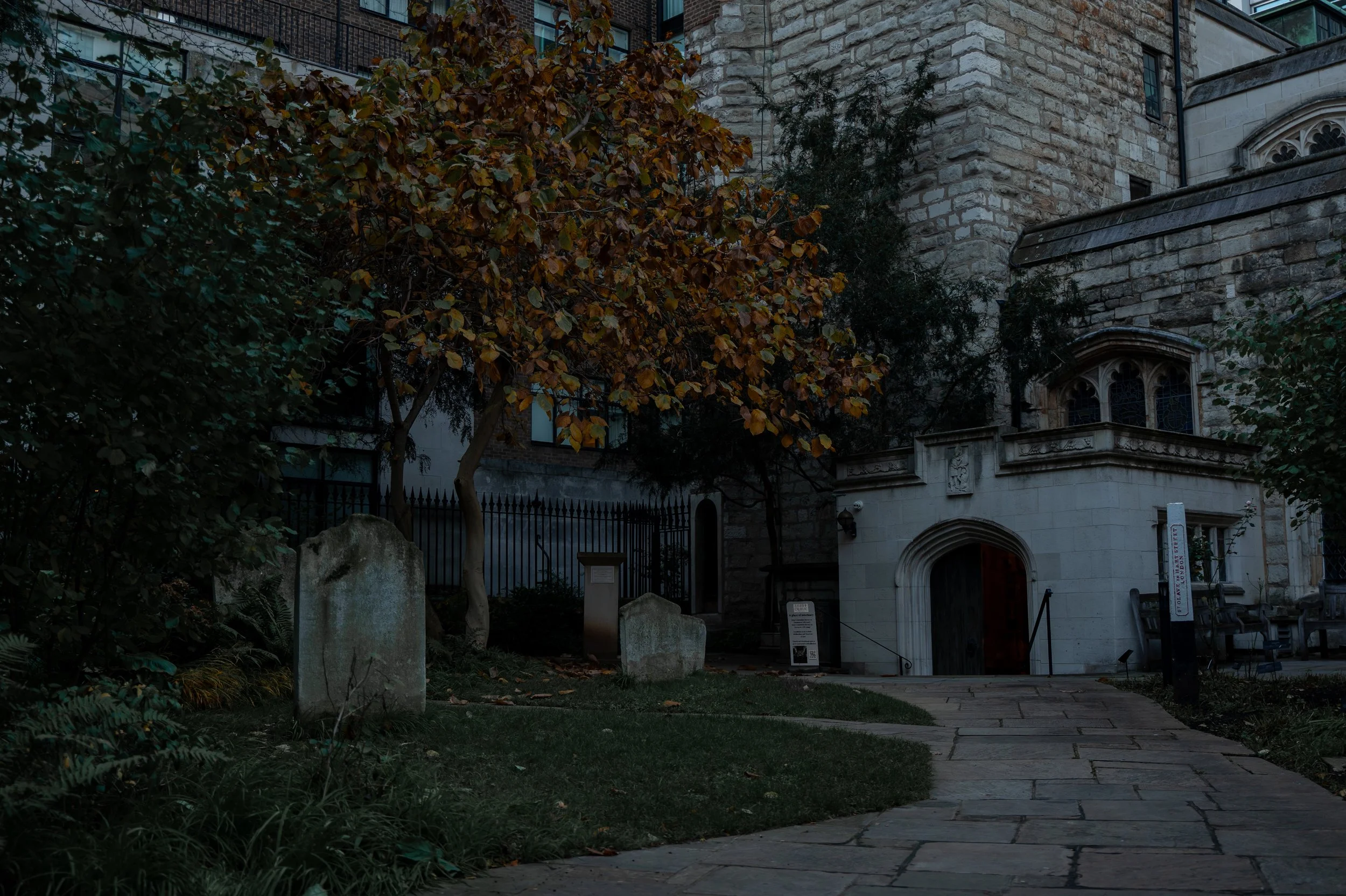
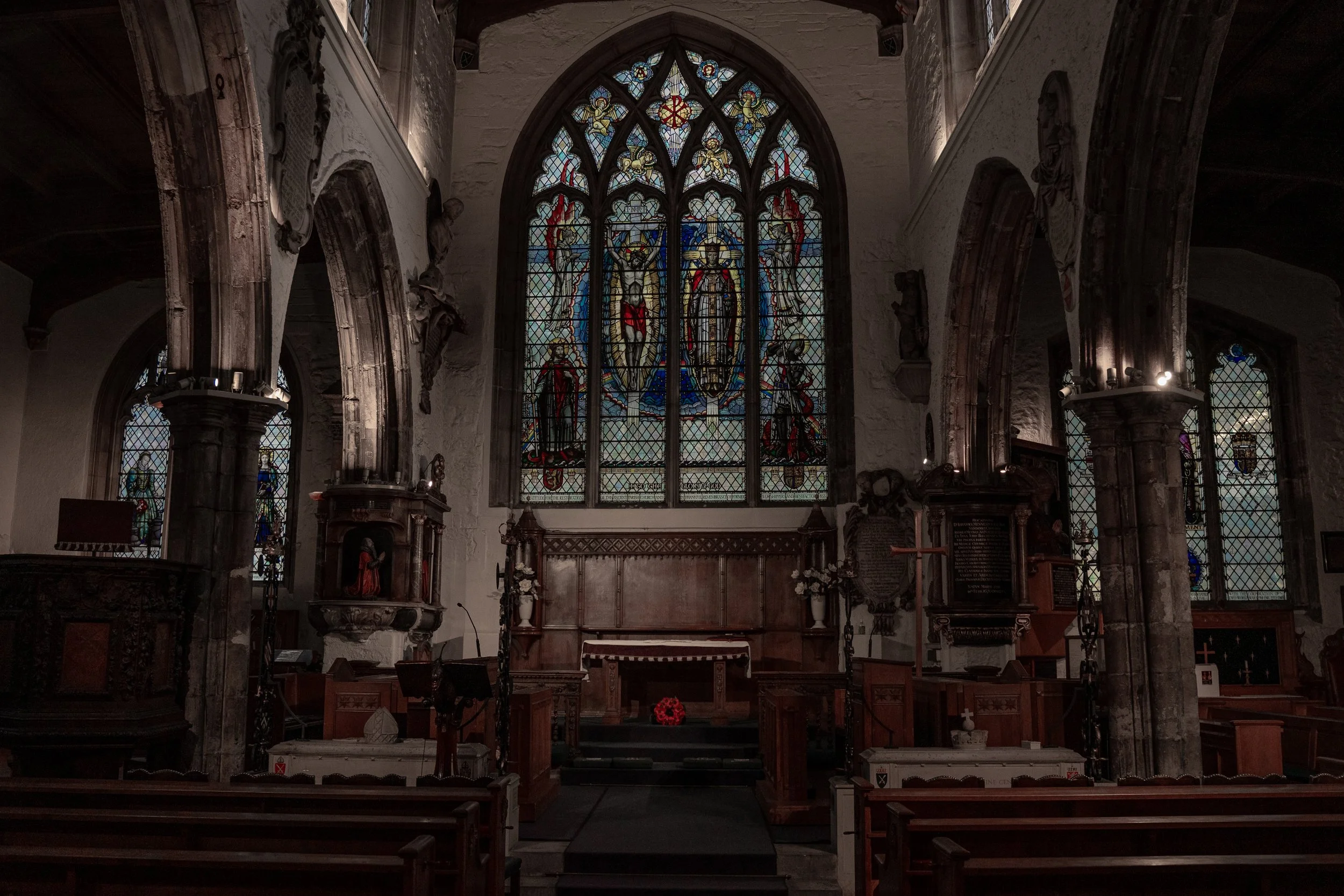
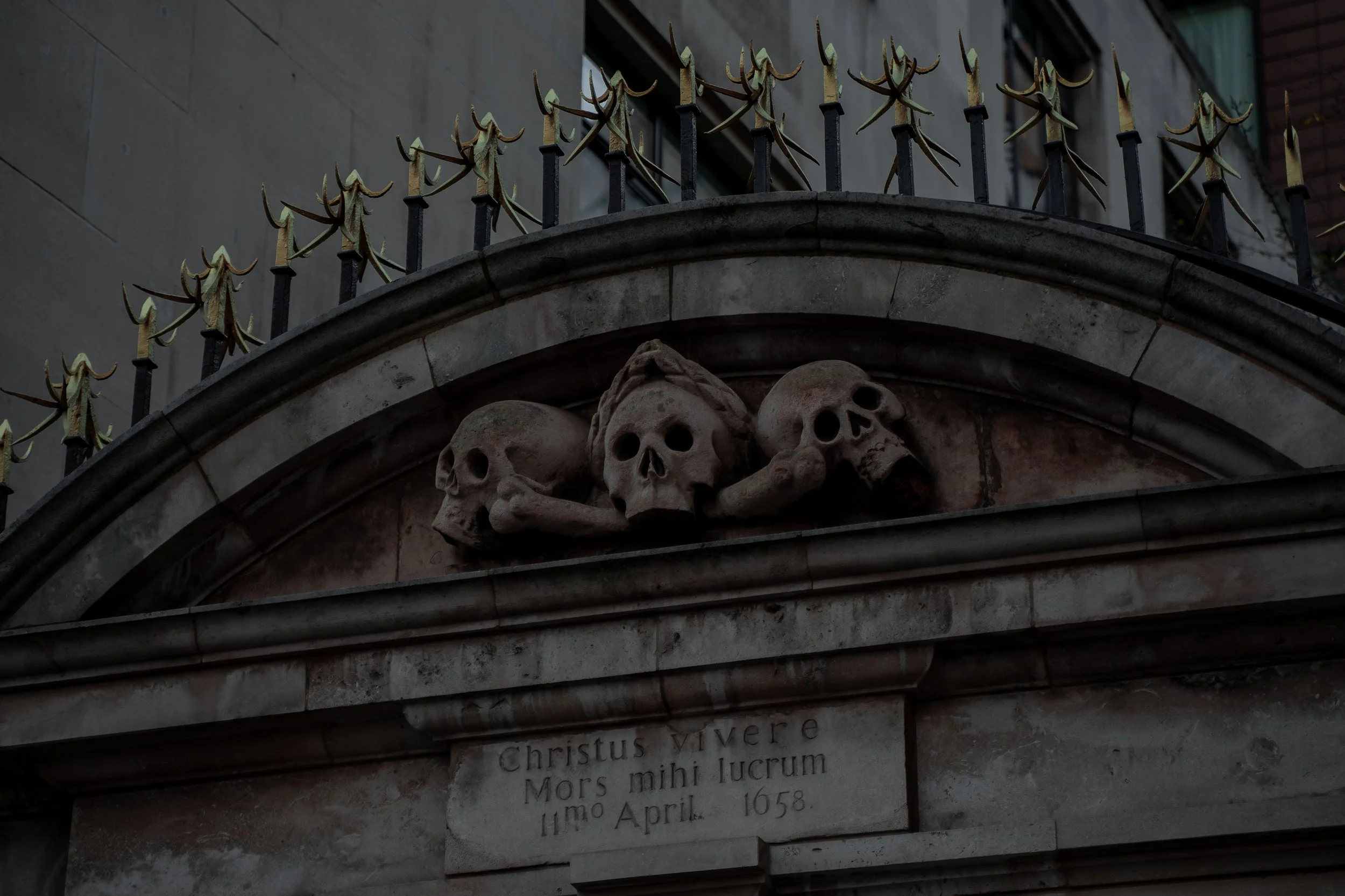
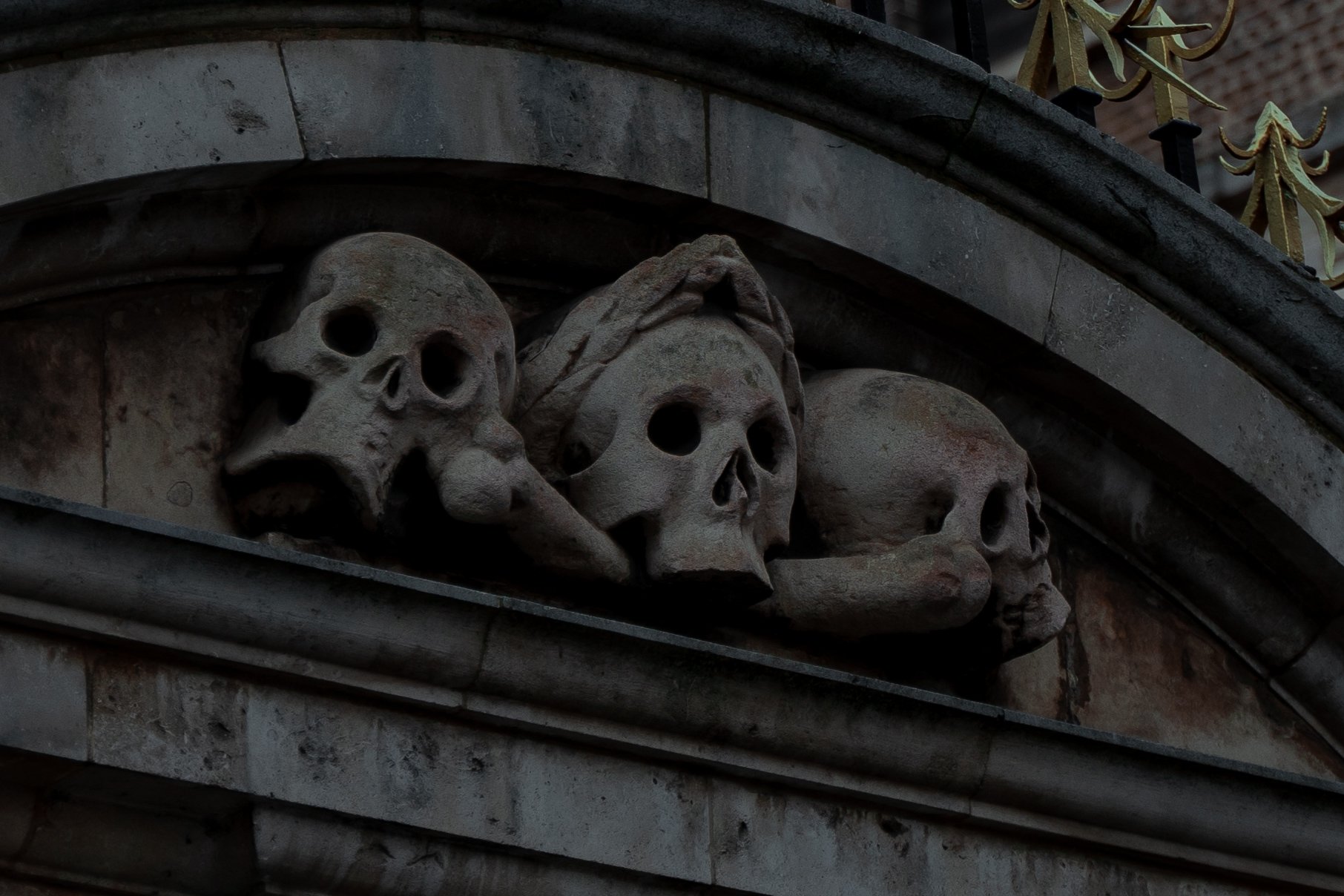
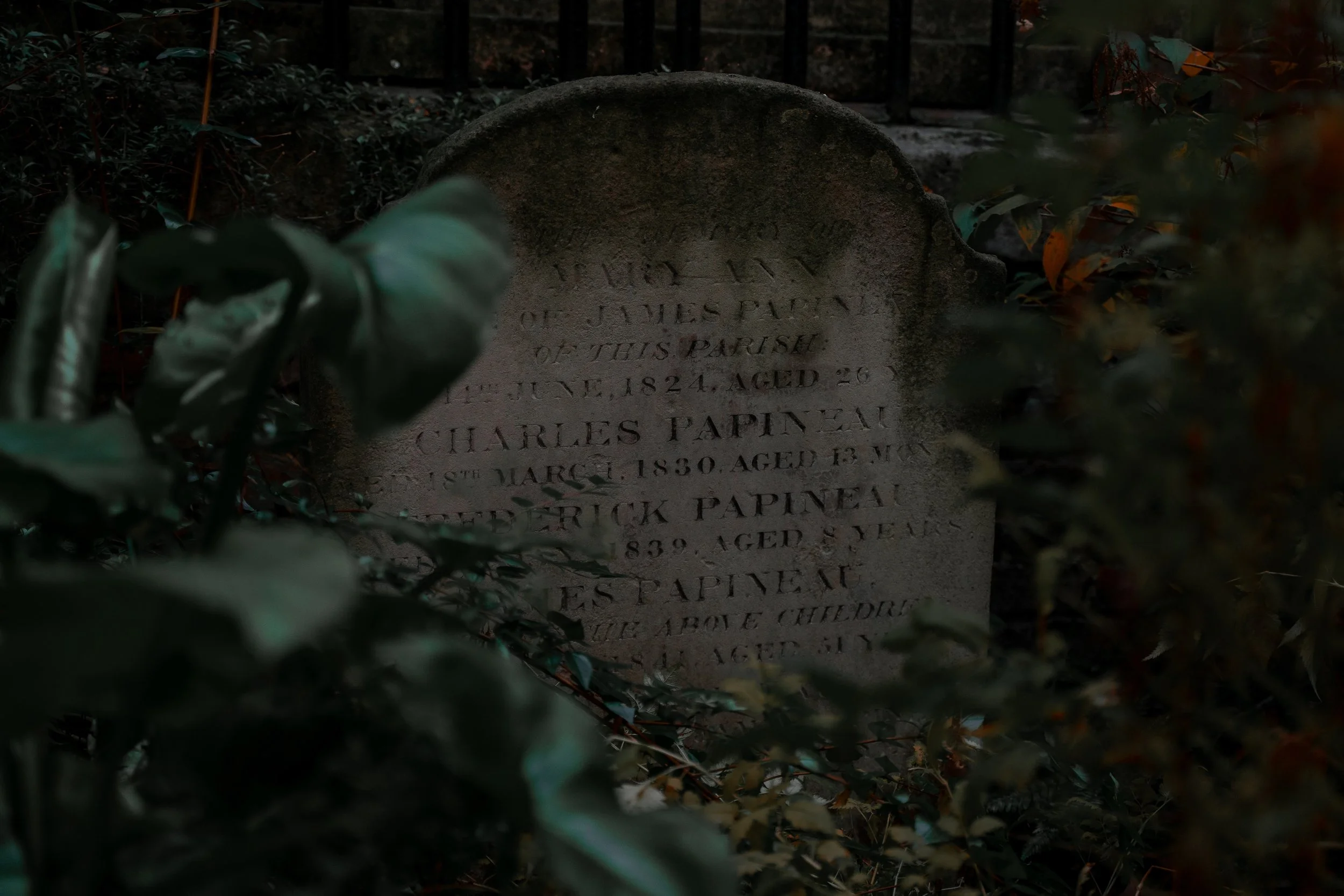
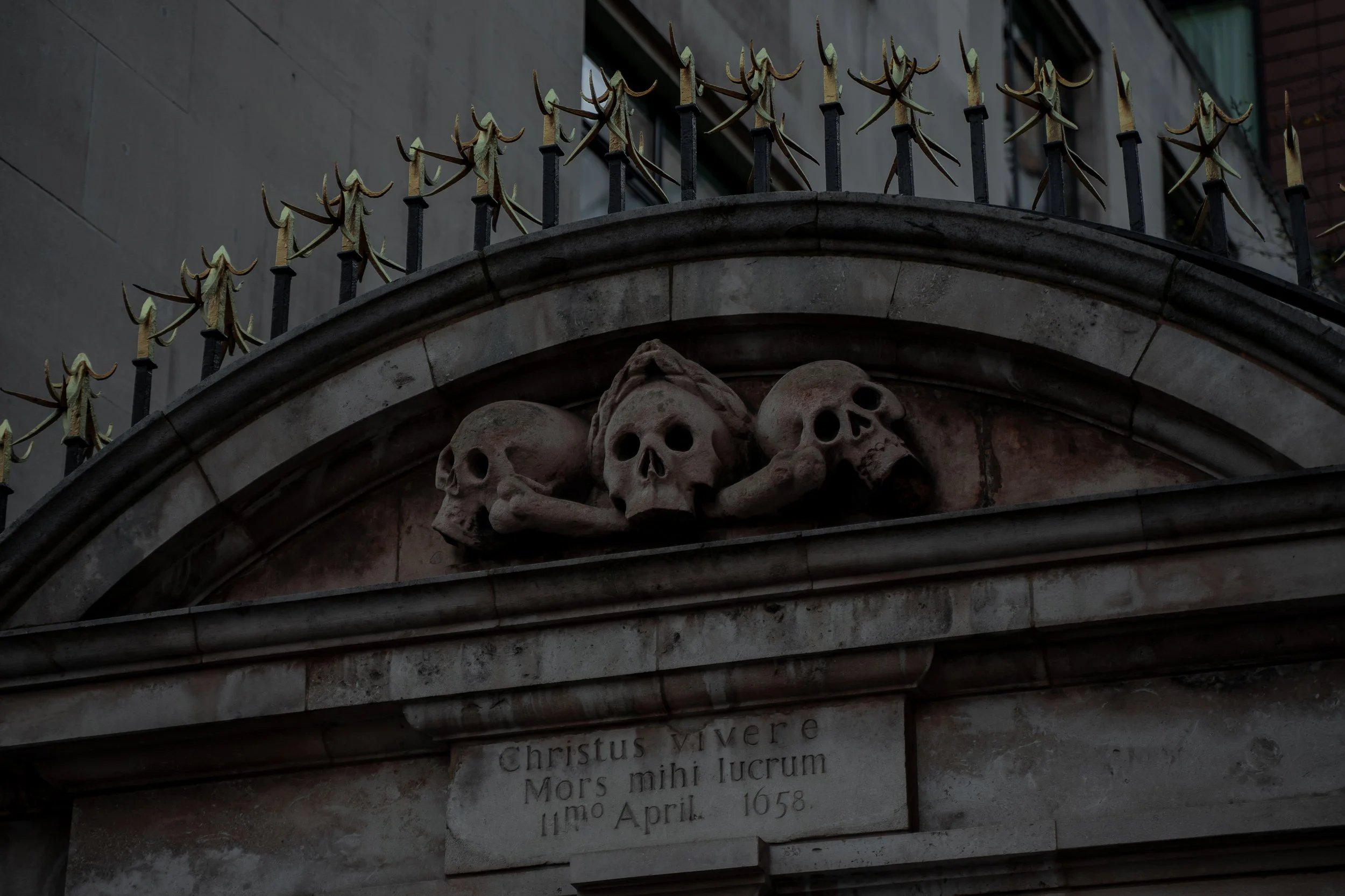
St Olave’s Church is not only one of the last remaining medieval places of worship in London, but its entrance is also one of the most macabre in the city, with a trio of deathly skulls astutely watching over anyone who enters.
This small Gothic church is located on Hart Street in the City of London and according to records was built in the 13th century, when it was once known as St Olave-towards-the-Tower. Although legend has it, that the church dates back even further to 1014 and was built on the site of the Battle of London Bridge.
The structure is one of the very few that managed to escape the Great Fire of London in 1666, but it was certainly a close call with the flames coming within a hundred yards of the church. It was only for the quick thinking of William Penn who pulled down neighbouring wooden structures to create fire-breaks and a fortuitous last-minute change in wind direction, that ultimately saved the shrine.
The church was beloved by the famous diarist Samuel Pepys, who lived and worked on Seething Lane. He even built a stairway which connected his Royal Navy offices to the church, so that he could walk there without getting wet in the rain. Both Pepys and his wife are buried here and you will also find a memorial to Pepys on the outside walls where the old stairway used to be.
Now on to my favourite part, the sombre gateway to the churchyard, featuring three extraordinary skull carvings dating from 11th April 1658 and which display the Latin phrase ‘Christus vivere mors mihi lucrum’ translating to ‘For Christ to live, death is my reward’. It seems that this memento mori piece has a certain effect on people; even Charles Dickens was so taken by the skulls, that he gave the beloved churchyard the name of ‘Saint Ghastly Grim’ and once caught a cab here on a stormy night, to just stand and stare at the trio.
If you look above, you will also see many protruding spikes forming the top of the arch, which were added in the 19th century to deter body snatchers from climbing over the gateway and exhuming the remains of newly buried bodies to sell on to medical science.
Head through the gates into the tiny grounds, where it is said that over 300 Great Plague victims are buried, including Mary Ramsay, the woman who was widely accused of bringing the dreadful disease to London.
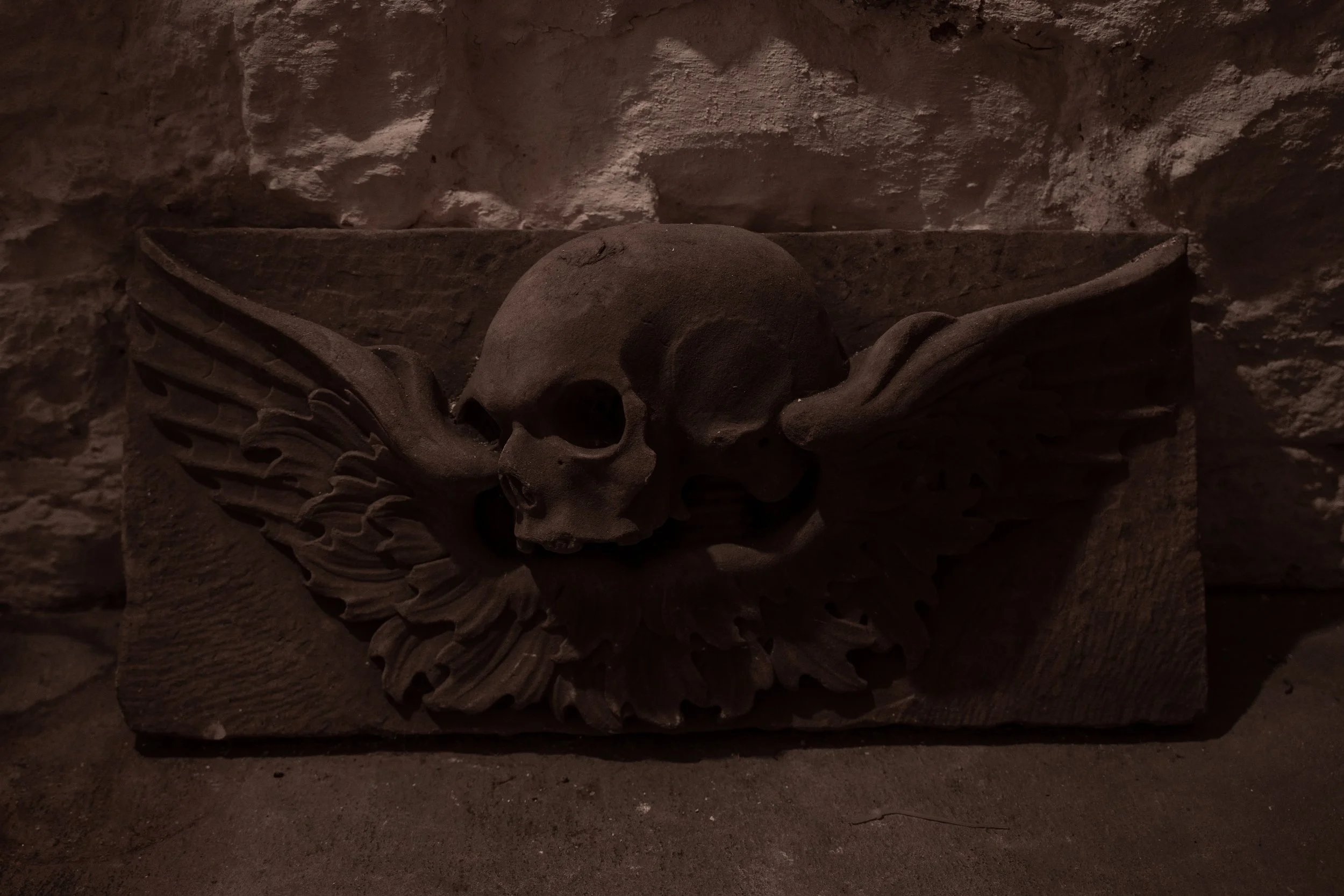
Restoration work after the Blitz in World War II reinstated the church’s interior design, and if you have the time, I’d highly recommend stepping inside to admire the beautiful medieval architecture of this Grade I listed building. While you're there, make sure to head down to the crypt, where you can see a fascinating winged skull carved into a stone slab, a unique feature that adds to the church’s rich history.
Taken from The Uncommercial Traveller (1861), by Charles Dickens: “It is a small, small churchyard, with a ferocious, strong, spiked iron gate, like a jail. This gate is ornamented with skulls and cross-bones, larger than the life, wrought in stone; but it likewise came into the mind of Saint Ghastly Grim, that to stick iron spikes a-top of the stone skulls, as though they were impaled, would be a pleasant device. Therefore, the skulls grin aloft, horribly thrust through and through with iron spears. Hence, there is attraction of repulsion for me in Saint Ghastly Grim, and, having often contemplated it in the daylight and the dark, I once felt drawn toward it in a thunderstorm at midnight. 'Why not?' I said, in self-excuse”.
Looking for a place to stay? Discover my London hotel guide.
6. The Cornhill Devils
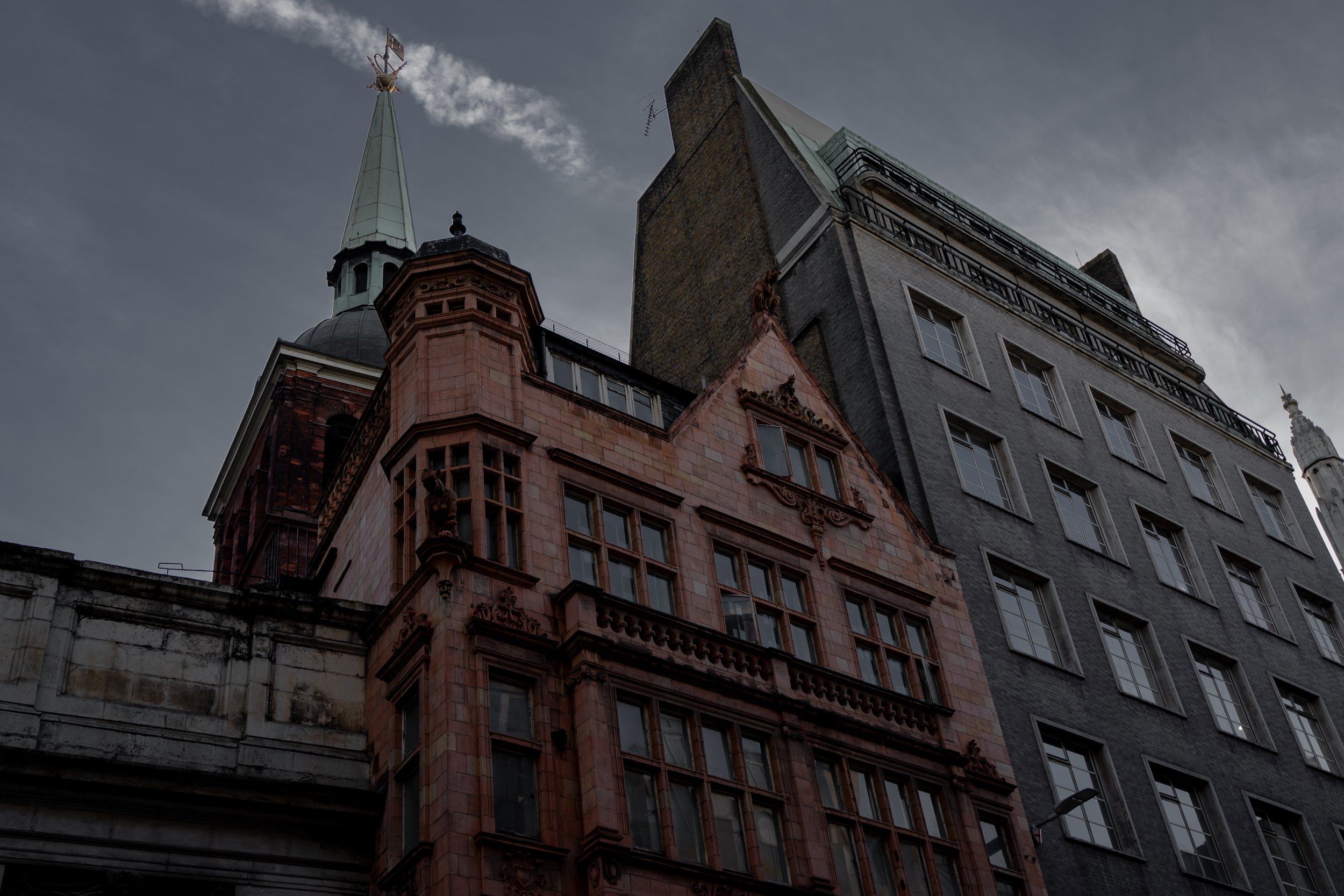
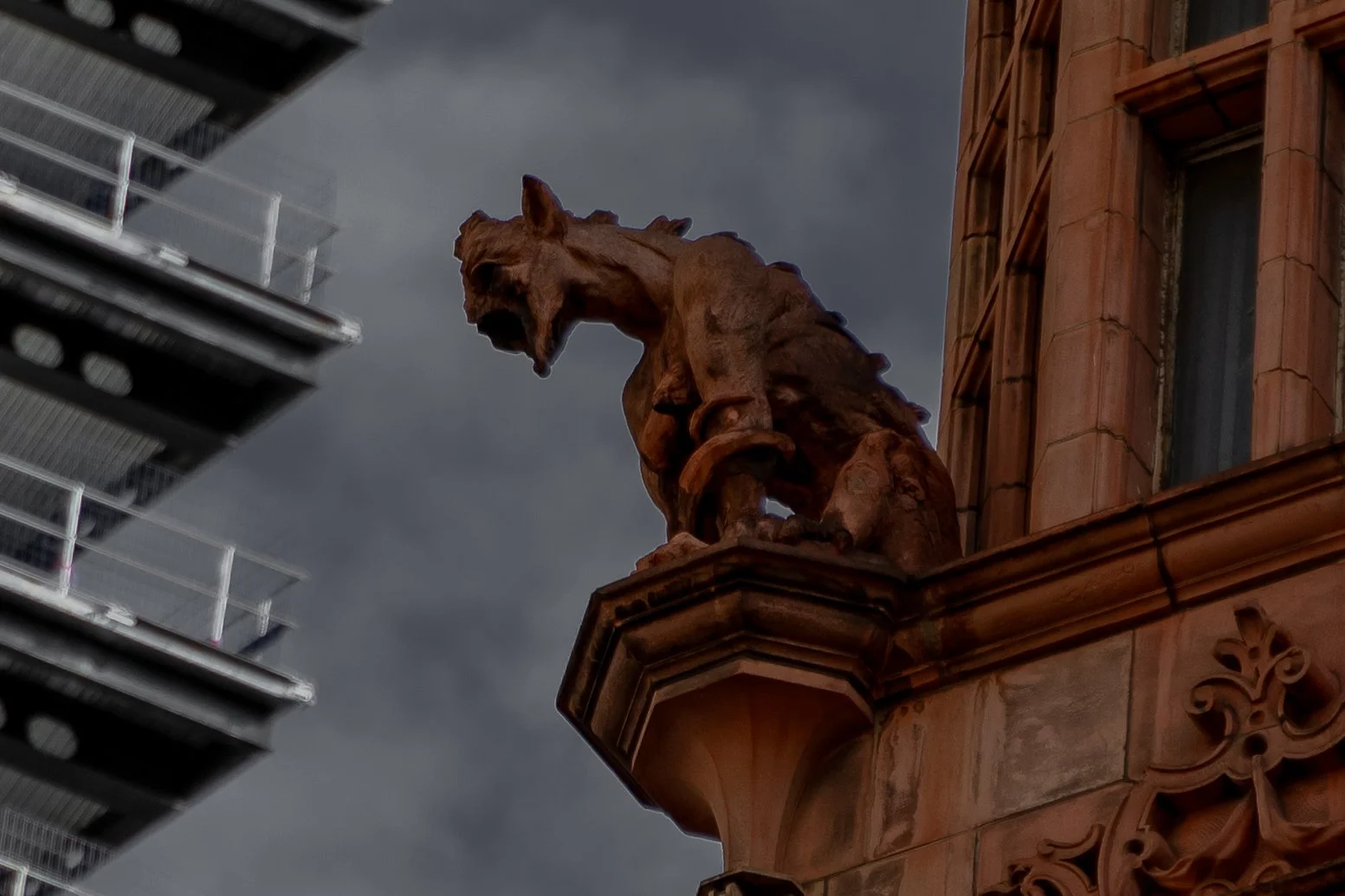
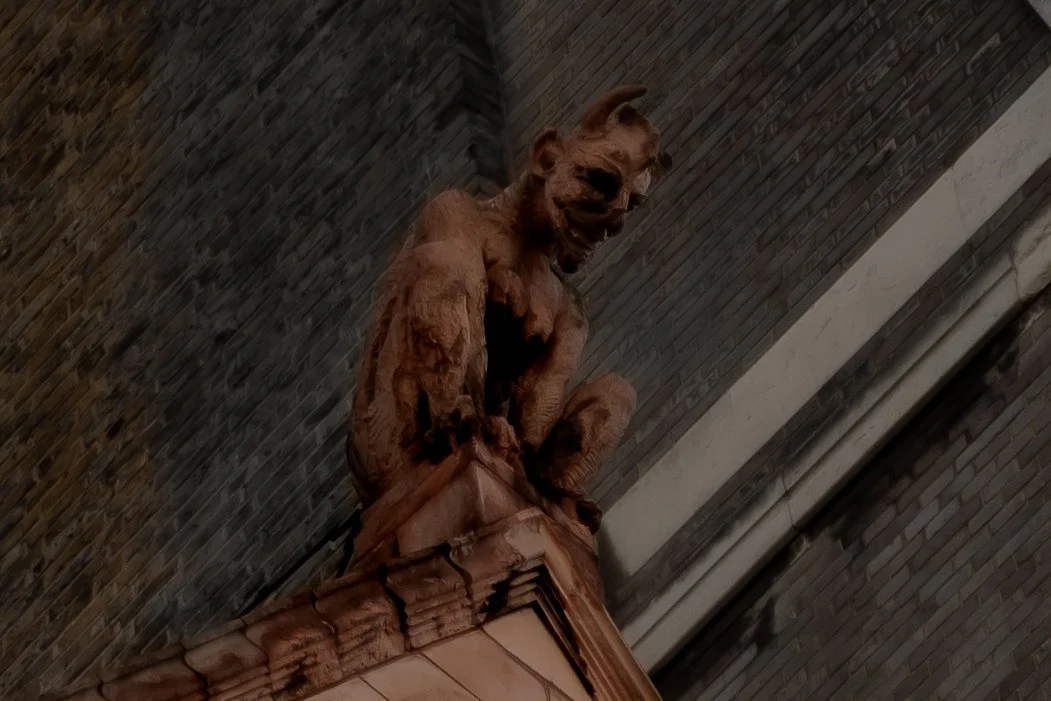
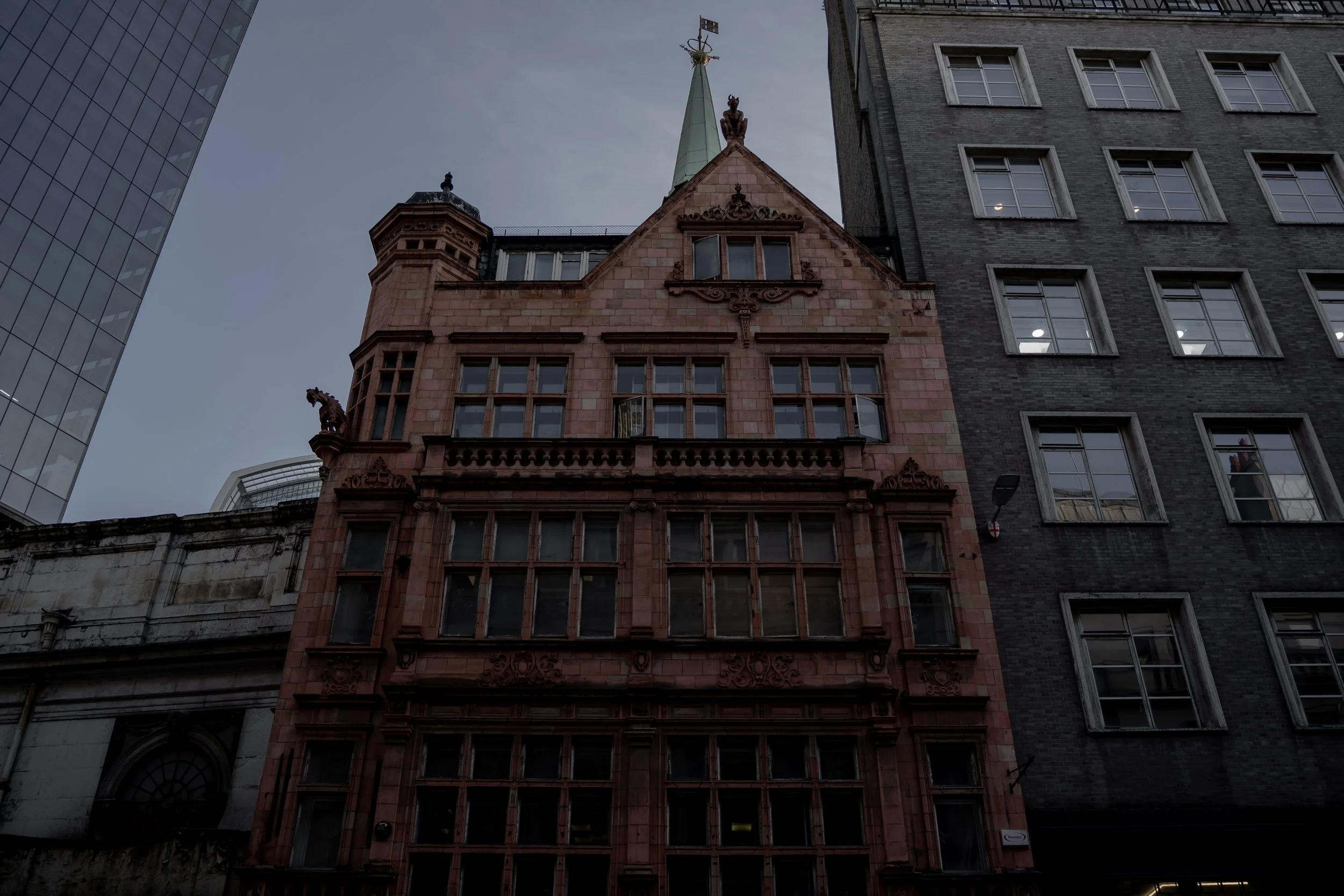
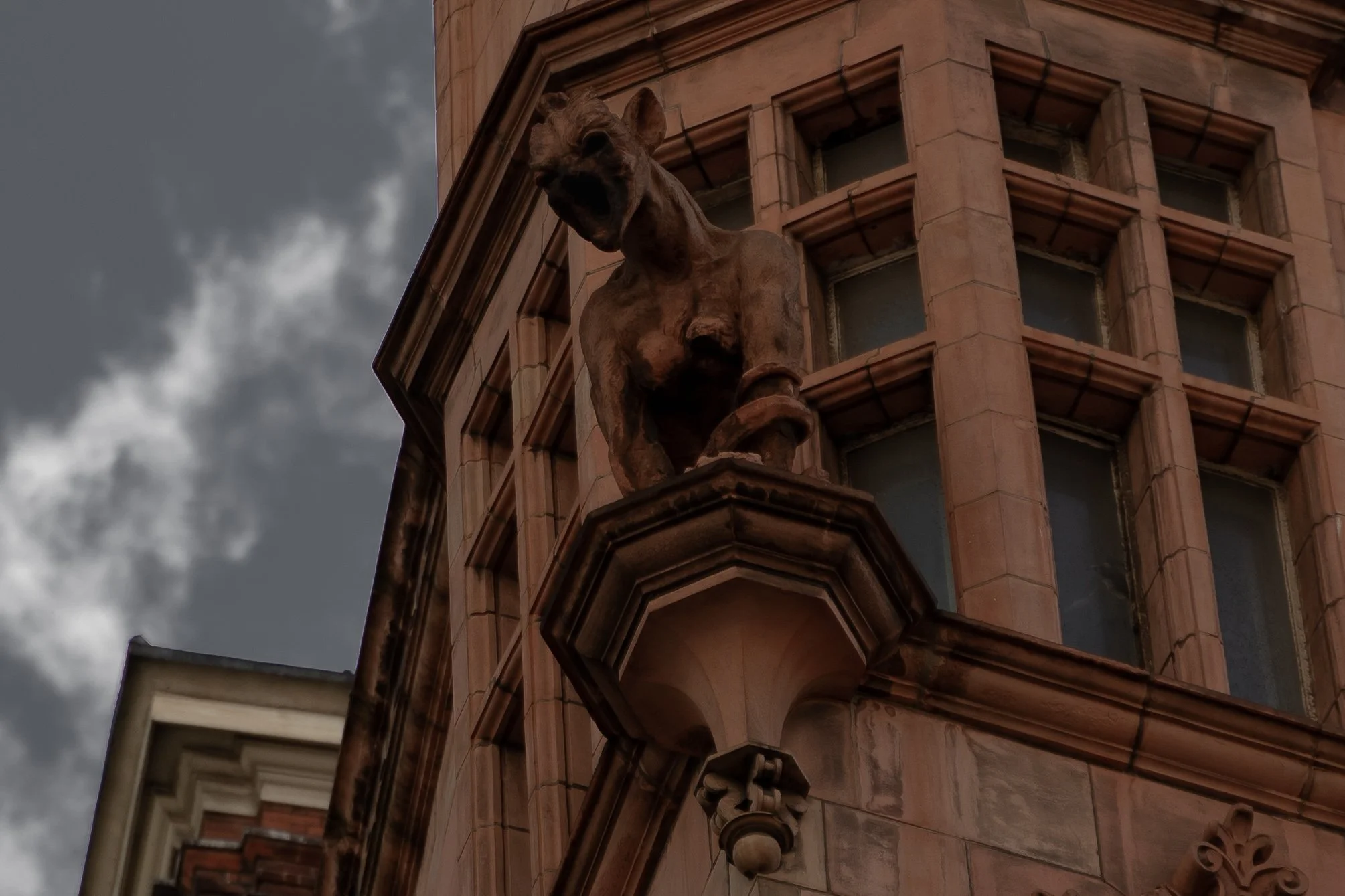
Cornhill is one of the oldest streets in London, originally laid out as a Roman road and later reshaped as a medieval market street before becoming part of the modern financial district. Amid the glass towers and banking façades, one of its most unusual survivals sits high above street level: the Cornhill Devils.
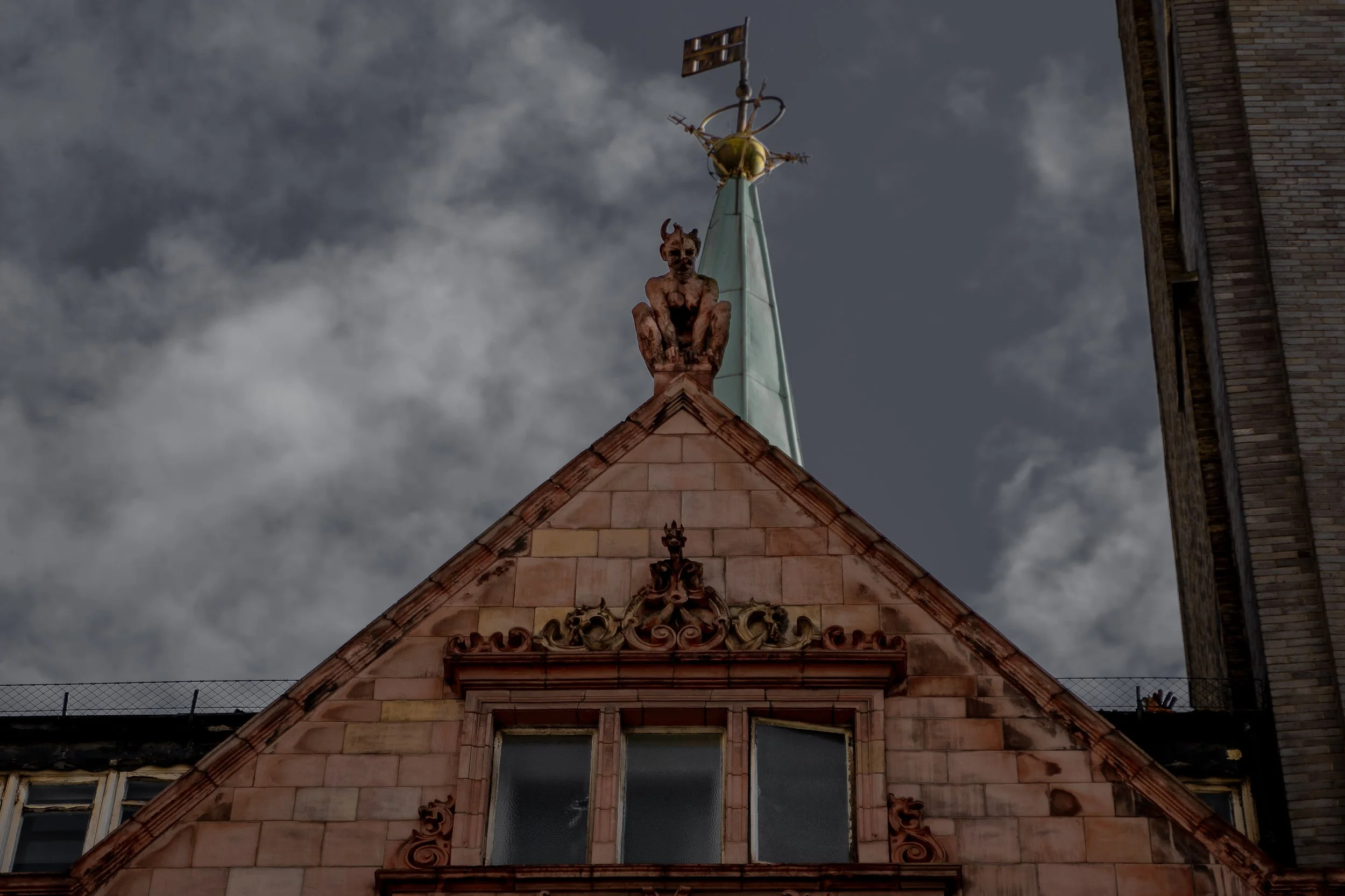
Perched on the façade of 54–55 Cornhill, these Victorian grotesques grin down at passers-by with exaggerated, almost theatrical expressions. Their curled tongues, bulging eyes, and clawed forms give the impression of mischief frozen in stone. They are easy to miss entirely unless you look up, but once seen, they are hard to forget!
The building itself is a strong example of Victorian Gothic Revival architecture, a style that embraced medieval ornament, pointed arches, and decorative stonework. The Devils act as purely decorative grotesques rather than functional gargoyles. In traditional Gothic architecture, such figures were often believed to ward off evil, although here they seem more playful than protective.
Local legend adds a sharper edge to their presence. It is said that during construction, architect Ernest Augustus Runtz became embroiled in a dispute with the neighbouring church of St Peter-upon-Cornhill over a boundary issue. In response, he is believed to have added the three demonic figures to the building as a deliberate act of architectural spite (possibly even modelling one on the opposing vicar himself). Whether true or not, the story has become inseparable from the carvings.
Today, they remain one of the City’s most easily overlooked curiosities. Most people pass beneath them without noticing, but those who look up find a small pocket of Victorian imagination staring back.
Looking for a place to stay? Discover my London hotel guide.
7. St Nicholas' Church
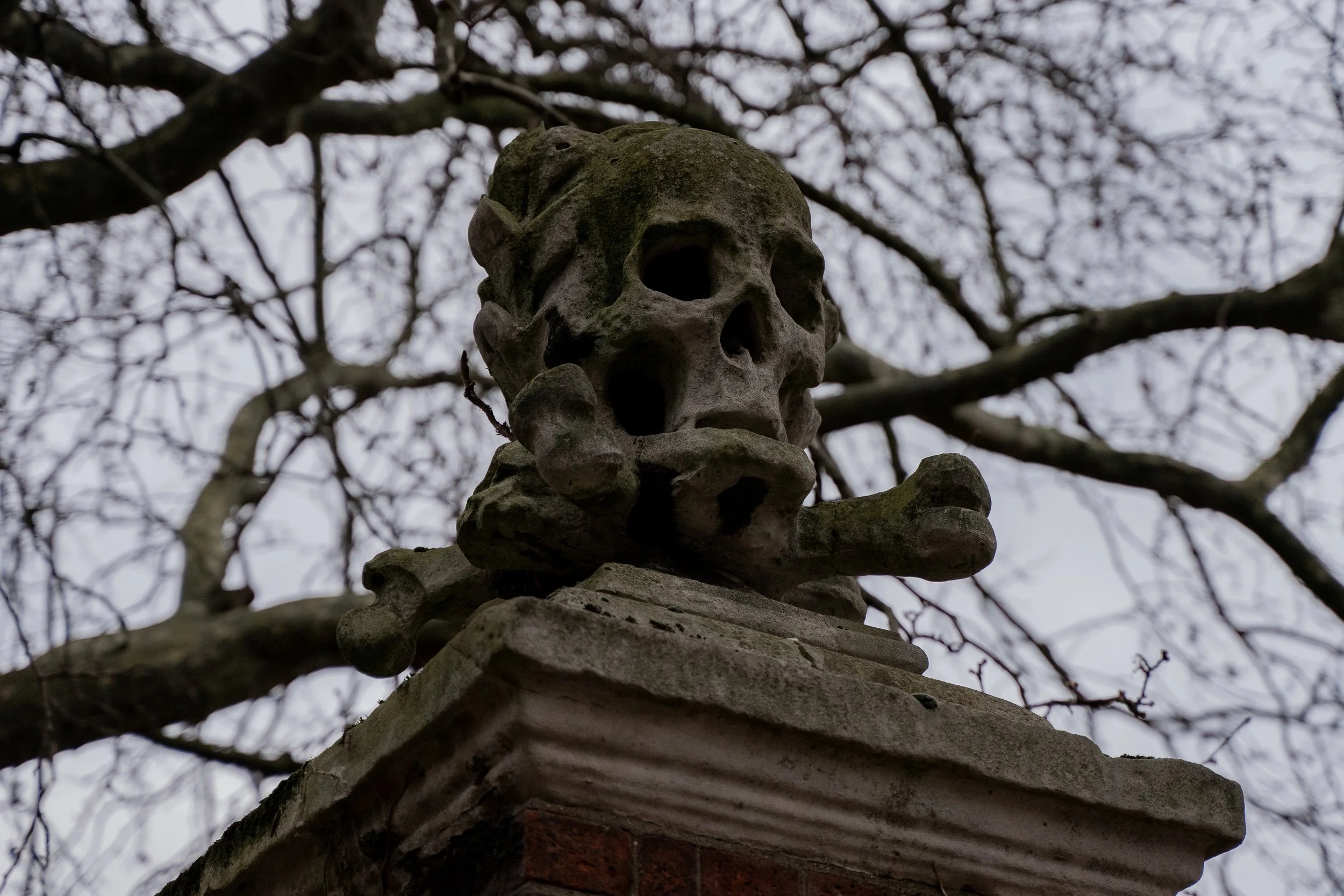
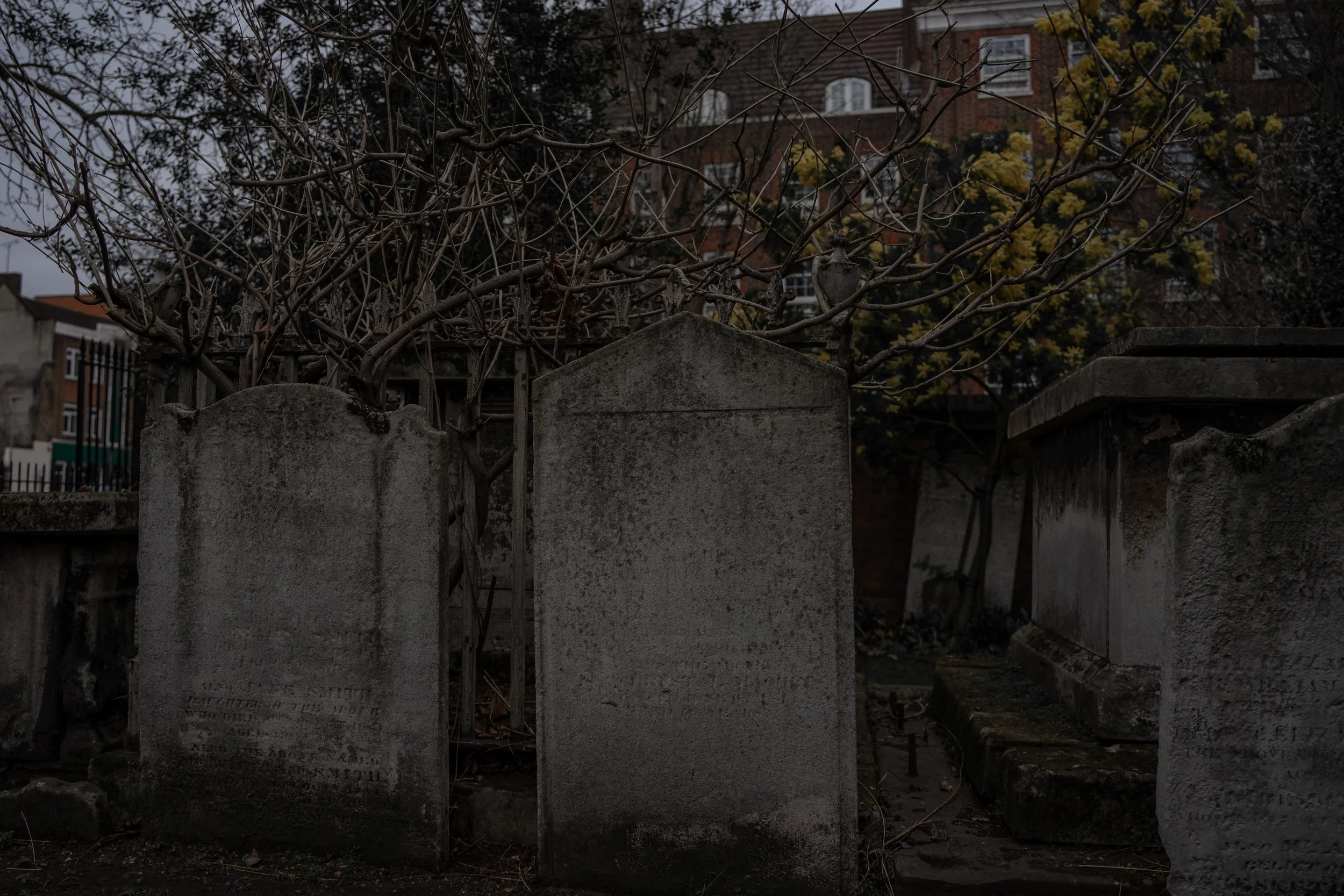
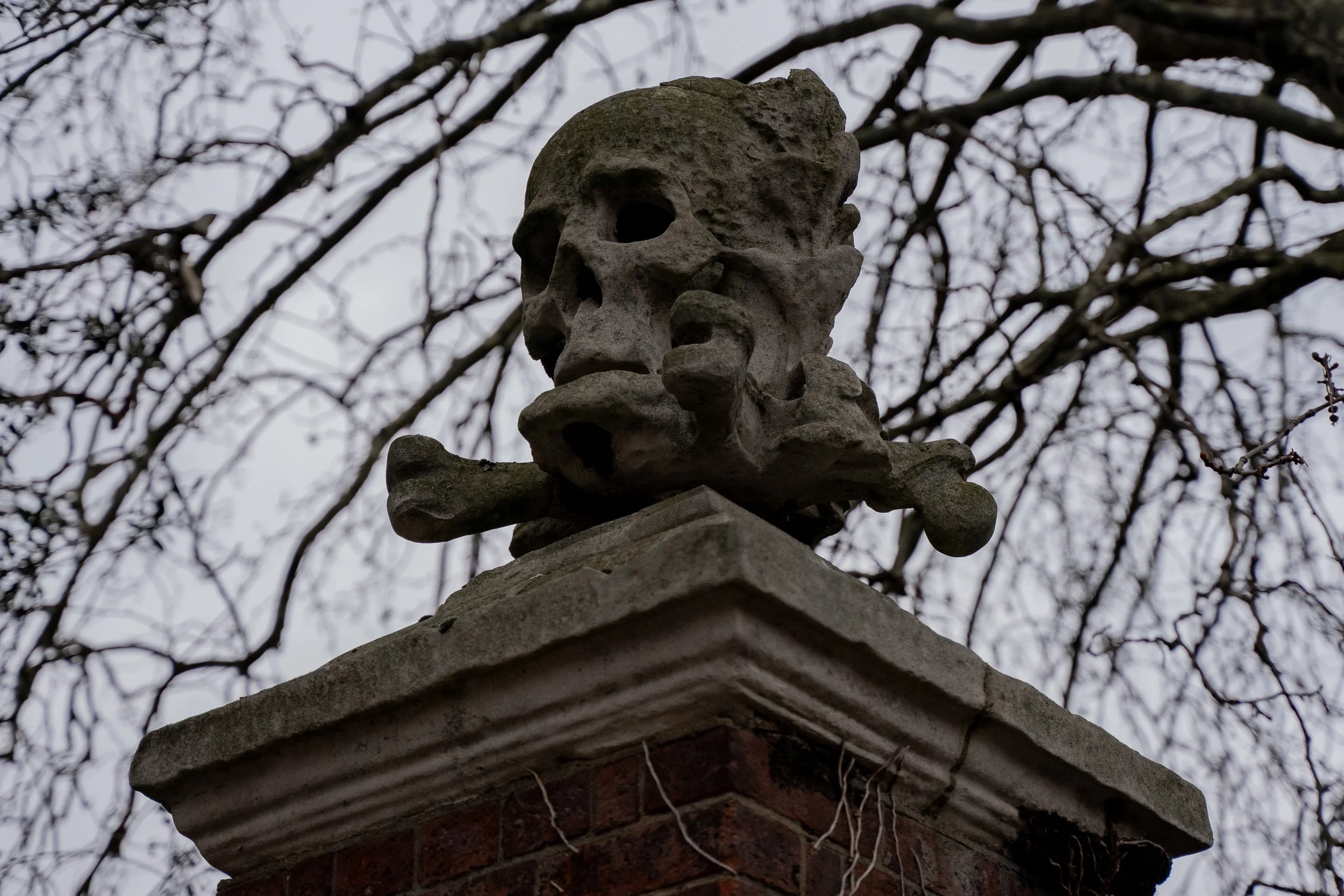
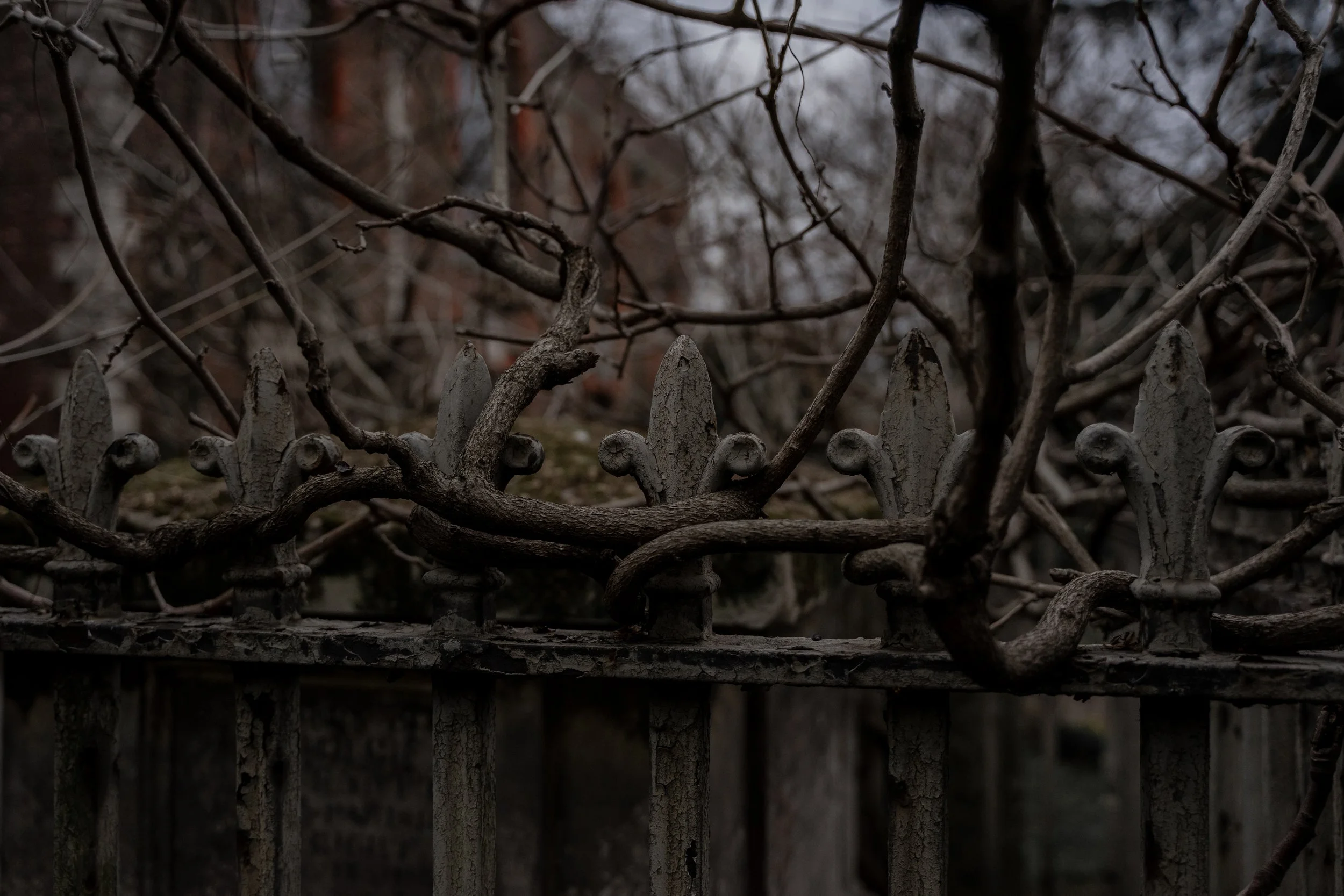
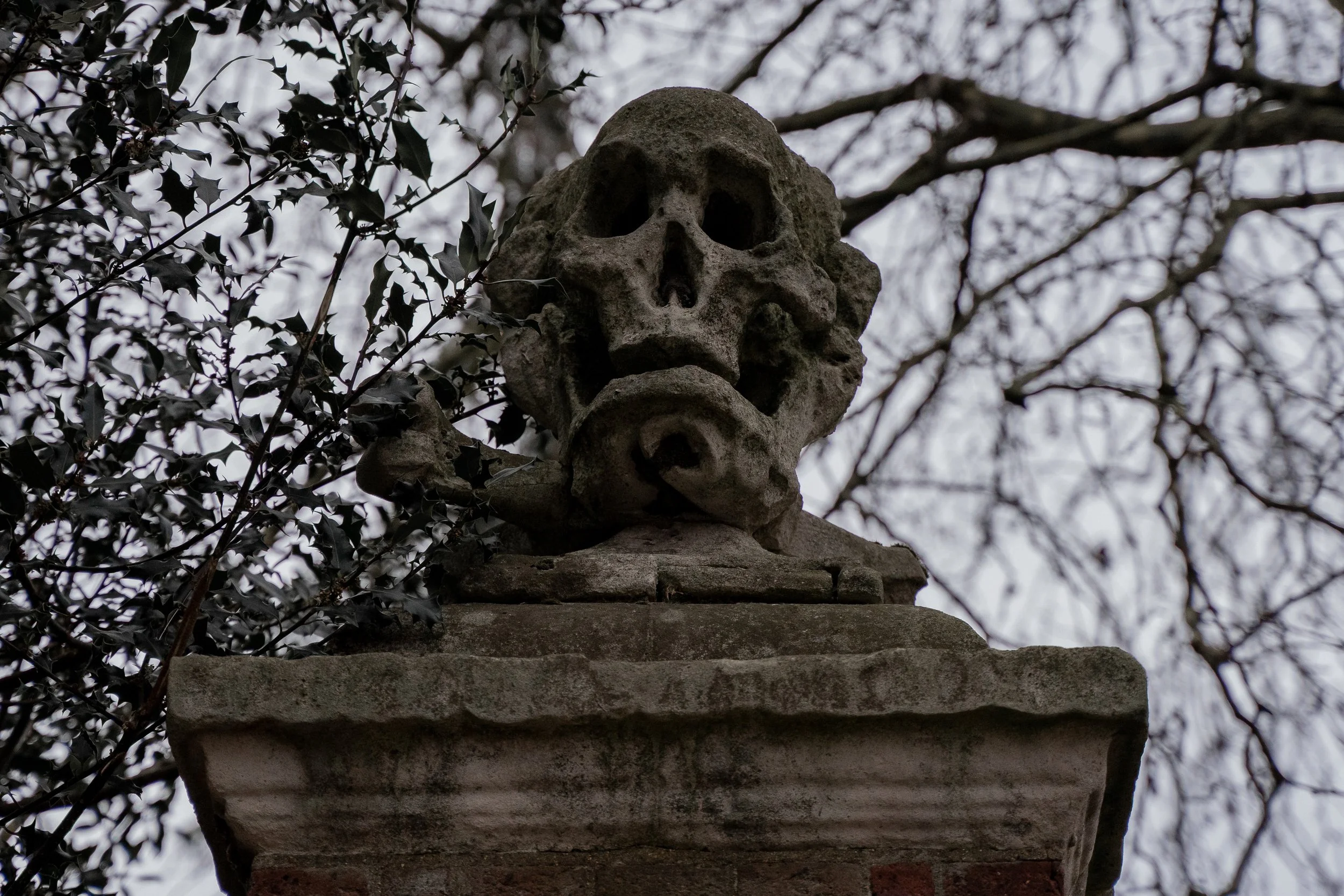
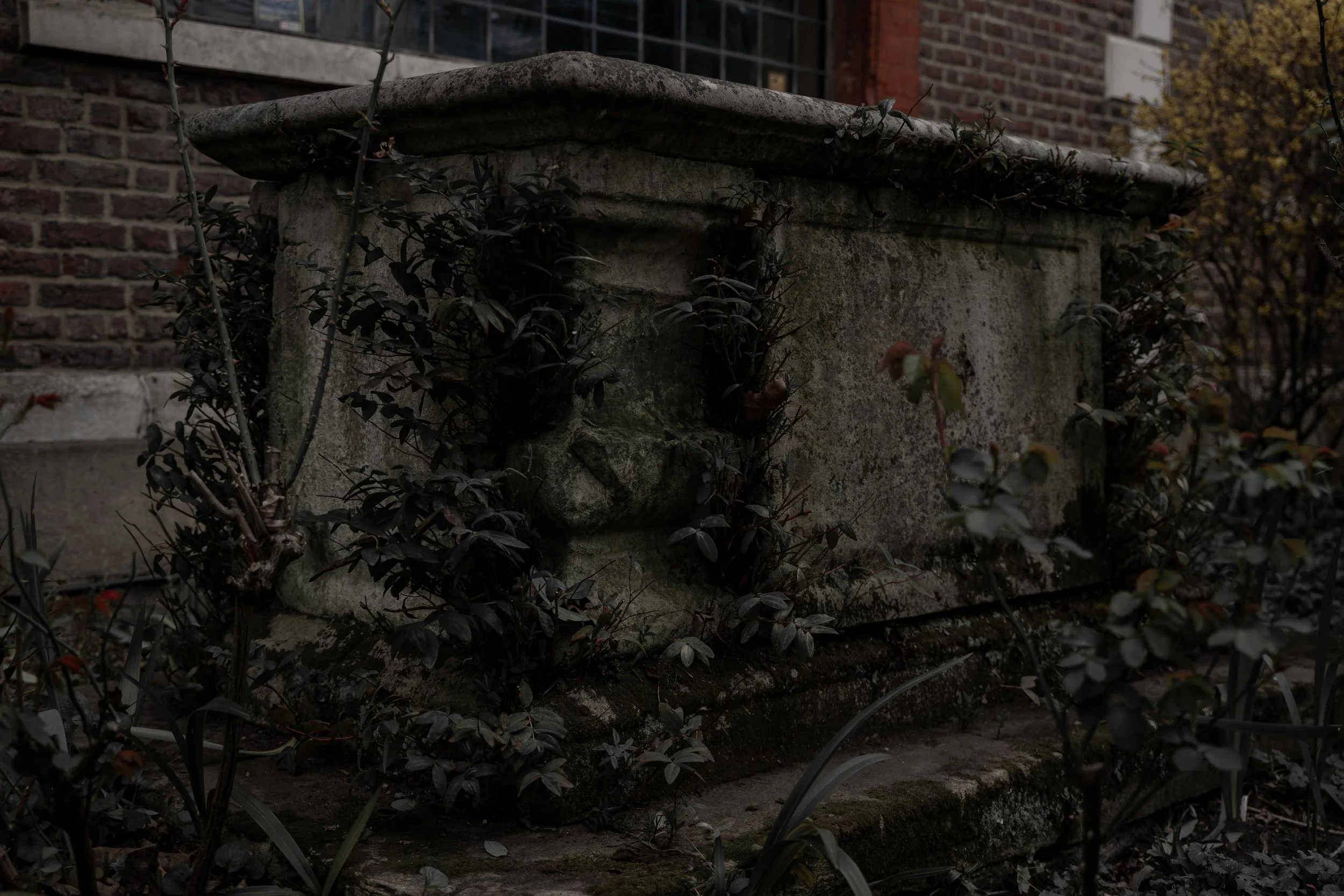
St Nicholas’ Church stands close to the Thames in old Deptford, in an area which was once one of England’s busiest shipbuilding districts. From a distance it looks like a quiet parish church, but at the gate the tone shifts sharply. Set into the stone posts are two carved skull and crossbones: hollow-eyed, weathered, and unflinching, greeting every visitor with a blunt reminder of mortality. They are among London’s most arresting memento mori, rooted not in piracy, but in the everyday dangers of a riverside community shaped by sea, sickness, and loss.
Despite popular myth, the carvings have no direct link to the Jolly Roger. Deptford’s maritime history certainly includes figures such as Sir Francis Drake and Captain James Cook, but these skulls predate romantic piracy lore. Dating from the 16th–17th century, they are more likely memento mori warnings and possibly associated with the church’s former charnel house (a space where bones were stored when the churchyard could no longer contain its dead).
Inside the churchyard, the atmosphere softens but never fully lifts. Gravestones tilt at uneasy angles, inscriptions dissolve into lichen and vines thread themselves through the iron railings. The church tower which is medieval in origin and later rebuilt, has overseen Deptford’s transformation from royal dockyard to wartime target to post-industrial riverside.
The church’s identity is inseparable from the Thames. Dedicated to St Nicholas, patron saint of sailors, it once served a community whose lives were bound to the river and its risks.
Looking for a place to stay? Discover my London hotel guide.
8. The Old Operating Theatre Museum
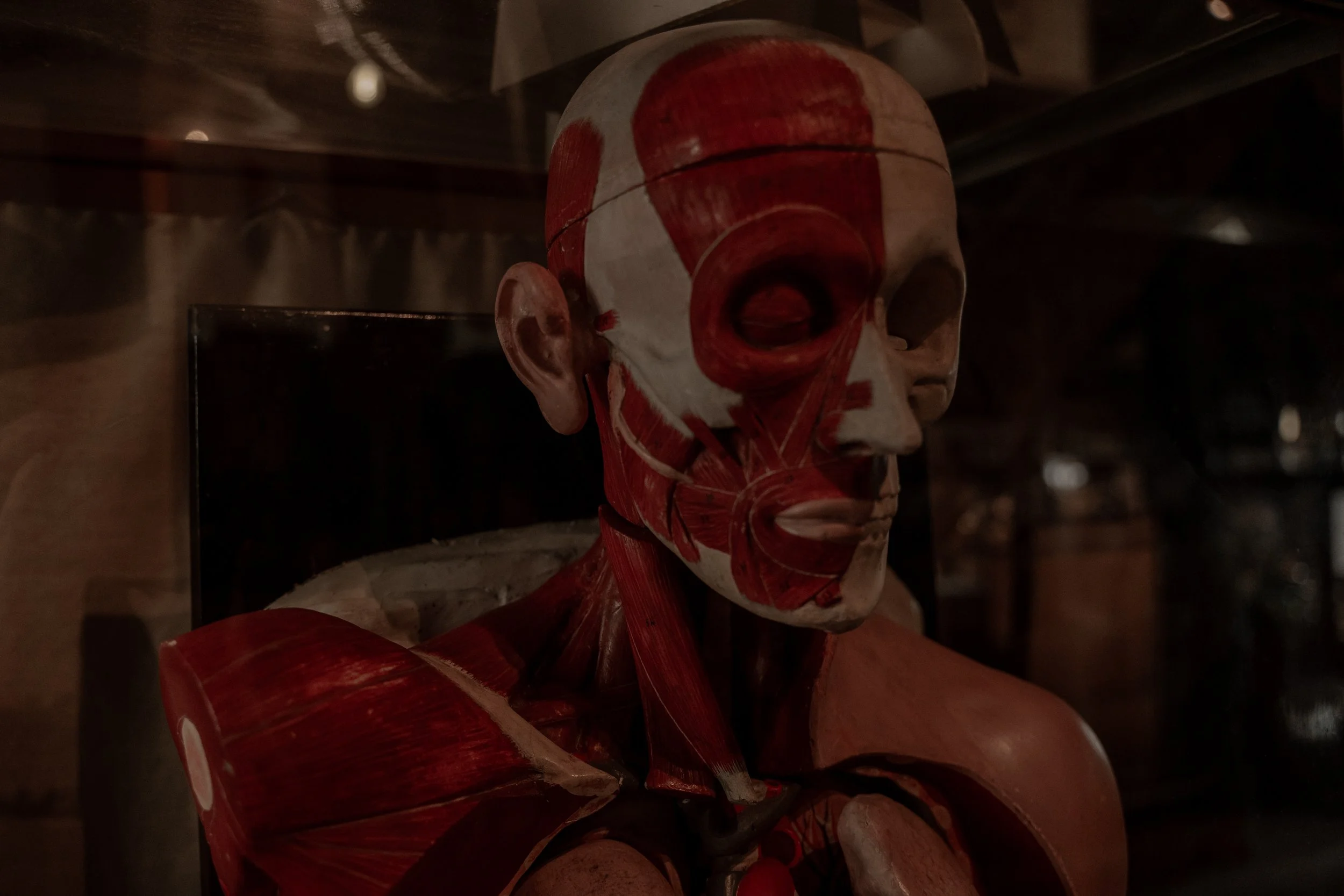
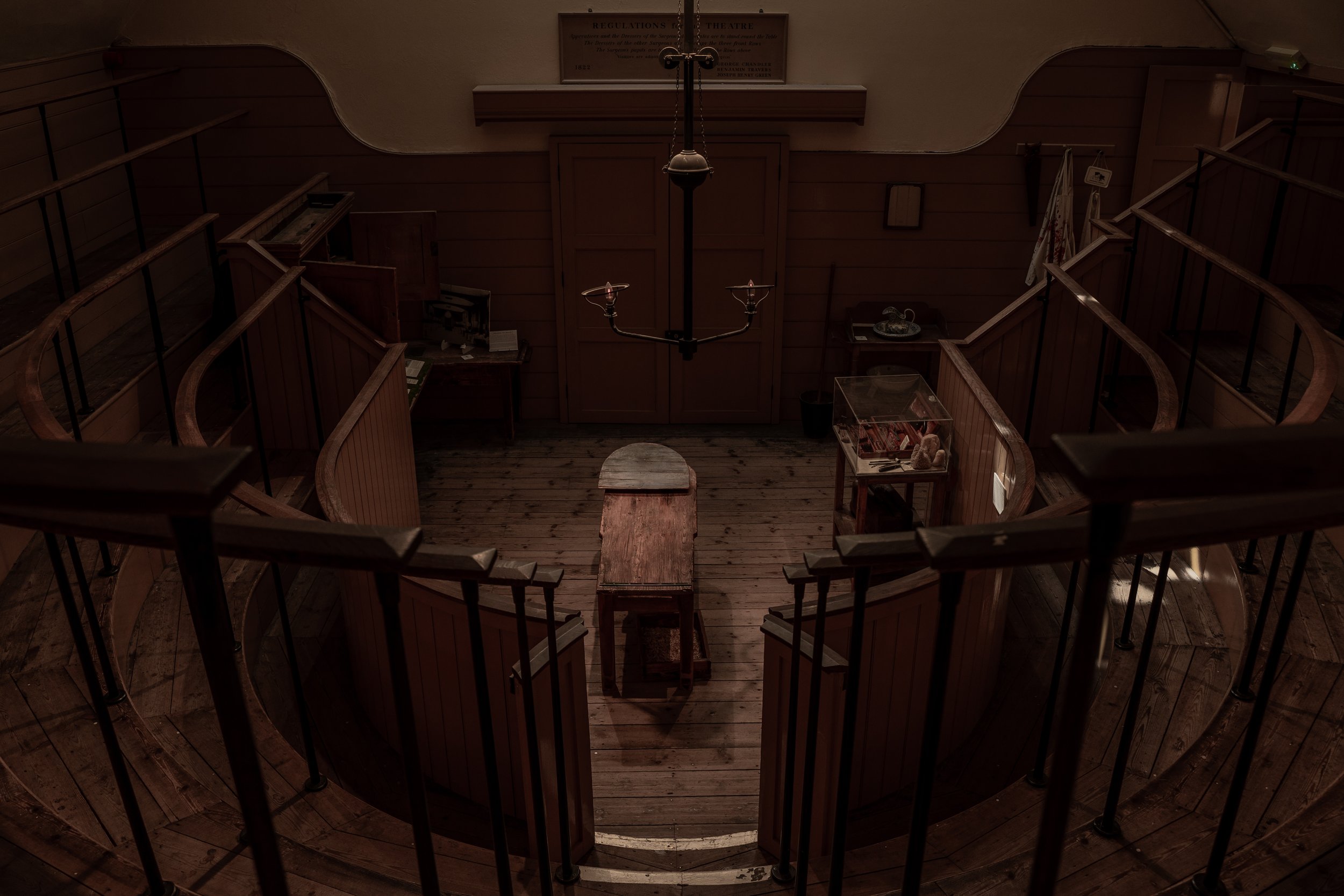
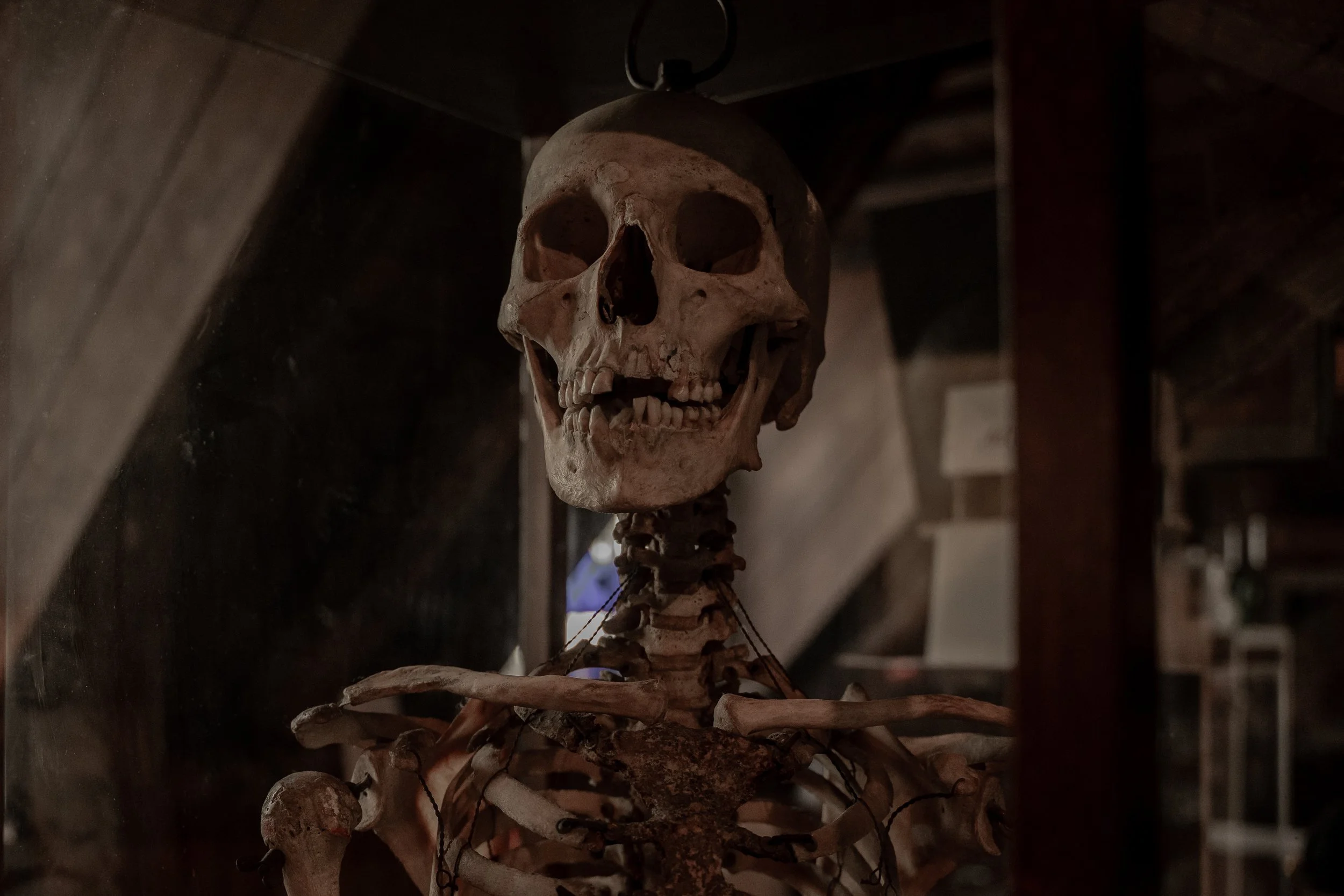
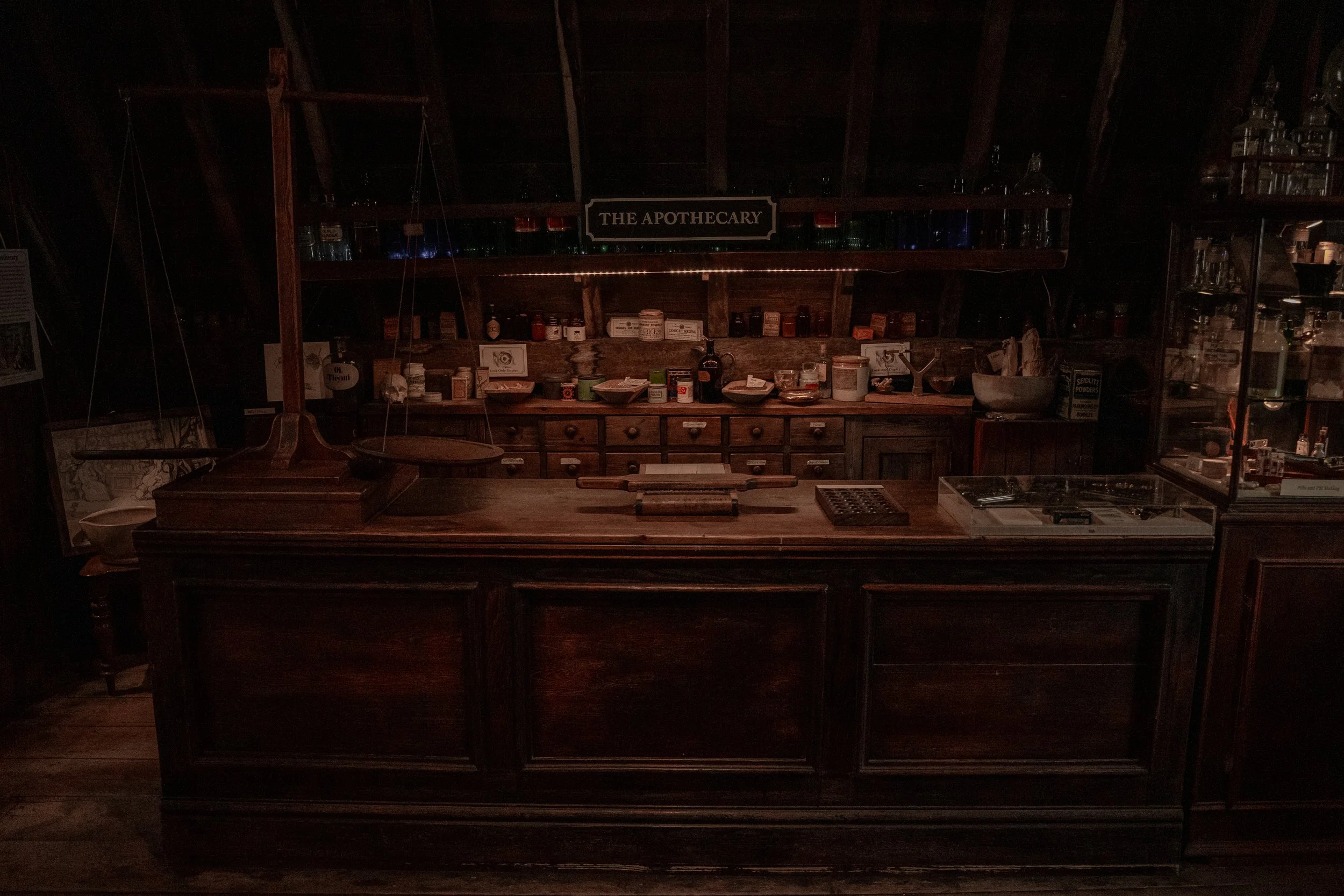
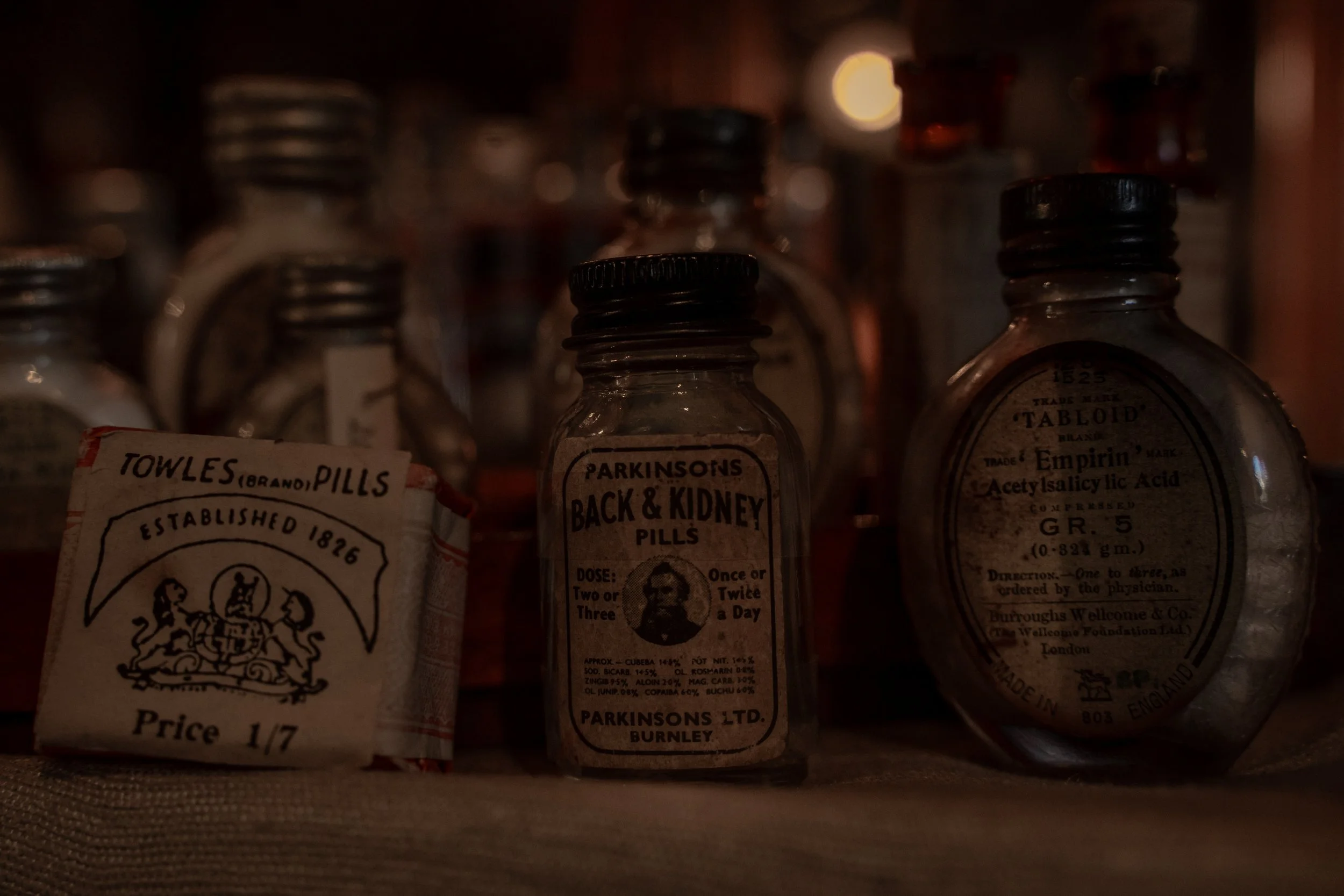
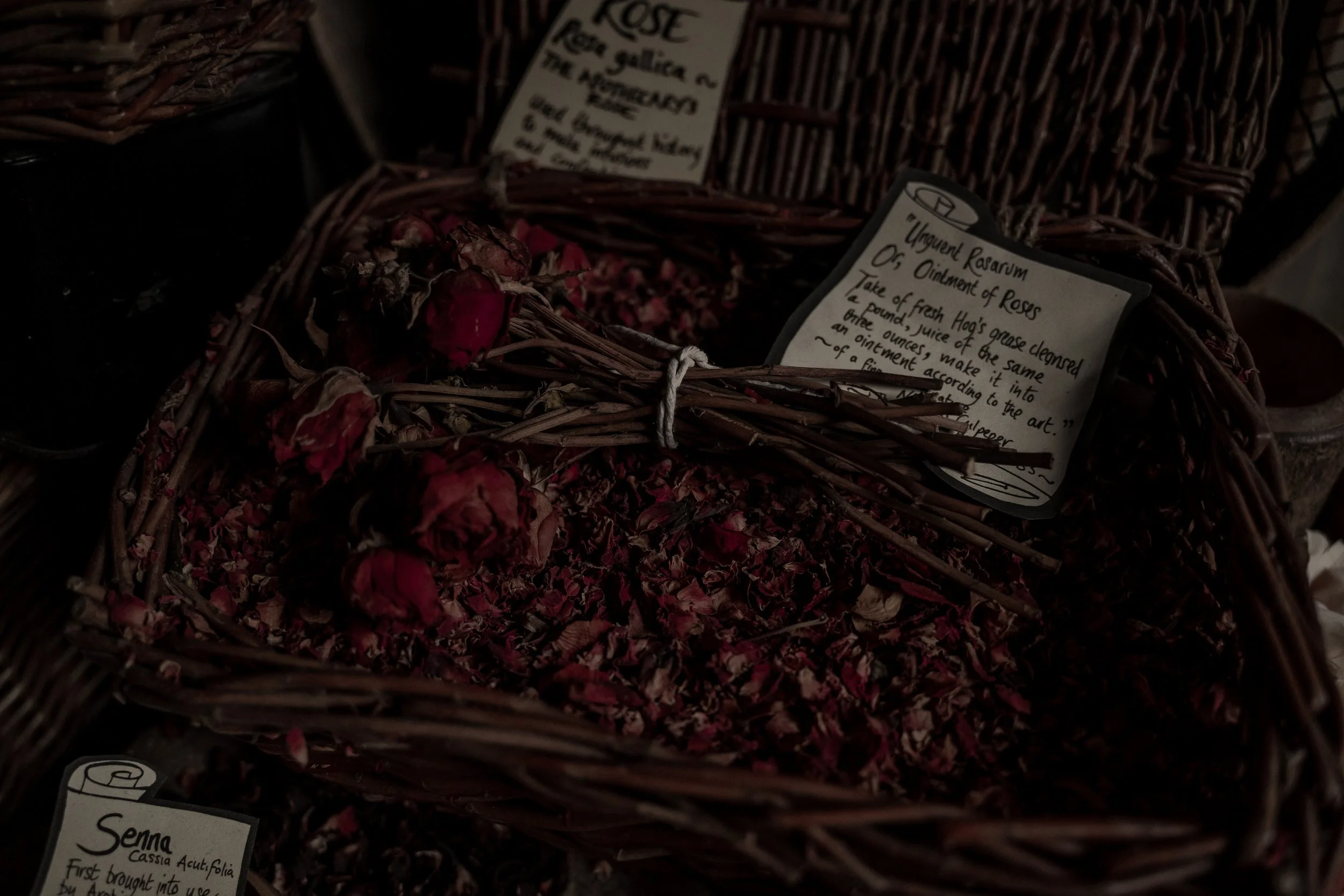
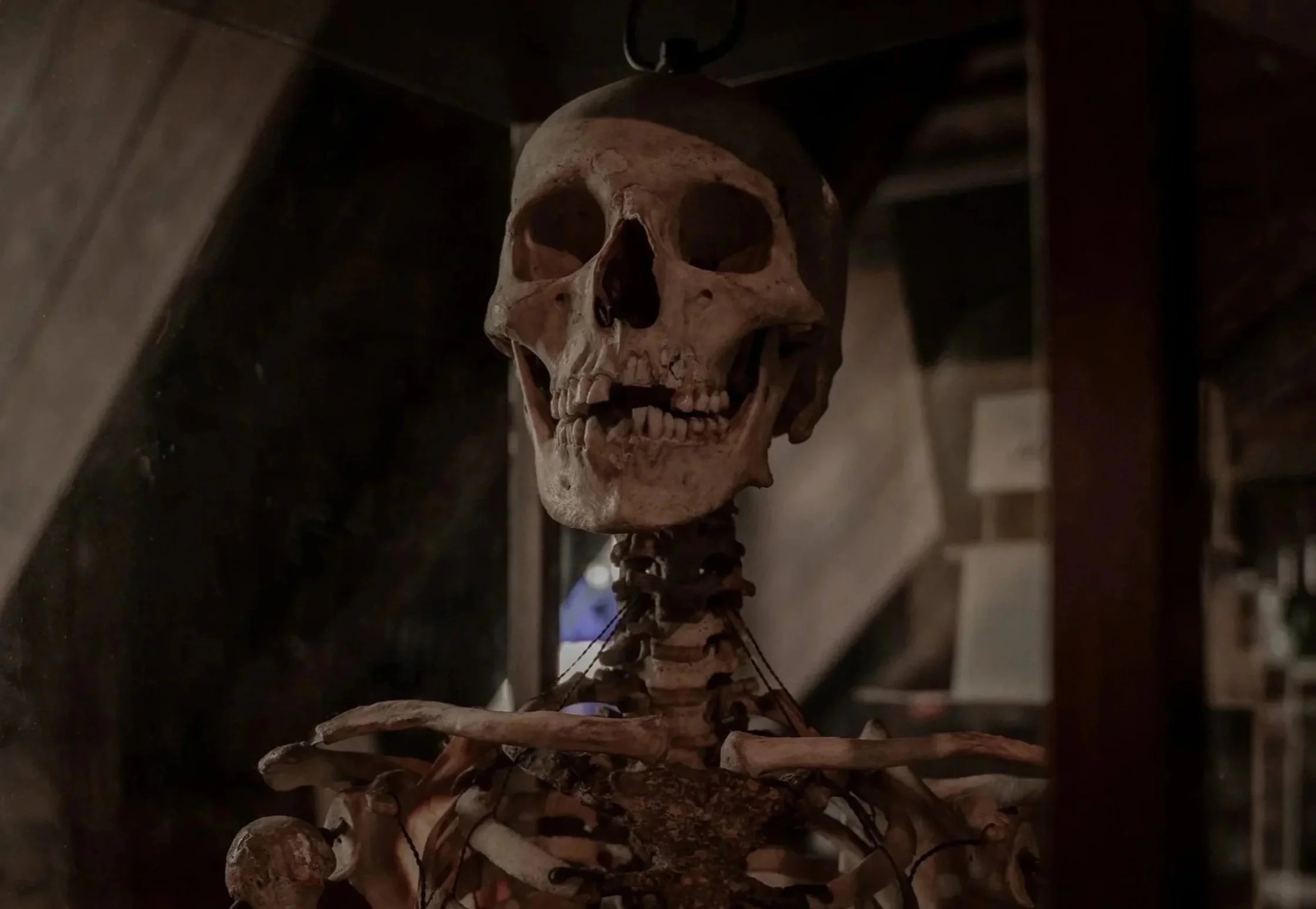
Located close by to the bustle of Borough Market, the Old Operating Theatre Museum occupies the timbered attic of the 18th-century church of Old St Thomas’ Hospital, a rare site from the earliest era of modern surgery. Originally the hospital’s herb garret, the space was used by the apothecary to dry and store medicinal plants beneath the rafters. Its rediscovery in 1956 revealed something far more significant: Europe’s oldest surviving operating theatre, preserved almost intact under layers of dust and time.
The experience begins before you even enter the gallery. A narrow 52-step spiral staircase winds sharply upward through the building. The climb is tight and enclosed, immediately stripping away the present day and setting a distinctly historic tone.
At the top, the garret opens into a world of pre-anaesthetic medicine. Shelves and drawers of dried herbs, roots and tinctures reveal how treatments were prepared before the age of pharmaceuticals. Alongside them sit early surgical instruments: amputation saws, bone forceps, tourniquets and trepanning tools, objects that reflect both extraordinary ingenuity and the brutal speed required when pain relief did not exist and infection was ever-present.
The museum also traces the profession's origins to the era of the barber-surgeons, whose distinctive red-and-white poles symbolised blood and bandages. For centuries, surgery was considered a practical trade rather than an academic discipline. While university-trained physicians diagnosed illness, barber-surgeons performed bloodletting, tooth extractions, amputations and other operations requiring strength, dexterity and speed. By the early 19th century, when this operating theatre was in use, surgery was becoming a recognised medical profession, yet many of the techniques, instruments and traditions on display still reflected that earlier world. The theatre stands at the point where surgery was beginning to emerge from its craft origins into a more scientific discipline.
At the far end lies the operating theatre itself, a steep wooden amphitheatre beneath dormer windows, where surgeons once worked at pace while patients endured procedures fully conscious, restrained only by assistants. Medical students would crowd the tiered benches above, observing in silence. Outcomes depended entirely on speed, precision and luck; survival was never guaranteed.
What makes the museum so powerful is its setting. The sloping beams, worn timber and confined space create a sense of enclosure that feels almost unchanged since the 19th century. It is not simply a reconstructed environment, but a preserved fragment of surgical history suspended above modern London, capturing the transition from the age of the barber-surgeon to the beginnings of modern medicine.
For those seeking one of the city's most atmospheric hidden sites near London Bridge, the Old Operating Theatre Museum remains unforgettable and a rare encounter with the origins of modern surgery.
Looking for a place to stay? Discover my London hotel guide.
9. St Dunstan in the East
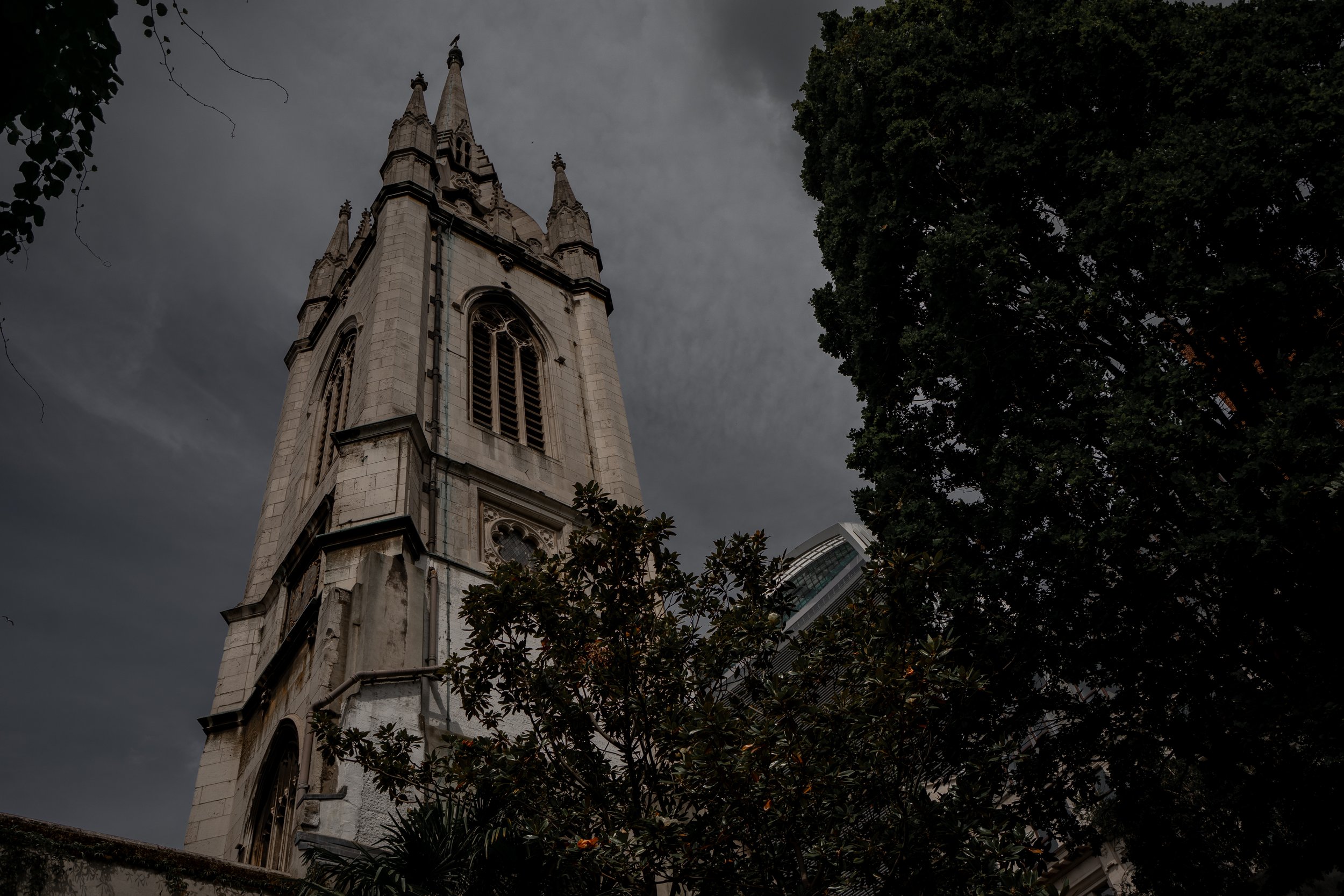
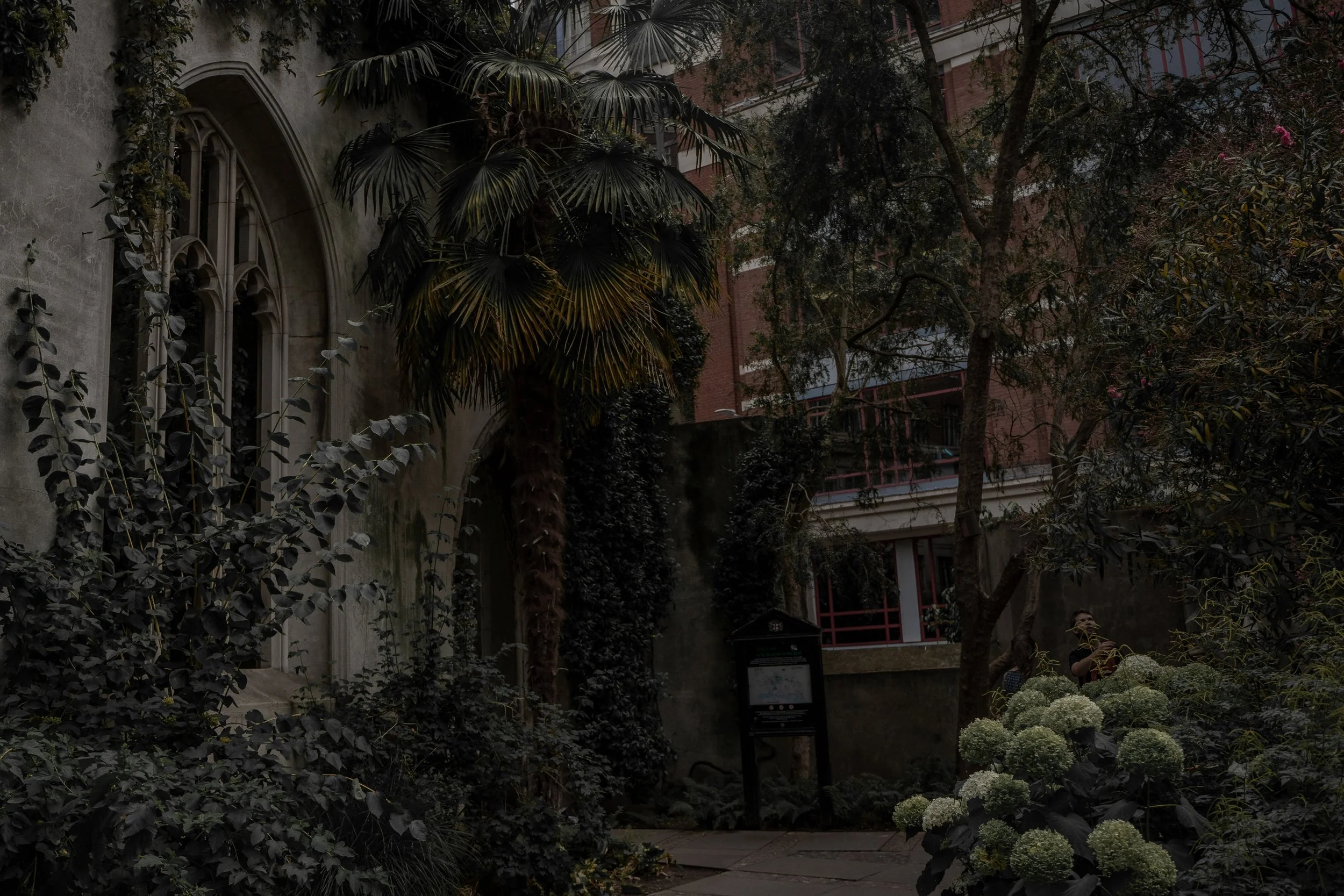
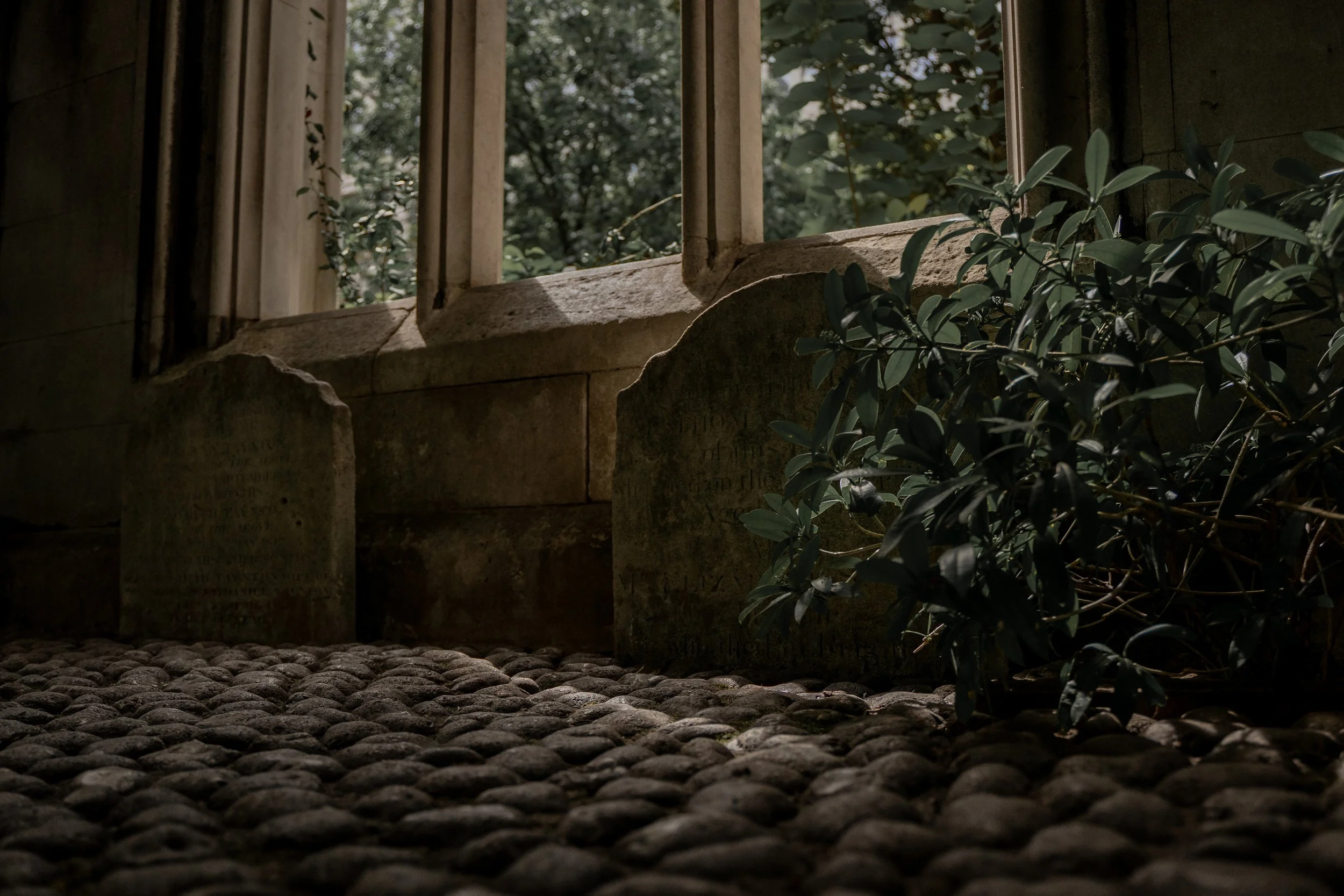
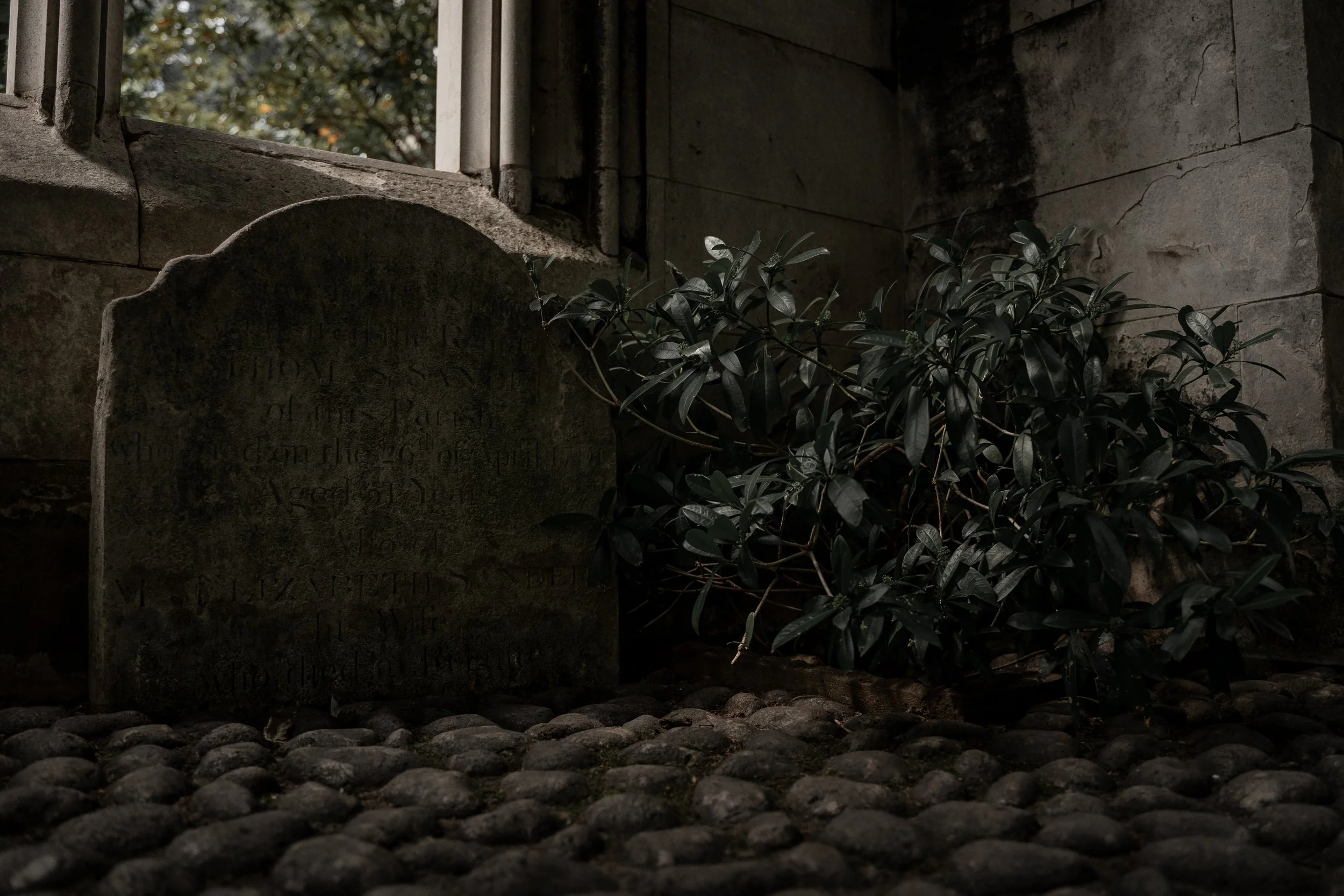
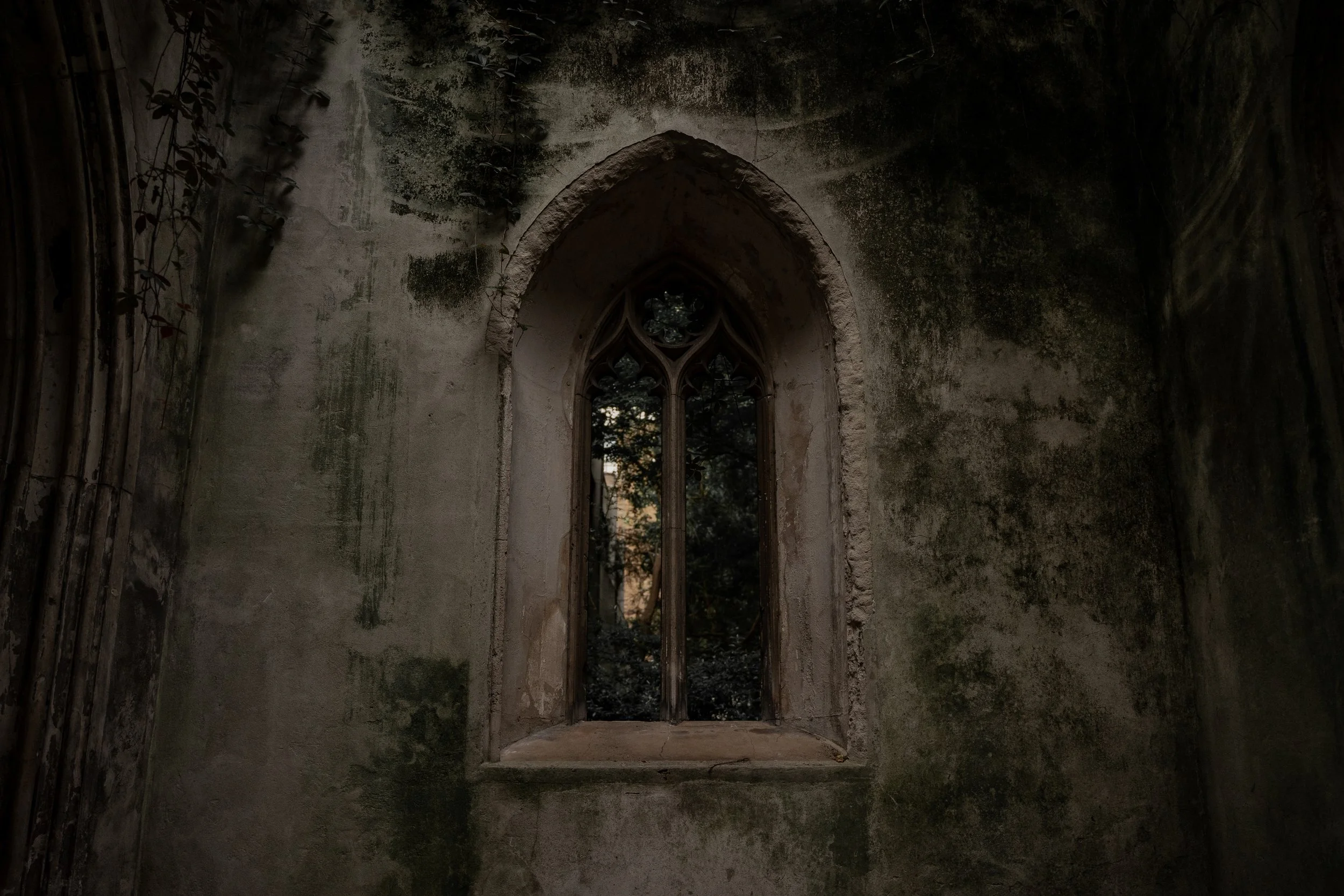
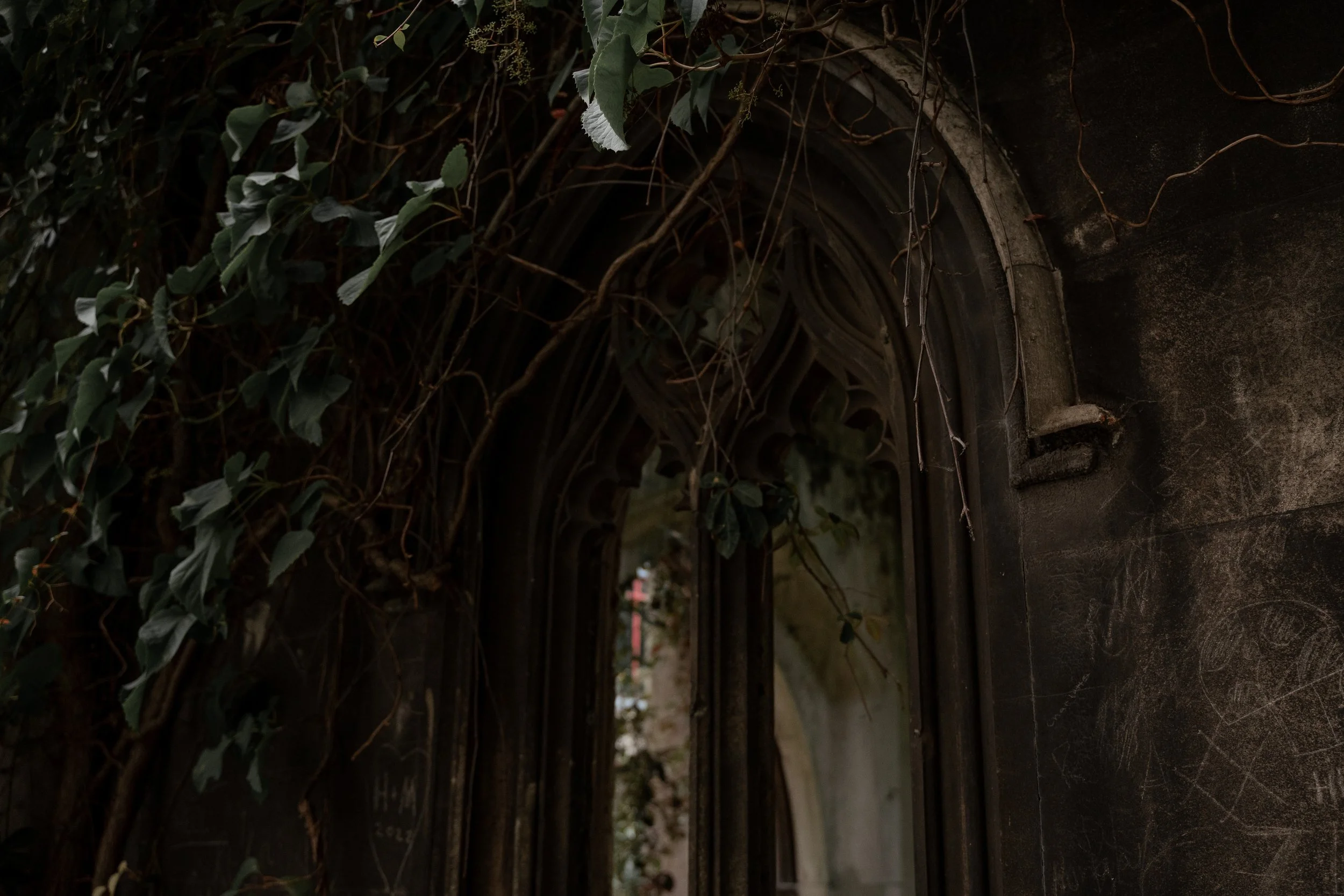
Tucked between London Bridge and the Tower of London, St Dunstan in the East feels like a secret held in plain sight. A 900 year old fragment of the City that has survived fire, war and reinvention. Originally a medieval parish church, it was rebuilt by Sir Christopher Wren after the Great Fire of London, only to be devastated again in 1941 during the Blitz. This time, the City chose not to restore it. Instead, the ruins were preserved as a public garden, transforming destruction into one of London’s most atmospheric spaces.
What remains is a frame of stone and history. Wren’s surviving tower rises above broken Gothic arches, while the roofless nave has become an open-air cloister where architecture and nature intertwine. Ivy pours through empty window tracery, trees grow through shattered ruins and sunlight moves softly across the stonework, creating a quiet sanctuary.
Birds nest in the arches, squirrels run along the tops of the walls and fragments of moss-covered gravestones still mark the site’s earlier life as a burial ground. The boundary between building and landscape has dissolved, leaving a space that feels neither fully wild nor fully man-made.
After the Second World War, the ruins were formally converted into a garden of remembrance, designed to honour both the destruction of the Blitz and the resilience of the City itself. Today, office workers eat lunch beneath its trees, visitors stumble in and fall silent and photographers chase the shifting light through its fractured frame.
St Dunstan in the East is now one of the City’s most peaceful corners, a place where medieval history, Wren’s architecture and post-war ruin have fused into something quite otherworldly.
Looking for a place to stay? Discover my London hotel guide.
10. The Hardy Tree
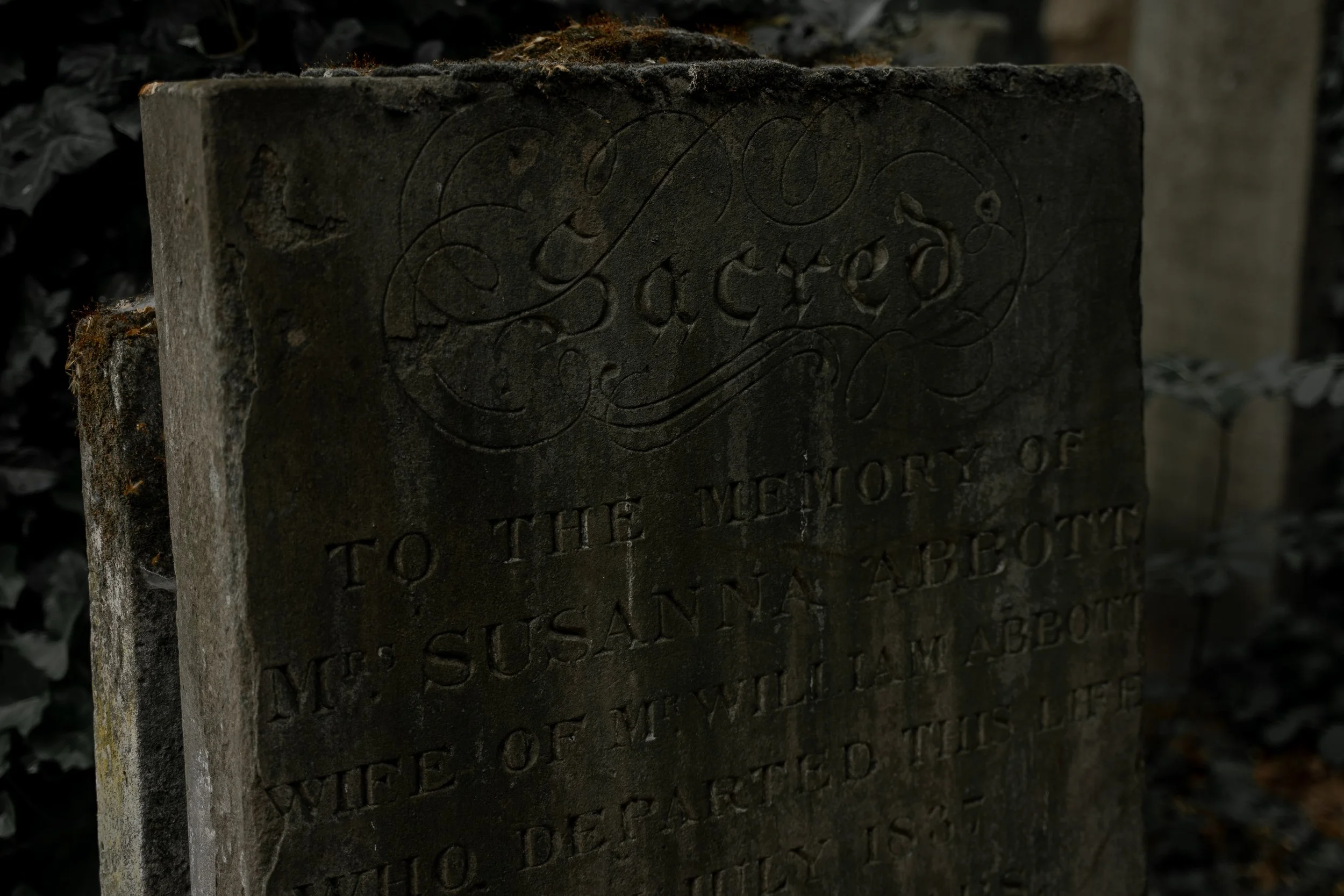
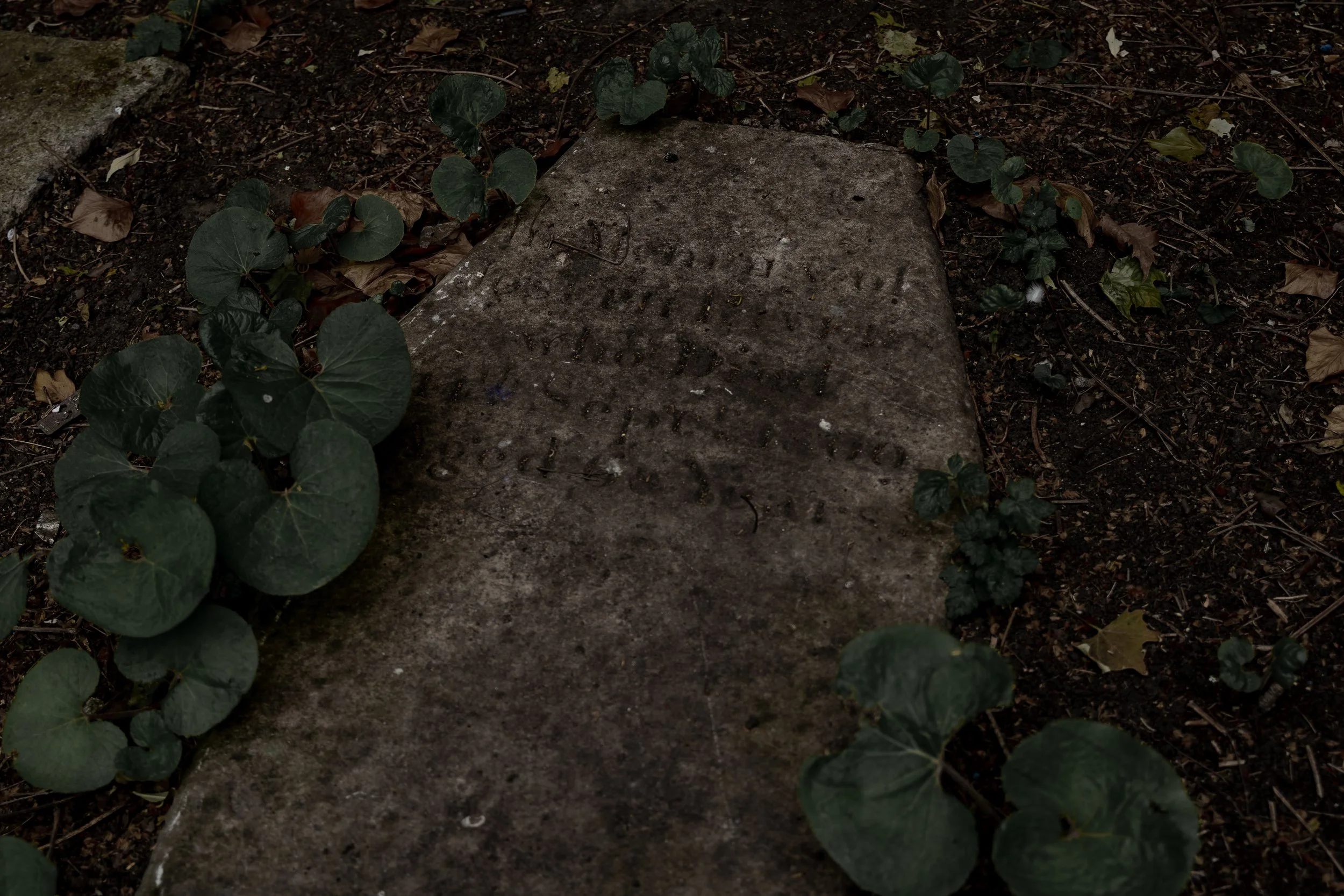
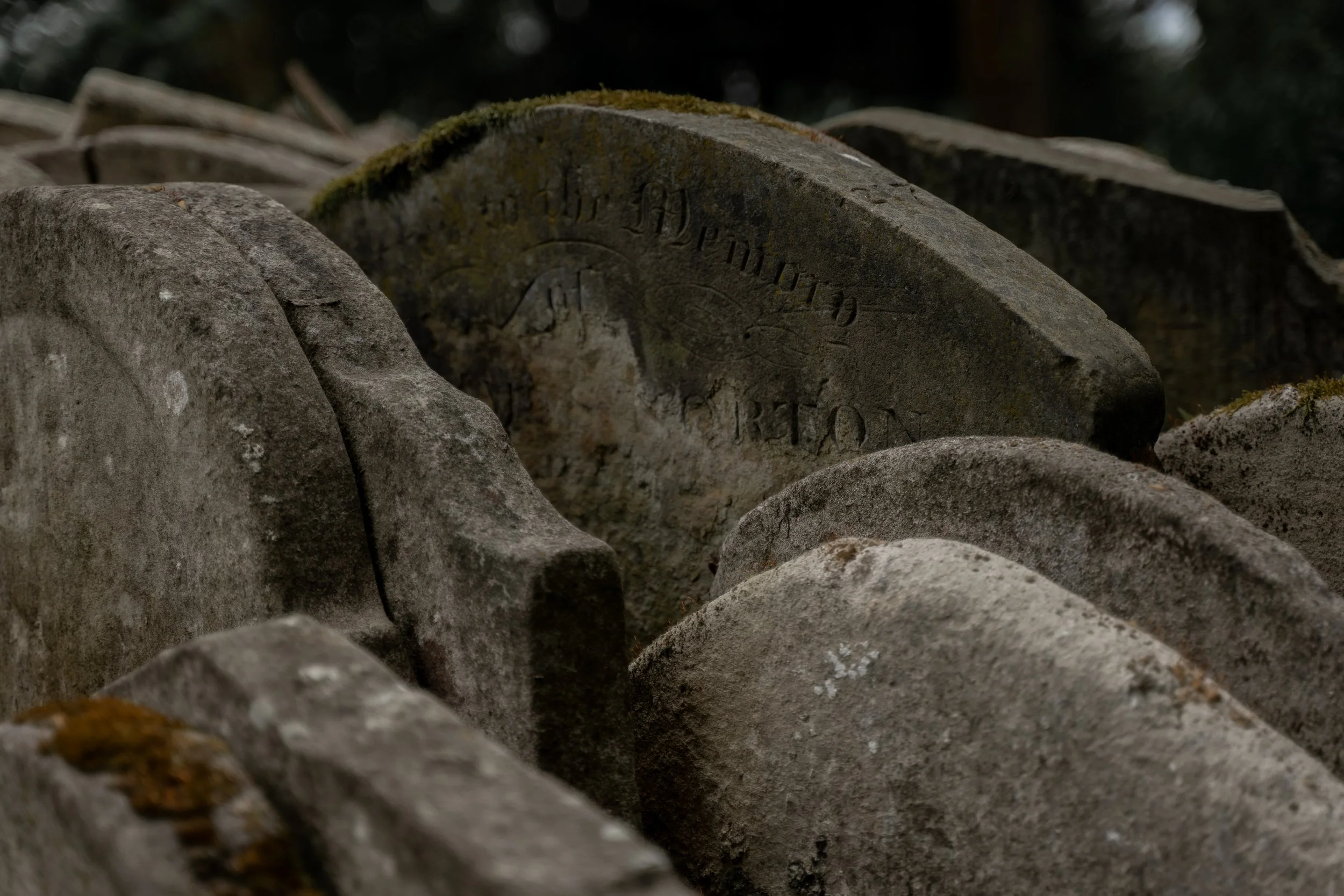
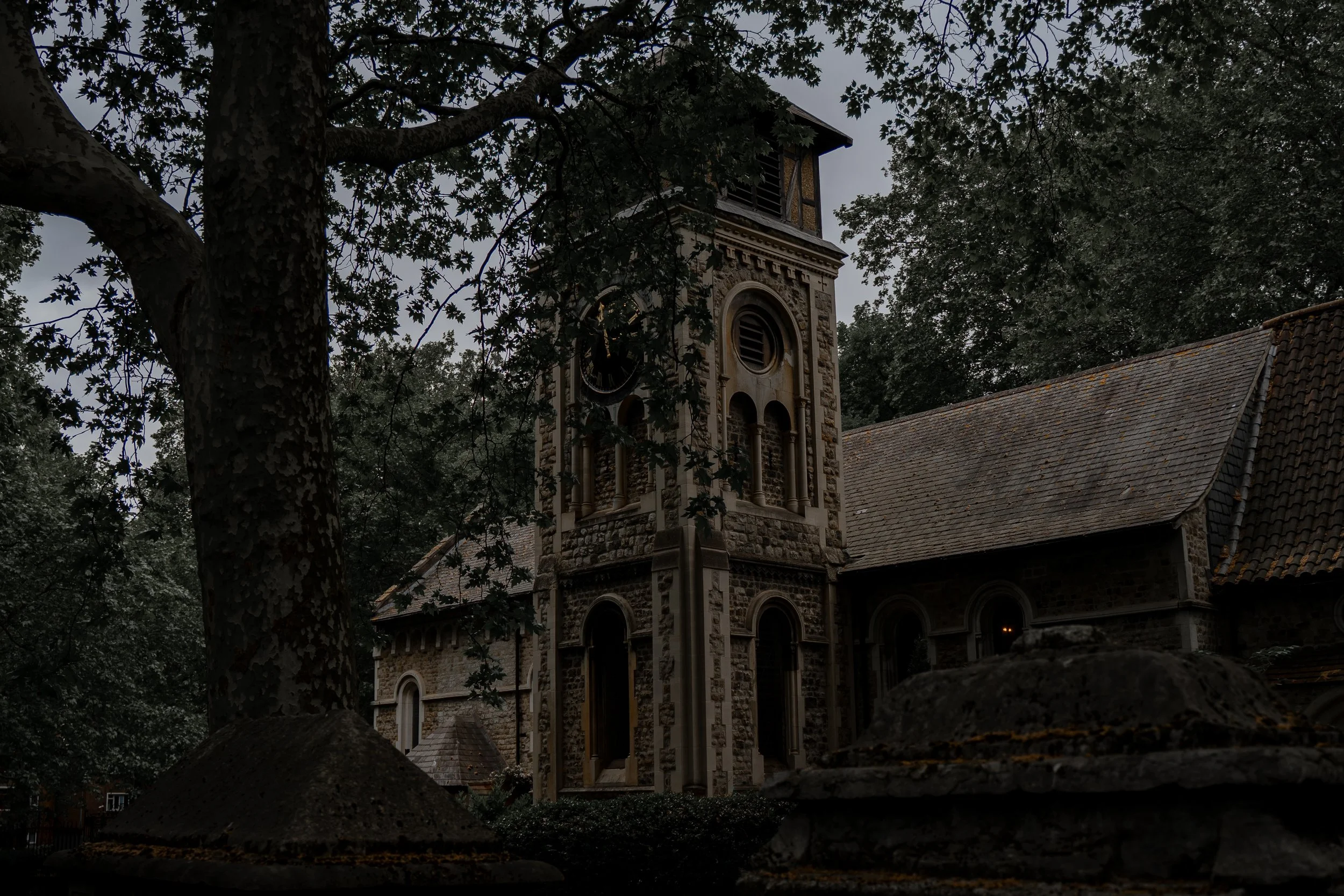
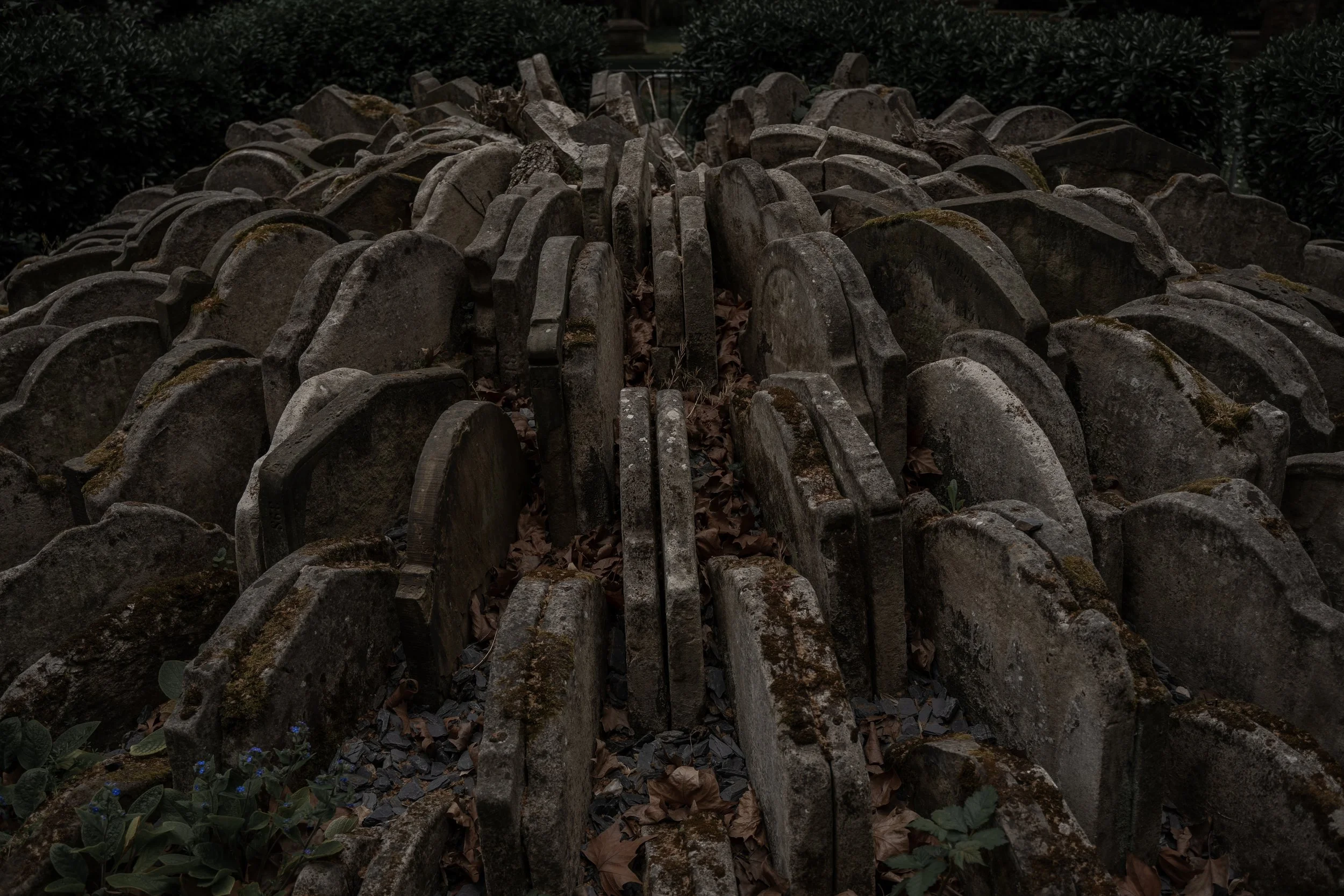
The story of the Hardy Tree begins in the 1860s, when a young Thomas Hardy then an apprentice architect, (long before he became a novelist or poet) was involved in clearing part of the churchyard to make way for the expanding railway lines near St Pancras. It was a sombre task. Graves were disturbed, coffins were lifted, bones were relocated and headstones were removed from their original positions as the city reshaped itself around new industrial infrastructure.
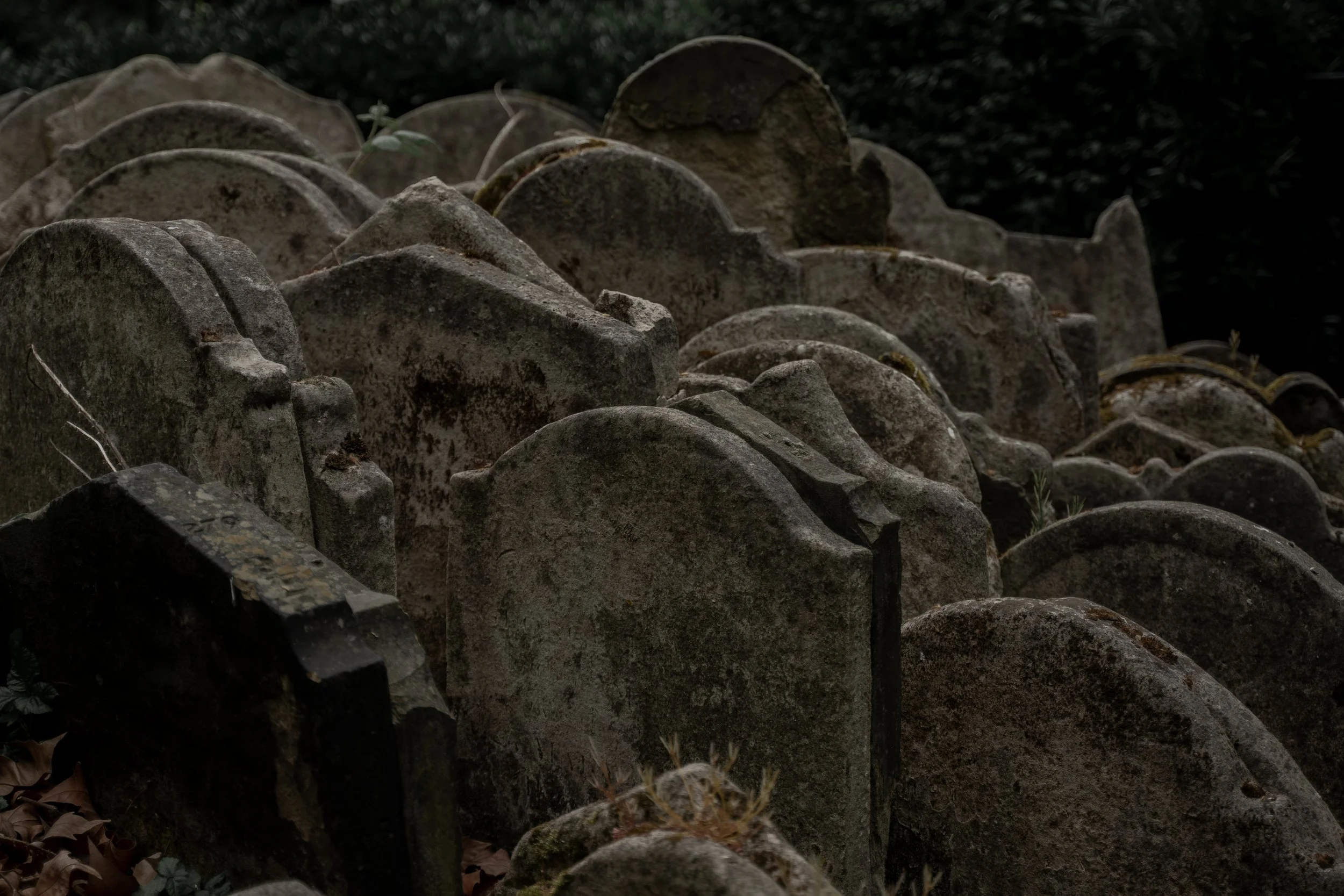
During this process, Hardy is believed to have arranged a number of displaced gravestones around a young ash tree growing in the churchyard. Whether out of practicality, respect, or an act of care, the result was an unintended composition: a ring of stones encircling a single sapling.
Over time, the tree grew and the gravestones shifted with it. The roots expanded, the stones settled and tilted, and the circle slowly transformed into something more organic and unsettling. Visitors began to notice an unusual scene: a tree emerging from a dense arrangement of leaning headstones, their inscriptions fading, their surfaces cracked and softened by moss and age.
For well over a century, the Hardy Tree became one of London’s most unusual natural monuments. But in 2022, it unfortunately finally collapsed, brought down by age, storms and the long-term pressure of the stones it had grown around.
In the Southeast section of the churchyard a smaller similar grouping of relocated headstones can also be found. These scattered arrangements serve as further reminders of how profoundly Victorian infrastructure reshaped the burial landscape of the area.
Looking for a place to stay? Discover my London hotel guide.
11. Sir John Soane’s Museum
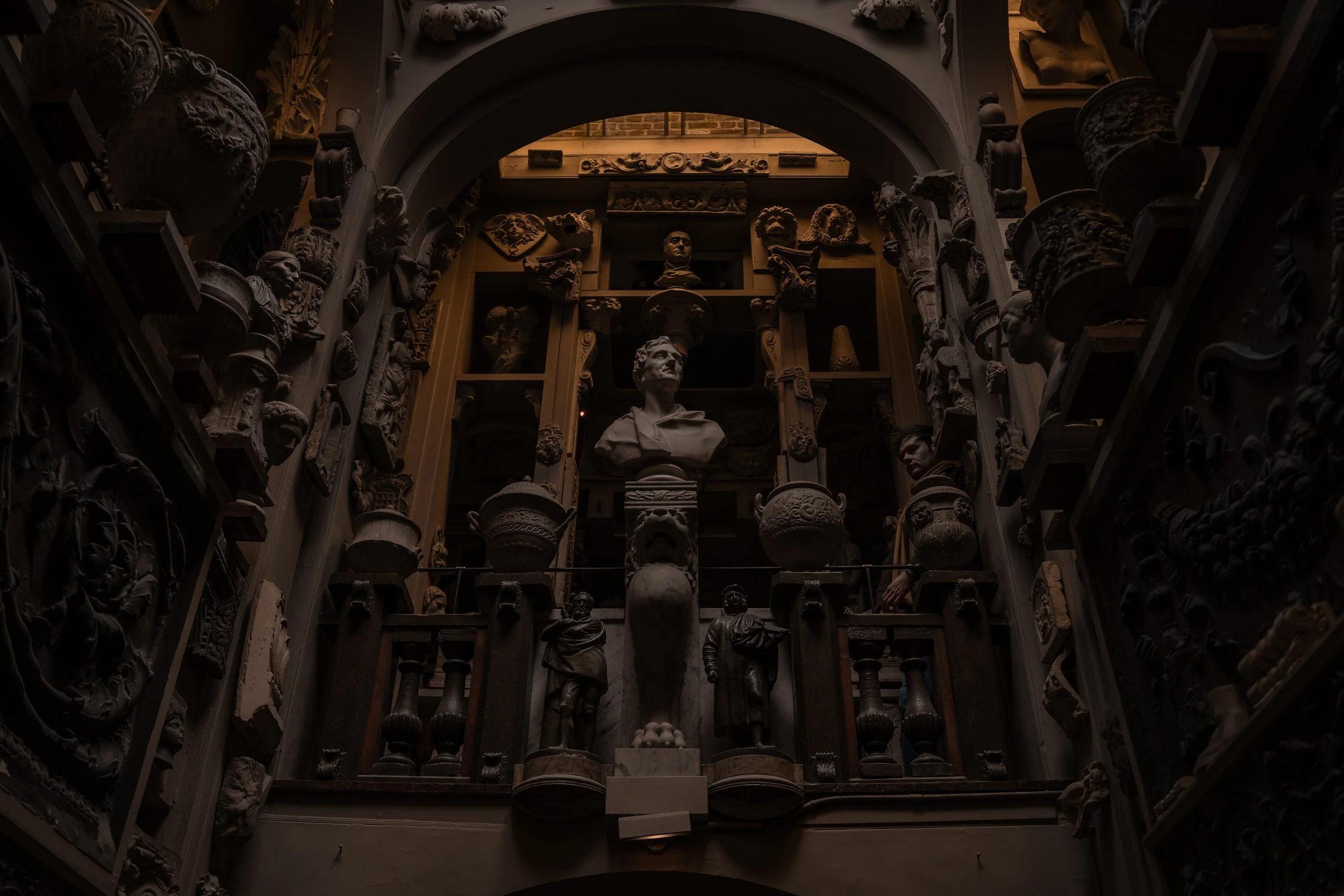
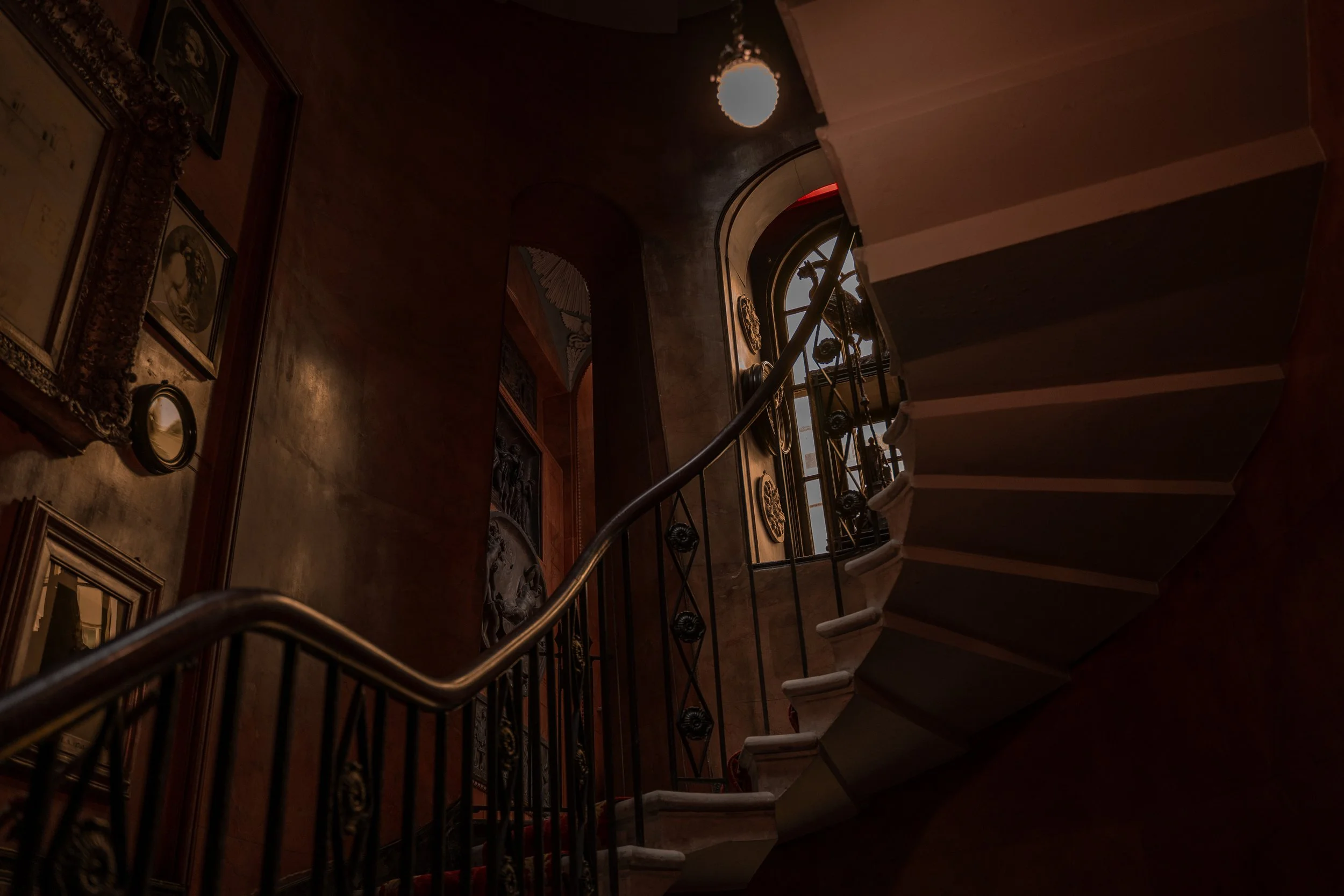
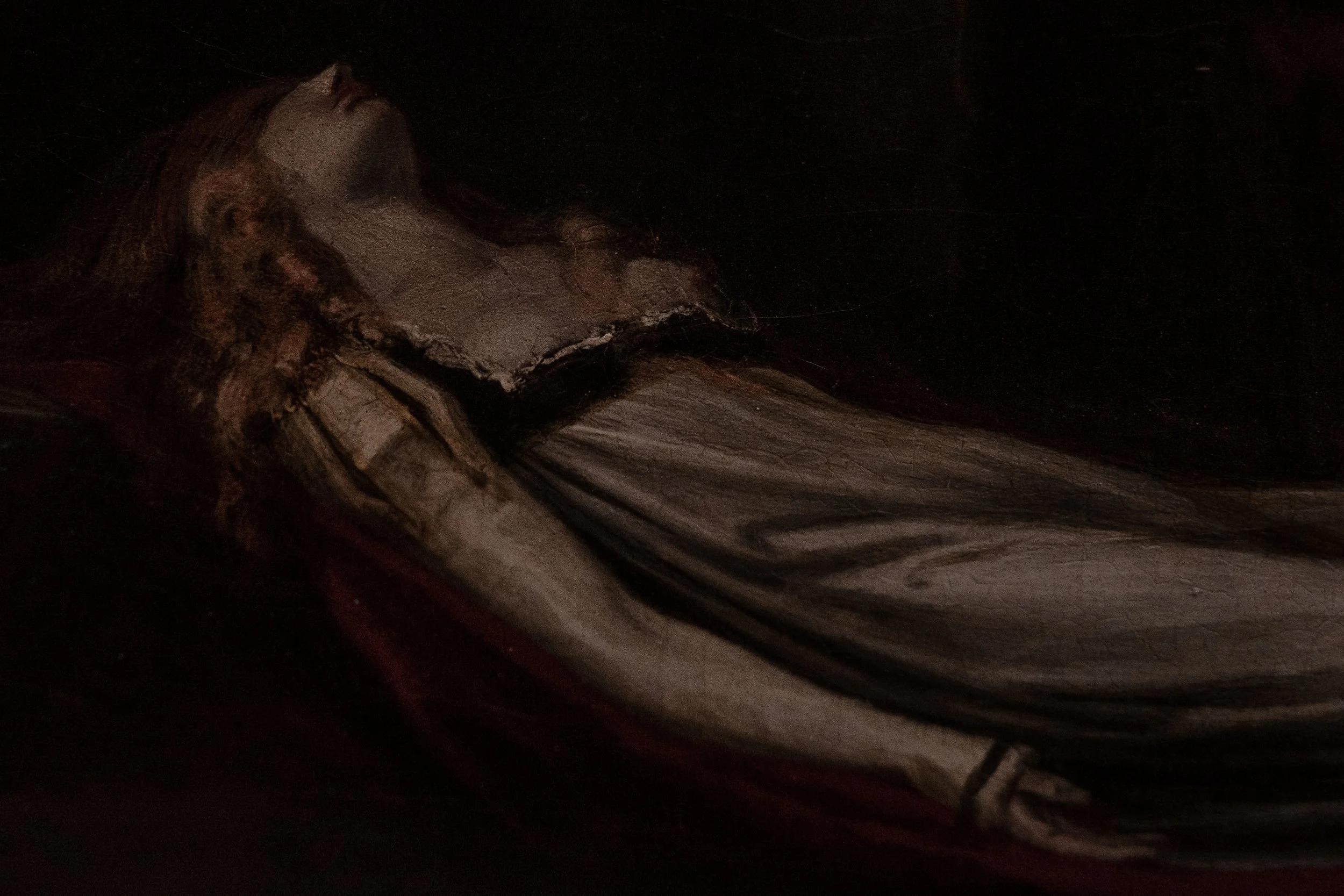
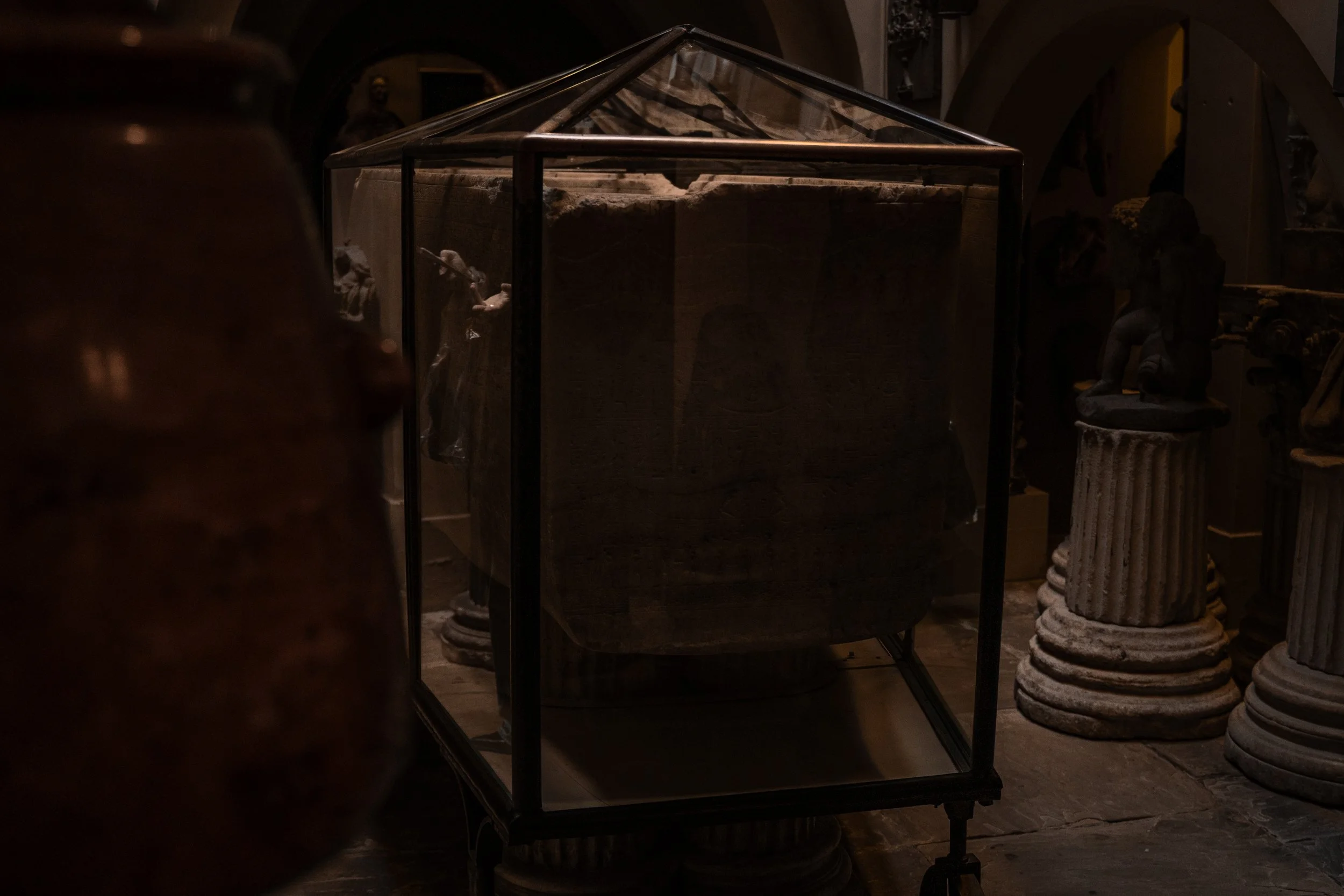
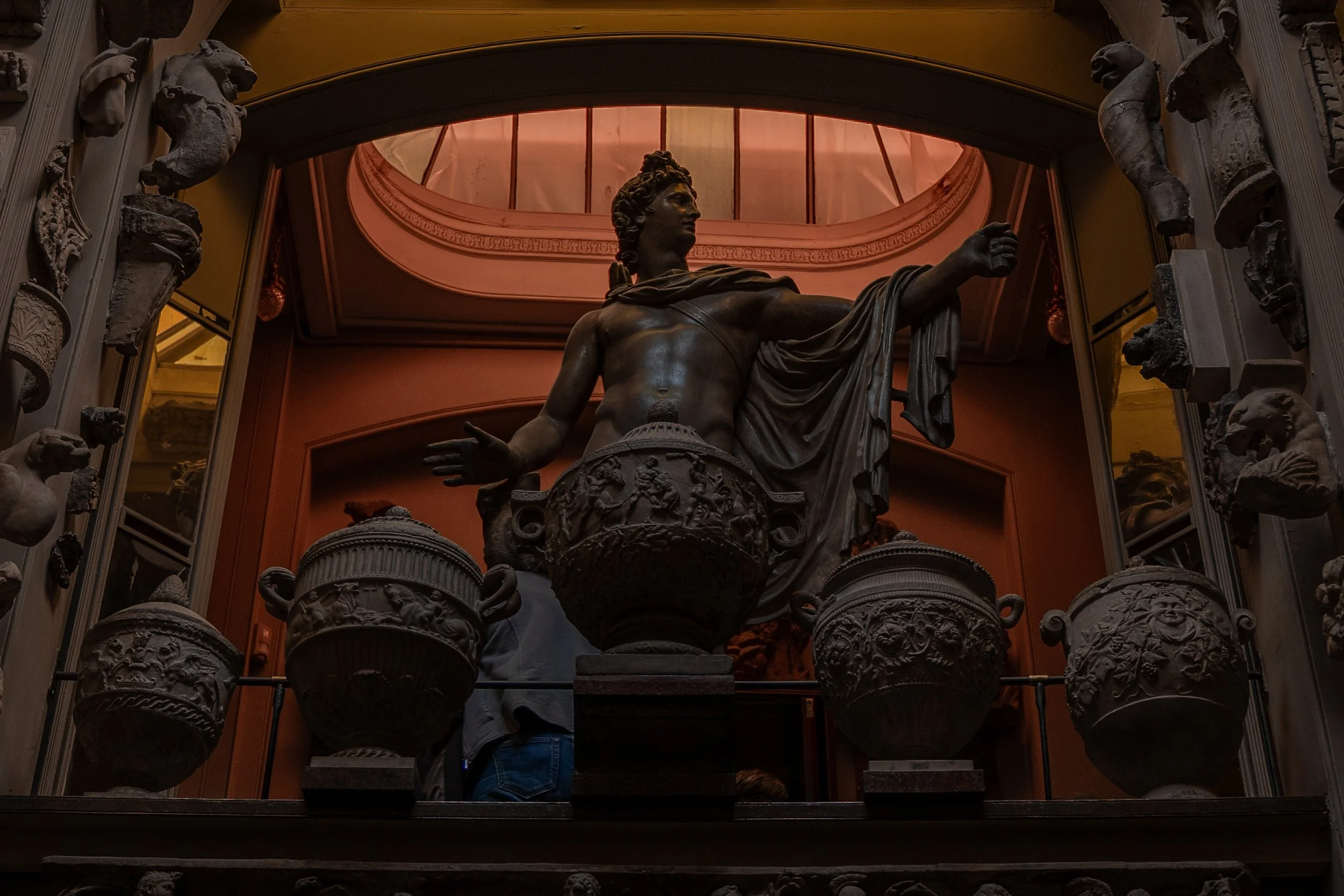
Sir John Soane’s Museum isn’t a museum in the usual sense. It feels more like a maze of ideas, part architectural experiment, part cabinet of curiosities and ultimately a kind of autobiography built in brick and plaster. Situated on Lincoln’s Inn Fields (close by to the Hunterian Museum), it occupies Soane’s former home, which he reshaped throughout his life into something between a masterpiece, a laboratory and eventually a personal work of art.
Soane (1753–1837) was one of Britain’s most distinctive architects, someone who pushed Georgian design into far more imaginative territory. Born to a bricklayer, he rose through talent and persistence, studying at the Royal Academy before travelling through Italy, where classical ruins and light-filled spaces shaped his thinking. Back in London, he developed an architectural style defined by invention, where light, reflection and spatial illusion mattered as much as structure.
His most ambitious public project was the Bank of England, once a sprawling, fortified complex of domes, courtyards and windowless walls. Much of it was demolished in the 20th century, but the surviving fragments still show his fascination with geometry and monumental form. It’s through his house though, that his imagination is most fully preserved.
The museum is a dense sequence of rooms packed with architectural fragments, casts, sculptures, paintings and antiquities. Soane constantly reworked the layout, creating an interior built around controlled sightlines, mirrored surfaces and unexpected openings. The
result is a space that feels far larger and more intricate than its footprint should allow.
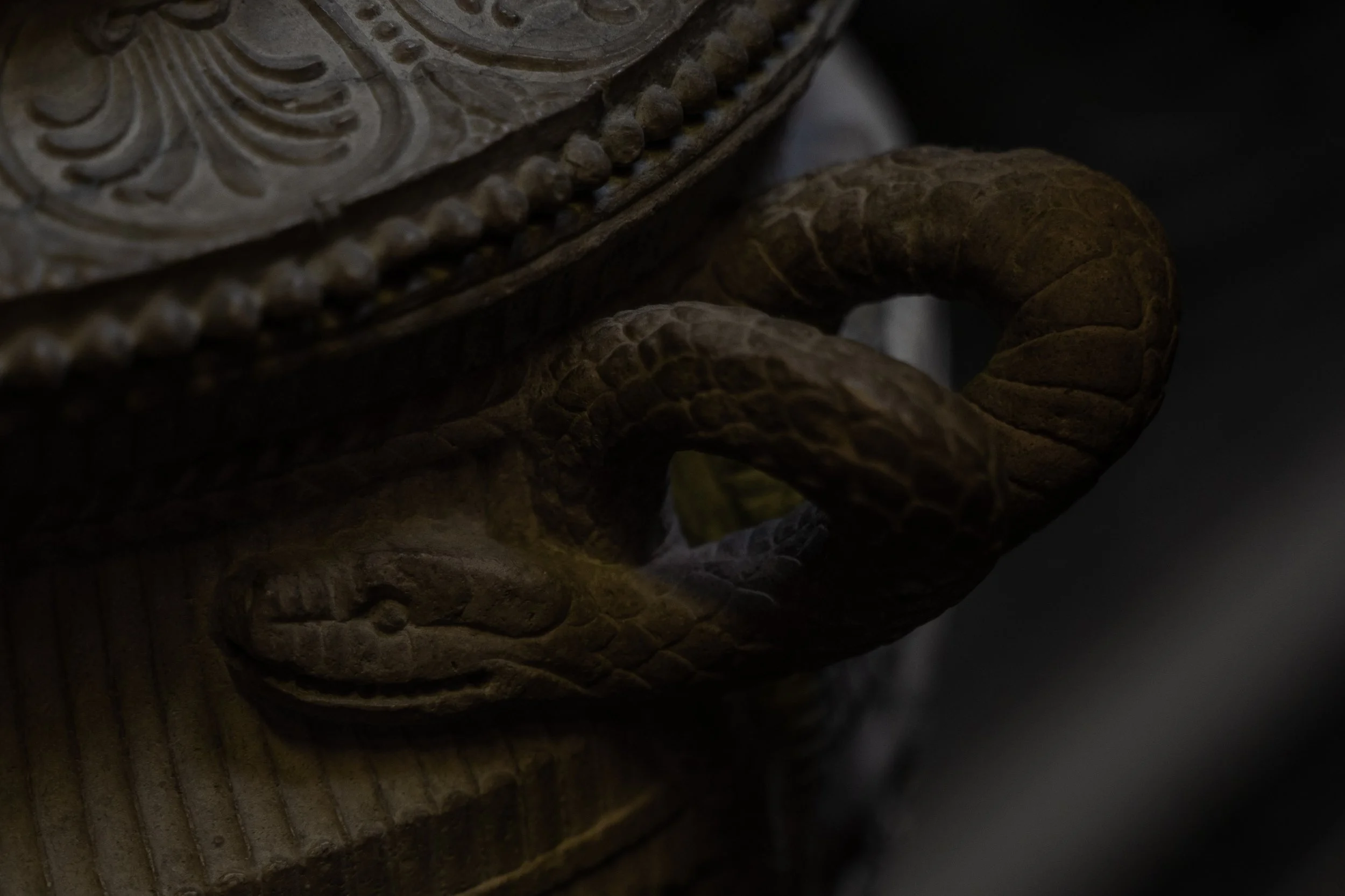
One of its most atmospheric areas is the Crypt. A dim, theatrical chamber that sits somewhere between a Roman catacomb and a Gothic chapel. Here, Soane arranged broken tombstones, medieval carvings, urns and casts of skulls with deliberate precision. At the centre lies the alabaster sarcophagus of Seti I, over 3,000 years old. When it arrived in 1824, Soane famously hosted a candlelit viewing that lasted several days, turning the house into a nocturnal stage set.
The Picture Room is another of the museum’s controlled spaces. Its walls are lined with paintings, but hinged panels open to reveal more works hidden behind them, creating a layered display that rewards slow looking. Access is limited to protect the fragile interiors, and visits are often timed.
In the basement, the Monk’s Parlour shows Soane at his most playful. He invented a fictional monk, “Padre Giovanni,” and built a Gothic-inspired chamber filled with pseudo-medieval fragments and imagined ruins. It’s intentionally melancholic, slightly odd and entirely of Soane’s own making.
His influence reaches beyond architecture. The museum has been cited as an inspiration for visual storytelling, including Guillermo del Toro’s approach to Frankenstein, particularly its use of layered interiors, dramatic lighting and obsessive collections to evoke curiosity and gothic unease.
Today, the museum is open to the public, though entry is carefully managed due to the narrow, fragile spaces. Admission is free, but the queue can move very slowly as visitors are admitted in limited numbers. I booked a guided tour online, which lets you bypass the queue and then wander through the house at your own pace afterwards.
Looking for a place to stay? Discover my London hotel guide.
12. Charterhouse
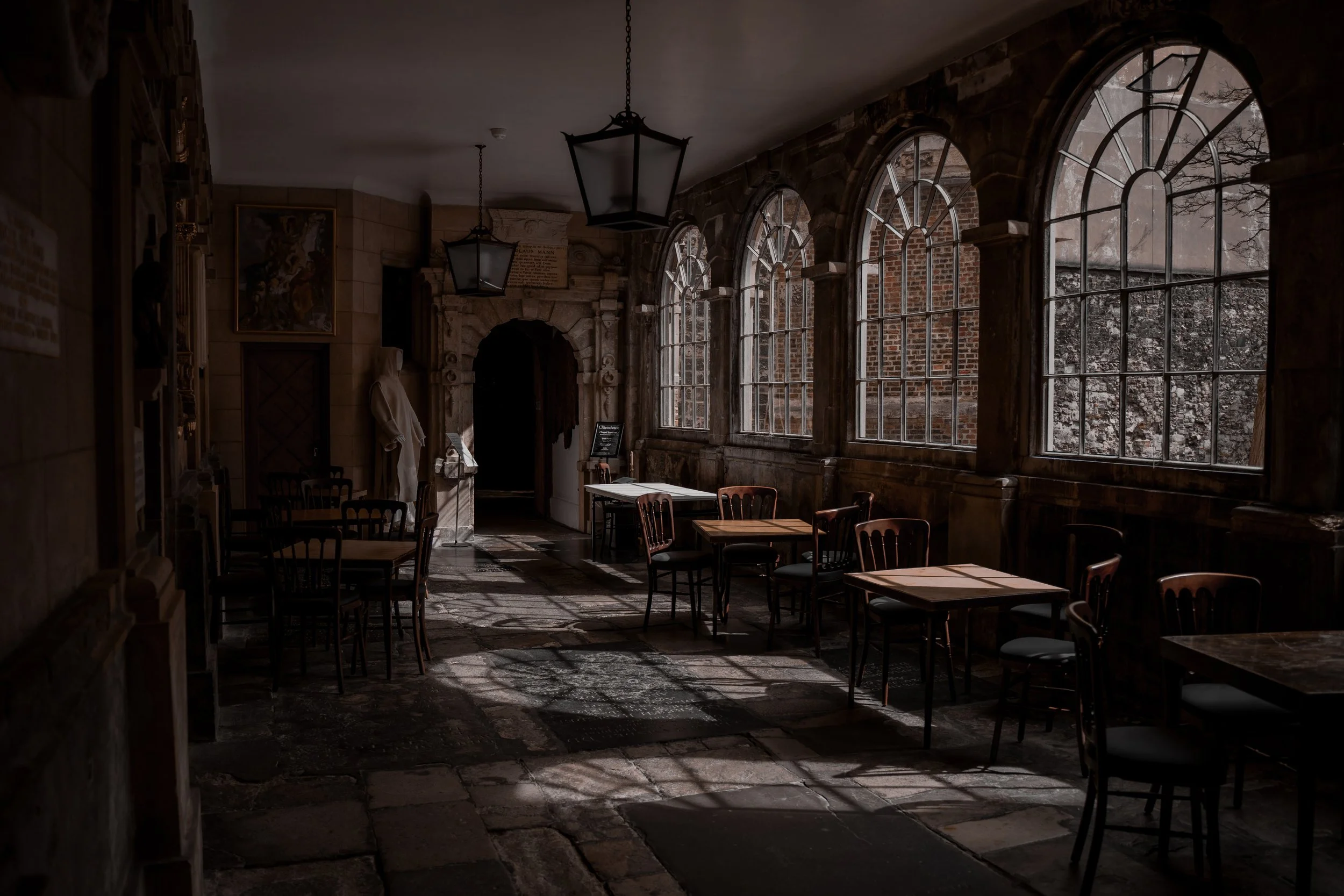
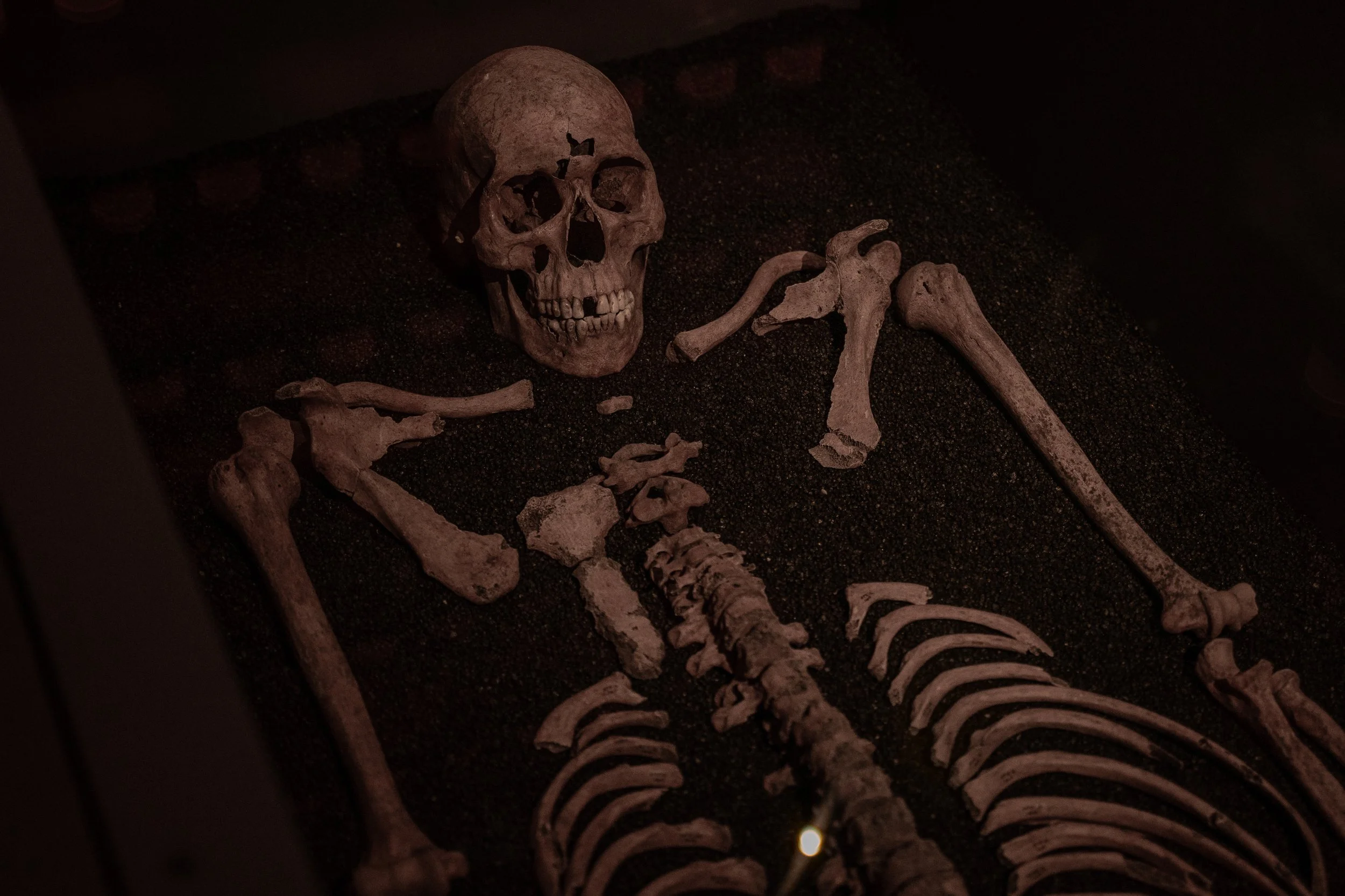
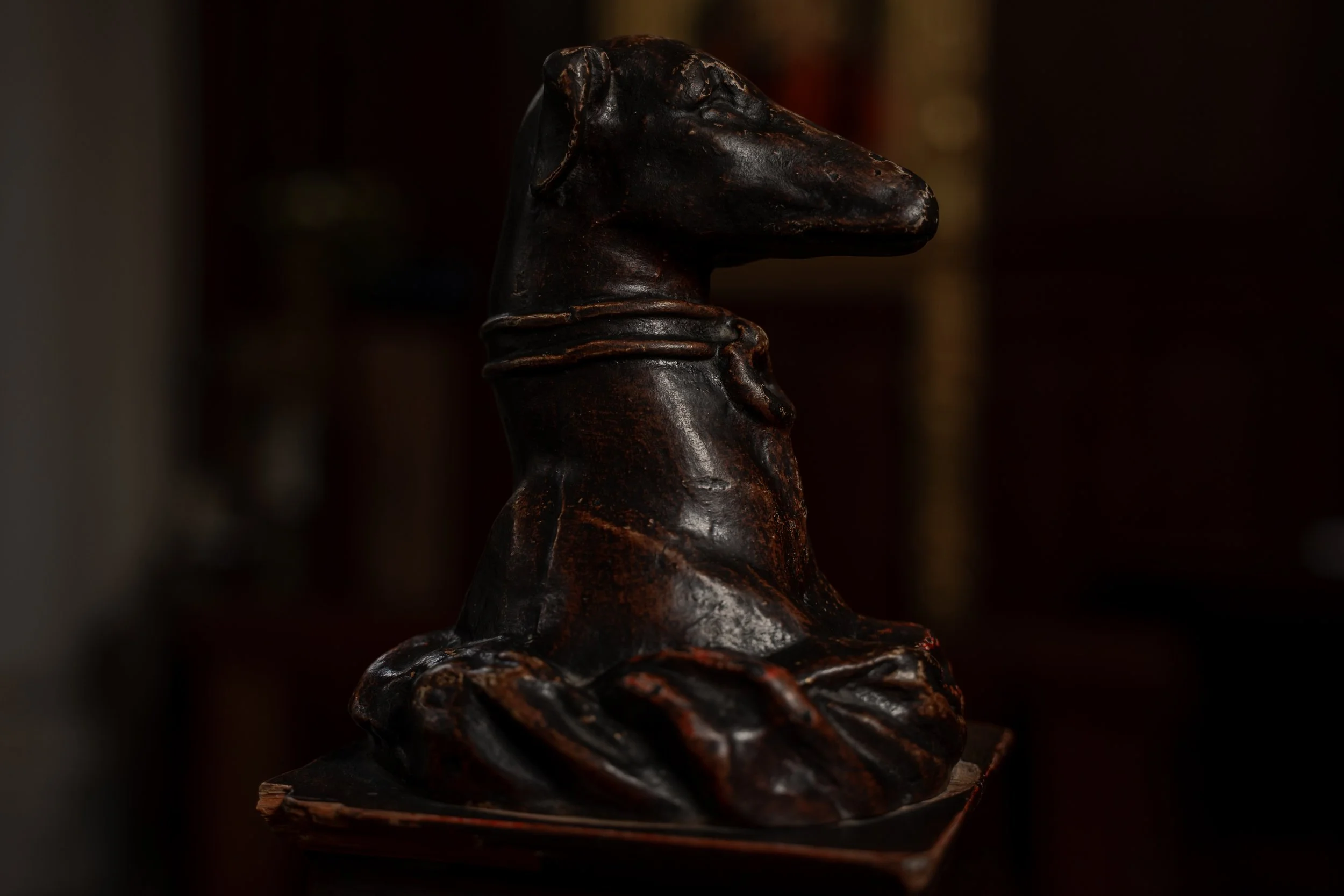
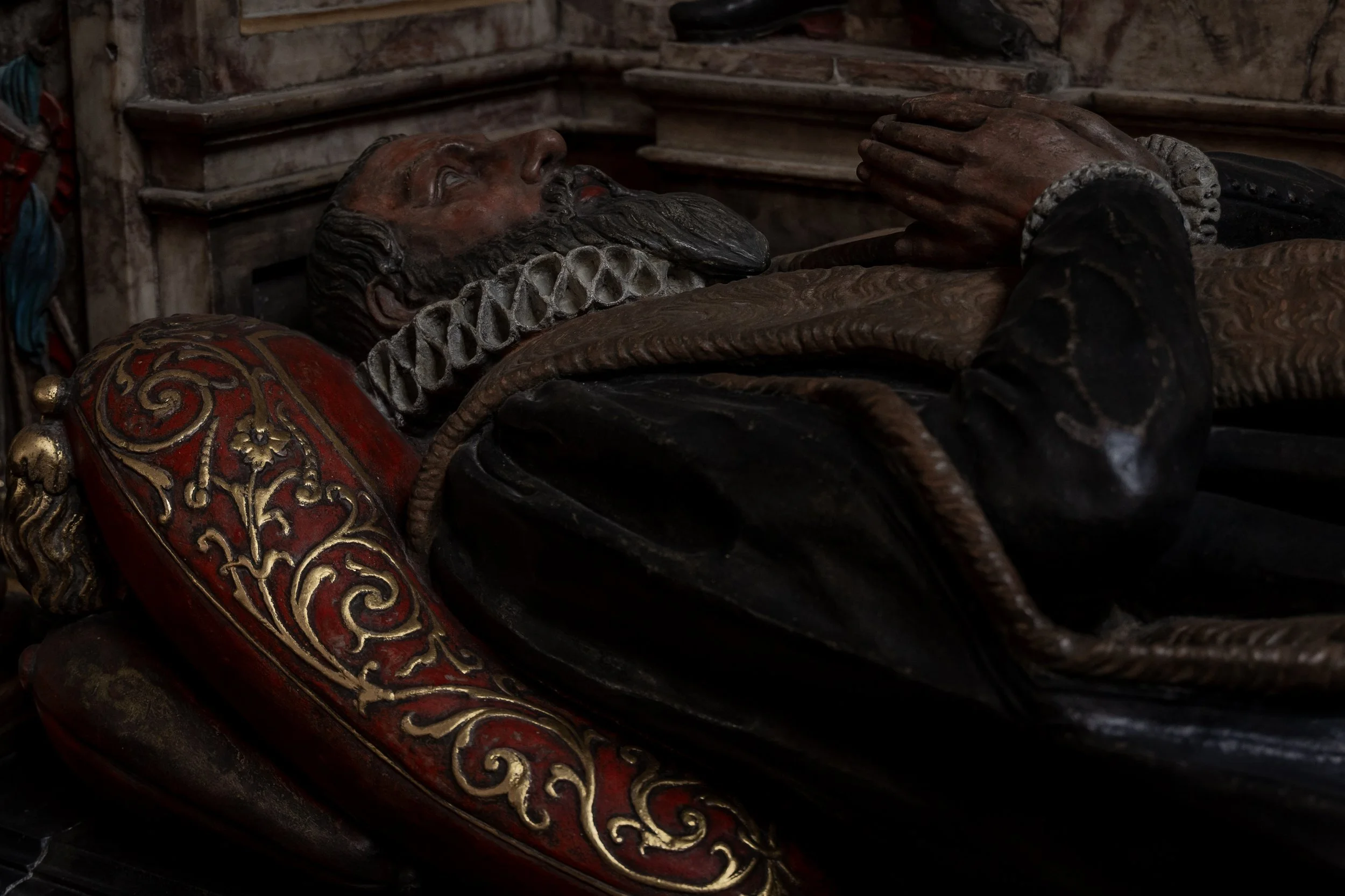
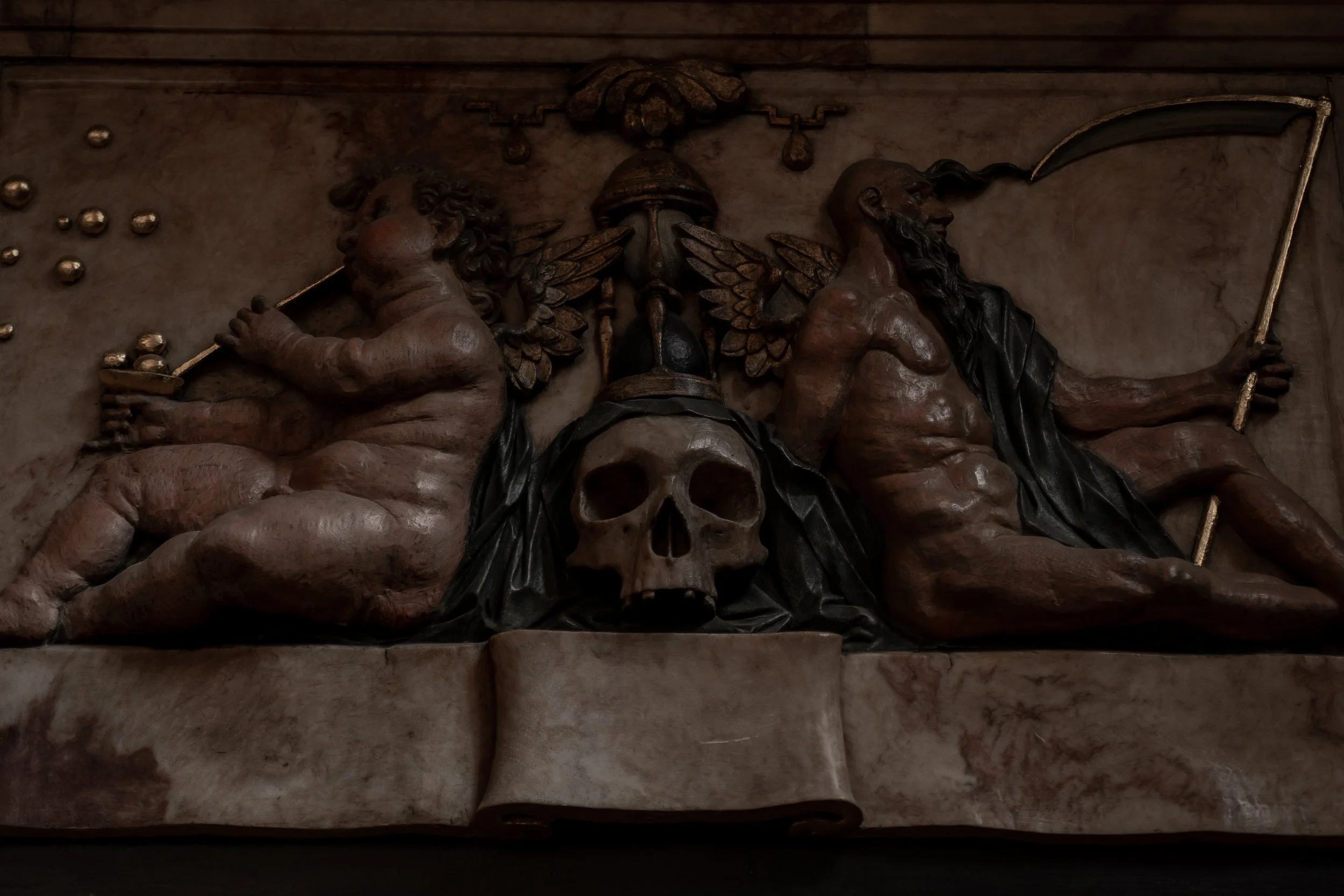
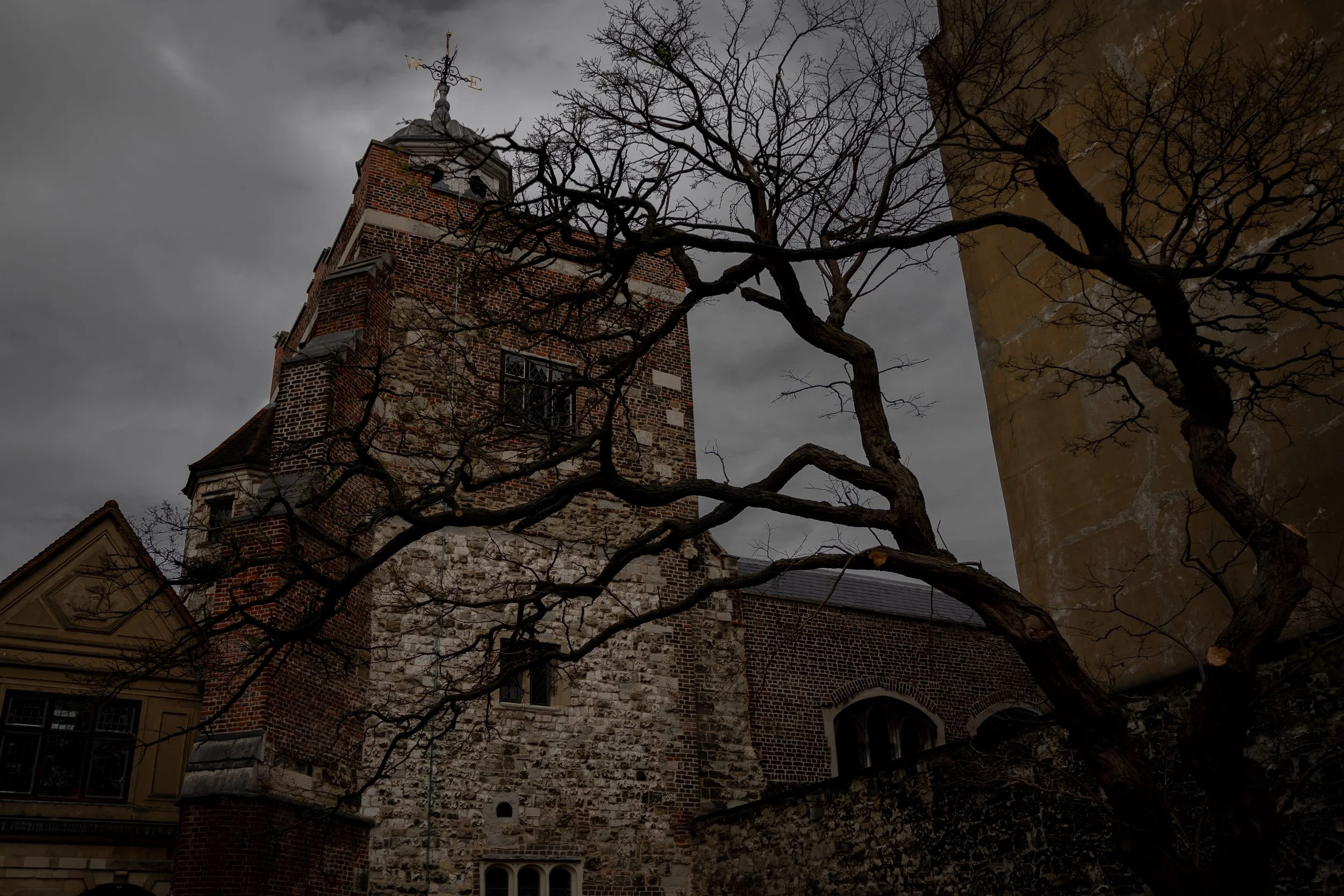
The Charterhouse is a self‑contained world of medieval cloisters, Tudor courtyards, Jacobean chambers and quiet gardens, all resting on a burial ground where thousands of plague victims were laid to rest.
It is a place where some of the city’s darkest history and most refined architecture exist side by side, layered across more than seven centuries of continuous use.
Long before the monastery was established, this area on the edge of Smithfield was used as a plague pit during the outbreak of 1348–49. Contemporary estimates suggest that tens of thousands of people were buried here in mass graves as the Black Death overwhelmed medieval London. When the Carthusian monks arrived in 1371, they founded their monastery on and around this ground, building their cloisters beside, and in some places directly over, the forgotten dead. Archaeological excavations have since confirmed the extent of these burials, including remains now preserved within the site’s museum.
The Carthusian Order created a life of extreme solitude and discipline. Each monk lived in near isolation in a small cell with its own garden, leaving only for communal worship. The cloisters that once structured this silent existence still survive today, their stone arcades and passageways preserving the rhythm of monastic life in architectural form. That quiet world was brought to a violent end during the Reformation, when the monastery was suppressed under Henry VIII. Several monks refused to accept the King’s supremacy over the Church and were executed or died in prison, and their martyrdom is still remembered within the site’s chapel.
The Chapel of St John the Baptist combines medieval stonework, Tudor timber and later restoration. Light filters through stained glass onto carved details, including memento mori motifs that reflect the Charterhouse’s long association with death, memory and devotion.
At the centre of the chapel lies the tomb of Thomas Sutton, the wealthy benefactor who refounded the Charterhouse in 1611 as an almshouse and school. His legacy transformed the site from monastic isolation into a place of care, charity and community.
That role continues today. The Charterhouse remains a living institution, home to the “Brothers” who reside in the almshouse, sharing meals in the Great Hall and worshipping in the chapel just as their predecessors once did. It is a rare example of continuity in London, where a single site still carries echoes of monks, plague victims, reformers and residents across nearly 700 years of history.
Looking for a place to stay? Discover my London hotel guide.
13. Host Café
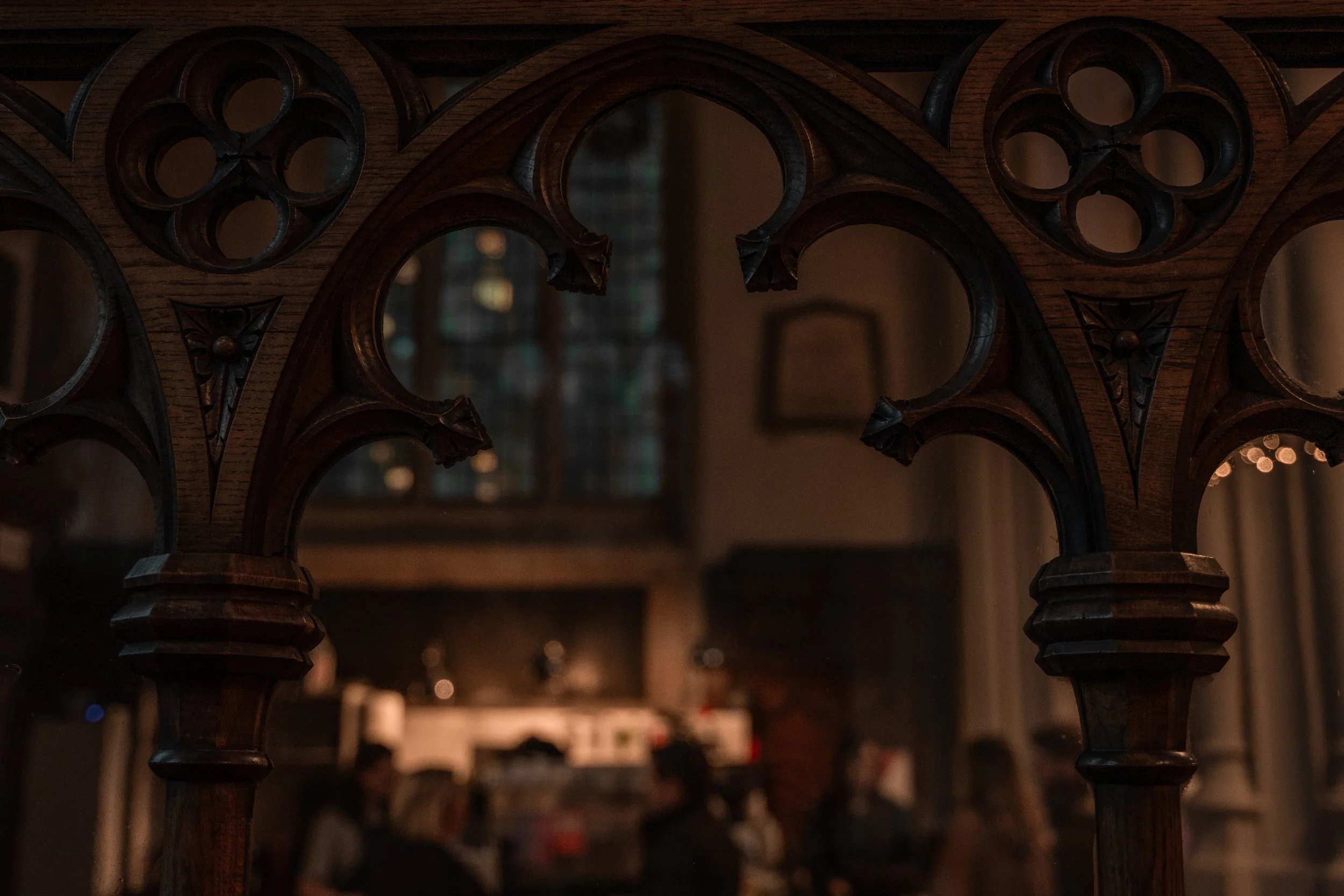
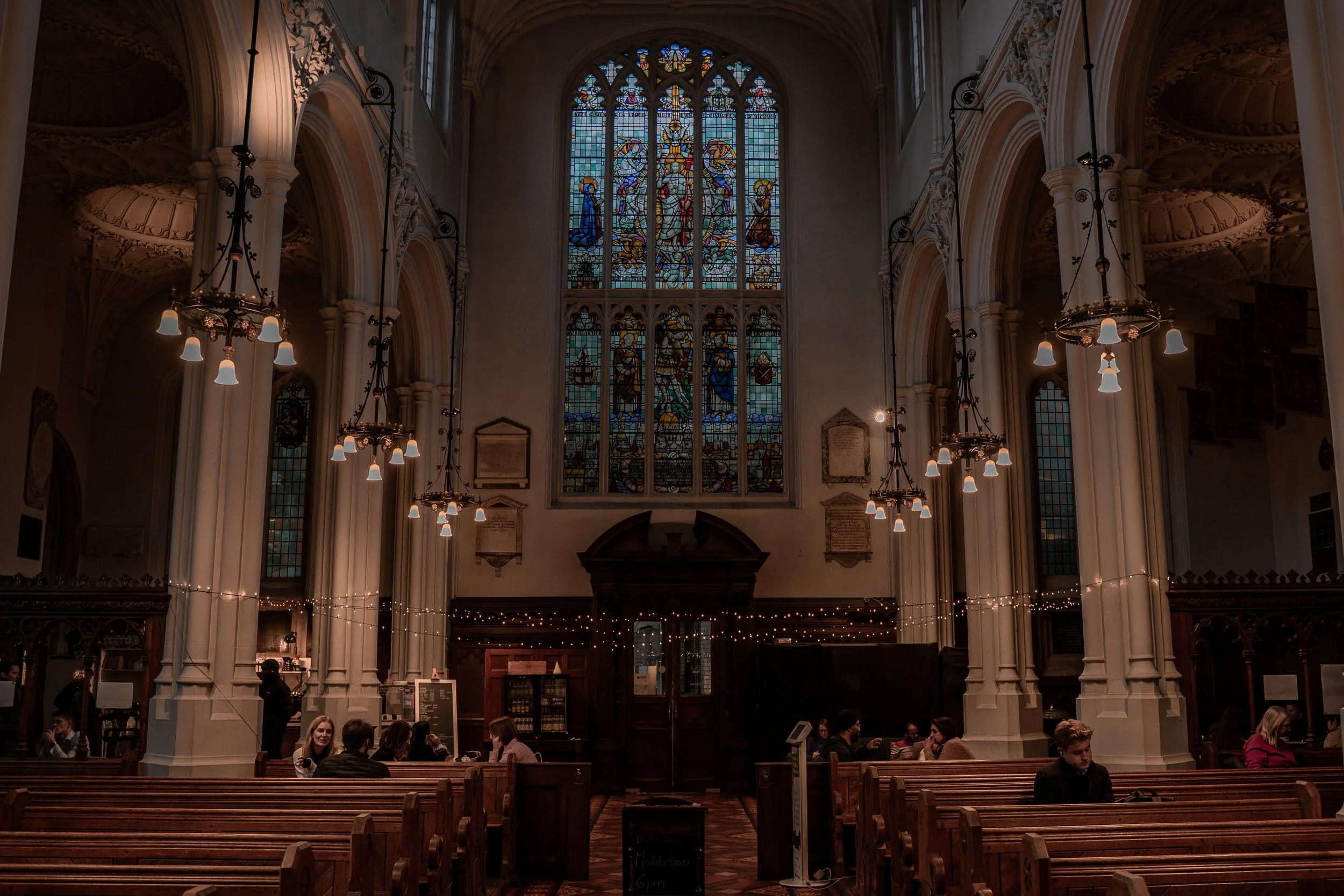
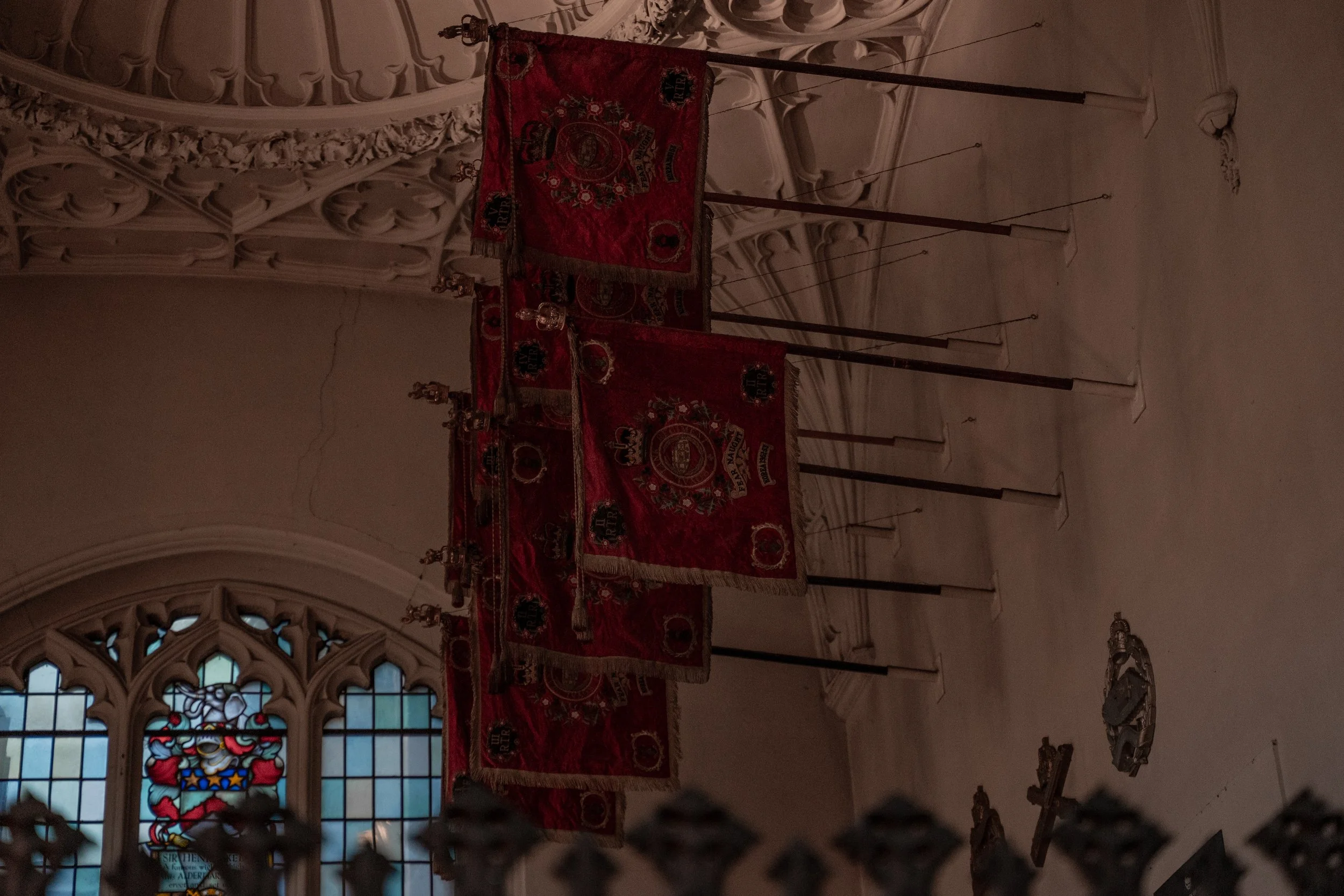
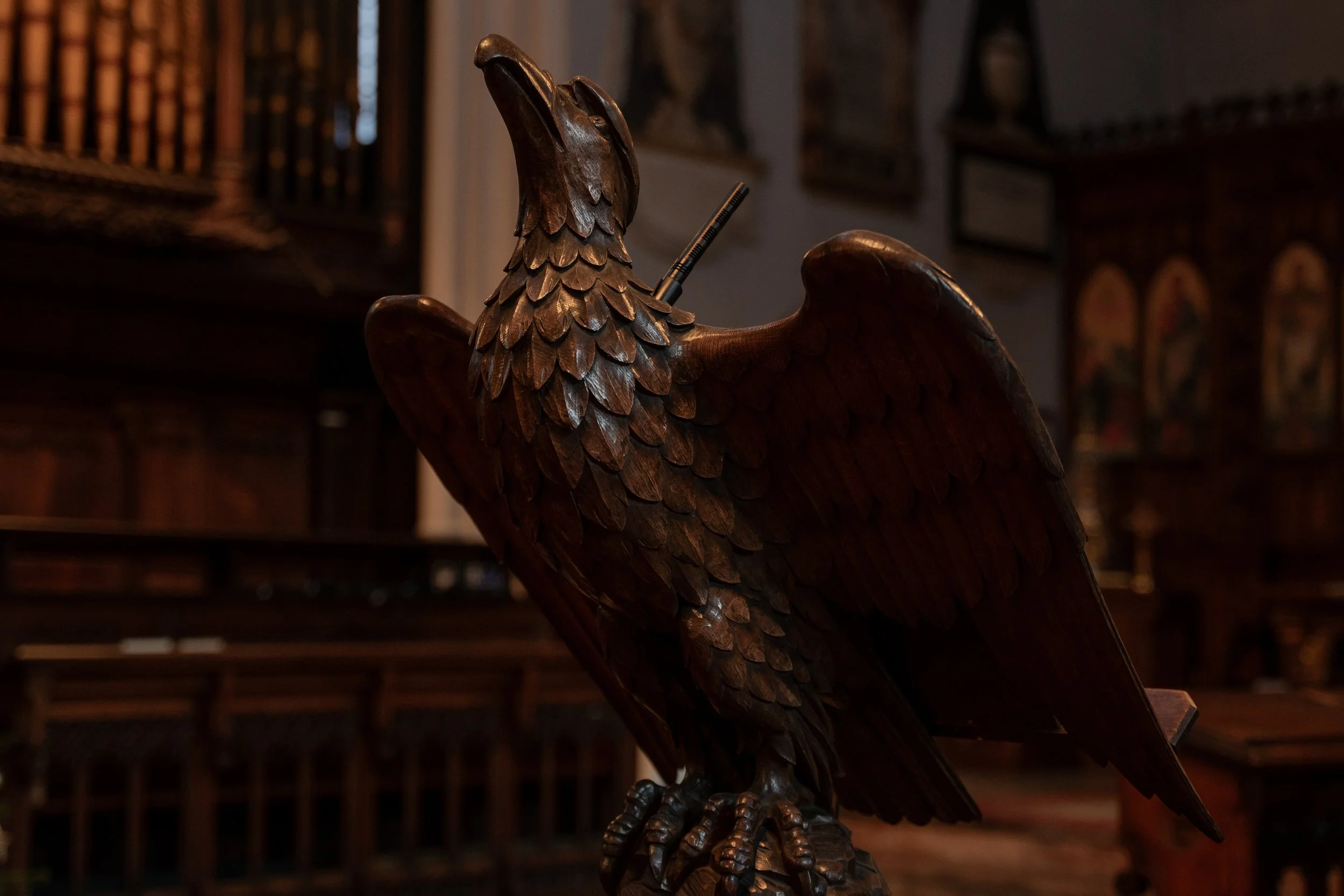
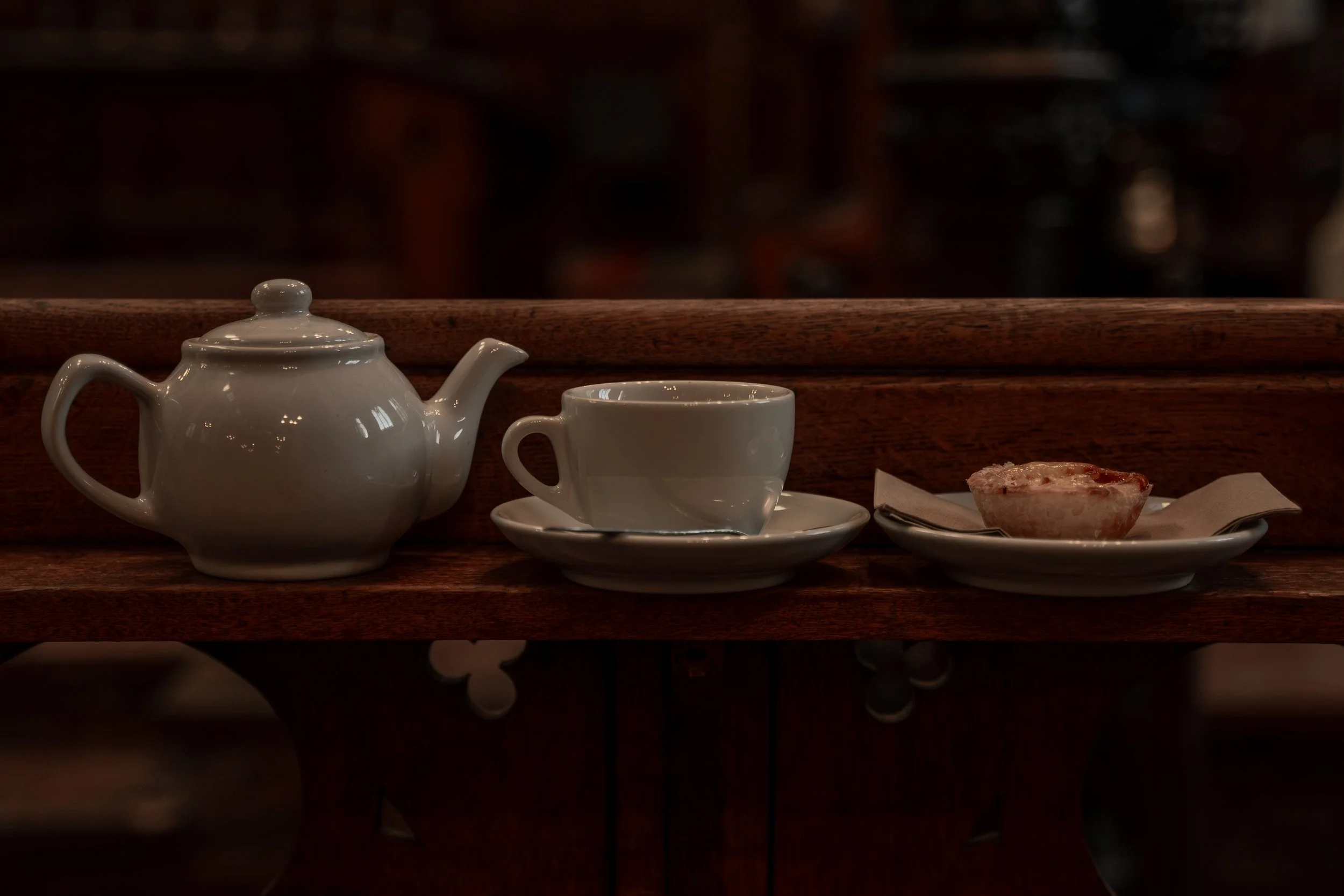
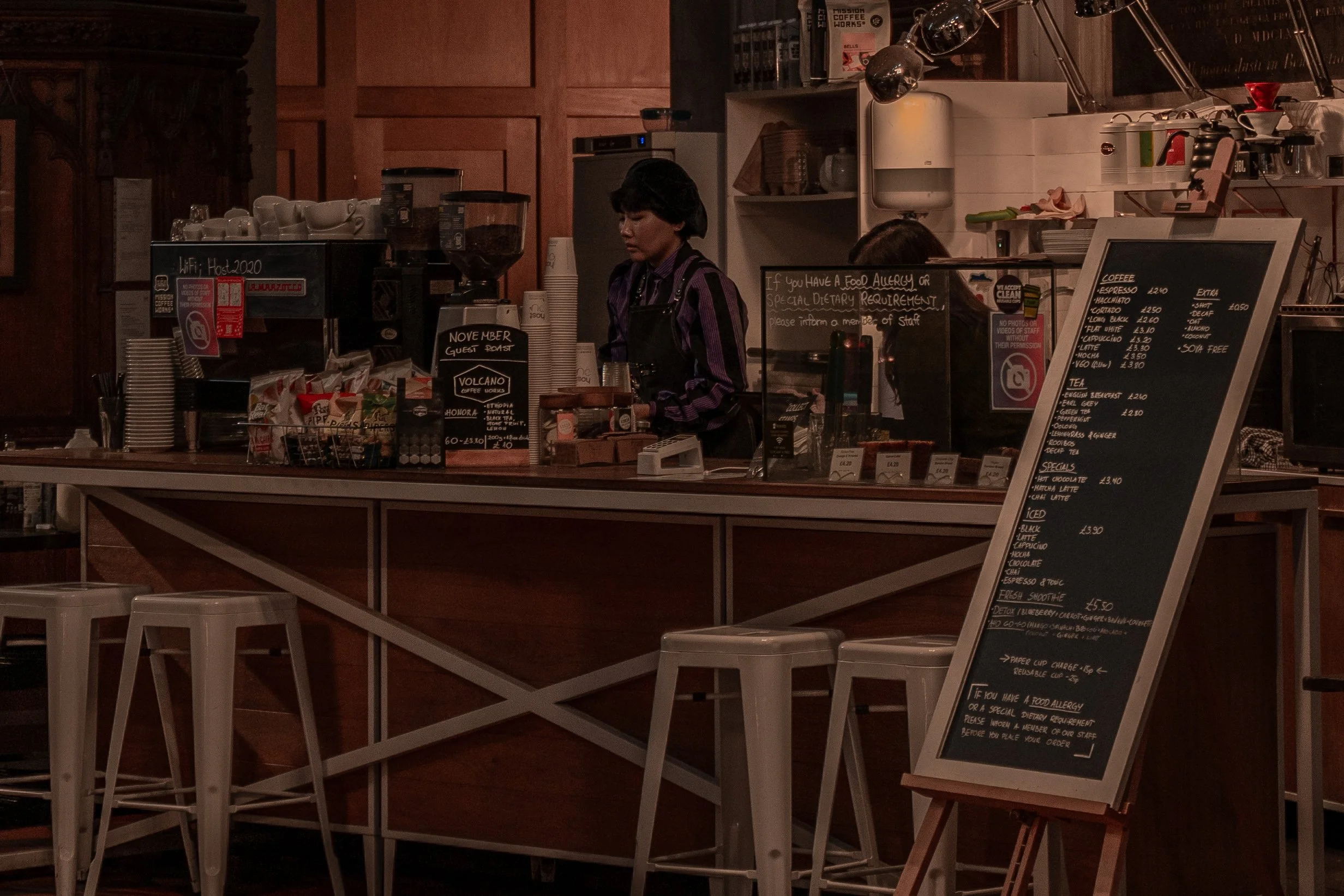
Hidden inside the historic church of St Mary Aldermary is one of London's most atmospheric cafés. Host Café occupies the nave beneath a spectacular fan-vaulted ceiling, where students work beneath carved stonework, City workers meet over coffee and visitors pause to admire one of the capital's most remarkable church interiors. It's one of my favourite places in London to read, write, think, or simply sit and look up.
Although the church has medieval origins, the building standing today dates largely from the late 17th century. The original church was destroyed in the Great Fire of London and later rebuilt under the supervision of Sir Christopher Wren. Unlike most of Wren's post-Fire churches, however, St Mary Aldermary was completed in the Gothic style at the request and expense of the wealthy merchant Sir Henry Keble's estate, which stipulated that the new church should follow the medieval design that had already begun before the Fire. As a result, it is one of the few examples of neo Gothic architecture to emerge from London's post-Fire rebuilding programme, more than a century before the Gothic Revival reached its peak.
The interior is extraordinary. Delicate fan vaulting spreads across the ceiling in a design often compared to that of King's College Chapel in Cambridge, while tall pointed windows flood the church with light. Intricately carved bosses and elegant stone tracery add to the illusion that the building is far older than it really is, making it easy to forget that much of what you see belongs to the decades after the Great Fire rather than the Middle Ages.
The café is only open on weekdays, but if you have the chance to visit, it's well worth seeking out. There are few places in London where you can enjoy a cup of coffee surrounded by architecture of this calibre, and fewer still where history and everyday life blend together so effortlessly.
Looking for a place to stay? Discover my London hotel guide.
Purchase The Alternative Guide to London Map to discover even more locations
Featuring 50 of the best dark, Gothic, curious and unusual things to do, my tailored interactive map is perfect for when you are on your travels, including my full city guide, photographs and location details all in one place!
Support The Alternative Guide
The Alternative Guide is completely reader‑supported. If the guide helped you uncover something fascinating, extraordinary or curious on your travels, please consider supporting my work. Every contribution helps me continue documenting and sharing these moody, atmospheric locations.