
St. Michael's Church
At first glance, the restrained Romanesque façade appears almost subdued against its opulent imperial surroundings. Yet above the doorway, a sudden flare of Baroque theatre erupts with a dramatic sculpture of the Archangel Michael casting Lucifer into the abyss. Billowing clouds and cascading angels spill outward as though the heavens have torn open, embodying the church’s patron saint as the defender of paradise, divine justice, and triumph over evil. Remarkably, this spectacle is only a prelude to the sacred drama that unfolds within!
With medieval origins, the church is one of the oldest in Vienna, constructed between 1219 and 1221 under Duke Leopold VI of the Babenberg dynasty. Though originally Romanesque, it has evolved over the ages before being rebuilt in the Gothic style after an earthquake destroyed its dome. It was then later enriched with Baroque additions in the 17th century and Classicist elements in the late 18th to early 19th century. Each era left its mark, layering new architectural styles atop the old.
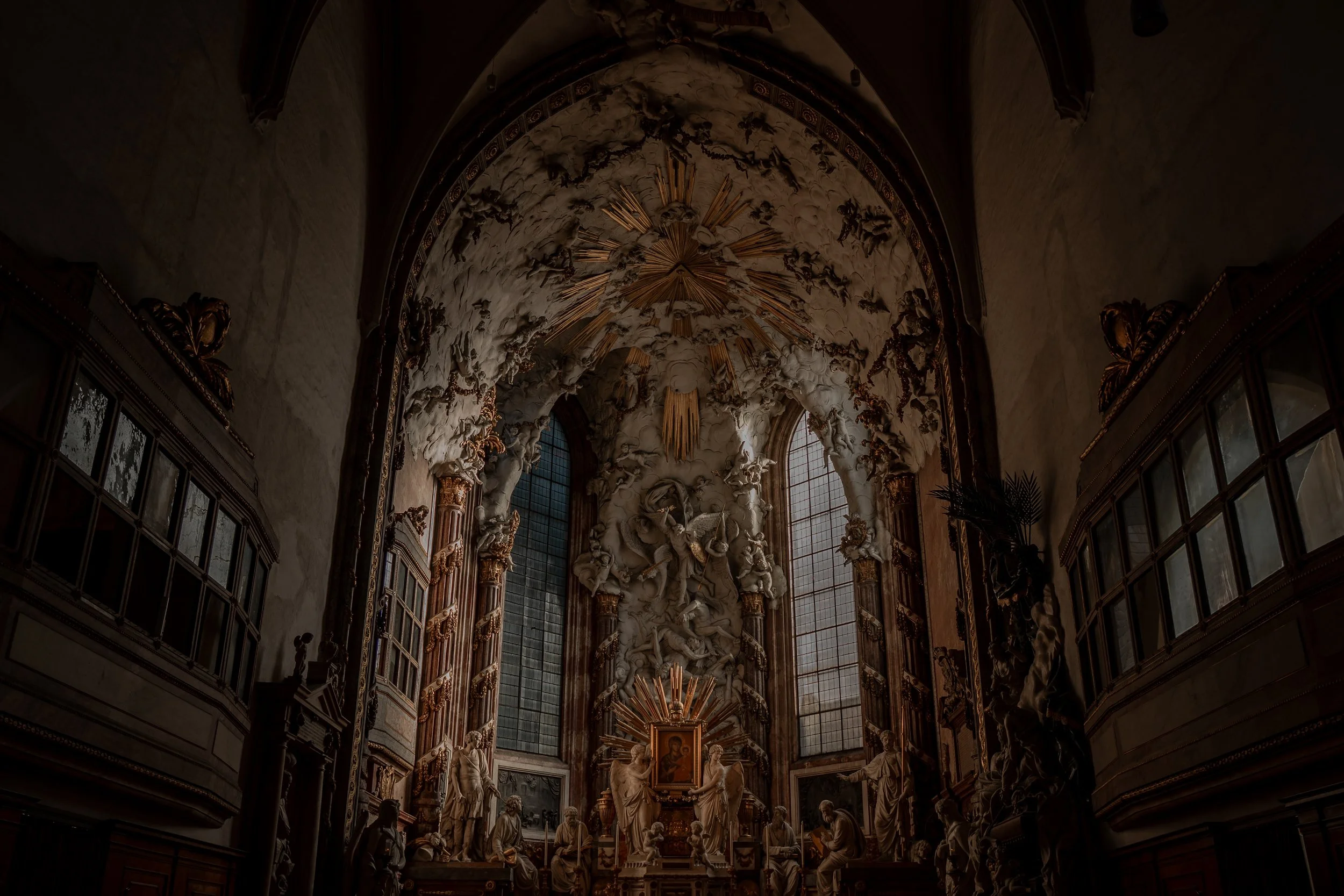
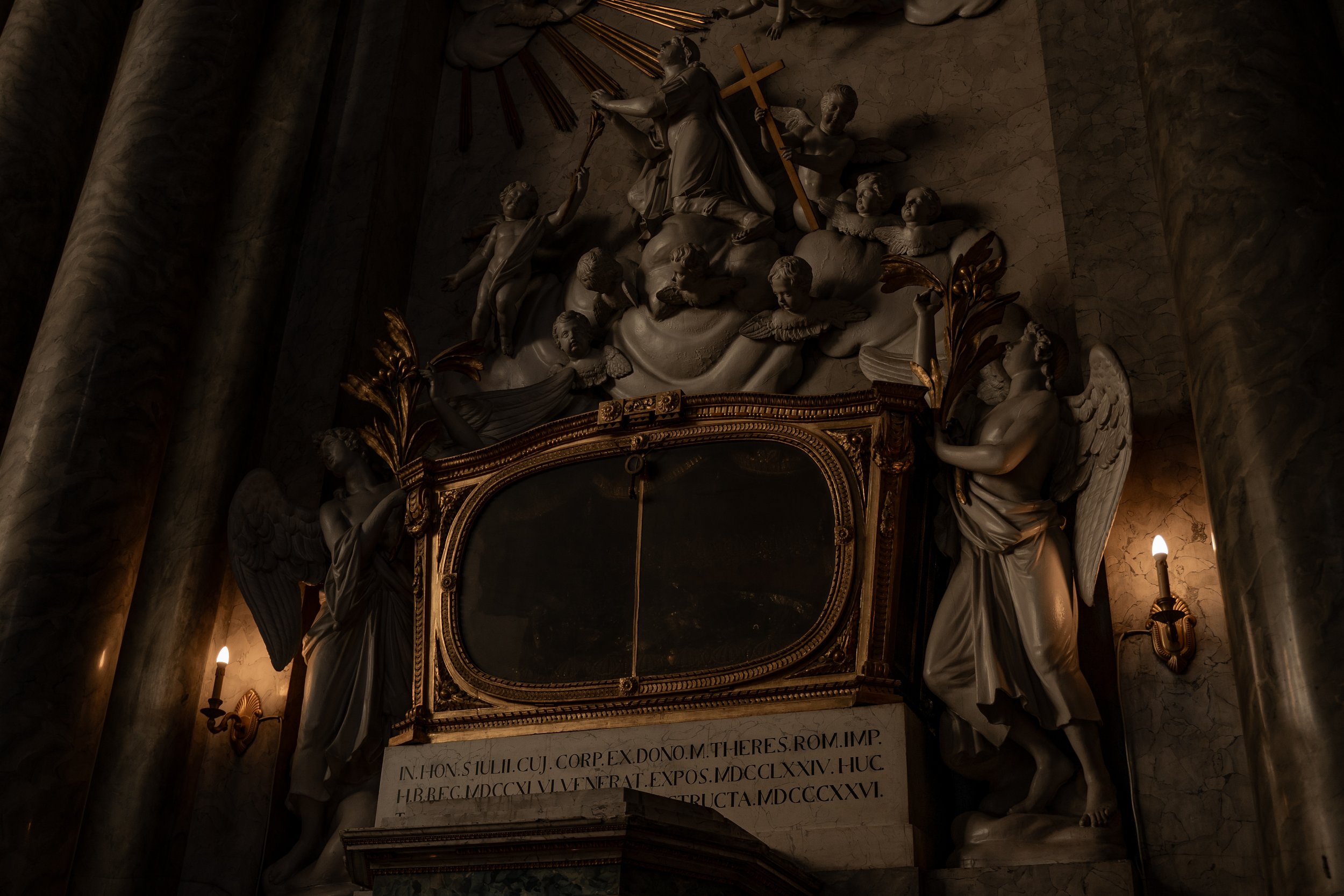
The soaring Baroque high altar, created in the 1780s, is an exquisite example of movement and light. White angels swirl around Archangel Michael in a celestial battle, lifting the viewer’s gaze heavenward. Yet above this exuberance, the church’s solemn Gothic features such as pointed arches, ribbed vaults, and austere stonework date back to its earliest moments. Walking through the space feels like stepping through time, moving from Gothic restraint to Baroque splendour in just a few paces, as it mirrors Vienna’s own layered history of shifting tastes and artistic ideals.
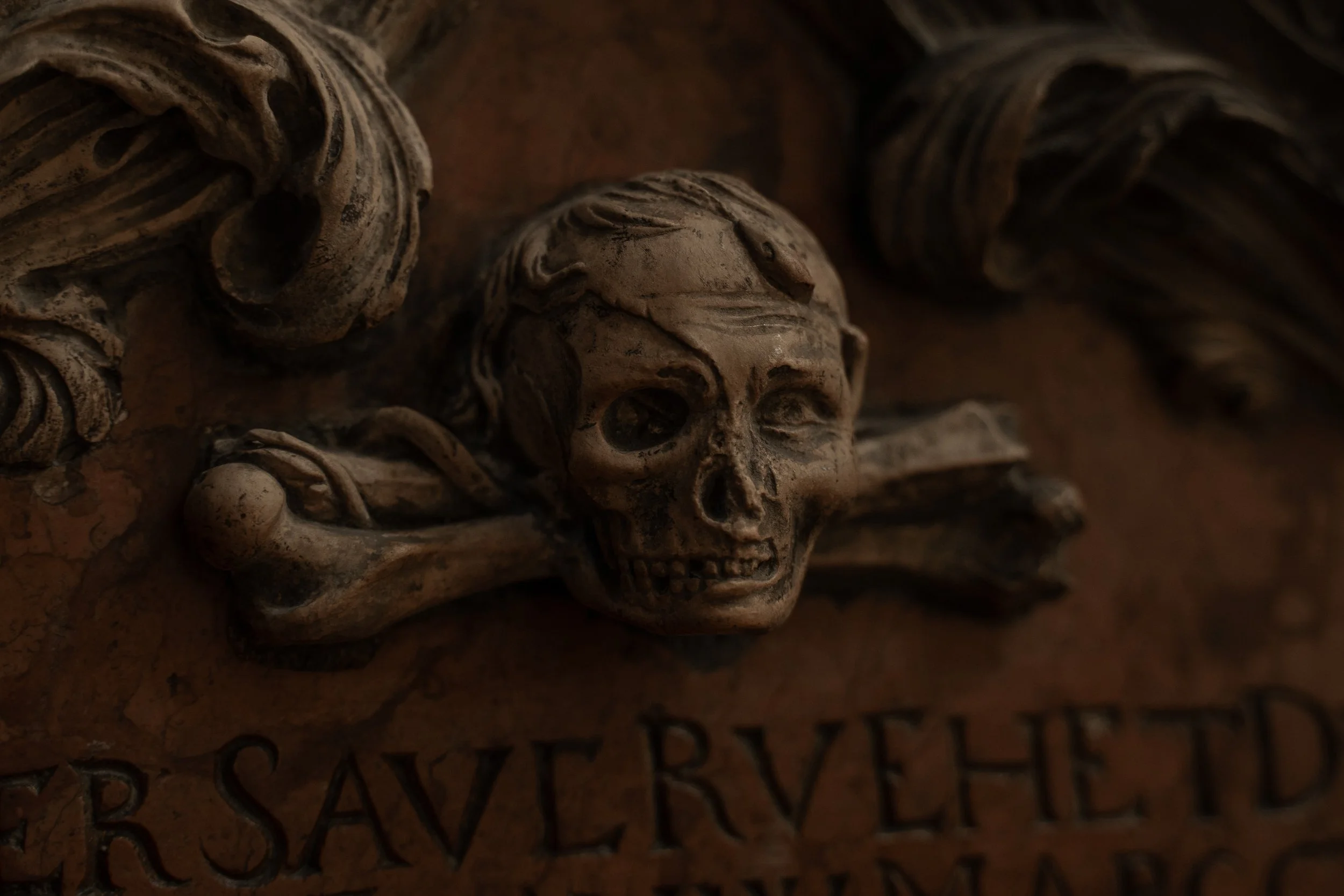
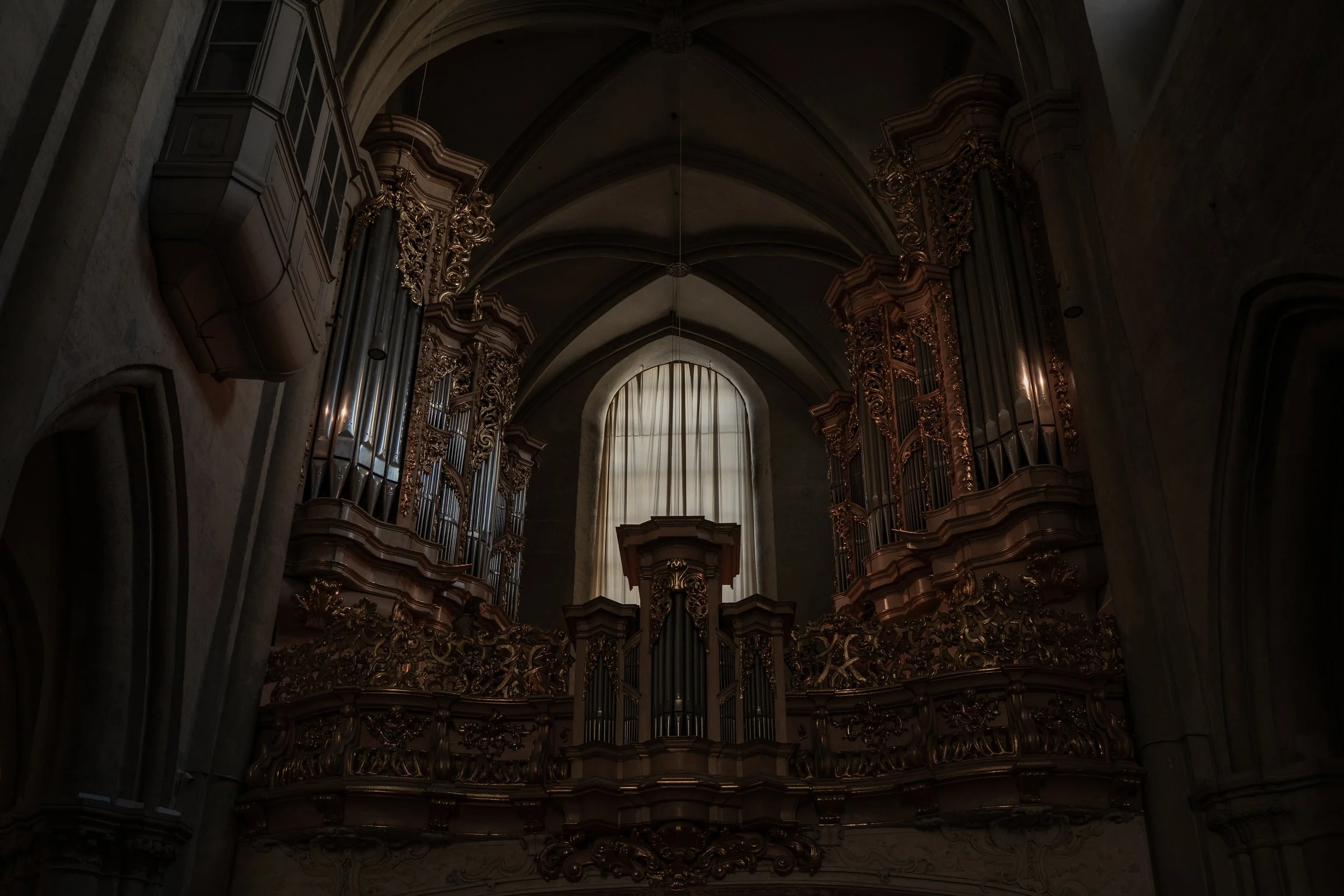
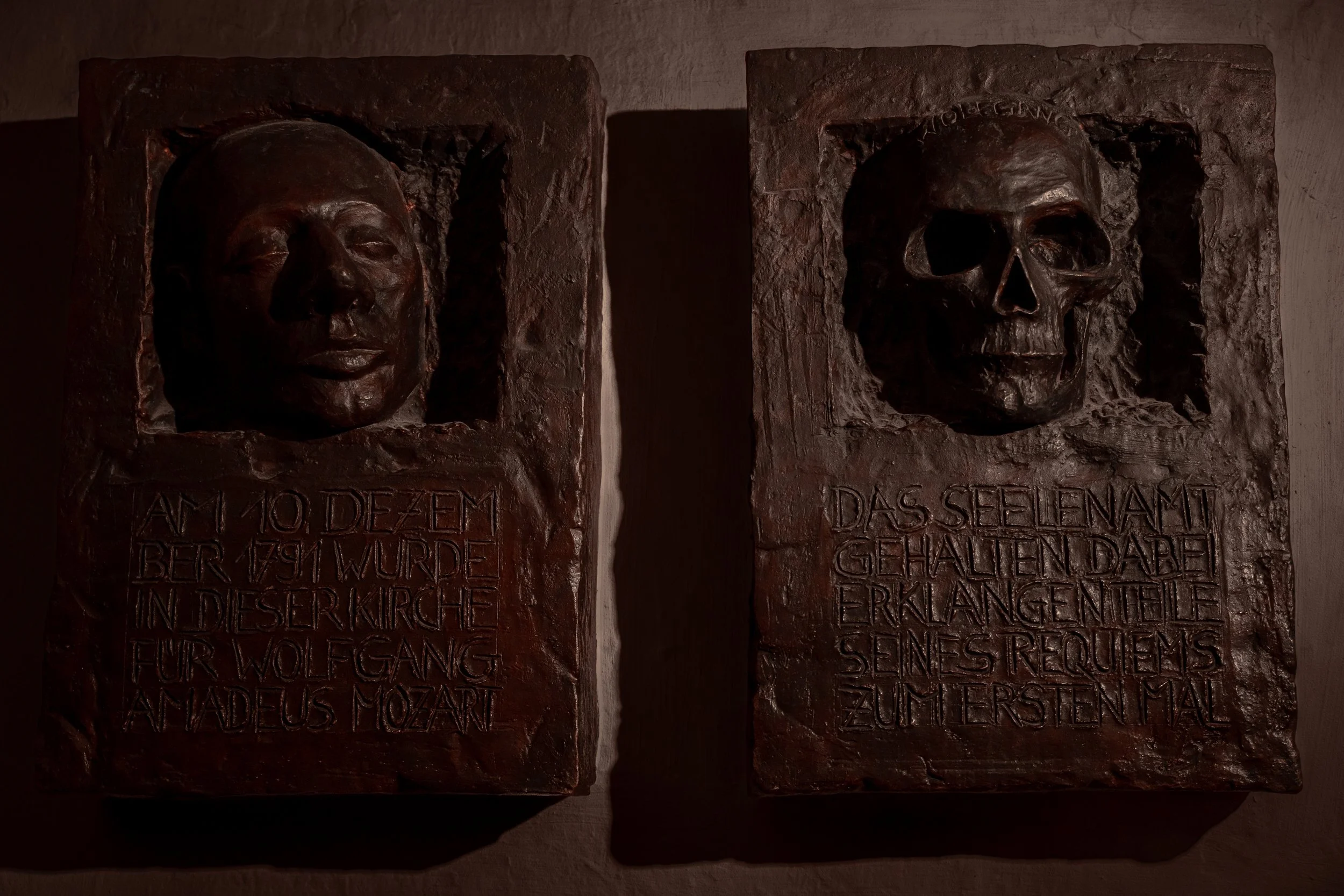
During my visit, the atmosphere was heightened further by the sound of Vienna’s largest Baroque organ, built by David Sieber in 1714. Its beautiful tones filled the interior, drawing everyone’s eyes upward in a shared moment of awe and disbelief. In 1791, just five days after Mozart’s death a memorial service was held here where several completed sections of his Requiem were performed for the first time. Two bronze reliefs can be found next to the entrance doors (one a human face symbolising Mozart, the other a skull in classic memento mori style). These commemorate the composer, but also act as a reminder of the fleeting nature of life.
This dialogue between transcendence and mortality continues below in the church’s 16th‑century crypt. Established after the closure of the surrounding graveyard in 1508, it is now the final resting place of more than 4,000 people. Access is only possible via guided tour, currently offered on Fridays and Saturdays, so it’s worth checking the church’s website for details before you visit. Please also note photography within the crypt was strictly prohibited.
The crypt is home to what are believed to be the only painted coffins in the world. These beautifully decorated caskets display floral motifs, skulls and crossbones, hourglasses and religious scenes reflecting the era’s fascination with death as spectacle. Some coffins remain open, and due to the crypt’s unique microclimate, many bodies have naturally mummified - their silk garments, wigs, and shoes astonishingly preserved! Around 30 mummies remain intact from roughly 250 coffins.
In other areas of the crypt, thousands of skulls and bones are arranged in deliberate patterns, merging art, mortality, and history into a single, contemplative space. The crypt’s calm and solemn atmosphere evokes reflection rather than fear and acts as a reminder that beneath Vienna’s imperial splendour, all lives eventually dissolve to dust.
Address: Michaelerplatz 5, 1010 Wien, Austria