
Imperial Crypt
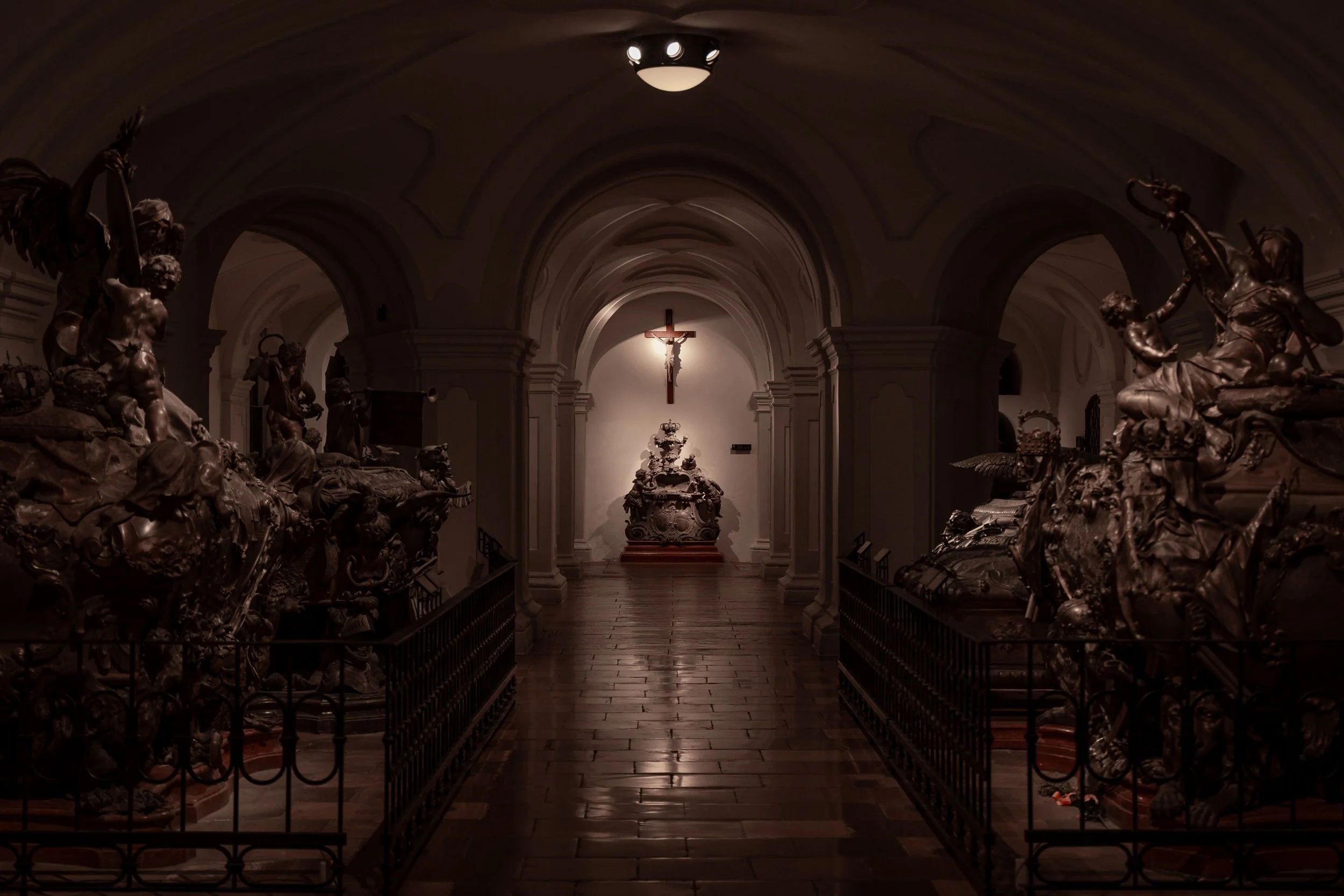
Hidden beneath the Capuchin Church lies the Imperial Crypt (also known as Kapuzinergruft ‘crypt of the Capuchins’), the main burial site for the Habsburg dynasty since the 1600’s.
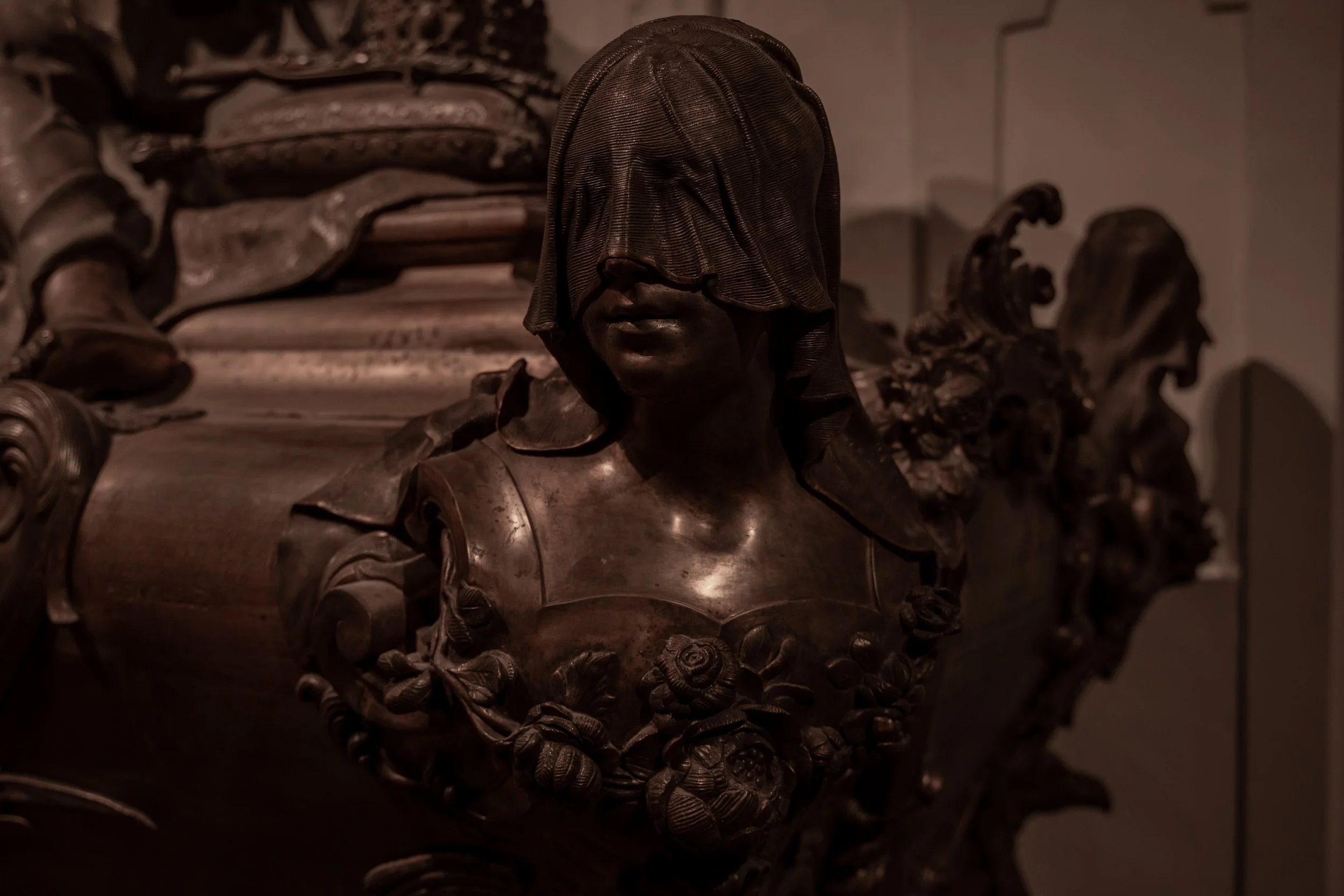
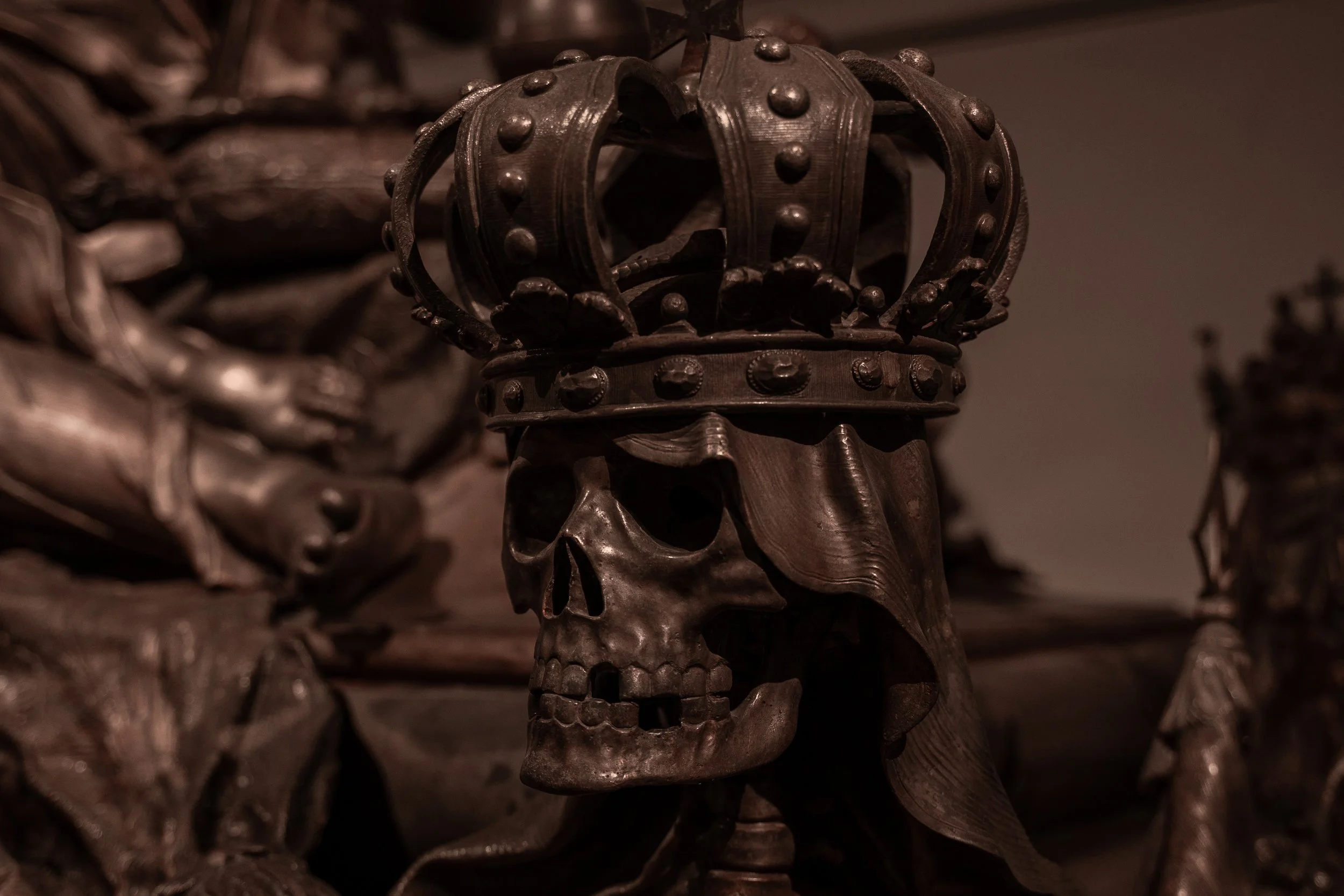
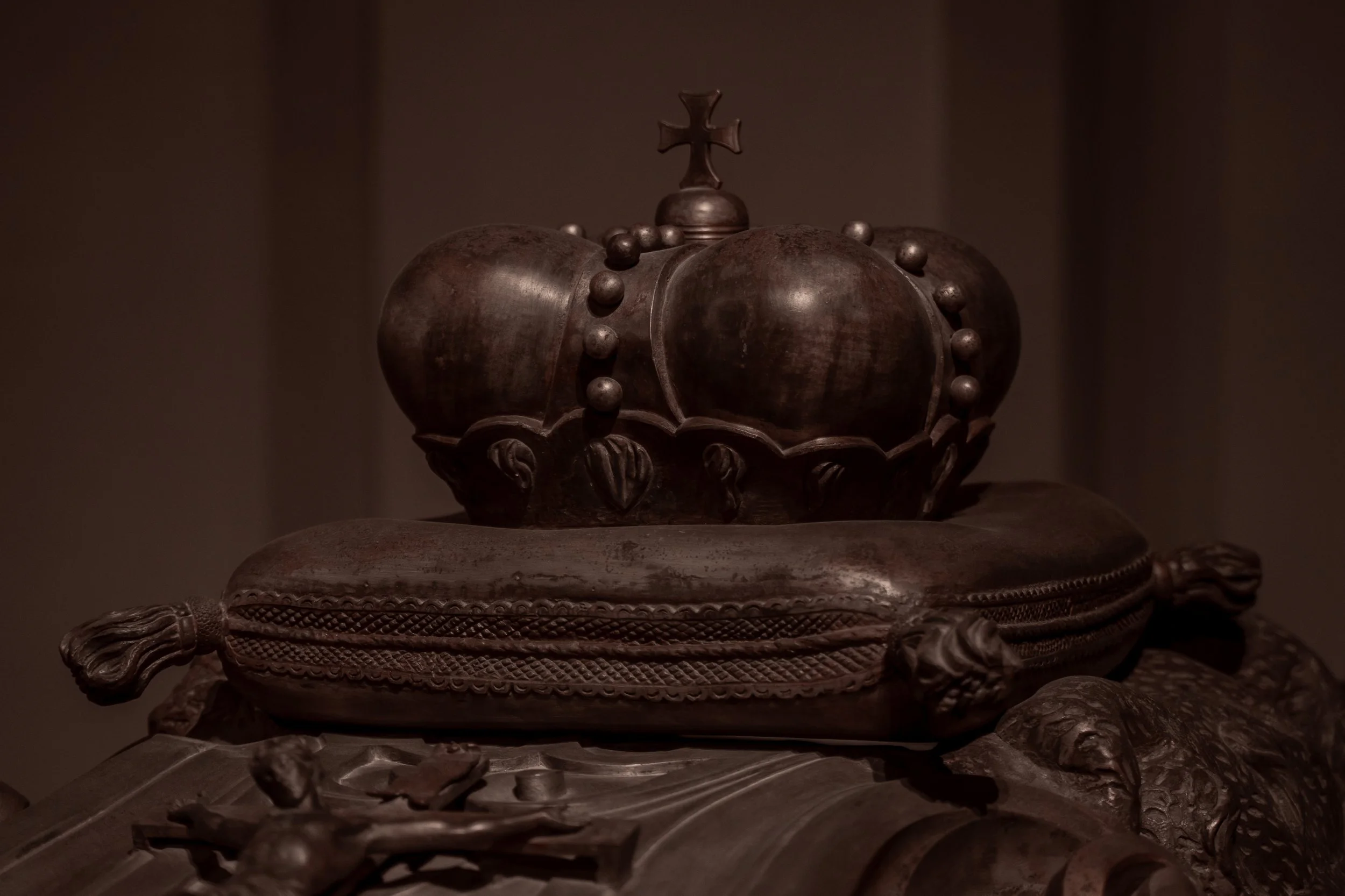
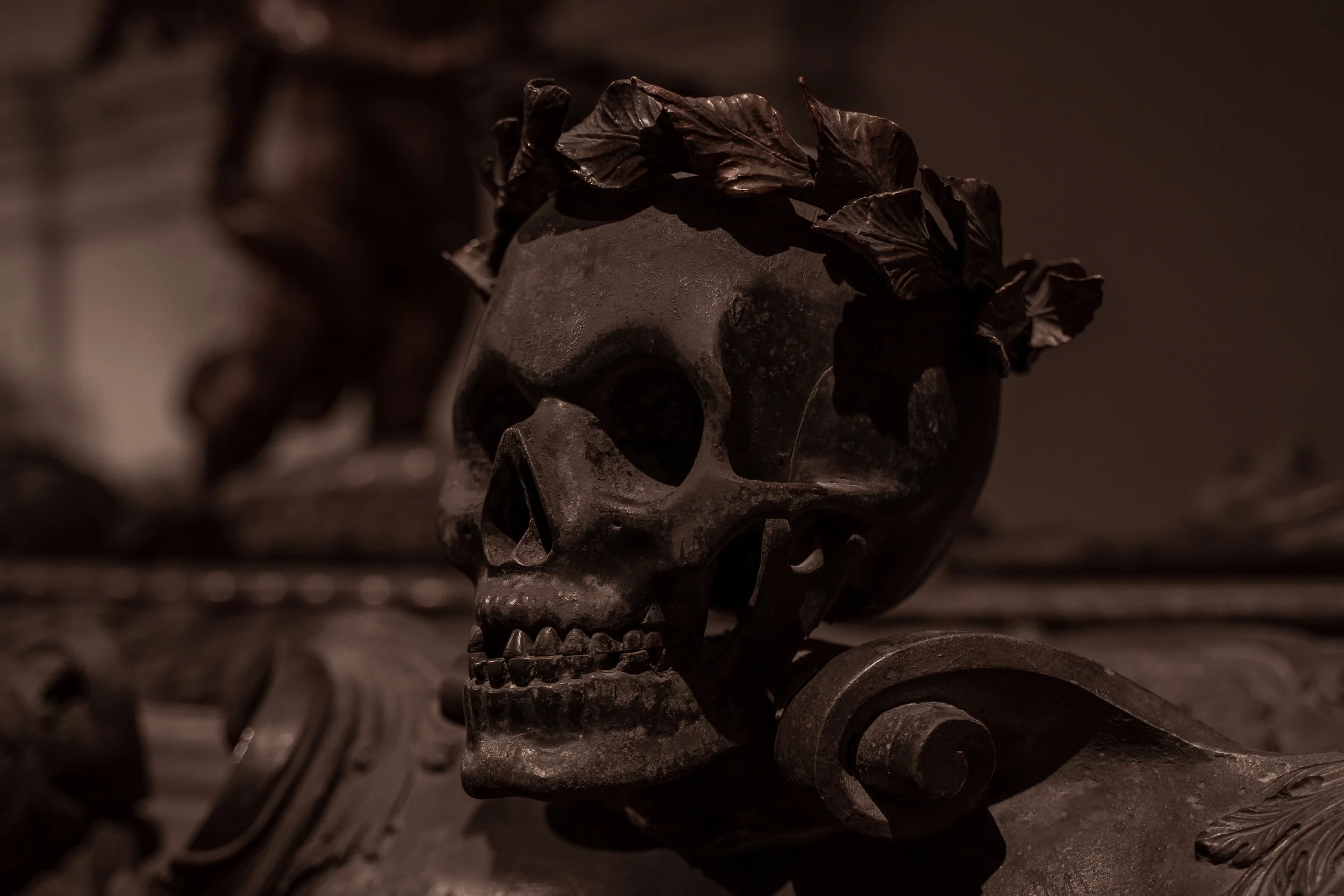
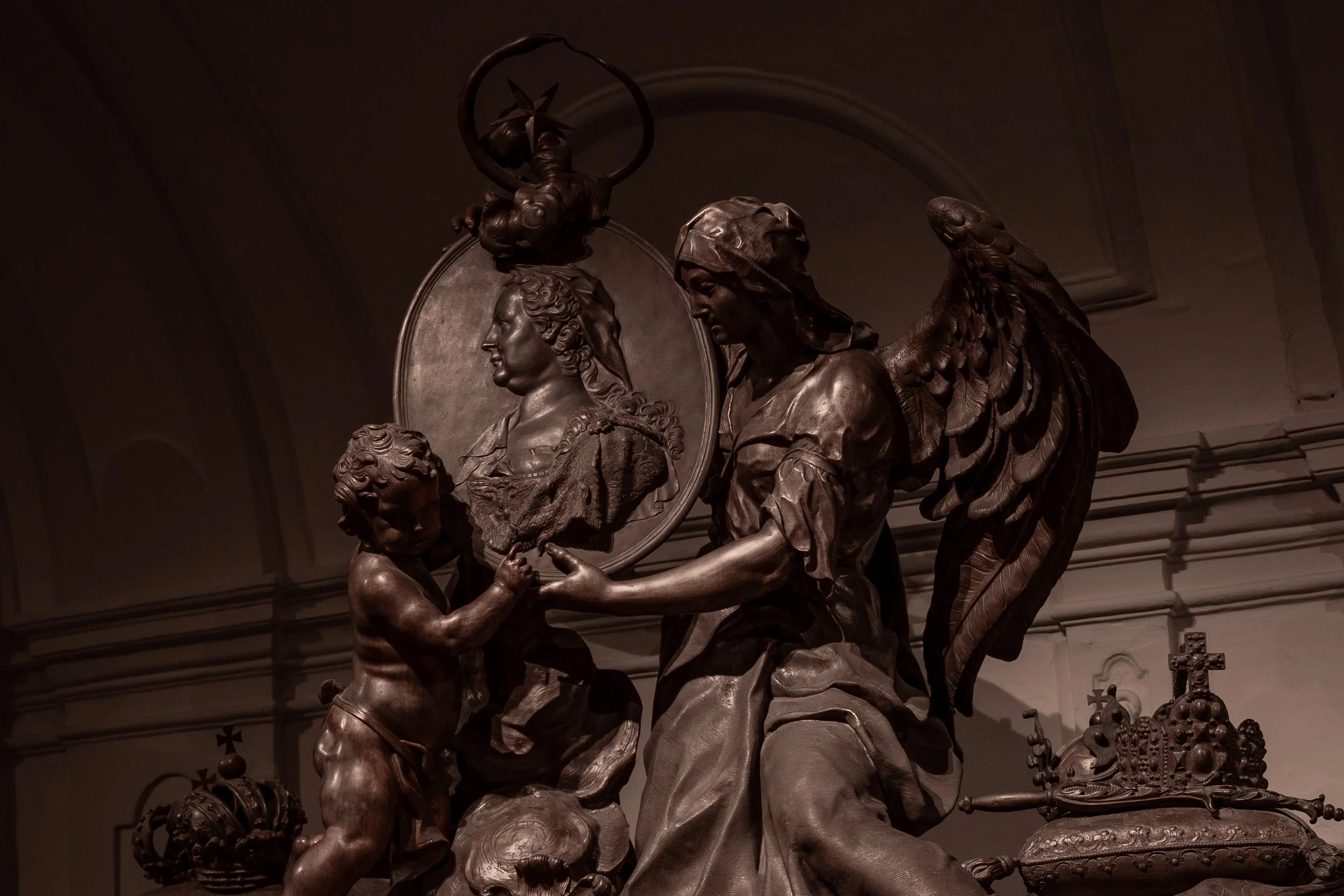
For nearly 650 years, before their reign collapsed in the wake of World War I, the House of Habsburg was the ruling dynasty of Austria and much of Europe. Founded in 1618 by Empress Anna, the crypt now houses around 150 members of the dynasty, with their remains encased in sarcophagi of astonishing craftsmanship. Each coffin is adorned with ornate memento mori: bronze skulls, skeletal motifs and allegories of transience, each a reminder that even royalty can’t escape death.
Within the ten burial chambers, rest the mortal remains of 12 emperors and 18 empresses. As a symbolic division of body and soul each of their hearts were separated from their bodies and interred in silver urns in the Augustinian Church’s crypt. However, their embalmed entrails are preserved in the Ducal Crypt beneath St. Stephen’s Cathedral (which you can see if you take their crypt tour).
As you descend from the entrance, you enter the first of the crypt’s rooms. Straight ahead, behind a Baroque grille, lies the oldest part known as the Founders’ Crypt, housing two chest-like sarcophagi of the founding couple - Empress Anna and Emperor Matthias. Originally intended only for the couple, the crypt expanded over centuries to accommodate the remains of an ever-growing dynasty.
The central hall, known as Leopold’s Crypt, lies beneath the church’s nave. 16 highly decorated Baroque sarcophagi fill the chamber, covered with elaborate funerary art, reflecting the Baroque fascination with death and its theatrical celebration.
From here, you move into the late Baroque Karlsgruft (Charles’ Crypt), built between 1710 and 1720 by Lukas von Hildebrandt. This chamber holds some of the most striking and captivating works including Charles VI’s sarcophagus, ornamented with skulls wearing crowns of the Holy Roman Empire which is accompanied by the monumental coffin of his wife flanked by veiled female heads in eternal mourning.
At this point you wouldn’t think it could get any more impressive, but then you step into Empress Maria Theresa’s Crypt which reveals an even greater masterpiece! Here, rising before you in the centre is a monumental Rococo-style mausoleum designed by Balthasar Ferdinand Moll. The double sarcophagus of Emperor Franz Stephan and his wife, Empress Maria Theresa, showcases the couple depicted in serene repose upon the tomb, and if you bend down and look underneath, you will see it being carried by a sculpted eagle (a symbol of imperial might).
Above, the domed ceiling floods the space with light and is exquisitely decorated by Josef Ignaz Mildorfer’s dramatic fresco. This radiant chamber serves as the final resting place of sixteen people: fifteen Habsburgs (including the imperial couple and their children) and Countess Fuchs-Mollarth, governess to the Empress.
The rooms and coffins that follow are a stark contrast to the grand Rococo ornamentation. Their austere simplicity creates a poignant juxtaposition of grandeur and humility, reminding us that all are equal in death.
The series of plain, solemn vaults leads you to Franz Joseph’s Crypt, where history’s most familiar Habsburgs lie: Emperor Franz Joseph I, his wife Empress Elisabeth (Sisi), and the heir to the throne, Crown Prince Rudolf. They are perhaps the most well-known of the Habsburg family in contemporary culture, thanks in part to the TV series ‘The Empress’.
Empress Elisabeth was known as the people’s Queen due to her ethereal beauty and rebellious spirit but was tragically assassinated in Switzerland in 1898 by an Italian anarchist. Emperor Franz Joseph I, the last great ruler of the dynasty, died of pneumonia in 1916, marking the end of the empire. The third coffin belongs to Prince Rudolf, who tragically committed suicide (after murdering his 17-year-old mistress) in 1889. As Rudolf left no male heir, the crown passed to Franz Joseph’s nephew, Franz Ferdinand, whose assassination in 1914 was instrumental in the outbreak of World War I.
The historical crypt is still in use, with the most recent burial taking place in 2011 for former Crown Prince and European politician, Otto Habsburg. Today the atmospheric subterranean necropolis offers a contemplative experience, reflecting on the fleeting nature of life and power, whilst echoing the Habsburg ethos of ‘magnificence in life, equality in death’.
Address: Tegetthoffstraße 2, 1010 Wien, Austria